
Vegas Hockey Emoji Stars Turned Marner, Eichel and Stone Into a Finals Shorthand
After Game 3 turned into a double-overtime fever dream, the Golden Knights did not need a long explanation for their identity. A few names, a few symbols, and the black-and-gold feeling were enough.
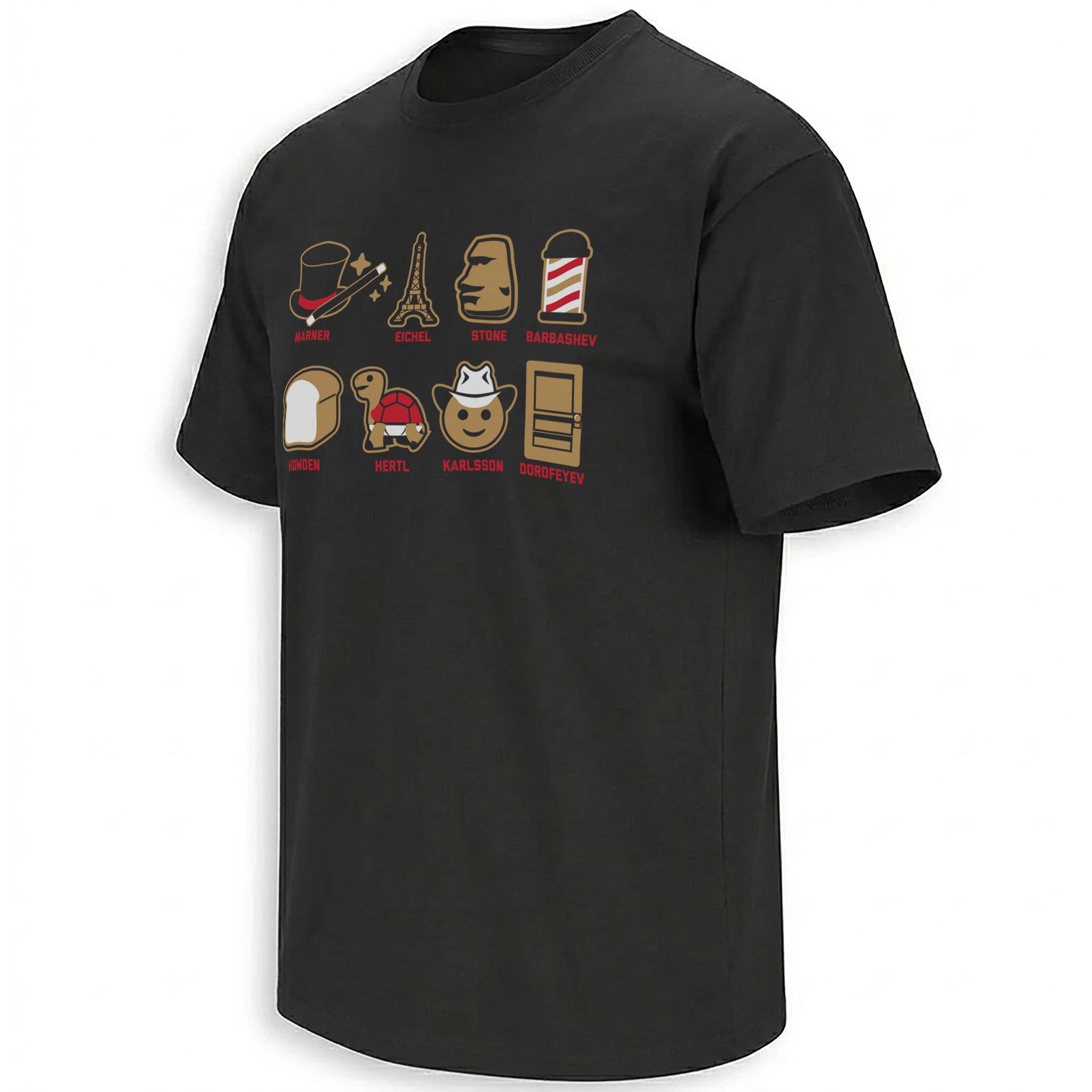
Game 3 did not behave like a normal Stanley Cup Final game. Vegas built a 4-0 lead, Carolina ripped it apart, the third period turned into a storm, and double overtime eventually gave the Golden Knights the kind of win that feels less remembered than survived.
In the middle of that chaos, Mitch Marner became the cleanest headline. A natural hat trick in the Stanley Cup Final is already rare language. Doing it in record time turned his night into a piece of hockey history before the game had even finished becoming weird.
That is why the Marner-Eichel-Stone shorthand lands right now. It compresses the Golden Knights’ Finals identity into a tiny internet-readable code: the new explosive star, the franchise centerpiece, and the captain figure who still represents Vegas’ ruthless, pressure-tested core.
Why Three Names Became Enough
Hockey fans love lines, pairings, nicknames, and shorthand because the sport moves too fast for long explanations. Marner, Eichel, and Stone are not the whole Golden Knights roster, but together they say a lot about the current Vegas machine.
Marner represents the new electricity. Game 3 made that impossible to ignore. Eichel represents the high-end center gravity that has defined Vegas’ modern contender era. Stone represents the captain’s edge, the veteran pressure, and the public memory of a team that already knows what it looks like when June gets heavy.
That trio is why the emoji language feels natural instead of childish. It is not reducing the team. It is translating the team into the way fans actually talk during a series: fast, visual, slightly exaggerated, and built to travel through replies, captions, group chats, and postgame screenshots.
Game 3 Made the Shorthand Feel Urgent
Before Game 3, the Golden Knights’ star structure was already obvious. After Game 3, the structure felt louder. Marner’s second-period eruption became the kind of performance that forces fans to rearrange the conversation. It was no longer only about Vegas depth, Vegas experience, or Vegas’ old championship memory. It was also about a new arrival becoming the loudest player in the series.
That matters because Eichel and Stone do not disappear inside that new story. They frame it. Eichel gives the lineup its established elite center identity. Stone gives the franchise its captain texture and playoff seriousness. Marner gives the 2026 Final its fresh, almost absurd spark. Together, the names become a tiny roster poster for how Vegas wants to be read: dangerous in multiple ways.
Design Language: Stars as Punctuation, Names as a Line Change
The artwork is built around a simple idea: names can behave like icons when the moment is hot enough. Marner, Eichel and Stone are stacked with the kind of visual directness usually reserved for a chant or a scoreboard graphic. The stars do the emotional work between them, giving the design a rhythm that feels closer to internet hockey language than formal commemorative art.
The black base matters because it keeps the piece in Vegas night mode. The gold gives it Golden Knights identity without needing to over-explain. The emoji-like structure keeps it loose, quick and fan-native. It does not try to draw the whole roster wall. It isolates the trio as a shorthand for the way this Final is being talked about after Marner’s Game 3 eruption.
In plain terms, the image works as a Vegas Golden Knights Finals shorthand tied to Marner’s record Game 3, Eichel’s established star gravity, Stone’s captain identity, and the black-and-gold internet language surrounding the 2026 Stanley Cup Final.
The Emoji Format Fits Vegas Better Than a Serious Poster Would
Vegas hockey has always leaned into spectacle. It is part arena show, part championship machine, part rival-fan irritation, part genuine sporting force. A graphic that treats three star names like symbols actually fits that personality better than a stiff, formal roster image.
The Golden Knights are not a franchise built around quiet tradition. Their public language is bright, fast, theatrical, and sometimes deliberately annoying to everyone outside the fan base. Emoji shorthand belongs in that environment. It makes the team feel like something fans can text, chant, meme, and wear as a piece of the conversation rather than a museum label.
Inside the wider Vegas Golden Knights collection, this graphic reads less like a standard player tee and more like a Finals-era caption. Around the broader NHL shirts and apparel archive, it belongs to the kind of playoff piece that only fully makes sense while the series is still throwing new language at fans every night.
The Vegas Hockey Emoji Stars graphic sits inside the moment as a visual record of how three names became enough to describe a whole Finals mood.
Carolina’s Comeback Made the Stars Feel Less Decorative
The Hurricanes matter to this story because they made Vegas prove that the star shorthand was not just front-running confidence. Carolina’s four-goal comeback in Game 3 turned a comfortable Vegas night into a stress test. Suddenly the names had to mean something beyond sparkle.
That is where the trio becomes useful as fan language. Marner gave Vegas the burst. Eichel gives the structure. Stone gives the edge and memory. When Carolina made the game unstable, the Golden Knights still had enough identity left to survive into double overtime and leave the rink with the series lead.
The emoji-star idea works because it catches that balance: a little playful, a little arrogant, but attached to a very real Finals pressure point.
FAQ
Why do Marner, Eichel and Stone work as a Vegas Finals shorthand?
The three names compress different parts of the Golden Knights’ identity: Marner’s new Finals explosion, Eichel’s elite center gravity, and Stone’s captain edge.
Why did Game 3 make the emoji-star idea more relevant?
Game 3 gave Vegas a chaotic double-overtime win and Marner a record hat trick, making the trio feel like a fast way to explain the Golden Knights’ star power in the middle of a wild series.
Why does the design use emoji-style stars?
The stars act like internet punctuation. They turn the player names into a quick fan caption, matching the way hockey discourse moves through symbols, shorthand, and postgame reactions.
How does Carolina shape the meaning of the graphic?
Carolina’s comeback pressure keeps the graphic from feeling purely celebratory. The Hurricanes forced Vegas’ star identity to be tested through chaos, not just displayed during control.
A Finals Caption Before the Series Hardens Into History
Playoff language changes quickly. One night creates a new villain, a new hero, a new joke, or a new set of symbols. After Game 3, Vegas had a different shorthand than it had before: Marner blazing across the series, Eichel and Stone still holding the frame, and the Golden Knights looking again like a team built to turn spectacle into advantage.
That is where the emoji-star graphic belongs. Not as the whole story, and not as a final verdict. It belongs to the living middle of the Stanley Cup Final, when fans are still trying to explain the series faster than the games can settle down.