
Katie Stewart’s “Blast Off” Moment Turned Texas Softball Power Into a Dynasty Language
Texas did not just win another championship. It built a postseason vocabulary around pressure swings, orange-clad belief, and the sound of Katie Stewart turning elimination tension into launch-angle memory.
The moment stopped being only a box-score detail when Texas fans started expecting the ball to leave. That is the strange power of Katie Stewart’s postseason: her at-bats began to feel less like ordinary plate appearances and more like countdowns.
Texas had already become a national softball force, but the 2026 run sharpened the image. Back-to-back Women’s College World Series titles changed the Longhorns from champions into a program with dynasty language forming around it. Teagan Kavan gave the run its pitching spine. The lineup gave it traffic and pressure. Stewart gave it ignition.
That is why “Blast Off” fits the current moment. It is not just a phrase about a home run. It is a way to describe what Stewart did to the emotional temperature around Texas softball: one swing at a time, she made the postseason feel like something could launch at any second.
Why Stewart Became the Face of Texas’ Power Mood
Stewart’s season had already been too loud to treat casually. She entered the national conversation through production, awards, and the kind of power numbers that force opponents to manage around her. By the time the WCWS reached its most compressed moments, the question was not whether Stewart could change a game. It was how long a pitcher could keep her from doing it.
The Nebraska swing captured that feeling perfectly. Texas needed a break in a tight elimination game, and Stewart gave the Longhorns a go-ahead three-run homer that pushed them into the semifinals. In fan terms, that is the exact kind of swing that stops being remembered as “a home run” and starts being remembered as a scene.
Then the pattern kept building. Her power stretched across elimination pressure, championship-series attention, and the kind of scouting fear that eventually changes how opponents pitch. When a player’s presence can shape a rally even through an intentional walk, the power has moved beyond the fence. It has entered the way the game is being managed.
The Internet Mood: Clutch, Pain, Blood, and the Swing That Kept Coming Back
The Stewart story was not clean in the way highlight packages often make postseason runs look. Part of why fans connected with it is that the WCWS version of her season included struggle, contact, errors, pressure, visible physical cost, and then another massive swing anyway.
That mix made the discourse feel human. Across softball spaces, the reaction around Stewart was not just about raw power. It was about resilience inside an already stressful Texas run: the player who could have a messy defensive day, take damage, and still become the offensive image people remembered. That is the kind of contradiction fans hold onto because it feels closer to the actual sport.
Design Language: Burnt Orange Orbit and Softball as a Launch Symbol
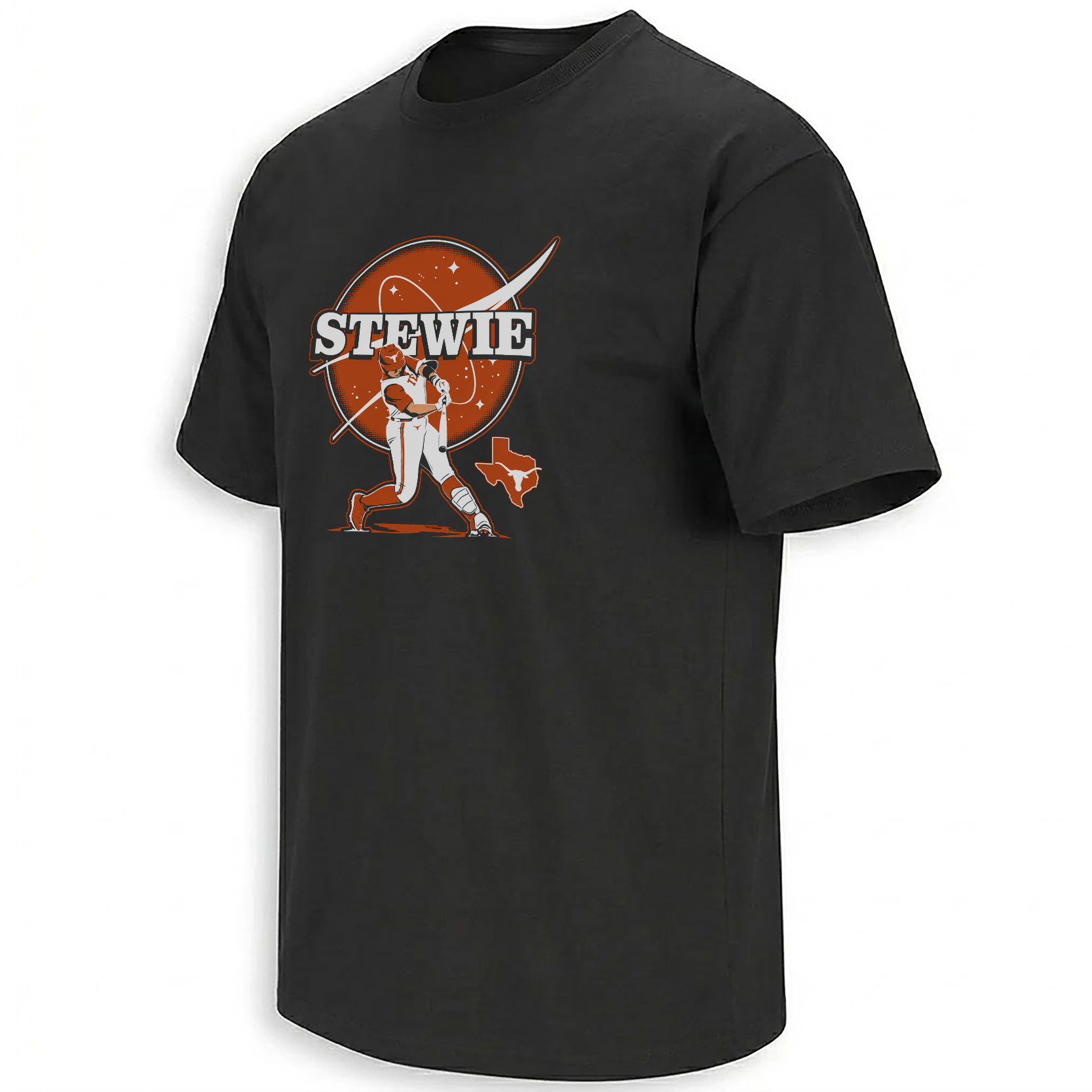
The artwork works because it understands the metaphor. “Blast Off” is not subtle, and it should not be. Stewart’s postseason power was not quiet. The design leans into movement, with the ball treated almost like an object leaving the atmosphere rather than simply crossing a fence.
The burnt-orange palette gives the image immediate Texas identity, but the layout does not feel like a standard player graphic. It has a poster-like energy: Stewart’s name becomes the anchor, the ball becomes the motion, and the surrounding orange glow turns the swing into a small visual explosion. That makes the piece read less like a regular softball graphic and more like a fan-facing memory map of the WCWS power run.
The strongest detail is the way the phrase lets fans remember both the player and the feeling. In plain terms, the design works as a Texas Longhorns softball power graphic tied to Katie Stewart’s 2026 WCWS surge, the back-to-back championship atmosphere, and the home-run language that followed her through elimination pressure.
Why Back-to-Back Changed the Meaning of the Swing
A single great postseason can be remembered as a run. Back-to-back championships begin to change the identity of a program. Texas now carries a different kind of softball weight: not the hope of becoming a national power, but the expectation of behaving like one.
That matters for Stewart because her swings did not happen in isolation. They arrived inside a Texas machine that had learned how to survive the WCWS bracket, answer pressure, and keep enough pitching and lineup depth intact to finish the job. The home runs were spectacular, but their meaning came from the environment around them: a program no longer asking whether it belonged at the end of the season.
Inside the wider Texas Longhorns collection, this kind of graphic feels less like a simple player image and more like a checkpoint in a new softball era. Around the broader NCAA shirts and apparel archive, it belongs to the postseason pieces that only fully make sense if you watched a swing become a season’s emotional shorthand.
The Katie Stewart Blast Off graphic sits inside the story as a visual record of how Texas power hitting became part of the 2026 WCWS memory.
The Fan Memory Is Bigger Than One Ball Leaving the Park
The easiest way to flatten Stewart’s postseason is to reduce it to home runs. The better way to read it is as a sequence of emotional interruptions. Texas would be pressed. The game would tighten. The broadcast would settle into tension. Then Stewart’s bat would change the room.
That is why “Blast Off” has cultural value. It gives fans a phrase for the feeling before the result — the half-second after contact, the dugout beginning to react, the camera climbing, the crowd realizing the game has tilted. Softball fans know that sound. Texas fans now have a 2026 version of it tied to Stewart.
FAQ
Why did Katie Stewart’s “Blast Off” moment connect with Texas fans?
It gave fans a simple phrase for Stewart’s postseason power. Her home runs arrived in high-pressure WCWS moments, so “Blast Off” became a way to remember both the swing and the emotional release around it.
How did Stewart shape the 2026 Texas softball story?
Stewart helped define the Longhorns’ power identity during a back-to-back championship run. Her production, award-level season, and clutch WCWS swings made her one of the clearest offensive symbols of the year.
Why does the design use launch and orbit language?
The launch imagery matches how fans experience a Stewart home run: contact, lift, crowd reaction, and the feeling that the entire game has suddenly changed direction.
How does this connect to Texas’ back-to-back WCWS titles?
The graphic sits inside a larger Texas softball shift. Back-to-back championships made the program feel like a dynasty conversation, and Stewart’s power gave that conversation one of its loudest visual symbols.
A Launch Trail From the WCWS Archive
Great postseason artifacts usually begin as a feeling before they become a record. Stewart’s “Blast Off” moment belongs to that space. It is a memory of power, but also of pressure, resilience, Texas orange, and a program that kept finding ways to make the season feel inevitable after it had already become dangerous.
The championship will live in the official record. The phrase lives somewhere else — in the fan memory of watching the ball rise and knowing, before it landed, that Texas had found another answer.