
University of Texas at Omaha: How the Longhorns Made a Second Baseball Home
One design imagines a fictional Texas campus in Omaha. The other creates the nickname “OmaHorns.” Together, they explain why reaching the Men’s College World Series feels less like unfamiliar travel and more like returning to a place already embedded in Longhorn baseball identity.
Texas arrived in Omaha for the 39th time carrying the strongest appearance record in Men’s College World Series history. That number turned the Longhorns’ 2026 qualification into more than another successful postseason result. It reinforced a relationship between one program and one city that has lasted across generations.
The current trip has already moved through both ends of Omaha emotion. Georgia controlled Texas in the opener, winning 7–1 and forcing the Longhorns immediately into the elimination side of the bracket. Two days later, Texas answered with a 14–2 demolition of Alabama.
Adrian Rodriguez supplied the defining response. He went 5-for-5, drove in seven runs and completed only the third cycle in Men’s College World Series history. Texas now enters a rematch with Georgia carrying both the pressure of elimination and fresh evidence that one offensive afternoon can transform an Omaha story.
Most programs describe Omaha as a destination. Texas has visited often enough for fans to describe it as an extension of the university.
These designs celebrate Texas qualifying for and competing in Omaha. They do not claim that the Longhorns have won the 2026 national championship. The tournament remains active, and Texas is fighting through the elimination bracket.
How Texas Earned Its 39th Trip
The road to Omaha ended at home in Austin, but the deciding game never felt comfortable.
Texas faced Oregon in the decisive game of the Austin Super Regional and carried a narrow contest into the eighth inning. Adrian Rodriguez delivered the go-ahead two-run double, giving the Longhorns the lead they needed.
Freshman reliever Sam Cozart then retired the final six Oregon hitters. The final out completed a 6–5 victory and sent Texas back to the sport’s most recognizable postseason destination.
The qualification also introduced Jim Schlossnagle’s first Texas team to the program’s Omaha standard. Texas did not simply reach the final eight; it extended a record that has become one of college baseball’s clearest measures of sustained national relevance.
Why 39 Appearances Change the Meaning of Omaha
Reaching the Men’s College World Series is the defining achievement for many college baseball programs. Seasons, recruiting classes and coaching tenures are often judged by whether they ever reached Omaha.
Texas operates under a different historical burden. Omaha is not viewed only as proof of success. It is treated as a place the Longhorns are expected to understand.
That expectation comes from repetition. Different generations have traveled north wearing burnt orange. Players who never shared a roster still occupy the same program story because each reached the same final city.
The phrase “University of Texas at Omaha” is funny because it exaggerates that familiarity, but it works because the underlying history is real.
A fictional-campus joke that treats repeated College World Series appearances like proof Texas has established a permanent baseball branch in Nebraska.
A shorter fan nickname combining Omaha and Longhorns into a word built for social captions, travel groups and burnt-orange tournament identity.
Two Designs, Two Versions of the Same Tradition
The two graphics share the same cultural foundation but communicate it through different visual systems.
The University of Texas at Omaha piece uses a circular collegiate seal. Baseball stitching, a centered Longhorn silhouette and explicit 2026 tournament wording give it the appearance of an official campus badge from a university that does not actually exist.
OmaHorns removes the institutional joke and keeps only the identity. Large arched varsity letters sit over the Longhorn silhouette and a small “Baseball” label. It resembles a practice or travel shirt that could belong to an established team nickname.
One design explains the history through a seal. The other assumes the history is already understood.
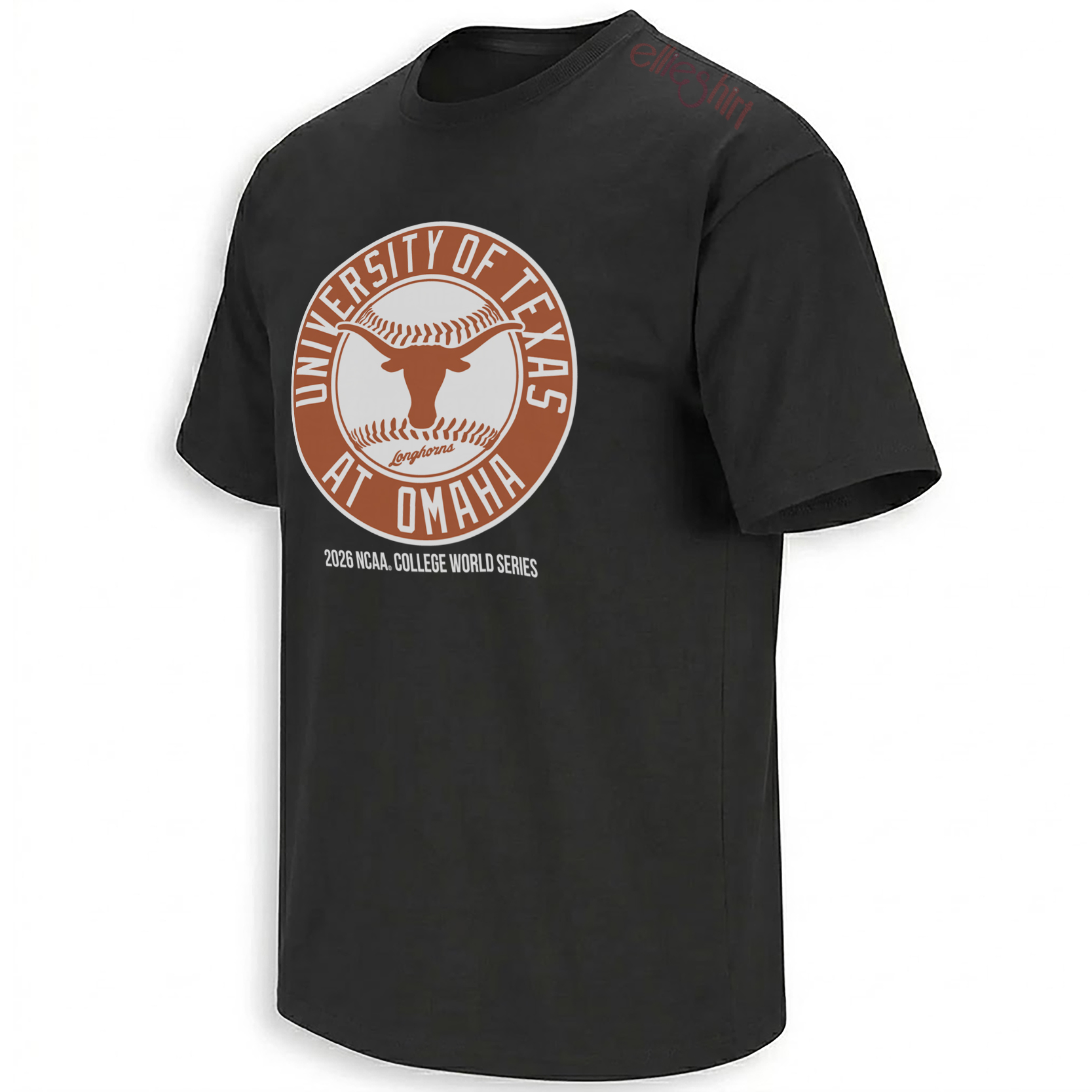
A burnt-orange baseball seal that imagines Texas’ repeated Omaha appearances as a fictional university campus established through tradition.
View the collegiate seal design →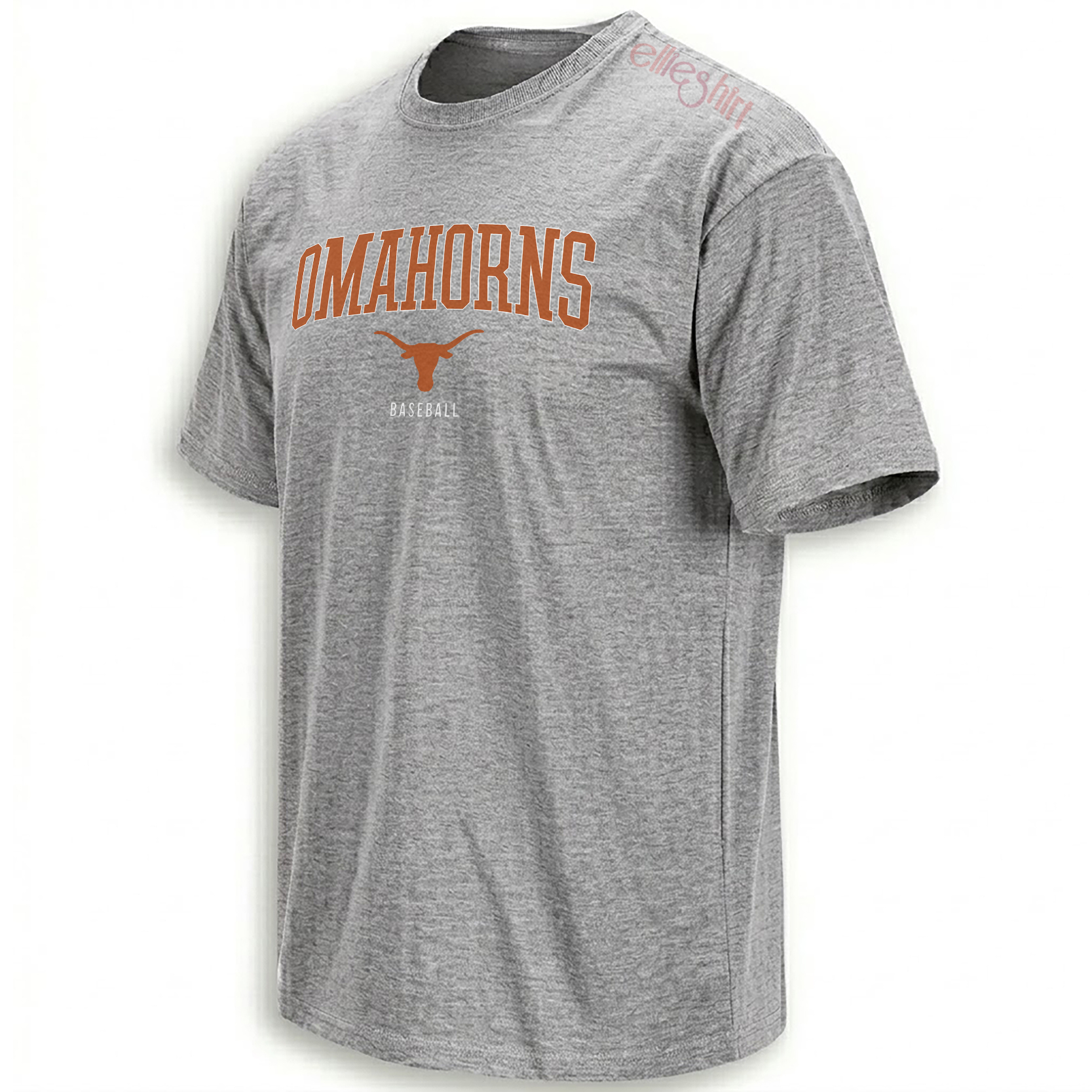
A minimal varsity wordmark combining Omaha and Longhorns into a compact identity for Texas baseball’s record-setting return.
View the OmaHorns wordmark →The Fictional University Seal Works Because It Looks Believable
The first design uses the visual authority of a traditional university emblem. Circular seals suggest permanence, institutional history and an identity meant to outlast one season.
“University of Texas” curves across the top while “At Omaha” completes the lower arc. Inside, baseball stitching creates the sport-specific frame and the Longhorn silhouette establishes the school immediately.
The joke depends on restraint. An overly cartoonish composition would make the fictional-campus idea feel temporary. The clean burnt-orange, white and black palette instead makes it look like a badge that could have existed for decades.
That credibility mirrors Texas’ actual history. There is no University of Texas campus in Omaha, but 39 appearances make the phrase feel less absurd than it should.
OmaHorns Sounds Like a Name Fans Were Waiting to Use
The strongest sports nicknames often feel obvious only after someone says them. OmaHorns combines two words with enough shared sound to appear natural rather than forced.
It can function as a hashtag, road-trip label, group-chat name or headline. It requires no date because the phrase describes a recurring relationship rather than one isolated tournament.
The visual treatment strengthens that permanence. Arched varsity typography resembles a standard college baseball wordmark, allowing the invented name to behave like an established identity.
Sport grey also matters. It gives the design the atmosphere of a practice shirt or travel-day tee rather than formal championship merchandise. OmaHorns looks like something the program could wear while preparing for work.
Georgia Turned the Omaha Welcome Into a Warning
Texas’ opening game demonstrated why tradition cannot win a present tournament by itself.
Georgia defeated the Longhorns 7–1 behind a complete-game performance from Joey Volchko, who struck out 15. The result immediately moved Texas into the elimination bracket.
That loss gave both shirt concepts another layer. “University of Texas at Omaha” could not function as entitlement. Familiarity with the city did not guarantee control inside Charles Schwab Field.
OmaHorns similarly became a test of identity. Was the phrase only useful during the celebration of qualification, or could it survive when the tournament became uncomfortable?
The response against Alabama answered that question emphatically.
Adrian Rodriguez Rewrote the Mood in One Afternoon
Texas entered the Alabama game facing elimination and left it with one of the tournament’s most memorable individual performances.
Rodriguez collected five hits, drove in seven runs and completed the cycle. A later scoring change officially awarded him the triple required to finish the feat.
Only two players before him had hit for the cycle in Men’s College World Series history. His seven RBI also tied the event’s single-game record.
Texas scored three times in the first inning and four more in the second, creating the aggressive start missing against Georgia. Anthony Pack Jr. homered, Ethan Mendoza added three hits and Ruger Riojas delivered six strong innings.
7 RBI
Adrian Rodriguez’s cycle turned Texas’ first elimination game from a test of survival into a display of offensive force—and sent the Longhorns toward another meeting with Georgia.
The Rematch Makes the Designs Feel Present, Not Nostalgic
Texas’ next game returns the Longhorns to the opponent that created their first Omaha setback.
Georgia has already demonstrated that it can control Texas’ lineup and dominate the strike zone. The Longhorns now return with a restored offense, a rested pitching option and the urgency of another elimination game.
That real-time uncertainty matters. These are not retrospective championship designs created after every question has been answered. They belong to the middle of the story.
Wearing “OmaHorns” during the rematch expresses presence rather than prediction. The phrase says Texas reached the stage and remains part of its current drama.
Why Omaha Becomes a Cultural Destination
The Men’s College World Series has transformed Omaha into more than the neutral host of a championship tournament.
Fans return to the same city, gather around the same stadium district and build rituals that connect different programs to the location. Restaurants, streets, statues and fan zones become part of the sport’s annual language.
For Texas supporters, the journey also creates a northbound migration of burnt orange. Alumni and families travel from Austin and across the state, carrying regional identity into Nebraska.
The University of Texas at Omaha joke captures that movement by pretending arrival has become enrollment. OmaHorns captures it by pretending the traveling fan base has become a temporary local population.
Tradition Creates Confidence—and Pressure
Texas’ record number of appearances offers recruiting power, institutional pride and confidence that the program understands how to reach college baseball’s final stage.
The same record makes every trip more demanding.
A first-time participant can celebrate the appearance as the completion of a historic season. Texas arrives carrying national-title expectations shaped by previous generations.
That pressure explains why the designs avoid a championship claim. Their achievement is specific: Texas earned another trip and extended the appearance record. What happens after arrival must still be decided on the field.
Texas defeated Oregon 6–5 to claim the Austin Super Regional, reached Omaha for the 39th time, lost its opening game 7–1 to Georgia, eliminated Alabama 14–2 behind Adrian Rodriguez’s historic cycle and advanced to a Georgia rematch with the season again at stake.
Two Shirts for Two Kinds of Texas Baseball Fan
The University of Texas at Omaha design fits fans who prefer explicit tournament context. The seal identifies Texas, baseball, Omaha and the 2026 College World Series within one structured emblem.
OmaHorns is more understated. It rewards people who already understand the reference and want a phrase that can remain relevant whenever Texas returns.
The first behaves like a commemorative travel badge. The second behaves like an identity.
Together, they show how fan apparel can record the same event at different levels of specificity: one naming the exact trip, the other naming the long-term relationship.
Where These Designs Fit Inside the Longhorns Archive
Texas baseball has enough history to support more than one visual interpretation of Omaha.
Some graphics focus on the Road to Omaha. Others emphasize the Longhorn logo, the 2026 field, specific players or the tournament badge. These two designs focus on language.
Fans can explore more burnt-orange tournament and college baseball pieces through Ellie Shirt’s Texas Longhorns collection , where Omaha-themed graphics sit alongside wider Texas sports culture.
The broader NCAA collection follows how college programs turn tournament destinations, school traditions and fan-created nicknames into wearable identity.
Frequently Asked Questions
What does “University of Texas at Omaha” mean?
It is a fan-created joke imagining a fictional Texas campus in Omaha because the Longhorns have reached the Men’s College World Series more often than any other program.
Is there an actual University of Texas campus in Omaha?
No. The phrase is an Omaha baseball reference based on Texas’ repeated College World Series appearances.
What does OmaHorns mean?
OmaHorns combines Omaha and Longhorns into a fan nickname for Texas baseball’s presence at the Men’s College World Series.
How many times has Texas reached the Men’s College World Series?
The 2026 tournament marked Texas’ record 39th appearance in the Men’s College World Series.
How did Texas qualify for Omaha in 2026?
Texas defeated Oregon 6–5 in the deciding game of the Austin Super Regional after Adrian Rodriguez hit a go-ahead two-run double in the eighth inning.
What happened against Alabama?
Texas won 14–2 in an elimination game. Adrian Rodriguez went 5-for-5, hit for the cycle and tied a Men’s College World Series record with seven RBI.
Does either design claim Texas won the national championship?
No. Both designs celebrate qualifying for Omaha, Texas’ record 39th appearance and the program’s College World Series tradition.
How are the two designs different?
University of Texas at Omaha uses a circular baseball seal with explicit 2026 tournament wording. OmaHorns uses a cleaner varsity wordmark and a compact Omaha–Longhorns nickname.
Explore the University of Texas at Omaha seal and the OmaHorns wordmark , then continue through Ellie Shirt’s Texas Longhorns collection for more 2026 College World Series and burnt-orange baseball designs.
University of Texas at Omaha and OmaHorns celebrate the Longhorns’ record 39th Men’s College World Series appearance through a fictional-campus baseball seal and a minimal Omaha–Longhorns varsity wordmark.