
Yoshinobu Yamamoto’s 10-K Masterclass: An October Performance That Felt Yamamazing
Seven innings, ten strikeouts, one run allowed. How the Dodgers ace outdueled Chris Sale in Atlanta and inspired a five-word vocabulary of baseball admiration.
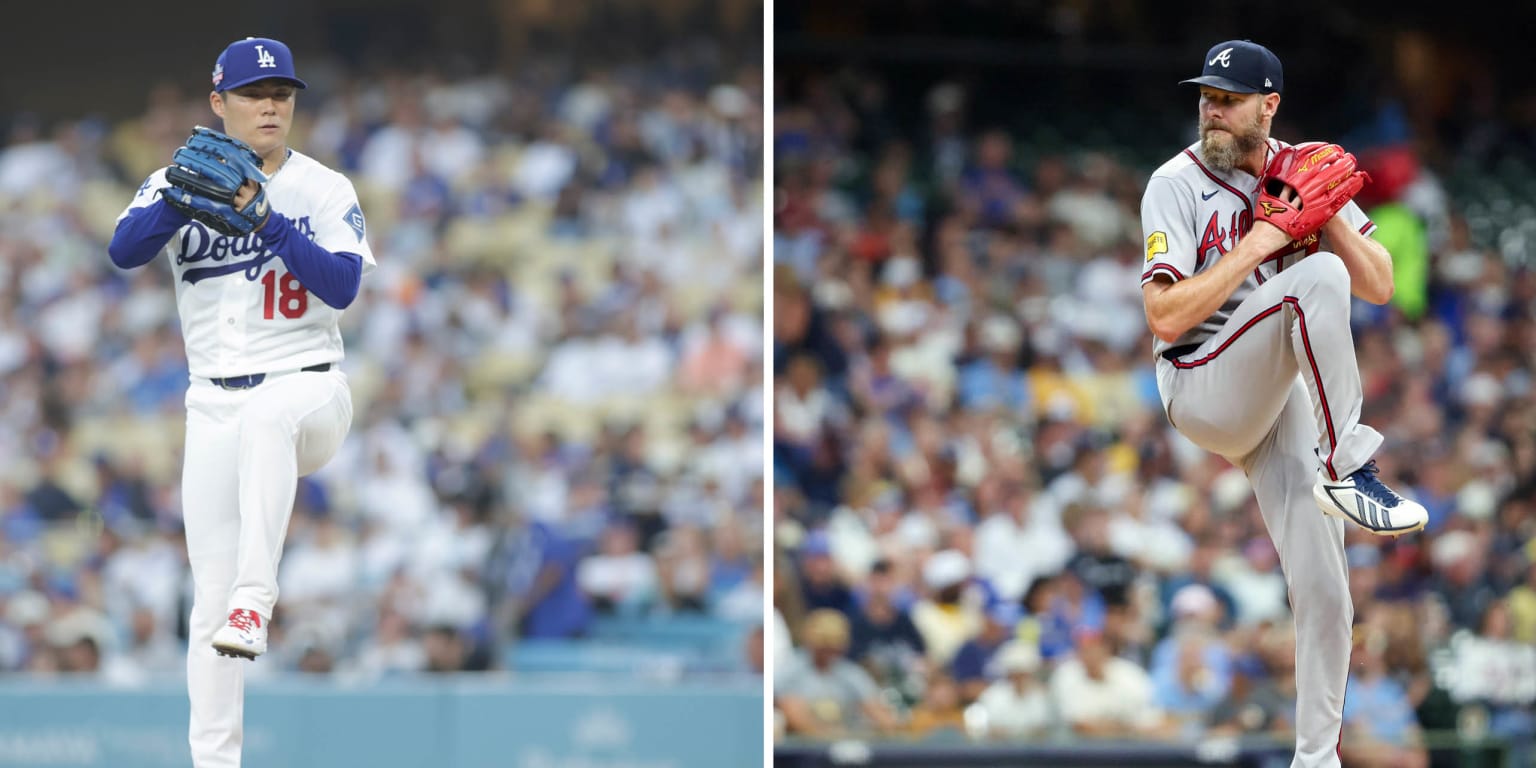
On October 6, 2026, Yoshinobu Yamamoto returned to the postseason mound with the Los Angeles Dodgers’ National League Division Series against the Atlanta Braves tied at one game apiece. Across from him stood Chris Sale, one of baseball’s most accomplished left-handed pitchers. The setting was Truist Park, and the stakes were considerable.
Seven innings later, Yamamoto had allowed just one run on four hits while striking out ten Braves. His performance helped Los Angeles win 3–1 and take control of the series. It was his highest strikeout total in a postseason game, reinforcing a reputation built through precision, composure, and an unusual ability to make difficult October assignments look manageable.
The Dodgers finished the job the following evening, beating Atlanta 4–1 in Game 4 to win the NLDS three games to one. Their next opponent would be the Milwaukee Brewers in the National League Championship Series. Yamamoto’s Game 3 performance had become one of the defining individual contributions to another Los Angeles postseason advance.
How Yamamoto Won the Battle of Aces Against Chris Sale
The matchup carried history before either pitcher threw a ball. Yamamoto and Sale had faced each other during the regular season, and Sale had already shown how effectively he could quiet the Dodgers’ lineup. Their October meeting offered an immediate comparison between two pitchers with very different mechanics but a similar capacity to dominate.
Yamamoto established control early with his fastball, splitter, and other secondary pitches. According to MLB’s Game 3 reporting, he retired twelve of the first fourteen hitters he faced. His command made Atlanta work for opportunities while giving Los Angeles confidence that its slim advantage could hold.
The fifth inning created his most serious test. Atlanta loaded the bases with one out and pushed across a run on a Drake Baldwin groundout. Yamamoto escaped without surrendering the lead. He then returned to his rhythm, finishing with 98 pitches, only one walk, and a career postseason-high tenth strikeout against Austin Riley in the seventh.
For Dodgers supporters, that escape may have carried as much emotional weight as the strikeouts. Dominant pitchers do not always avoid trouble. What separates October performances is the ability to prevent a difficult inning from becoming the moment that decides the season.
The loudest compliments often follow the quietest displays of control. Yamamoto made seven innings feel methodical, even when Atlanta threatened to change everything.
Why October Keeps Becoming Yamamoto’s Stage
Yamamoto arrived in MLB with an extraordinary reputation established in Japan, where his career with the Orix Buffaloes made him one of the most celebrated pitchers of his generation. His transition to Los Angeles placed him inside an organization with enormous expectations and a fan base accustomed to championship contention.
His October reputation became particularly strong in 2025. Yamamoto won World Series MVP honors after an exceptional championship series against the Toronto Blue Jays, including memorable starting performances and crucial relief work. His postseason contributions became central to the Dodgers’ second consecutive championship.
The 2026 NLDS supplied another chapter. MLB noted that the Dodgers had won ten of the eleven postseason games in which Yamamoto had appeared through Game 3. That record speaks not only to one pitcher’s skill but also to the confidence the team has developed around his presence.
When Los Angeles needed a road victory to shift a tied series, Yamamoto provided it. Against an elite opponent and an opposing lineup capable of punishing mistakes, he offered the combination that postseason teams crave: innings, strikeouts, and control of the scoreboard.
Five Ways to Say Yoshinobu Yamamoto Is Extraordinary
That atmosphere helps explain the concept behind the Yamamazing Yoshinobu Yamamoto Shirt. Its central joke is based on the player’s surname, turning the opening sound “Yama” into the foundation of five affectionate English superlatives.
Each phrase begins with the same distinctive syllables but ends with a different compliment. The repetition creates a visual rhythm, like one enthusiastic baseball reaction becoming progressively more exaggerated. It is playful fan-language rather than an official collection of awards or statistical titles.
The five words work because each expresses a slightly different feeling. “Yamamazing” emphasizes astonishment. “Yamamarvelous” suggests delight. “Yamamagitanificent” is not the phrase on the design; the correct third line, “Yamamagnificent,” carries the idea of grandeur. “Yamamasterful” recognizes technical command, while “Yamamonumental” gives the praise a sense of historical scale.
No single invented word captures every aspect of a pitcher’s performance. Together, the sequence illustrates how supporters sometimes turn admiration into a joke that only becomes funnier through repetition.
The Visual Language of the Yamamazing Design
The design deliberately avoids a photographic portrait, baseball illustration, or complicated collage. Instead, it uses six lines of condensed uppercase lettering against a royal-blue background. The five superlatives appear in muted blue-gray, while the final line, “YOSHINOBU YAMAMOTO,” identifies the player in brighter white.
That contrast gives the typography an understated retro athletic feeling. The joke is visible at a glance, but its meaning becomes clearer as the reader moves down the repeated lines. The final name functions almost like the answer to a word puzzle.
Royal blue associates the composition with Los Angeles baseball without requiring an oversized team logo. The result is distinctive among traditional player graphics: a shirt designed around the language used to appreciate a performance rather than a particular pose or scoreboard.
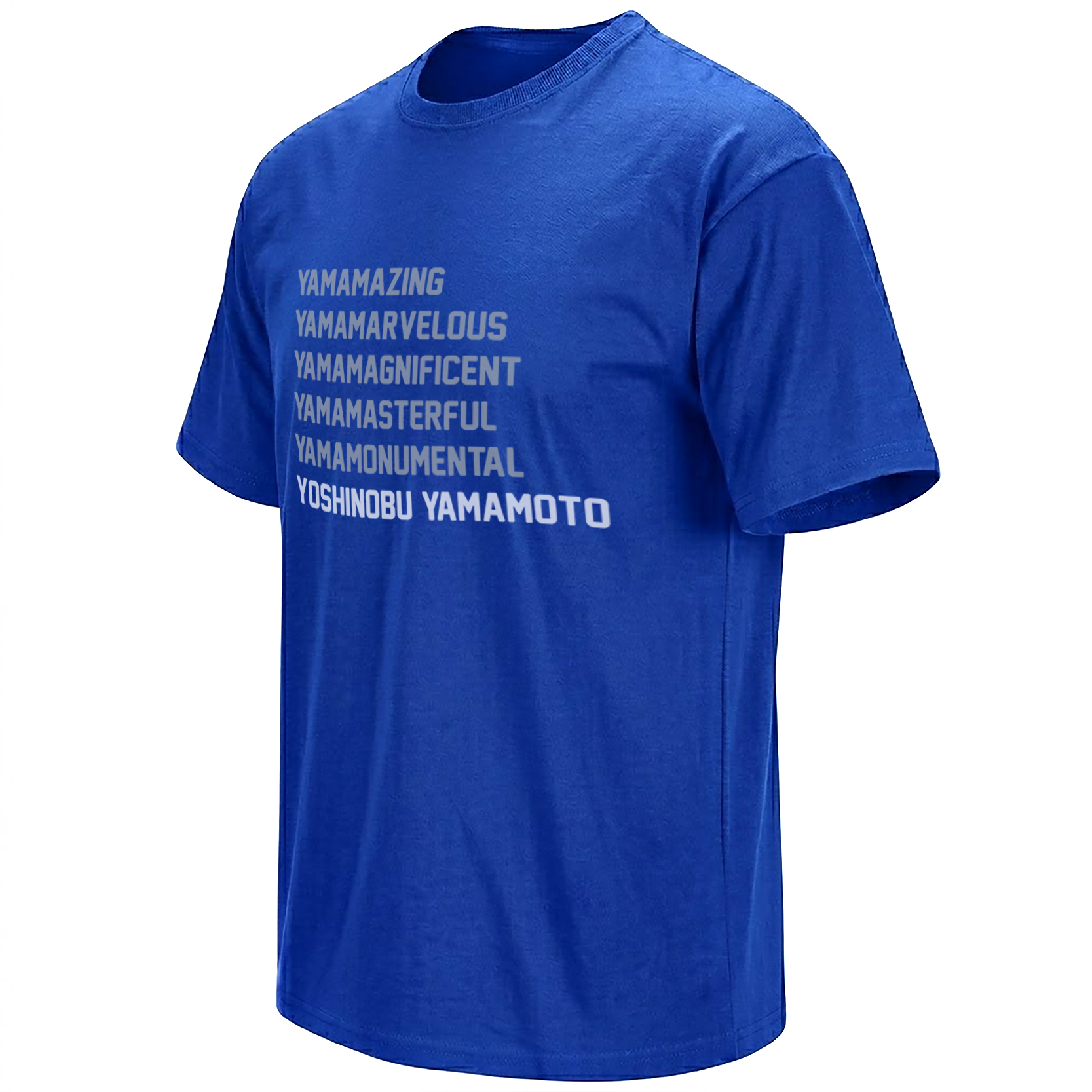
A minimal Dodgers-blue typography composition celebrating Yoshinobu Yamamoto’s pitching through five original expressions of admiration.
Explore the five-word graphic →The Actual October Performance Behind the Praise
Unlike the playful language of the design, the numbers from October 6 are precise. Yamamoto’s 10 strikeouts, seven innings, and one earned run are documented in MLB’s official Game 3 coverage. The performance carried Los Angeles into a position to clinch its Division Series the next night.
MLB’s official social coverage captured the strikeout sequence and the atmosphere surrounding another important October start. The original post below documents the real moment behind the design’s broader celebration of Yamamoto.
For an extended visual record of the same outing, MLB also published a video compilation of all ten strikeouts. It shows why the statistical line matters: different pitch selections, repeated execution, and a final strikeout that finished his evening in emphatic fashion.
From Game 3 to the National League Championship Series
By October 8, the immediate result of Yamamoto’s performance was clear. Los Angeles had eliminated Atlanta in four games and advanced to face Milwaukee. His Game 3 victory did not complete the series by itself, but it gave the Dodgers the advantage that Tyler Glasnow and the bullpen helped convert into qualification the following night.
For fans revisiting this postseason stretch, the Los Angeles Dodgers collection provides a broader visual archive of players and October moments. The MLB collection connects those designs with the rest of baseball’s postseason culture, while Yoshinobu Yamamoto-related designs focus on the pitcher himself.
Frequently Asked Questions
What does Yamamazing mean?
Yamamazing combines the opening sound of Yamamoto’s surname with “amazing,” creating an affectionate baseball wordplay expression.
What are the five superlatives on the shirt?
Yamamazing, Yamamarvelous, Yamamagnificent, Yamamasterful, and Yamamonumental.
How did Yamamoto perform in NLDS Game 3 in 2026?
He pitched seven innings against Atlanta on October 6, allowing one run on four hits while recording ten strikeouts.
Did the Dodgers advance to the 2026 NLCS?
Yes. Los Angeles defeated Atlanta in four NLDS games and advanced to face Milwaukee in the National League Championship Series.
Are the five superlatives official Yamamoto awards?
No. They are playful, unofficial expressions built around the pitcher’s surname, celebrating his overall skill and postseason reputation.
The Yamamazing typography design reflects a simple truth about baseball fandom: when a player repeatedly performs under pressure, supporters keep inventing new ways to describe what they have witnessed.
Yamamazing Yoshinobu Yamamoto Shirt celebrates the Dodgers ace through five inventive superlatives, minimalist royal-blue typography, and the growing admiration surrounding his October postseason performances.