Walker Jenkins Is Finally Here — and Minnesota’s Future Now Wears No. 11
The Twins spent years talking about Walker Jenkins in prospect language. Late August changed the vocabulary. First came the call-up, then the first hit, then the first homer — and Minnesota’s most anticipated young outfielder became a Major Leaguer in real time.
Target Field applauded Walker Jenkins before he had done anything in the Major Leagues. That may be the cleanest explanation of how long Minnesota had been waiting.
Jenkins made his MLB debut on August 28 after the Twins promoted the player they selected fifth overall in the 2023 Draft. MLB Pipeline had him ranked as Minnesota’s No. 1 prospect and the No. 15 prospect in baseball at the time of the call-up, but the numbers only explain part of the anticipation.
His first plate appearance ended with a 380-foot flyout and still drew another ovation. Later, Jenkins lined a 102.3 mph single into right field for his first Major League hit. He described the reaction afterward as giving him “straight chills.”
Three days later, the first homer arrived. Jenkins sent a 37.4 mph Zach McKinstry offering 388 feet to right, making one of the strangest pitches he may ever see responsible for one of the milestones he will remember longest.
Jenkins arrived in Minnesota with prospect rankings behind him. The standing ovations made something clearer: Twins fans were already treating him like part of the next era.
The First Homer Made the Future Feel Real
Prospect hype is built on projection. A Major League homer is physical evidence. When Jenkins rounded third after his first one on August 31, the moment provided Minnesota with an image that scouting reports could never quite supply.
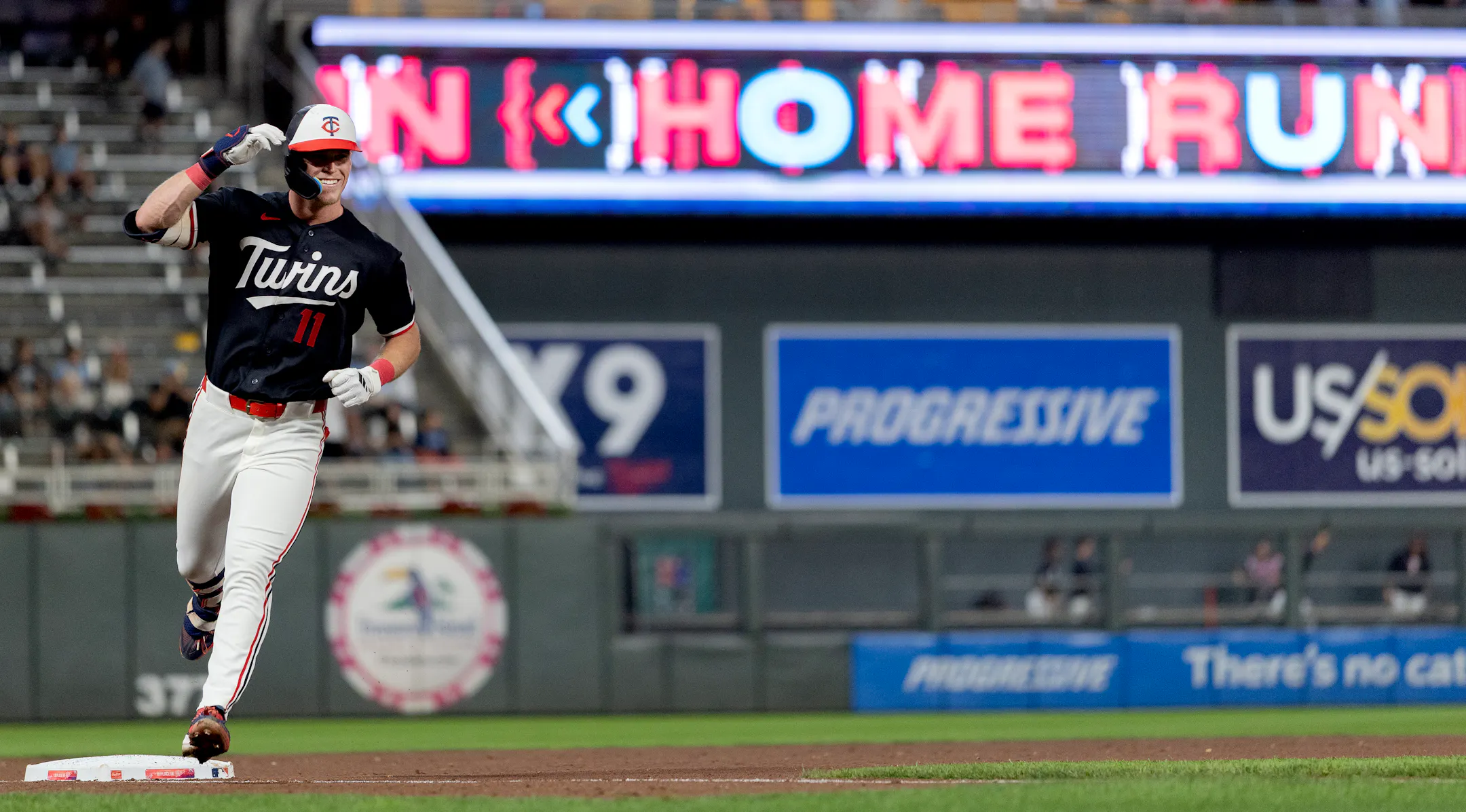
The homer did not suddenly complete his development. September has already shown the normal difficulty of adjusting to Major League pitching. That is what makes the moment useful as an artifact rather than a prediction. It records the instant Jenkins moved from “future Twin” to a player collecting firsts in a Minnesota uniform.
Why the USA Treatment Has Real Baseball Roots
The stars-and-stripes treatment in the USA Slugger design is not meant to claim Jenkins is currently playing for Team USA. Its connection is biographical.
Before professional baseball, Jenkins spent time inside the USA Baseball development system and was part of the 2021 18U National Team roster. The same group included several names who later became prominent young professional players, including Jackson Holliday and Druw Jones.
That history gives red, white and blue a different meaning around Jenkins. It points backward to the national-team stage and forward to the much larger stage he has now reached with Minnesota.
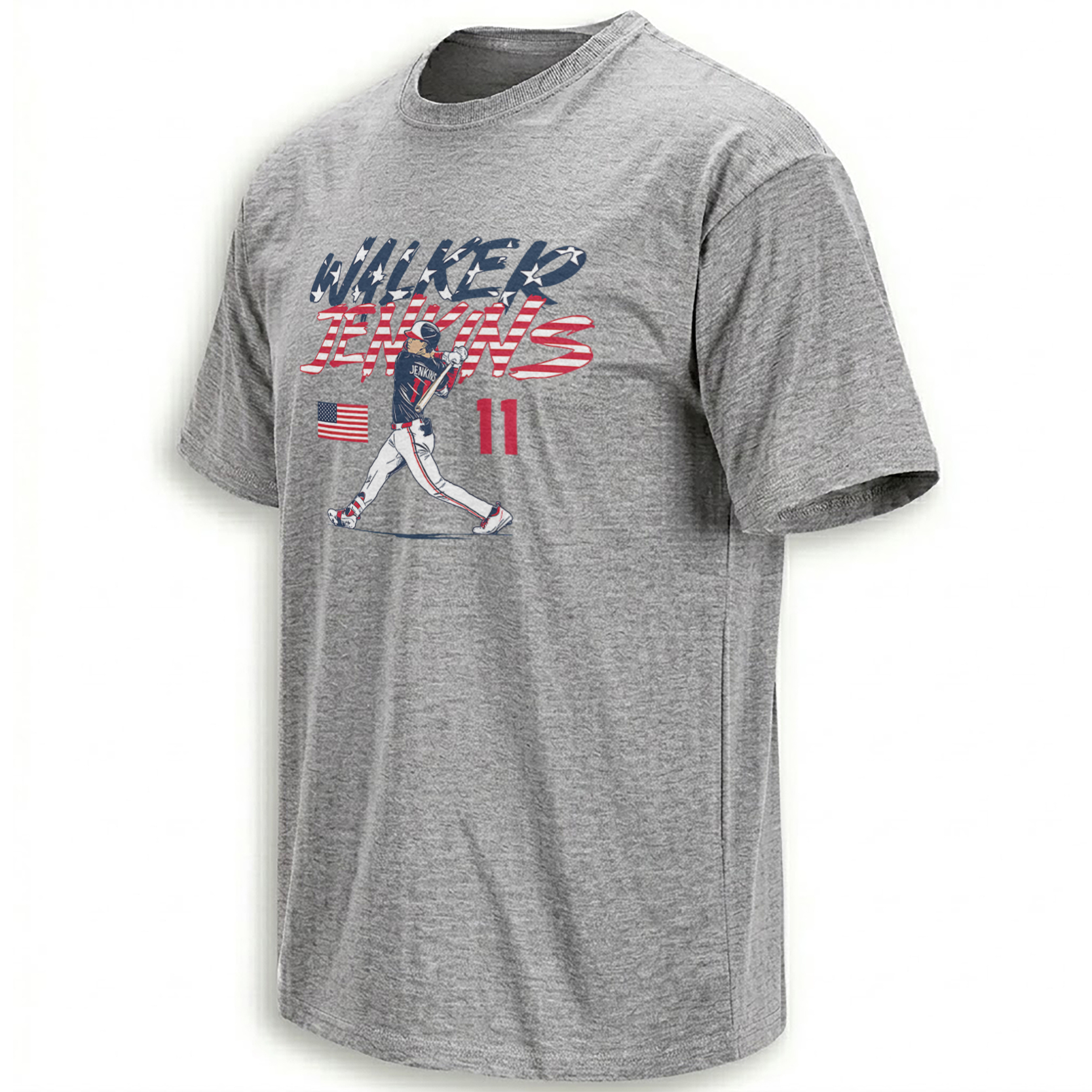
Red, navy and white create an immediate USA baseball read, while the isolated left-handed swing keeps Jenkins — rather than generic patriotic symbolism — at the center. No. 11 is especially useful because it makes the artwork unmistakably tied to his current Minnesota chapter.
No. 11 Already Has a Personal Story
Jenkins did not simply take the first available jersey number. His childhood preferences were complicated by Twins history: No. 6 is retired for Tony Oliva and No. 7 for Joe Mauer.
He ultimately chose No. 11 in honor of his wife, Lexi, who wore the number while playing high-school soccer. That small detail makes the number unusually personal for a rookie and gives the design a more specific timestamp than a generic prospect graphic.
The Call-Up Came After a Serious August Heater
Minnesota did not promote Jenkins simply because the calendar reached September. His bat forced the conversation.
Over an 18-game August stretch, Jenkins hit .411/.488/.795. Across 69 Triple-A games with St. Paul, he produced a .308/.407/.532 line. The month included his first professional multi-homer game and enough sustained damage to turn a likely future call-up into an immediate one.
That context matters because the Twins’ 2026 season has increasingly become about identifying what the next competitive core will look like. Jenkins does not have to rescue September for his debut to matter. His presence changes what Minnesota supporters are watching for.
From Prospect Rankings to a Twins Timeline
The wider Minnesota Twins collection now has a new young player around whom future moments can accumulate, while the broader MLB collection places Jenkins alongside the other prospects making the jump from pipeline rankings to Major League culture.
Jenkins-specific releases can also be followed through the Walker Jenkins product archive, where his debut, No. 11 identity and future milestones can form a visual timeline rather than one isolated rookie graphic.
Frequently Asked Questions
When did Walker Jenkins make his MLB debut?
Jenkins made his Minnesota Twins debut on August 28, 2026, at Target Field and recorded his first Major League hit that same night.
When did Walker Jenkins hit his first MLB home run?
His first Major League homer came on August 31 against Detroit, a 388-foot drive to right field.
Why is Walker Jenkins connected to USA Baseball?
Jenkins participated in USA Baseball’s youth national-team system and appeared on the 2021 18U National Team roster before beginning his professional career.
Why does Walker Jenkins wear No. 11 with Minnesota?
Jenkins chose No. 11 in honor of his wife Lexi, who wore the same number in high-school soccer, after some of his childhood numbers were unavailable because of Twins retired numbers.
Why was Jenkins one of Minnesota’s most anticipated call-ups?
He was the fifth overall selection in the 2023 Draft, Minnesota’s No. 1 prospect and one of baseball’s highest-ranked young players when the Twins promoted him.
The USA Slugger Swing graphic connects Jenkins’ earlier national-team roots with his new No. 11 Twins identity, while the Minnesota Twins archive can follow whatever comes after the first hit and first homer.
Walker Jenkins USA Slugger Swing Shirt connects the Twins rookie’s USA Baseball background with his No. 11 Minnesota arrival, left-handed swing, first MLB hit and first Major League home run.