
“Rent Is Due” Became the Internet’s Funniest Measure of Maximum Effort
The phrase does not usually mean that someone needs to call a landlord. Online, it means a performer, creator or delightfully unhinged stranger is behaving as though an ordinary effort will no longer cover the bills.
In July 2026, “Rent Is Due” returned to social feeds through a particularly internet-ready visual: an older man on a boardwalk wearing an enormous downward-arrow shirt. The image is funny before anyone supplies context. The arrow is oversized, strangely authoritative and pointed at exactly the place viewers expect the joke to land.
Once the caption entered circulation, the photograph became another branch of a much older online expression. “Rent was due” or “rent is due” describes someone performing with extraordinary urgency—singing, dancing, acting, dressing or committing to a bit as though failure carries immediate financial consequences.
The wording grew through Stan Twitter and K-pop fan communities in the late 2010s before expanding across celebrity clips, movie performances and everyday viral encounters. Its humor comes from applying the language of monthly bills to an effort so intense that viewers can almost see the deadline approaching.
The boardwalk image gives the phrase a new visual punchline
The boardwalk photograph works because it does not look professionally staged. It carries the accidental specificity that fuels durable memes: a public setting, an unexpected outfit, an anonymous protagonist and one graphic symbol that explains almost nothing while demanding attention.
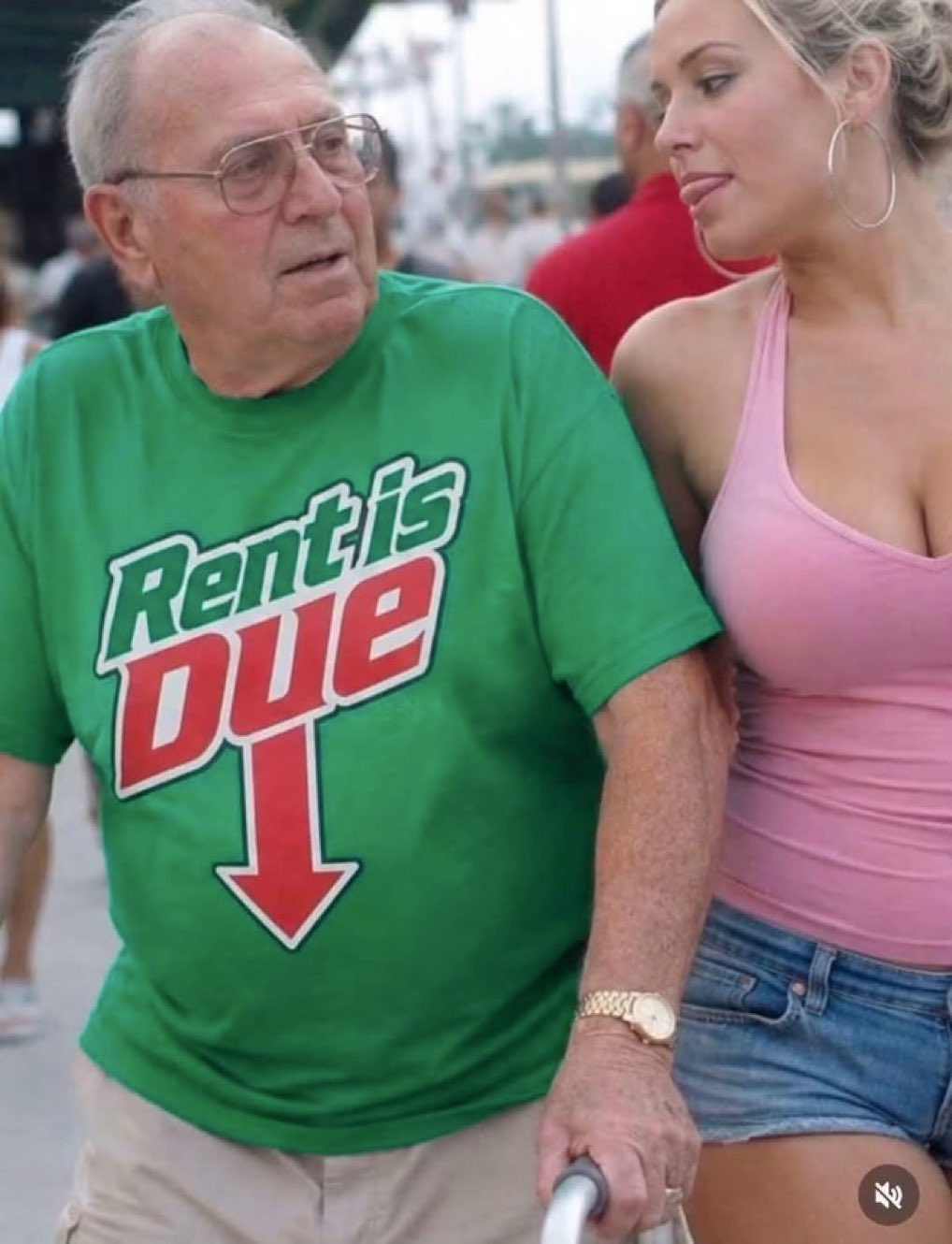
The arrow also gives the meme a rare advantage: it can survive without a long caption. It resembles old roadside signage, bargain-store graphics and crude internet annotation at the same time. The visual says “look here” with absolute confidence, even though the reason for looking remains deliberately ridiculous.
Why “rent was due” became such flexible internet slang
The phrase originally became useful because it could praise talent without sounding like formal criticism. A dancer did not merely perform well; the rent was due. An actor did not simply dominate a scene; the utilities were apparently about to be disconnected. Exaggerated financial stakes converted admiration into communal comedy.
That flexibility allowed the expression to move beyond music fandom. It now appears beneath athletic highlights, dramatic acting clips, strange public behavior, ambitious cooking videos and creators returning to the exact style of content their audiences reward.
It can also be teasing rather than complimentary. When someone appears to be trying conspicuously hard, “rent is due” recognizes the hustle while gently pointing out the desperation. Tone and context decide whether it means “this performance is incredible” or “someone urgently needs engagement.”
From reaction image to wearable visual artifact
The graphic adaptation preserves the meme’s bluntest elements: heavy uppercase lettering, the oversized directional symbol and the visual simplicity of unofficial signage. There is no attempt to explain the entire joke. Like the strongest reaction images, it trusts recognition and timing.
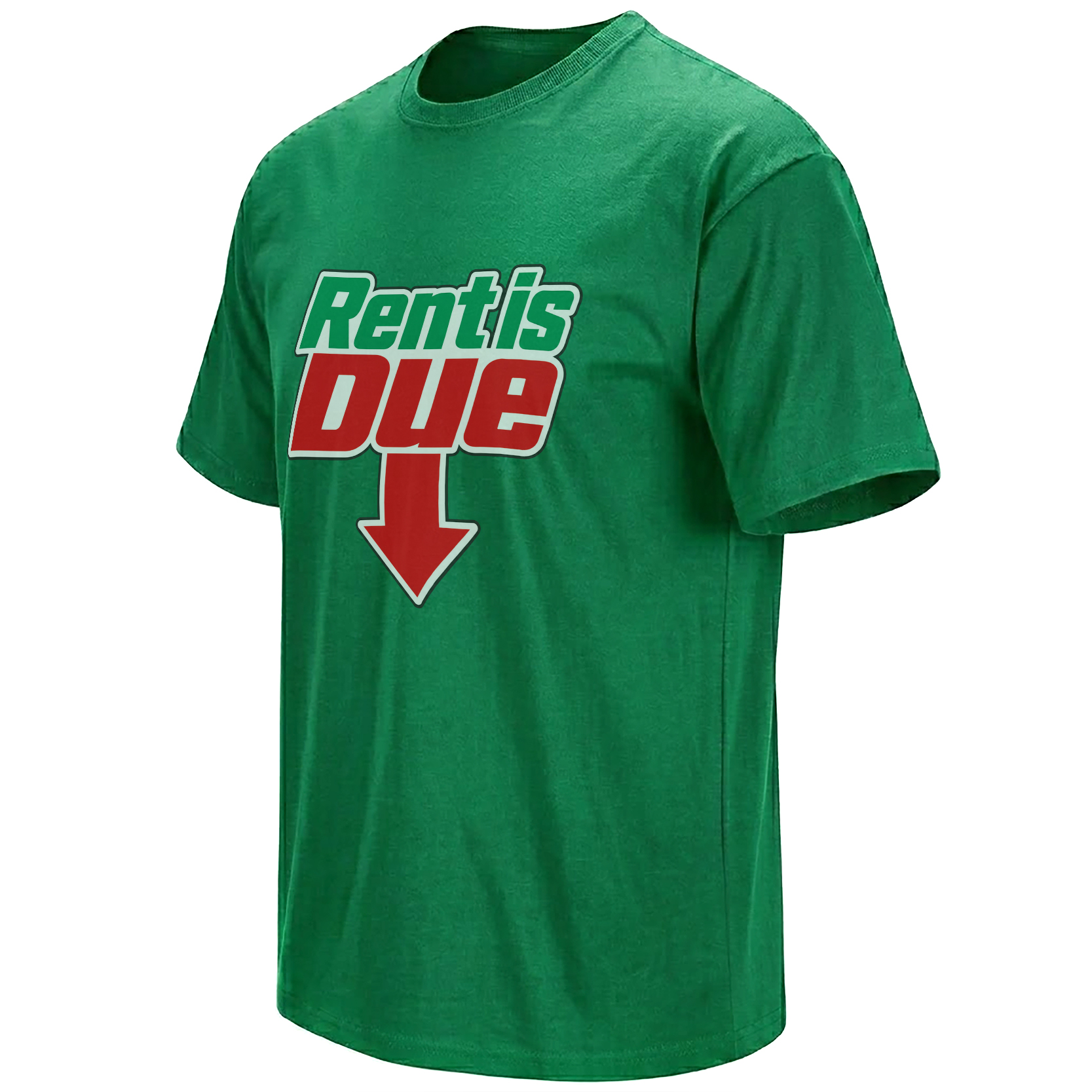
A graphic reconstruction of the boardwalk sighting, preserving the blunt lettering and inexplicably commanding arrow that made the image memorable.
View the meme piece →This is where the design functions as an internet timestamp. It records not only a photograph but the audience behavior around it: noticing one absurd detail, isolating it, naming the energy and giving strangers a compact joke they can reuse.
Why the meme still works after the first laugh
“Rent is due” remains durable because its meaning keeps expanding while its structure stays simple. The phrase can describe excellence, desperation, theatrical commitment or someone simply doing far too much. The audience supplies the missing story.
That interpretive gap is also why the arrow matters. It points toward a punchline without closing it. Different viewers can read the same design as absurd streetwear, self-deprecating hustle culture or a reference to the boardwalk image moving through feeds in 2026.
As newer screenshots and phrases enter the cycle, Ellie Shirt’s newest design archive serves as a running record of how quickly internet language becomes visual culture.
Frequently Asked Questions
What does “rent is due” mean as internet slang?
It describes someone performing or behaving with exceptional urgency and energy, as though an important payment depends on the result.
Where did the “rent was due” expression become popular?
The expression was popularized through Stan Twitter and K-pop fan communities in the late 2010s before spreading into broader celebrity, film and viral-video commentary.
Why is there a downward arrow in this meme?
The arrow comes from the boardwalk photograph and works as an intentionally blunt visual command. It points toward the joke without explaining why viewers should look there.
Is “rent is due” praise or an insult?
It can be either affectionate praise or light teasing. Context determines whether the speaker is celebrating extraordinary effort or joking that someone is trying conspicuously hard.
The Rent Is Due downward-arrow graphic keeps the visual joke intact: three words, one oversized symbol and enough unexplained urgency to restart the meme whenever it appears.
Rent Is Due Shirt translates the viral boardwalk image and familiar Stan Twitter phrase into a blunt downward-arrow graphic about maximum effort, comic desperation and internet hustle language.