The Oldest Baby Boomers Turn 80—and “Badass Generation” Style Is Answering Back
Born between 1946 and 1964, the generation routinely reduced to an internet punchline is reaching a new milestone with its taste for loud graphics, gallows humor and unapologetic self-definition intact.
In 2026, the oldest members of the Baby Boomer generation turn 80. It is a clean demographic fact with an unexpectedly strong cultural charge: a cohort long associated with postwar expansion, television’s rise, rock-and-roll rebellion and decades of generational argument is entering its ninth decade.
The milestone complicates the flat “OK Boomer” caricature that dominates social media. “Boomer” may function online as a shorthand for being out of touch, but the real cohort covers people born across an 18-year span, with different formative experiences, politics and relationships to technology.
Designs built around “The Badass Generation” answer that caricature in the bluntest possible language. They do not ask younger audiences for approval. Instead, they turn the official 1946–1964 range into a badge and surround it with skulls, roses, denim tones and the visual vocabulary of motorcycle patches.
Why 2026 changes the emotional meaning of “Baby Boomer”
People born at the beginning of the commonly used Baby Boomer range—1946 through 1964—reach age 80 during 2026. The youngest members of the cohort turn 62.
Generational labels are always imperfect. They compress millions of individual lives into a shared date range. Yet anniversaries give those labels fresh emotional weight. For Boomers, 2026 invites retrospection without requiring surrender to nostalgia.
This was the first American generation to grow up alongside television’s dramatic expansion. Its members lived through shifting music, protest, war, civil-rights struggles, women’s liberation, suburban growth and the transition from analog media into the digital world. Not everyone experienced those changes in the same way, but the scale of transformation helps explain why resilience features so prominently in Boomer self-mythology.
The skull is less about death than refusal
In biker graphics and vintage tattoo culture, the skull rarely functions as a quiet symbol. It suggests mortality confronted head-on, toughness earned over time and identity that does not disappear with age. Adding flowers softens the composition without making it delicate; the contrast creates a specifically rebellious form of femininity.
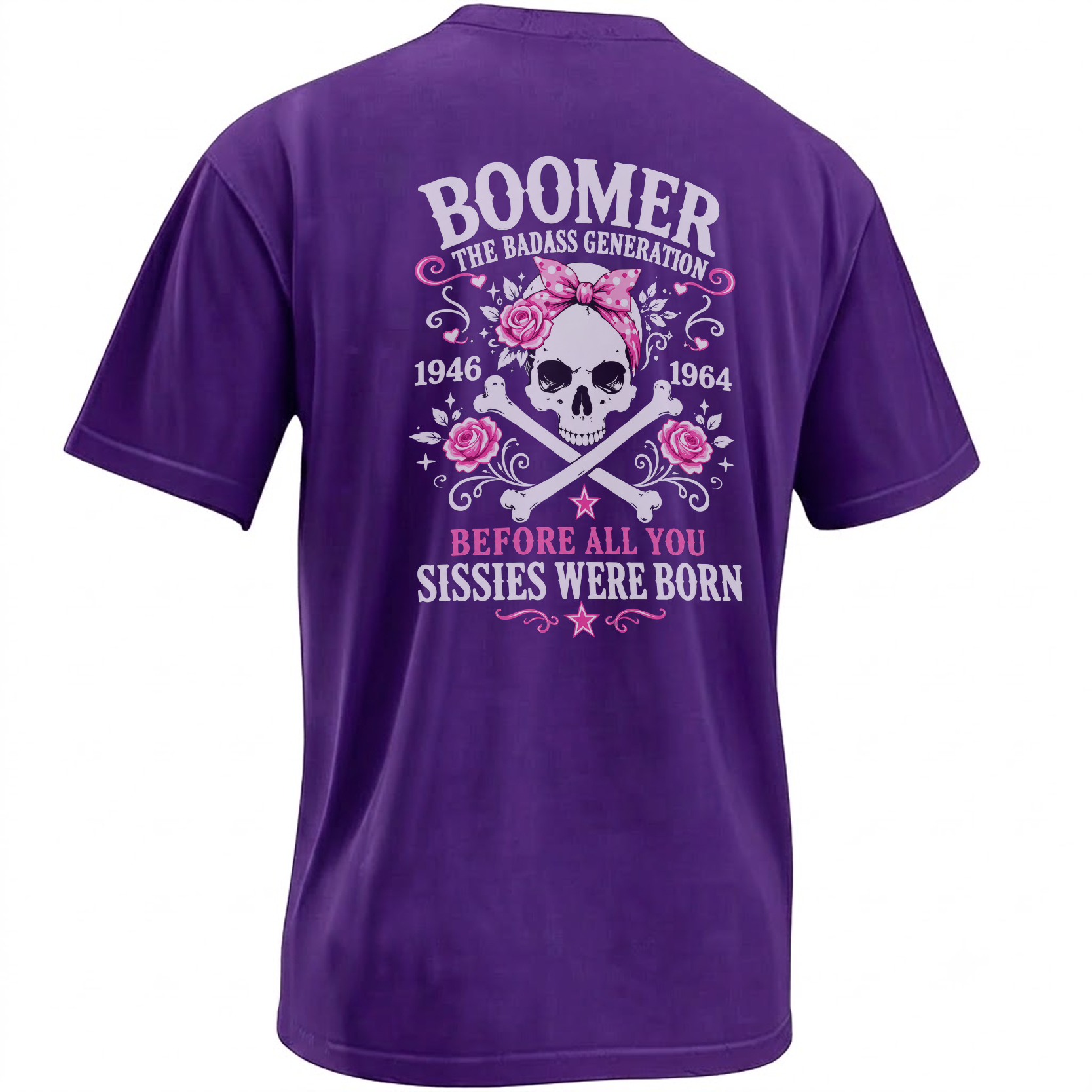
Skull imagery, floral accents and the 1946–1964 date range combine like a back patch—part generational badge, part refusal to become visually invisible.
View the generational piece →The back-print placement matters. Rather than behaving like a small commemorative emblem, the image occupies the garment like a club insignia or concert graphic. It reads from a distance and transforms the generation label into public identity.
Its vintage distressing also resists the polished language of contemporary lifestyle branding. The artwork appears worn in rather than newly invented, connecting the message to old tour shirts, roadside Americana and hand-painted motorcycle graphics.
How women reshape the “badass Boomer” image
Tough-generation merchandise has often defaulted to masculine cues: engines, flags, heavy-metal lettering and aggressive slogans. This design retains the skull but places it inside a more layered visual language. Flowers and sweeping ornamental forms introduce beauty without removing force.
That distinction matters for women who came of age while expectations around work, marriage, family and independence were being renegotiated. The design is not a complete social history, but it reflects a recognizable generational claim: aging does not require becoming quiet, neutral or visually absent.
Generational humor works because the argument never ends
The internet routinely turns age cohorts into teams. Boomers mock participation trophies and phone dependence; younger generations answer with housing costs, workplace memes and “OK Boomer.” Much of the exchange is unserious, but it provides ready-made language for identity.
“The Badass Generation” participates in that argument without attempting to settle it. Its exaggeration is part of the appeal. It functions as a toast, a comeback and an inside joke among people who recognize the 1946–1964 dates immediately.
As milestone birthdays create new opportunities for generational storytelling, Ellie Shirt’s newest cultural design archive tracks how personal histories, internet humor and vintage graphic traditions continue to overlap.
Frequently Asked Questions
What years define the Baby Boomer generation?
The commonly used Baby Boomer range includes people born from 1946 through 1964, following the major rise in births after World War II.
Why is 2026 a milestone year for Baby Boomers?
People born in 1946, at the beginning of the Baby Boomer range, turn 80 during 2026. The youngest Boomers, born in 1964, turn 62.
Why do Boomer graphics often use skull imagery?
Skulls draw from motorcycle, tattoo and rock-merch traditions, where they commonly represent toughness, mortality confronted directly and identity that persists with age.
What does “The Badass Generation” mean in this design?
It is a humorous, self-assertive generational slogan that reframes the 1946–1964 cohort around resilience, rebellious memory and pride rather than online stereotypes.
The Boomer Badass Generation skull graphic turns the 1946–1964 timeline into a back-patch-style cultural marker for a cohort reaching 80 without surrendering its visual edge.
Boomer The Badass Generation Shirt marks the 1946–1964 cohort through a women-focused skull, floral details and vintage back-print styling—an unapologetic visual response to how aging is discussed in 2026.