
Miles Mikolas Made the Bunt Cool Again for One Night
Washington entered extra innings in Philadelphia trying to stop a seven-game losing streak. It escaped with a six-run 11th, a 10–4 win and the least probable offensive hero on the roster: starting pitcher Miles Mikolas, summoned off the bench to put down an RBI bunt.
There was a time when seeing a pitcher square around in a National League game barely required explanation. By 2026, the universal designated hitter has made the image feel almost archaeological. That is why Miles Mikolas walking to the plate in the 11th inning on August 5 immediately looked strange enough to stop baseball fans mid-scroll.
Washington had already broken a 4–4 tie when CJ Abrams drove home the automatic runner with a triple. But the Nationals were operating with a depleted bench, and manager Blake Butera still needed another bat. Instead, he called on Mikolas — a 37-year-old right-handed pitcher whose normal assignment involved trying to prevent runs rather than manufacture one.
Mikolas squared. Philadelphia brought the defense in. The bunt landed exactly where Washington needed it, allowing another run to score and pushing the inning toward what eventually became a six-run avalanche. The Nationals won 10–4, snapped a seven-game losing streak and accidentally created one of their most enjoyable pieces of baseball internet all season.
The fun was not that a pitcher suddenly became a great hitter. The fun was watching an almost extinct baseball situation return and immediately matter.
Why Was Miles Mikolas Even Batting?
That question became part of the joke almost immediately. Since MLB introduced the universal designated hitter, pitchers hitting for themselves has disappeared from the everyday rhythm of National League games. A modern box score can go weeks without asking fans to think about pitcher offense at all.
Washington’s roster situation created the exception. The bench had been thinned during a long extra-inning game, and when the Nationals needed another hitter in the 11th, Mikolas became the unusual solution. He entered as a pinch hitter rather than because the lineup had organically reached the pitcher’s spot.
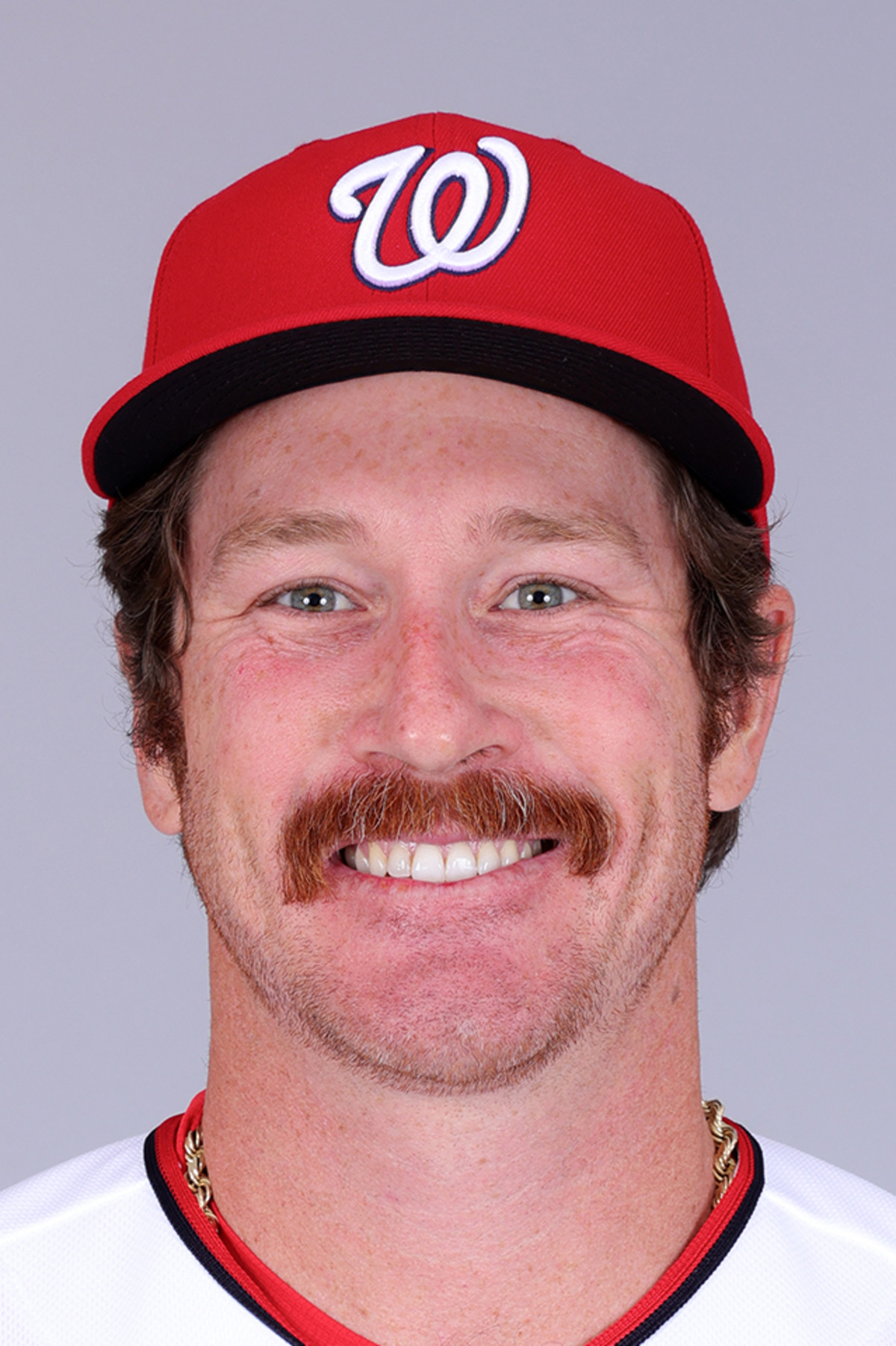
Miles Mikolas is listed by MLB as a Nationals pitcher in 2026. His unexpected August 5 pinch-hit appearance temporarily revived a style of National League baseball that largely vanished with the universal DH.
Mikolas at least carried an unusual advantage for a modern pitcher: history. He spent years in the National League before the universal DH and accumulated more than a hundred career plate appearances. He was not being asked to rediscover an entirely foreign movement. He was being asked to retrieve an old part of his baseball memory at exactly the moment Washington needed it.
A Tiny Bunt Produced a Huge Internet Reaction
The actual contact was deliberately modest. A squeeze or sacrifice bunt is baseball reduced to placement and timing: deaden the ball, force the defense to move, give the runner enough space to score. There is no launch-angle mythology and no opportunity to admire the flight.
Yet online, the contrast made the moment bigger. A pitcher had been sent to the plate in 2026. He executed the assignment. The run scored. Suddenly old arguments about pitcher hitting returned as comedy, nostalgia and disbelief all at once.
The Nationals thread quickly became an appreciation page for the lost art itself. Fans praised how cleanly Mikolas executed the bunt; baseball-wide discussion joked about pitchers hitting again and treated the plate appearance as the kind of bizarre event that belongs on an “I did not expect this in 2026” bingo card.
“Squeeze Bunts Win Games” Sounds Like Baseball Advice From Another Century
That is precisely why the phrase works. Modern baseball language usually emphasizes velocity, barrel rate, exit velocity and home-run distance. “Squeeze bunts win games” belongs to a different vocabulary: dirt on the uniform, a runner breaking from third and the satisfaction of making the defense field a ball it does not want to field.
It also connects to something Washington has already done this season. In May, the Nationals used three bunts in one inning during a comeback against Milwaukee, including a safety squeeze. This team has occasionally treated small ball not as nostalgia but as a practical way to stress a defense.
The bunt has become rare enough that successful execution now feels visually distinctive. Mikolas’ plate appearance worked because the tactic, the personnel and the inning were all improbable at the same time.
The Graphic Treats the Bunt Like a Piece of Baseball Folklore
The Squeeze Bunts Win Games Shirt does not need to exaggerate what happened. The joke is already contained inside the basic image of Mikolas holding a bat.
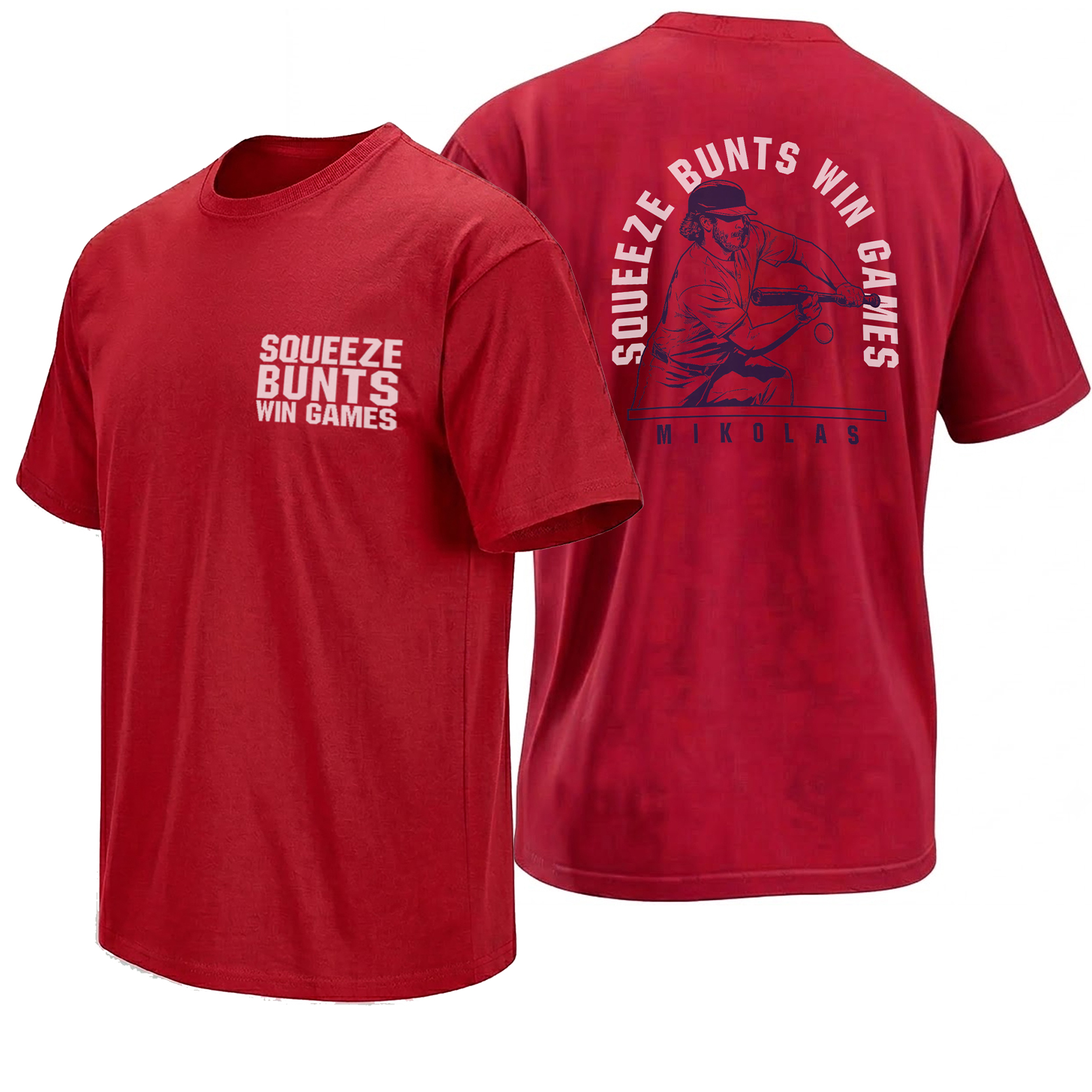
Visually, the slogan works because it sounds definitive even though the situation was absurdly specific. That gives the typography the quality of an old dugout rule painted on a clubhouse wall. The front establishes the punch line; the back expands the play into a fuller commemorative composition.
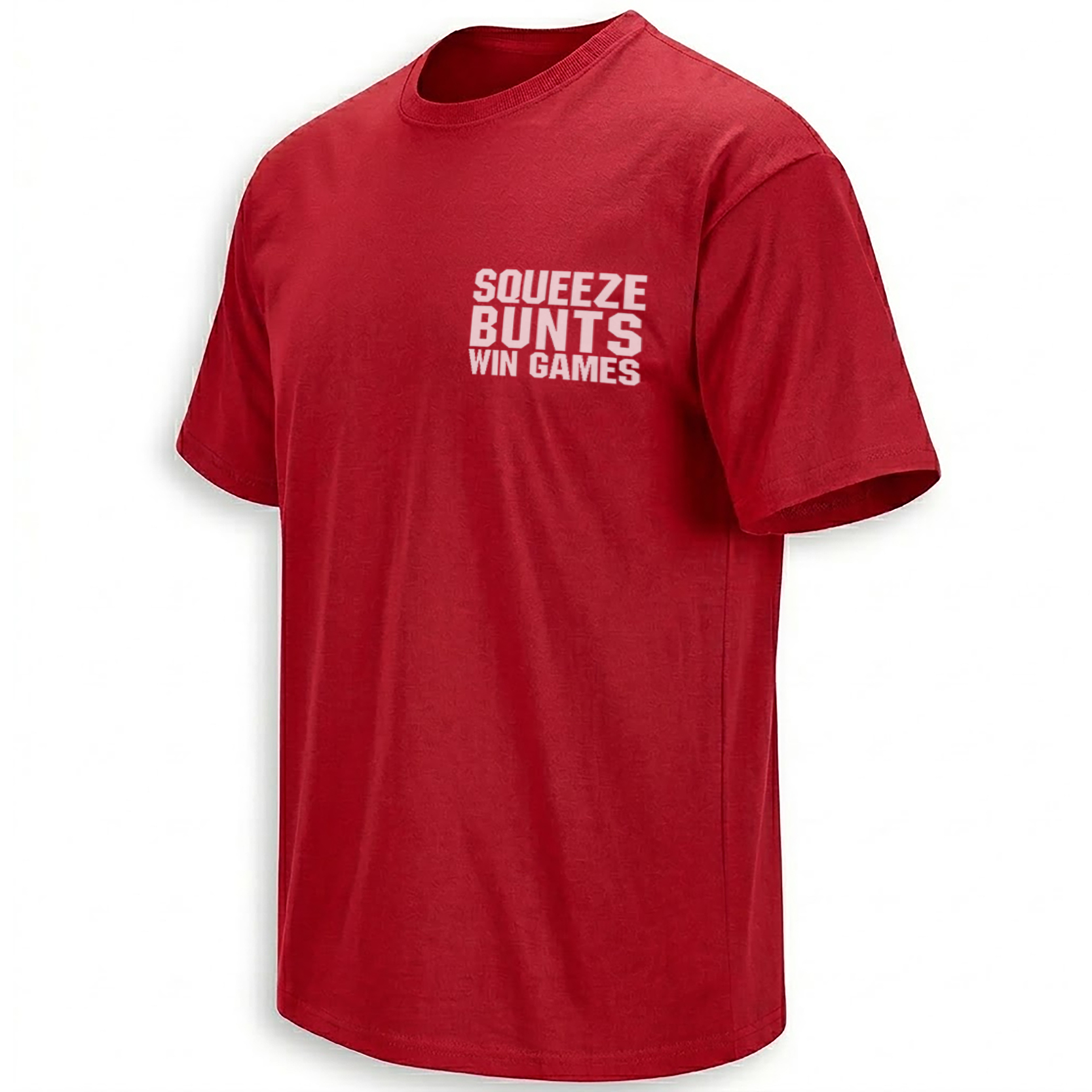
The slogan reads like an old coaching maxim revived by one very modern, very strange extra-inning game.
See the front graphic →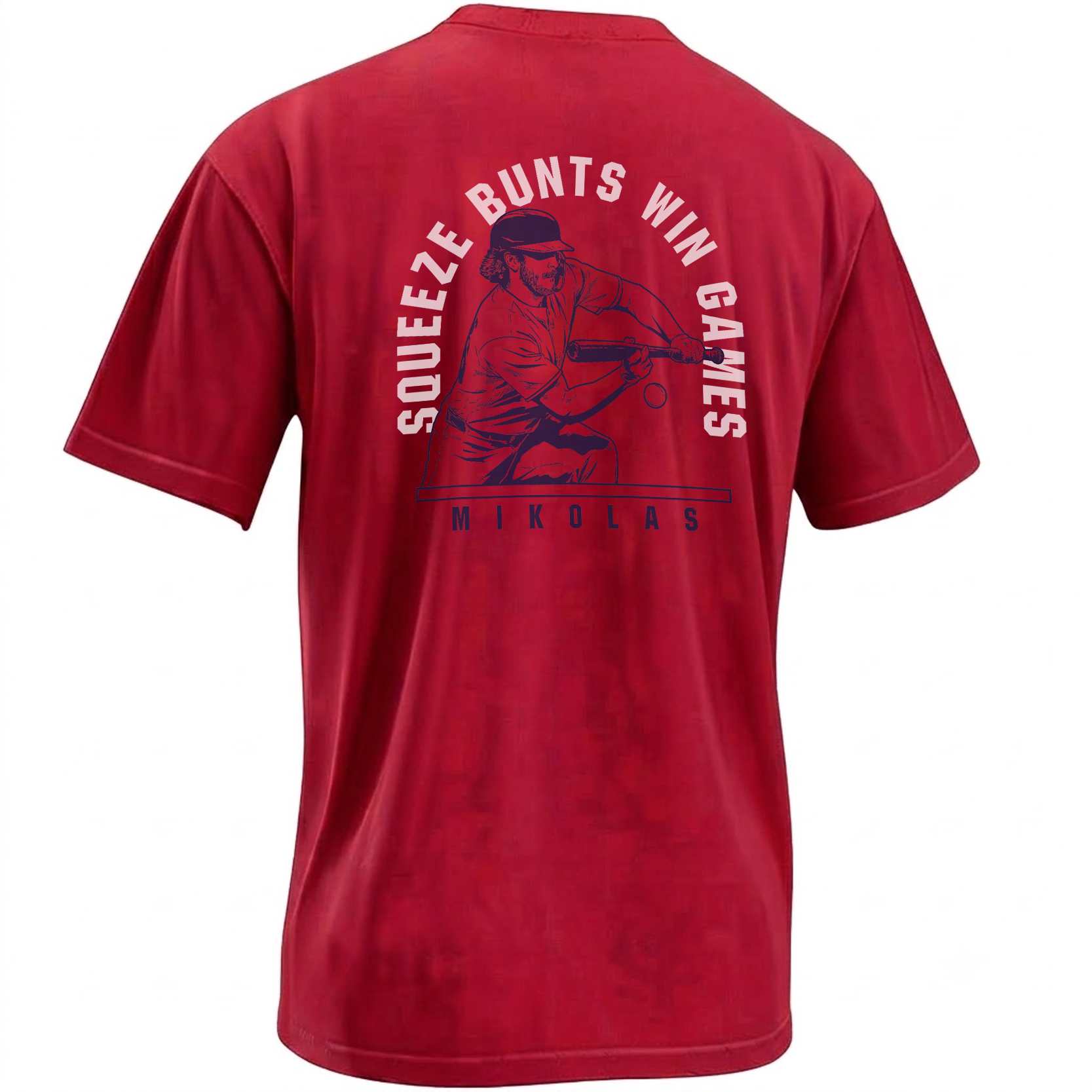
The larger composition gives the bunt the scale of a legendary play even though its charm came from doing something intentionally small.
See the back graphic →Why This Moment Fits the Nationals’ 2026 Season
Washington has lived through enough volatility this year that a perfectly executed pitcher bunt almost feels appropriate. The win in Philadelphia did not solve the entire season, and Mikolas followed the moment by struggling on the mound the next night. Baseball rarely allows one funny highlight to rewrite everything around it.
But that is why isolated moments become valuable to fans. They do not need to represent a championship season. Sometimes they simply identify the night a losing streak ended and everyone briefly remembered why weird baseball is often the best baseball.
The wider Washington Nationals collection works as a running archive of those peculiar 2026 snapshots, while the broader MLB collection collects the sort of league-wide moments that become memorable precisely because nobody could have predicted them before first pitch.
Frequently Asked Questions
When did Miles Mikolas make the RBI bunt for the Nationals?
Mikolas pinch-hit in the 11th inning on August 5, 2026, during Washington’s road game against the Philadelphia Phillies.
Why was pitcher Miles Mikolas batting?
Washington had a depleted bench deep into extra innings, creating the unusual situation in which the veteran pitcher was used as a pinch hitter.
What happened after Mikolas’ bunt?
The bunt drove in a run during Washington’s six-run 11th inning. The Nationals eventually won 10–4 and ended a seven-game losing streak.
Why did the play go viral?
Pitchers rarely bat in the universal-DH era, so seeing a veteran pitcher enter as a pinch hitter and successfully execute an RBI bunt felt both nostalgic and improbable.
What does “Squeeze Bunts Win Games” reference?
The slogan transforms Mikolas’ successful extra-inning bunt into tongue-in-cheek old-school baseball wisdom, celebrating the precision and absurdity of the play.
The Squeeze Bunts Win Games graphic preserves the night a Nationals pitcher stepped into a modern MLB batter’s box and briefly made small ball feel like the center of the baseball universe.
Squeeze Bunts Win Games Shirt captures Miles Mikolas’ improbable 11th-inning RBI bunt for Washington on August 5, 2026 — a rare pitcher-at-bat moment that helped turn a Nationals win into instant baseball folklore.