King of the Artists: Why Luffy’s Hand-Drawn Doodle Energy Belongs to One Piece Fan Culture
Monkey D. Luffy is usually introduced as the future King of the Pirates. Inside global fan-art culture, he has become something else as well: one of anime’s most endlessly redrawn characters, capable of surviving every sketchbook, doodle style and imaginative reinterpretation.
Luffy has never required perfect lines. A curved smile, round eyes, a scar beneath the left eye and the unmistakable straw hat are often enough for a drawing to become recognizable. That simplicity is one reason he travels so easily through notebooks, classroom margins, digital tablets and fan-made posters.
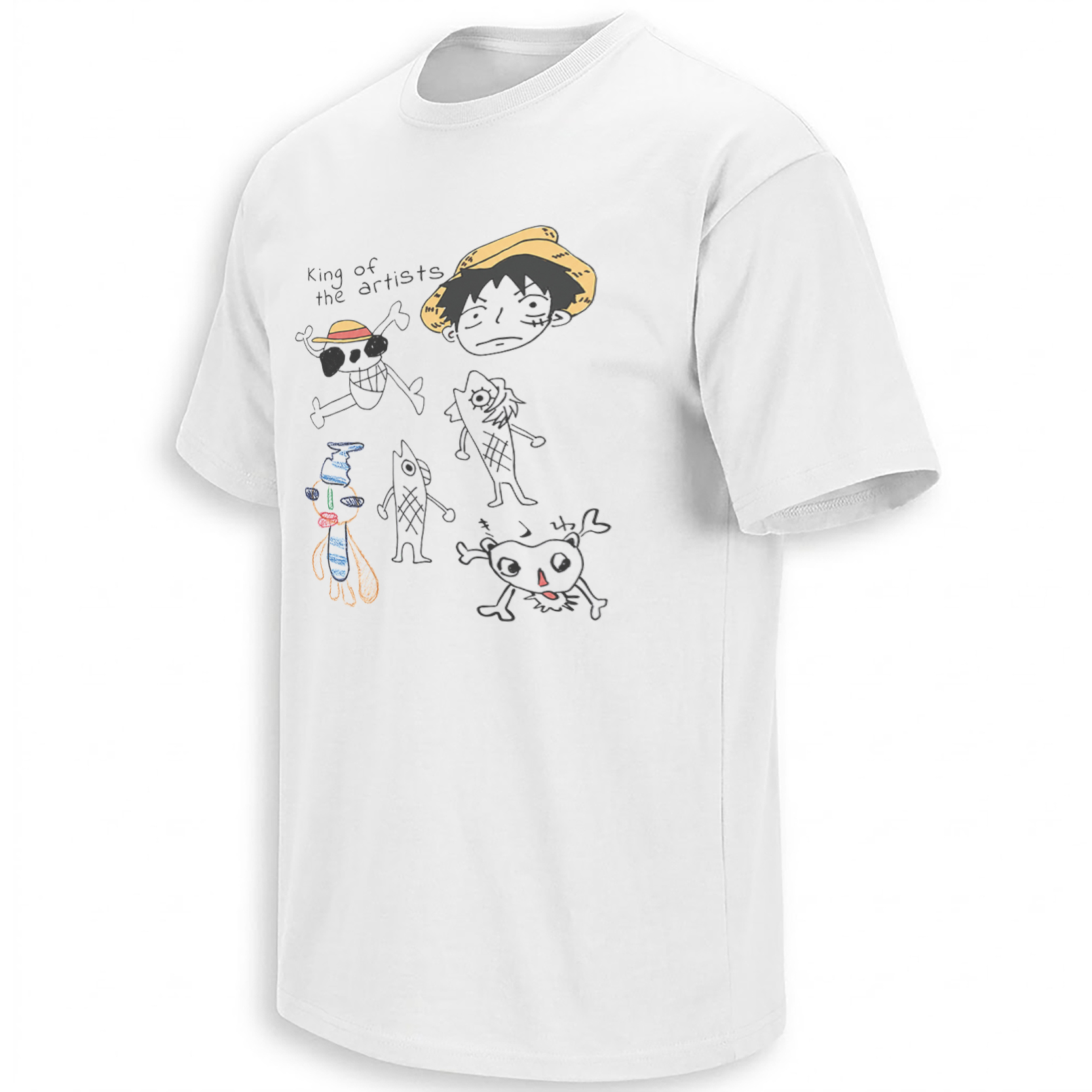
The King of the Artists design treats that creative afterlife as the main story. Rather than presenting Luffy through a polished anime frame, it surrounds him with the marks of an active sketchbook: loose lines, miniature symbols, handwritten energy and the feeling that the page continued growing after the central portrait was finished.
This approach fits One Piece because the series itself has never treated visual perfection as more important than personality. Eiichiro Oda’s world is filled with exaggerated bodies, extreme expressions, strange silhouettes and emotional reactions that stretch beyond realistic anatomy. The art remains coherent because every distortion serves character.
Luffy is easy to recognize but impossible to contain, which makes him the ideal character for an artwork built from unfinished lines and creative interruptions.
Why Luffy Invites People to Draw Him
Some fictional characters depend on complicated armor, precise costume details or highly controlled proportions. Small mistakes can make the entire image feel wrong. Luffy’s visual identity is more forgiving.
The straw hat creates a clear outer symbol. His hair can be rendered through a series of quick spikes, his face through a wide expression and his body through the relaxed posture associated with someone who refuses to behave like a traditional hero.
This does not mean drawing Luffy well is effortless. It means the character remains alive even when interpreted through different skill levels. A child’s simple sketch, an experienced illustrator’s ink portrait and a chaotic fan doodle can all preserve the same essential personality.
That accessibility is central to anime fan culture. Drawing becomes a form of participation. The fan does not merely watch Luffy’s journey; the fan recreates him, changes the pose and places familiar symbols around him.
“King of the Artists” Changes the Familiar Title
Luffy’s declared goal is to become King of the Pirates. Replacing “Pirates” with “Artists” creates a playful title without removing the original ambition. The phrase imagines creativity as another kind of ocean: open, unpredictable and impossible to control through a single correct route.
The wording also reflects the extraordinary volume of One Piece fan art produced around the world. Luffy belongs to professional illustrators, tattoo artists, manga students, mural painters, digital creators and casual fans drawing during spare moments.
Each artist changes the visual surface while preserving a recognizable emotional core. That is similar to the way Luffy forms alliances throughout the story. He enters different islands and cultures without becoming less himself.
Uneven lines communicate motion and human touch. Red, blue and yellow recall Luffy’s most familiar color language, while the surrounding mini-doodles make the piece feel collected over time rather than produced as a single polished poster.
Watch a Luffy Drawing Develop Directly
The drawing tutorial below demonstrates how quickly Luffy’s identity emerges from a small group of visual anchors. The straw hat, eyes, hair and smile become recognizable before the illustration reaches its final level of detail.
The video is embedded directly in the blog, allowing readers to watch the drawing process without opening a separate YouTube page.
One Piece Day Shows How Far the Image Travels
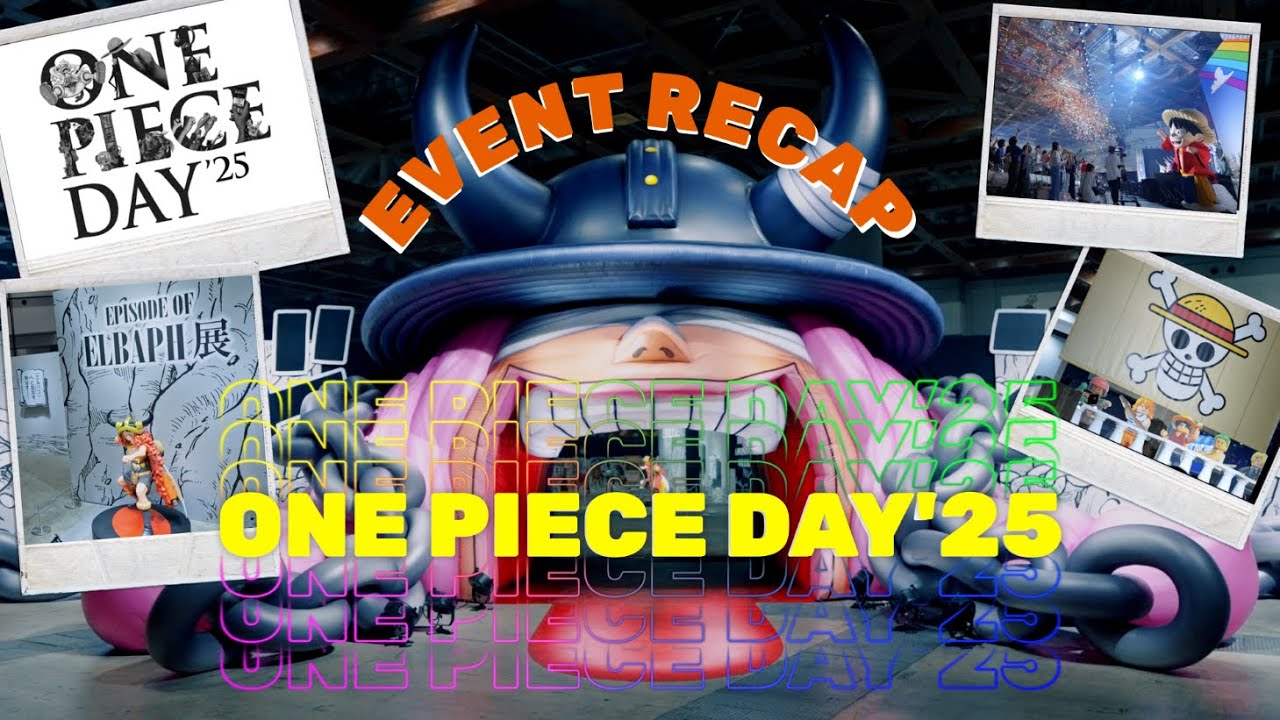
One Piece is no longer experienced through manga pages and weekly anime broadcasts alone. ONE PIECE DAY brings together animation, games, merchandise, live stages and fan participation in one official cultural event.
The official event recap below provides an external visual source beyond the product artwork. It shows fans moving through exhibitions, character displays and environments built around the series’ visual language.
Oda’s Art Has Always Valued Expression Over Restraint
One Piece would lose much of its personality if every face, body and reaction followed a controlled house style. Oda stretches mouths during laughter, changes proportions for comedy and allows characters to become almost abstract when emotion reaches its highest point.
That flexibility gives fan artists permission to experiment. A Luffy drawing can become more cartoonish, more serious, more chaotic or more minimal without automatically losing contact with the source character.
The doodle style therefore does more than make the graphic appear casual. It reflects a deeper artistic principle inside One Piece: emotional truth can matter more than visual realism.
Freedom Is the Link Between Luffy and Drawing
Luffy’s understanding of the Pirate King is closely connected to freedom. He does not seek the title only as a form of political authority. He associates it with the ability to travel, choose companions and live without accepting the boundaries imposed by others.
Drawing provides a smaller version of that freedom. A blank page offers no required route. The artist can build one large portrait, many small jokes, unfinished shapes or visual references that only another fan may recognize.
That parallel explains why the King of the Artists phrase feels more meaningful than a simple pun. Luffy’s personality and the act of doodling share the same refusal to remain overly controlled.
A Wearable Sketchbook for One Piece Fans
Traditional character graphics often isolate one dramatic pose. The doodle format works differently. It rewards closer viewing because secondary marks, handwritten details and small visual references remain distributed around the central figure.
The design becomes a wearable sketchbook page rather than a conventional poster. From a distance, the viewer recognizes Luffy. At closer range, the surrounding drawing language becomes part of the experience.
The complete One Piece collection brings together other character moments, symbols and fan-culture interpretations. The newest collection places this piece among the latest cultural graphics added to Ellie Shirt.
Frequently Asked Questions
What does “King of the Artists” mean?
It reworks Luffy’s goal of becoming King of the Pirates into a celebration of fan art, drawing and the creative freedom surrounding One Piece.
Why is Luffy especially popular in doodle art?
His straw hat, scar, expressive face and simple silhouette remain recognizable across many drawing styles and skill levels.
How does the doodle style connect with One Piece?
It reflects the series’ exaggerated expressions, playful proportions, visual freedom and willingness to prioritize personality over realism.
Is the design based on one specific One Piece scene?
No. It works as a fan-culture collage built around Luffy’s broader visual identity rather than reproducing one single anime frame.
The King of the Artists Luffy design celebrates hand-drawn creativity, while the full One Piece visual archive explores the characters and symbols surrounding the Straw Hat journey.
King of the Artists Shirt turns Luffy into the center of a hand-drawn One Piece sketchbook filled with expressive lines, fan-art energy and the creative freedom of the future Pirate King.