Dansbomb: How Dansby Swanson Turned a June Slump Into a Chicago Power Surge
Dansby Swanson entered June carrying one of the most difficult offensive stretches of his Cubs tenure. Then came a two-homer, seven-RBI game, a franchise-record 11 RBIs in one doubleheader and a nickname that suddenly sounded less like wordplay than a warning.
The Cubs had already removed Dansby Swanson from the starting lineup for a short reset earlier in June. His average had fallen near the bottom of the league, the quality of contact had become inconsistent and every ordinary ground ball seemed to enlarge the conversation around his offense.
On June 24 against the Mets, that entire conversation changed shape. Batting ninth, Swanson hit a three-run home run in the sixth inning and a grand slam in the eighth, driving in seven runs during Chicago’s 10–3 victory.
He then added four more RBIs in the second game of the doubleheader. Eleven RBIs across two games established a Cubs franchise record and gave Chicago the kind of offensive eruption capable of turning a difficult month into a new narrative.
A “Dansbomb” is not simply a Dansby Swanson home run. It is the moment a smooth-fielding shortstop reminds everyone that one swing can carry far more force than his quiet demeanor suggests.
The Nickname Converts Elegance Into Explosion
Swanson’s public image has rarely depended on raw theatrical power. He is associated with polished defense, controlled movement and a calm presence at shortstop.
“Dansbomb” creates a useful contrast. The first half is familiar and personal. The second half describes impact—one baseball leaving the bat and changing the shape of the inning.
That contradiction makes the phrase memorable. The player often appears composed. The result is violent.
The Artwork Captures the Instant After Contact
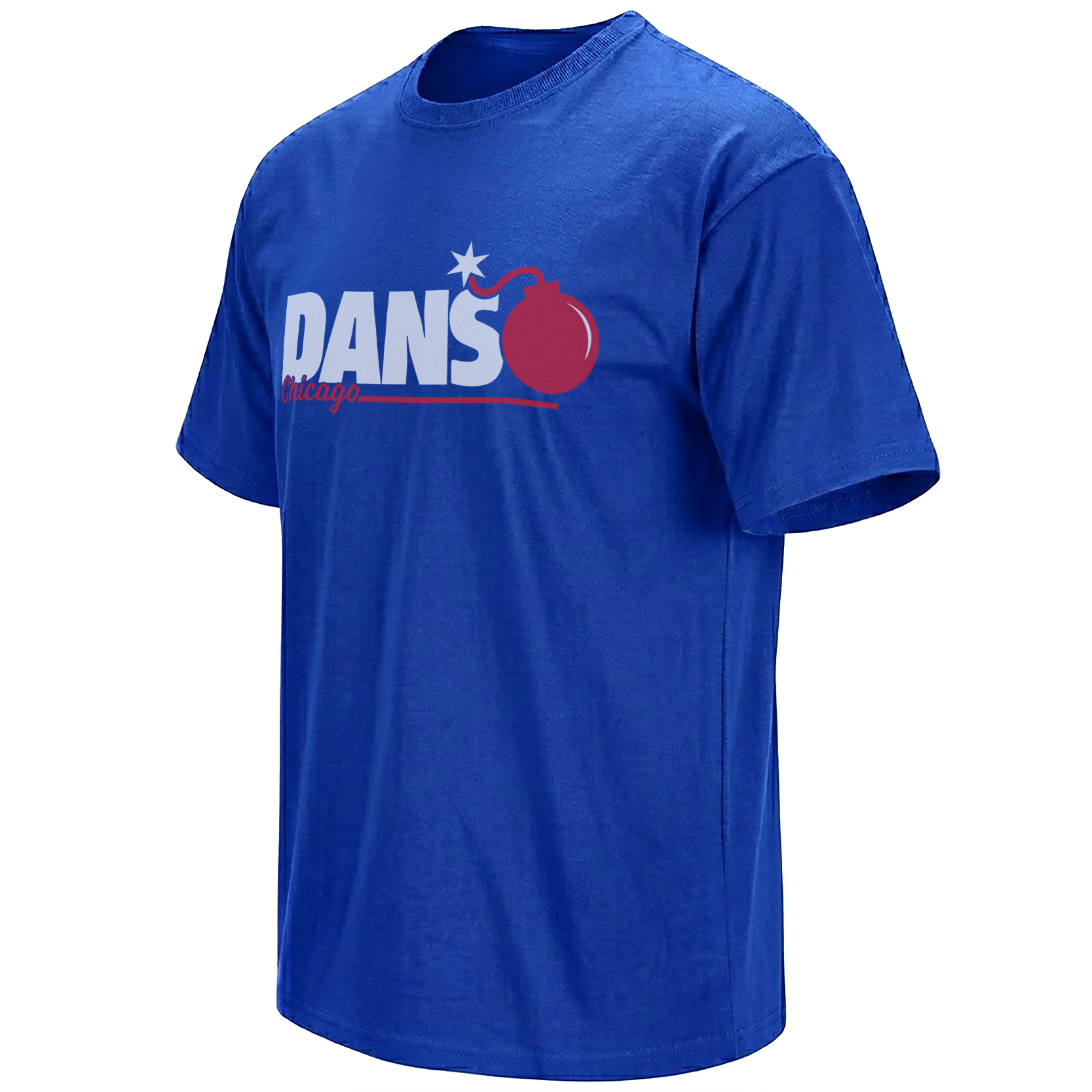
The design uses Swanson’s figure as the center of a compact home-run statement. Cubs colors establish the team immediately, while the oversized “Dansbomb” wording turns the swing into a repeatable fan phrase.
It does not attempt to explain batting mechanics or reproduce a box score. The graphic preserves the reaction: the instant supporters recognize that the ball has been struck well enough to matter.
The Breakout Mattered Because the Slump Was Real
Home runs are always valuable. A home run after several weeks of public frustration carries a different emotional weight.
Swanson had been batting near .180 when Chicago briefly rested him. The move was described as a break rather than a demotion, but the message was clear: the Cubs needed the veteran shortstop to recover a more productive offensive rhythm.
His June surge did not erase every earlier at-bat. It demonstrated that the underlying power had not disappeared.
Chicago gave Swanson time away from the starting lineup after a prolonged offensive struggle.
He returned with a run of extra-base damage, including homers against Colorado and New York.
Eleven RBIs in one doubleheader created a new franchise benchmark rather than merely a good afternoon.
Batting Ninth Made the Damage More Dangerous
The bottom of a lineup is usually discussed as a place to survive. Swanson transformed it into the beginning of another scoring cycle.
When a former All-Star and Gold Glove shortstop bats ninth, the opposing pitcher receives no true recovery zone. The lineup can turn over with runners already moving and pressure already restored.
His first homer against New York gave Chicago the lead. His grand slam removed uncertainty. The No. 9 hitter produced the game’s largest offensive statement.
The Grand Slam Completed the Nickname
A three-run shot can reverse a game. A grand slam carries a more ceremonial finality.
Swanson’s eighth-inning slam traveled deep into left-center and broke open the opener. It was his second homer of the afternoon and his eleventh of the season.
By that point, “Dansbomb” no longer described one isolated highlight. It described a player capable of making the lineup feel complete again.
Defense Kept His Value Present During the Cold Stretch
Swanson’s offensive struggle did not remove the reason Chicago trusted him at shortstop. His range, positioning and throwing consistency continued to provide value even when the bat went quiet.
That distinction matters. The June outburst did not transform an unplayable player into a contributor. It restored the missing half of an already important profile.
When the offense returns beside elite defense, the nickname feels larger because it describes an addition rather than a rescue.
The Surge Helped Chicago Recover Its Season
The doubleheader sweep pushed the Cubs above .500 and continued a stronger stretch following a period of uneven results.
Swanson’s production was part of a wider offensive revival that included Michael Busch, Pete Crow-Armstrong and other hitters creating pressure throughout the order.
The Cubs did not need Swanson to carry every game. They needed his bat to stop becoming the inning where momentum disappeared.
Frequently Asked Questions
What does “Dansbomb” mean?
It is a home-run nickname combining Dansby Swanson’s first name with “bomb,” a common baseball term for a long home run.
What was Swanson’s biggest 2026 game?
On June 24, he hit two home runs, including a grand slam, and drove in seven runs against the Mets.
What Cubs record did he set?
Swanson drove in 11 runs across a doubleheader, the most by a Cubs player in one doubleheader.
Why was he batting ninth?
Chicago had moved him lower in the order while he worked through a significant offensive slump.
What does the design represent?
It represents Swanson’s home-run power, his June rebound and the sudden offensive explosion that changed the tone around his season.
The Dansbomb piece preserves the moment Dansby Swanson turned one difficult month into a Cubs power story.
Dansbomb Shirt celebrates Dansby Swanson’s Chicago Cubs home-run surge, highlighted by his two-homer, seven-RBI game and franchise-record 11 RBIs in one doubleheader.