Vote for Turang Became Milwaukee’s All-Star Case — Even When the Ballot Said No
Brice Turang did not advance to the final stage of the 2026 MLB All-Star ballot, but the campaign surrounding Milwaukee’s second baseman revealed something more durable than a voting result: the rest of baseball was finally being asked to see the complete player Brewers fans had been watching develop.
By the time Phase 1 of the 2026 MLB All-Star voting process ended, Brice Turang had become one of the ballot’s clearest arguments about the difference between recognition and performance. The Milwaukee Brewers second baseman finished third among National League players at his position, behind Ozzie Albies and Bryson Stott, and therefore missed the two-player Phase 2 runoff.
The result did not erase the campaign. It sharpened it. Turang had been close enough to make every vote feel consequential, yet distant enough from the largest-market candidates to remind Milwaukee how much All-Star balloting depends on visibility, fan-base scale and repeated public persuasion.
On June 22, MLB’s second ballot update listed Turang with 739,111 votes. He trailed Stott by fewer than 62,000 at that stage, while official league coverage repeatedly presented him as one of the National League’s strongest first-time All-Star candidates. When the finalists were announced, Stott had widened the final margin, leaving Turang outside Phase 2 but still firmly inside the baseball argument.
Milwaukee’s ballot campaign was never only about checking a box. It was about making the league account for everything Brice Turang had become.
The Campaign Started With a Baseball Argument
Fan voting becomes most interesting when it stops functioning like a popularity census and starts functioning like advocacy. Turang gave Brewers fans a case worth making because his value could not be reduced to one familiar category.
He already carried a reputation for elite infield defense, speed and pressure on the bases. The 2026 conversation expanded because the offensive profile had changed. During the opening months of the season, Turang paired his usual defensive range with stronger contact, increased power and a career-best level of on-base production.
MLB’s early ballot analysis described him as a player who continued to improve, noting that his OPS had risen in each of his first four major-league seasons. Another official breakdown placed his early-June production alongside the National League’s leading second basemen and identified him as a legitimate candidate to start his first All-Star Game.
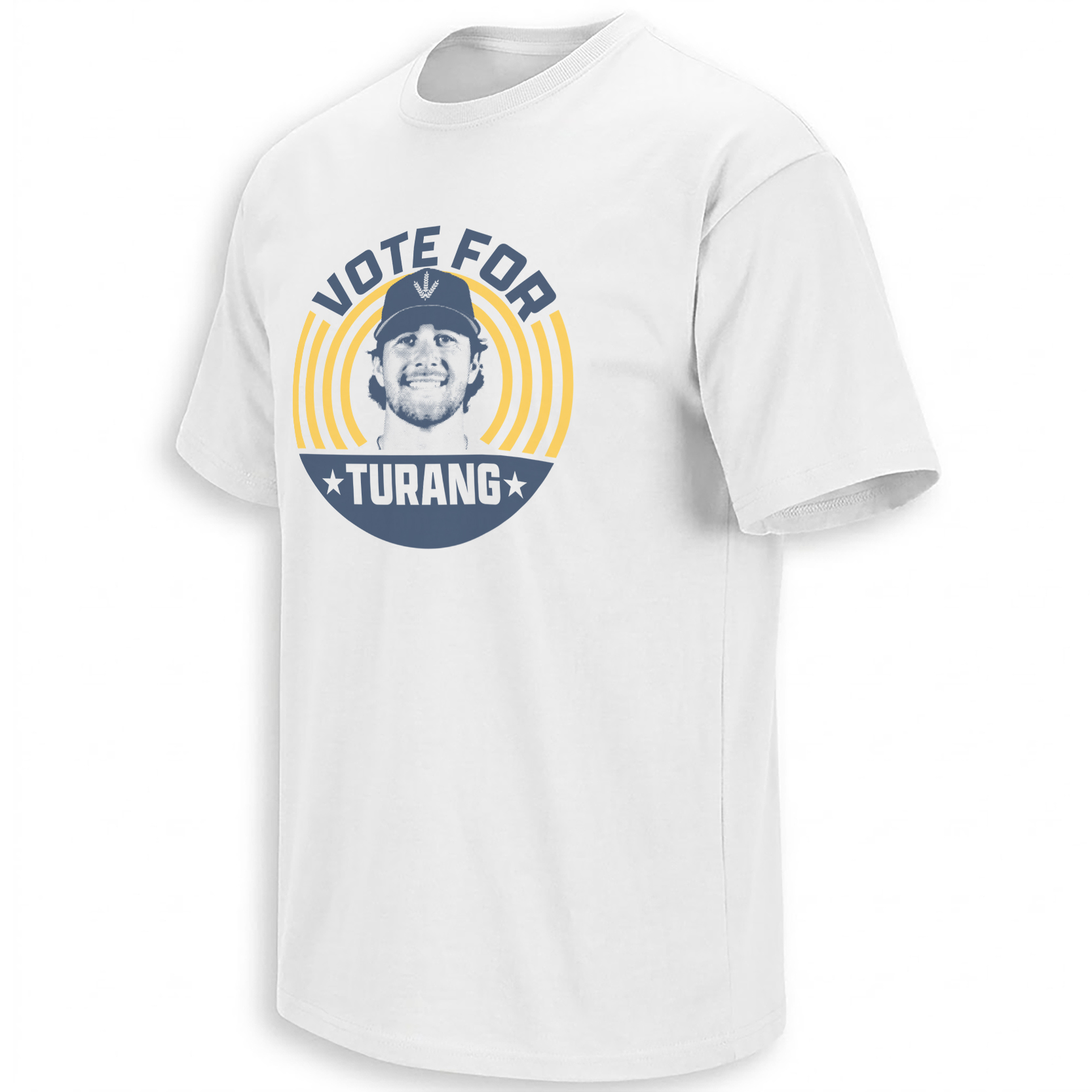
“Vote for Turang” worked because the slogan could be read as both instruction and correction. The check box asked fans to support a player; the larger graphic asked baseball to notice that Milwaukee’s second baseman was no longer only a defense-and-speed specialist.
Why Third Place Felt So Frustrating
Turang’s position on the ballot created the exact emotional conditions that turn routine team promotion into a fan movement. He was not buried in the standings. He was close enough to advance, and the performance-based case for him was strong enough that every update invited comparison with the two names ahead.
At the June 22 checkpoint, fewer than 62,000 votes separated Turang from Stott. In a nationwide ballot involving millions of selections, that gap was small enough to encourage another round of posts, reminders and appeals from Milwaukee fans.
When Turang ultimately missed Phase 2 by a wider final margin, the disappointment was not simply that a Brewer had lost an online contest. The frustration came from a belief that his all-around season had been stronger than the final ranking suggested.
That tension is built into All-Star culture. Ballots reward performance, but they also reward recognizable markets, established names, regional voting habits and the ability of a fan base to turn daily participation into a ritual. Milwaukee understood the assignment. It simply could not overcome the entire arithmetic.
The Ballot Graphic Turned Advocacy Into Design
The Vote for Turang graphic borrows directly from campaign material: oversized candidate language, a checked selection box and a visual hierarchy designed to be understood at a glance. It treats a baseball player as the subject of a local election without losing the humor of the metaphor.
That approach fits Milwaukee especially well. Small-market fandom often operates through organized persuasion. Fans learn to repeat the case, share the numbers and remind outsiders that national attention does not always distribute itself according to on-field value.
The ballot framing transforms that behavior into a visual object. Turang’s name becomes the candidate line. Brewers colors establish the constituency. The check mark becomes both voting instruction and fan verdict: Milwaukee had already decided he belonged.
Turang’s Game Had Outgrown the Old Label
For much of his early major-league career, Turang was easy to summarize with defense and speed. Those qualities were real, but the shorthand could become limiting. It described what made him useful without accounting for how the offensive side of his game was evolving.
The transformation became especially visible across 2025 and the first half of 2026. Added bat speed changed the quality of his contact. The ball began leaving the yard more often. Pitchers had fewer safe areas in which to challenge him, and his role near the top of Milwaukee’s order gained more weight.
By late June 2026, widely reported statistical listings placed Turang around a .262 batting average with 11 home runs, 44 runs batted in and an OPS above .840. Those figures mattered because they were attached to a second baseman still providing premium defense and baserunning value.
The All-Star case therefore rested on completeness. Turang was not asking voters to overlook one part of his game in favor of another. He was asking them to notice that all the parts were now operating together.
A Brewers Season That Made the Campaign Bigger
Individual ballot pushes carry more emotional force when the team around the player is winning. Milwaukee reached the midpoint of the season at 50–31, holding first place in the National League Central despite closing June 28 with a frustrating extra-inning loss to the Chicago Cubs.
Turang remained central to the shape of that success. He occupied a premium defensive position, appeared at the top of the lineup and represented the kind of internal development on which the Brewers have repeatedly depended.
That organizational context matters. Milwaukee does not usually build its identity through the loudest offseason transaction. Its most persuasive teams are formed through pitching development, defensive flexibility, aggressive baserunning and players who add new dimensions after reaching the majors.
Turang embodies that process. The 2026 version is connected to the young infielder who first arrived with speed and a glove, but he is no longer confined to that first impression.
Missing Phase 2 Did Not End the All-Star Case
Fan voting determines the starters who advance through the ballot process. It does not select every All-Star roster spot. Pitchers and reserve players are chosen through separate mechanisms, leaving room for players who lose a popularity contest but retain a strong baseball case.
That distinction kept Turang’s candidacy alive after the finalist announcement. Official Brewers coverage continued to identify him among Milwaukee’s deserving All-Star possibilities, noting both his offensive production and his experience starting five games for Team USA during the 2026 World Baseball Classic.
The argument had simply changed form. “Vote for Turang” was no longer a literal instruction once Phase 1 closed. It became a summary of the work fans had done and a message directed toward the next layer of roster selection: the ballot may have ended, but the résumé had not disappeared.
Turang did not advance to Phase 2 of fan voting. The graphic now functions as a timestamp of Milwaukee’s campaign and the belief that his complete 2026 season still deserved All-Star recognition through the reserve-selection process.
How Baseball Voting Becomes Fan Culture
All-Star voting is one of the few points in the baseball calendar when fandom becomes repetitive civic participation. The league publishes standings. Teams release graphics. Broadcasts remind viewers to vote. Fans return to the same form each day and treat the accumulation of clicks as evidence of loyalty.
The process resembles an election without the seriousness of public office, which is precisely why campaign visual language works so naturally. Player names become slogans. Team colors become political branding. A check mark becomes a declaration of local allegiance.
For Brewers fans, that ritual also carries the familiar small-market desire to make national attention arrive on purpose. Milwaukee cannot assume its players will dominate broad public voting. Recognition has to be organized, argued and repeated.
The wider Milwaukee Brewers Shirts archive follows that fan language through player nicknames, breakout performances and team-specific campaigns. Across the broader MLB Shirts collection, ballot graphics sit beside rivalry moments, postseason memories and the visual jokes through which baseball fans record a season.
Why the Design Lasts Beyond the Voting Window
Campaign graphics usually carry an expiration date. The polls close, the winner is announced and the instruction is no longer actionable. Sports culture changes that relationship because the campaign itself becomes part of the player’s season.
In Turang’s case, the design preserves the weeks when Milwaukee attempted to push one of its most complete players into his first All-Star Game. It recalls the close second-base race, the statistical comparisons and the repeated belief that the national vote was underrating him.
The missed finalist spot may even make the artifact more emotionally specific. A straightforward victory graphic records celebration. A ballot graphic from a narrow loss records advocacy—the feeling of having to make the case louder because recognition was not automatic.
That is why “Vote for Turang” continues to make sense after voting ends. It no longer tells fans what to do. It remembers what they believed.
Frequently Asked Questions
Did Brice Turang advance to Phase 2 of the 2026 MLB All-Star ballot?
No. Turang finished third among National League second basemen and did not advance to the two-player Phase 2 runoff, which included Ozzie Albies and Bryson Stott.
How many votes did Brice Turang have in the June 22 ballot update?
MLB listed Turang with 739,111 votes in its June 22 update, placing him fewer than 62,000 votes behind Bryson Stott at that stage of Phase 1.
Can Brice Turang still become a 2026 MLB All-Star?
Missing the fan-vote runoff prevents Turang from being elected as a starting finalist, but it does not automatically remove him from consideration for a reserve roster spot selected through the remaining All-Star process.
Why did Brewers fans believe Turang deserved an All-Star selection?
His case combined improved power and on-base production with premium second-base defense, speed, baserunning value and a major role for a Milwaukee team leading its division.
What does the Vote for Turang graphic represent?
The ballot-style artwork records Milwaukee’s 2026 campaign to gain national recognition for Turang, using election imagery, Brewers colors and a checked voting box as symbols of fan advocacy.
The Vote for Turang graphic preserves the campaign that formed around his first All-Star case, while the wider Milwaukee Brewers archive follows the player moments, slogans and local arguments defining the club’s 2026 season.
Vote for Turang Shirt captures Brice Turang’s 2026 Milwaukee Brewers All-Star campaign through ballot-box imagery, team colors and the fan argument surrounding his breakout power, elite defense and narrow Phase 1 voting finish.