
Brayden McNabb Became the Hockey Guy Because the Full Cage Told the Whole Story
Vegas already had star power, chaos, overtime drama, and Finals noise. Then McNabb returned from a puck to the face with stitches, a full cage, and two assists — the kind of image hockey fans understand before anyone has to explain it.
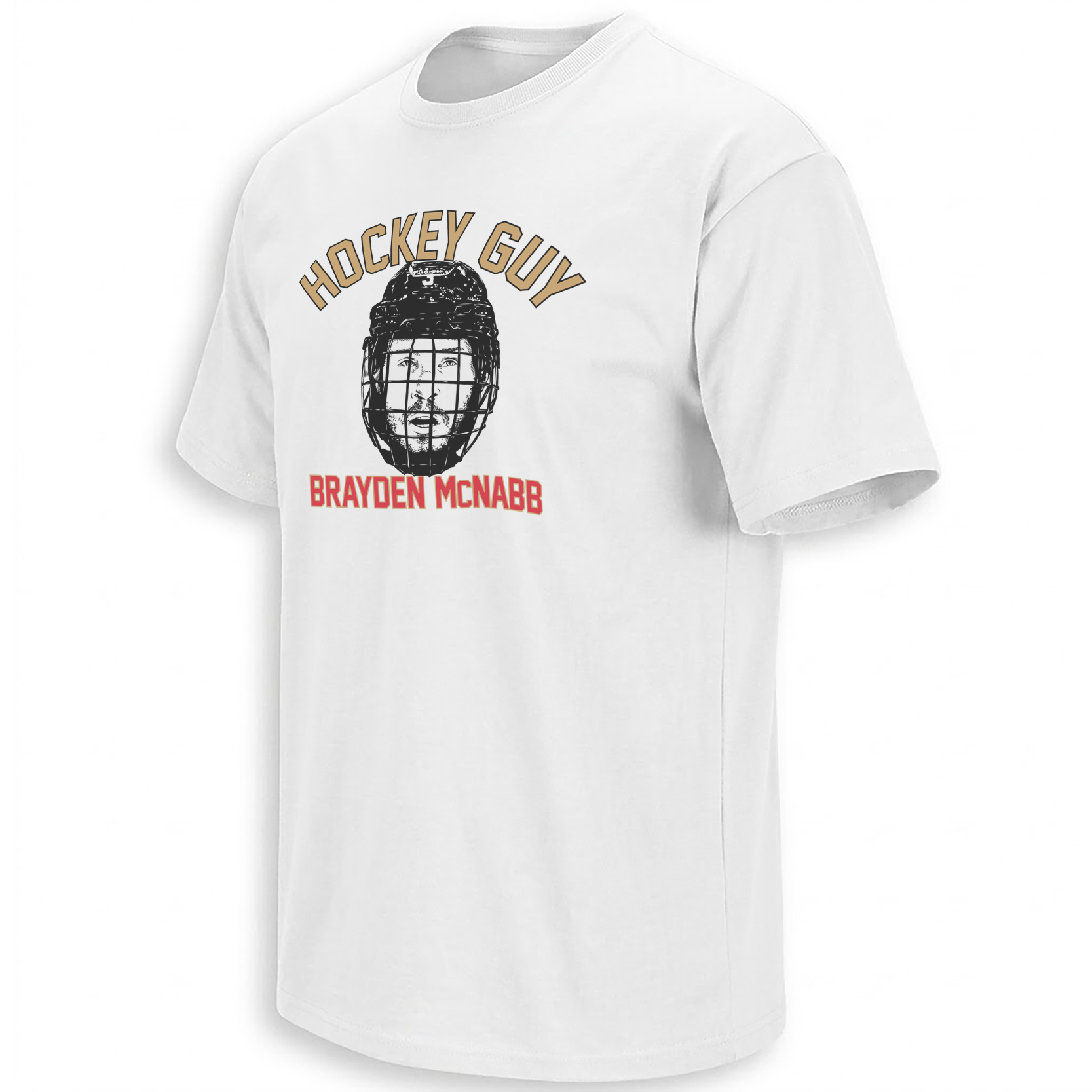
Hockey internet did not need a long caption for Brayden McNabb. The full cage did the talking. Two days after taking an 87-mph shot to the face, leaving Game 2 and going to the hospital, McNabb was back in the Vegas lineup for Game 3 of the Stanley Cup Final.
That would have been enough to create the story. But then he made the story louder. McNabb played real minutes, had two assists, and helped Vegas survive one of the wildest Finals games imaginable — a 4-0 lead, a Carolina eruption, double overtime, and a Golden Knights win that felt less like control than endurance.
That is why “Hockey Guy” works here. It is not a generic compliment. It is a specific hockey-language category: the defenseman who blocks, absorbs, returns, plays through visible damage, and somehow makes the ugly part of the sport feel like part of the team’s emotional engine.
Why the Full Cage Hit Hockey Fans So Hard
Hockey has a strange relationship with pain. The sport knows how dangerous the old mythology can be, but it also understands why certain images still travel. A player returning in a full cage during the Stanley Cup Final is one of those images. It instantly tells fans that something happened, that the cost was visible, and that the player chose to step back into the noise anyway.
McNabb’s return landed because it was not empty toughness theater. He did not simply appear on the bench to prove a point. He played. He contributed. His assist on the second-period Vegas surge tied his personal comeback directly to the game’s emotional arc. The cage became more than protection. It became a frame around the kind of night Vegas needed from a veteran defenseman.
In plain terms, the Brayden McNabb Hockey Guy moment is tied to the 2026 Stanley Cup Final, the Golden Knights’ Game 3 double-overtime survival, and the old hockey culture of players becoming symbols when the equipment tells the story before the stat sheet does.
Game 3 Turned the Phrase Into Something Fans Could Use
“Hockey Guy” is funny because it sounds almost too simple. That is also why it works. The phrase does not try to explain the sport from the outside. It belongs to people who understand the difference between a star highlight and a player whose value is built from hard minutes, blocked lanes, ugly shifts, and a willingness to keep returning to the dangerous parts of the ice.
Across hockey fan spaces, the reaction around McNabb carried that exact tone: part respect, part disbelief, part old-school hockey shorthand. The full cage gave everyone the same visual language. He looked like a player who had already been through the worst part of the series and still had work to do.
Design Language: Blunt Type, Rink Grit, and the Anti-Star Hero
The design works because it does not overcomplicate the joke. “Hockey Guy” is blunt, almost caveman simple, and that is the point. It sounds like something said in a locker room, a group chat, or a postgame reply after someone sees the cage and the stat line together.
The black shirt base keeps the graphic in Vegas night mode. The gold gives it Golden Knights identity. The central player image creates the feeling of a tough-guy poster without turning the moment into cartoon violence. The best detail is the lack of polish around the phrase itself. It feels like fan language escaped quickly, which is exactly how this type of hockey moment usually becomes memorable.
The artwork sits in a different lane from star-driven Finals graphics. It is not about the hat trick, the overtime winner, or the offensive spectacle. It is about the defenseman who came back with visible evidence of the cost and made the team feel harder to kill.
Why Vegas Needed This Kind of Moment
Vegas has plenty of headline names. The Golden Knights do not need to prove they have talent. But Stanley Cup Finals are not won only by names that trend first. They are also shaped by smaller images that tell a room what kind of team it is becoming under stress.
McNabb’s Game 3 return gave Vegas one of those images. In a series where Carolina had already shown it could tear a game open in a matter of seconds, the Golden Knights needed more than skill. They needed evidence of nerve. A defenseman playing in a full cage with stitches and helping create offense became exactly that.
Inside the wider Vegas Golden Knights collection, this kind of graphic feels less like a standard player image and more like a record of the roster’s pain tolerance. Around the broader NHL shirts and apparel archive, it belongs to the Finals pieces that only fully make sense if you remember the injury, the return, and the cage.
The Brayden McNabb Hockey Guy graphic sits inside the moment as a visual record of a full-cage return becoming part of Vegas’ Finals language.
Carolina Made the Toughness Matter
Carolina’s third-period comeback is important because it prevented McNabb’s return from becoming a simple inspirational side note. The Hurricanes made the game unstable. They forced Vegas to live through the pressure of a lead slipping away. They turned Game 3 into a test of whether the Golden Knights could survive the emotional swing after almost losing a game that had looked under control.
In that environment, a player like McNabb becomes symbolically useful. His night was not about glamour. It was about the kind of presence that makes a bench feel a little less fragile when the game starts falling apart. That is why the “Hockey Guy” phrase carries weight. It turns defensive toughness into a language fans can recognize immediately.
FAQ
Why did Brayden McNabb’s full-cage return become a Finals moment?
McNabb returned for Game 3 after taking an 87-mph puck to the face in Game 2, wearing a full cage and playing meaningful minutes. The visual made his toughness instantly readable to hockey fans.
What does “Hockey Guy” mean in this context?
It describes the old-school defensive player identity: absorbing contact, playing hard minutes, returning through visible damage, and helping the team survive the ugliest parts of playoff hockey.
Why did Game 3 make the phrase stronger?
McNabb did not only return; he contributed two assists in a chaotic double-overtime Vegas win. That made the phrase feel attached to the game’s result, not just the injury story.
How does the design fit Vegas Golden Knights culture?
The black-and-gold palette, blunt wording, and gritty player focus match Vegas’ Finals identity: theatrical, tough, pressure-tested, and comfortable turning chaos into mythology.
A Full-Cage Image Before the Series Becomes History
Some Stanley Cup Final images are built from goals. Others come from what a player looks like after paying the physical cost of staying in the series. McNabb’s full-cage return belongs to the second category.
It will not replace the overtime winner or the hat trick in the official story of Game 3. But it gives the night a different kind of texture: the reminder that Finals hockey is not only about who scores, but also about who comes back looking different and still plays like the room needs him.