
Bobby. Bobby. Bobby. The chant that followed Sergei Bobrovsky into his new Toronto chapter
Before Sergei Bobrovsky has made his first regular-season save for the Maple Leafs, Toronto already understands the sound attached to his most dominant nights.
Toronto signed Sergei Bobrovsky to a three-year contract on July 1, 2026, importing two Stanley Cup rings, two Vezina Trophies and one of hockey’s most recognizable crowd reactions. When Bobrovsky controls a game, arenas do not need a complicated song. They need three repeated syllables: “Bobby! Bobby! Bobby!”
The chant was shaped during his years with the Florida Panthers, particularly on playoff nights when one difficult save was followed by another and the crowd began treating every shot as a new opportunity to repeat his name. It eventually became part of the sensory memory surrounding Florida’s championship era.
Now the sound has travelled north before the goalie himself has played a meaningful game in Toronto blue. Sports media and fans immediately revived the chant after the signing, transforming it from a piece of Panthers history into a preview of what Scotiabank Arena might sound like if Bobrovsky becomes the stabilizing presence Toronto believes it acquired.
A goalie chant begins as a reaction to one save. It becomes culture when the entire building starts expecting the next one.
Why Goalie Chants Feel Different
Hockey crowds chant many names, but a goaltender’s name carries a distinct emotional charge. The position is isolated, visible and unforgiving. Every player may contribute to a win, yet the goalie is the final body standing between the puck and an immediate change in the scoreboard.
That isolation makes a chant feel like collective reinforcement. It tells the goalie that the crowd has recognized the save, but it also tells the opposing shooter that the building has begun assigning confidence to the person in the crease.
“Bobby” works particularly well because it is simple, warm and percussive. The hard opening consonant gives the crowd something to strike, while the two-syllable rhythm can repeat without explanation. The chant sounds personal even when twenty thousand people are producing it at once.
From Sunrise Playoff Nights to Toronto Expectation
In Florida, the chant became inseparable from Bobrovsky’s playoff transformation. The most memorable versions appeared when the Panthers were defending narrow leads, killing late pressure or watching their veteran goalie produce a save that seemed to change the temperature of the arena.
During the Panthers’ 2024 postseason run, an Amerant Bank Arena crowd moved from “Bobby! Bobby! Bobby!” into “We want the Cup,” placing the goalie’s name directly inside the emotional progression from one victory toward a championship dream. Florida later won consecutive Stanley Cups in 2024 and 2025, giving those chants permanent historical context.
Toronto inherits that memory but cannot simply copy it. The chant will only become authentic in its new setting if Bobrovsky gives Maple Leafs supporters their own sequence of saves, their own tense third periods and their own reason to stand together.
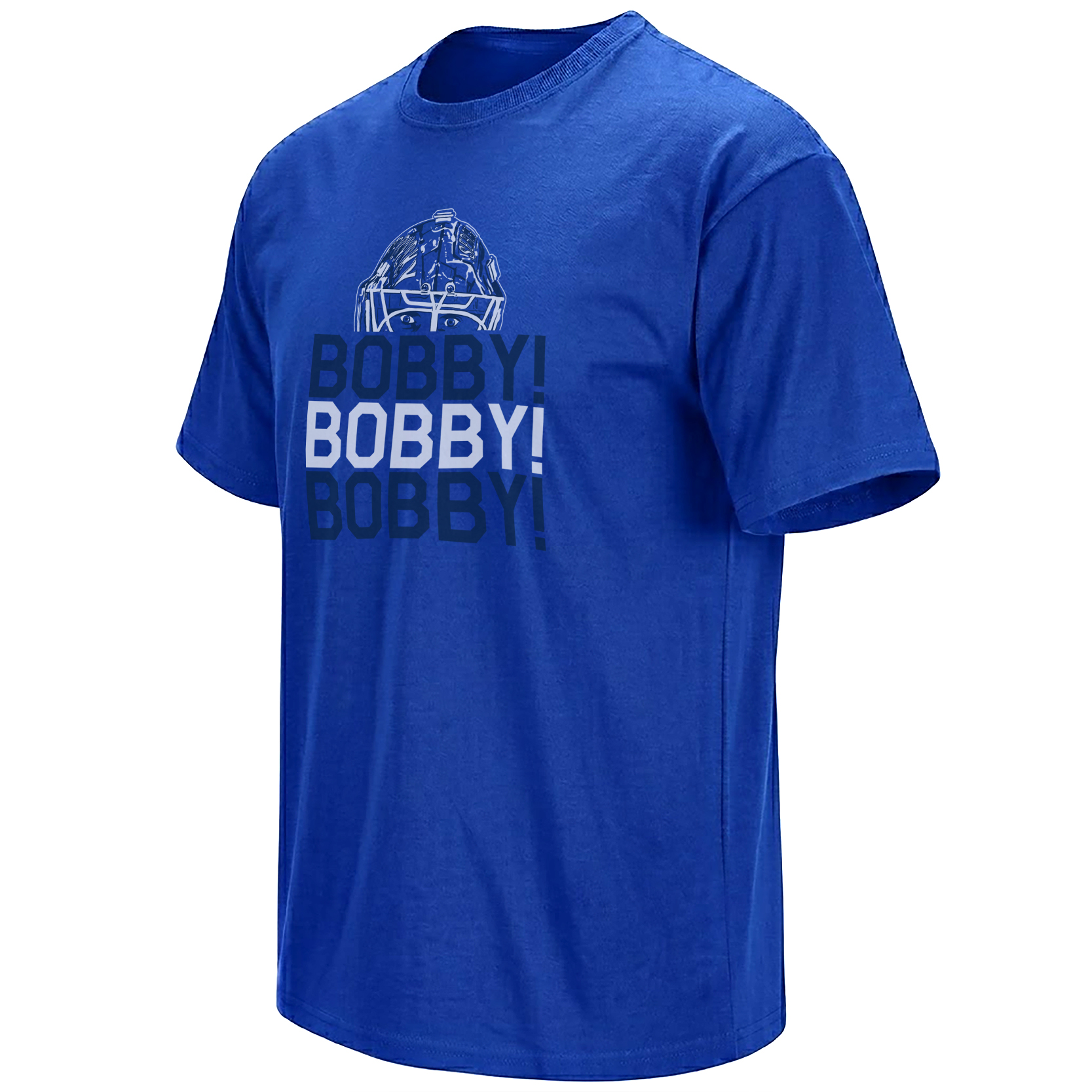
The repeated wording mimics crowd cadence rather than ordinary player branding. Toronto blue relocates the chant into its new market, while the stripped-down arrangement leaves space for fans to hear the rhythm internally as they read it.
A Chant Is a Form of Immediate Trust
Fans do not normally organize a sustained goalie chant after an average save during an average game. The sound usually emerges when a player has crossed an invisible threshold from performing his job to controlling the emotional state of the building.
That is why the chant carries such importance for Bobrovsky’s Toronto arrival. The Maple Leafs have signed him partly because the organization believes he can create calm in high-pressure moments. “Bobby” is the audible evidence of that calm being received by the crowd.
The relationship is reciprocal. The goalie provides the save. The building returns confidence. Another shot arrives, and the cycle either continues or disappears. The chant is therefore never guaranteed by reputation alone, regardless of the awards and championship rings attached to the player.
Toronto Will Not Chant for the Résumé
Bobrovsky enters the city as one of the most accomplished active goaltenders in hockey. His career statistics and trophies explain why Toronto made the signing, but they will not protect him from the expectations attached to the Maple Leafs crease.
The city will judge the current version rather than the historical one. His age, his difficult final season in Florida and the length of the contract make the move a real gamble. The crowd may respect his past, but the chant will be earned through present-tense saves.
That distinction keeps the story from becoming simple nostalgia. Toronto is not borrowing an old Florida celebration as decoration. It is waiting to discover whether the conditions that produced the chant can be recreated in another arena.
Why Repetition Makes the Graphic Feel Like Sound
A single “Bobby” would identify the player. Three create movement. The eye travels across each repetition in the same way a crowd gathers volume from one cycle to the next.
This is why chant-based graphics belong to a different visual tradition from player collages. They do not attempt to show every dimension of the athlete. Their subject is participation. The wearer, reader or viewer is invited to complete the rhythm.
The design functions like a fragment of arena audio converted into a static object. It preserves the part of sports memory that photographs often miss: not simply what the crowd saw, but what the moment sounded like.
The Meaning of “Bobby” Changes in Blue
For Panthers fans, the chant recalls the championship years and a goalie who became central to the most successful period in franchise history. For Maple Leafs fans, the same syllables currently represent possibility.
Toronto does not yet have its own iconic Bobrovsky sequence. There is no defining postseason save in a Maple Leafs jersey, no home crowd rising after a late penalty kill and no spring image that has fully reassigned the chant.
That unfinished quality is what makes the graphic a timestamp of July 2026. It captures a fan base receiving the sound before receiving the memory, imagining how a familiar hockey chant might fit inside a new emotional geography.
From Nickname to Collective Voice
“Bob” is the individual nickname. “Bobby, Bobby, Bobby” is what happens when the individual is absorbed by a crowd. The extra syllable softens the name and makes it easier to stretch across thousands of voices.
That change reflects a broader truth about sports language. Fans rarely use names exactly as they appear on official rosters. They shorten, repeat and reshape them until they become tools for celebration, frustration and memory.
Bobrovsky’s name has already completed that transformation. Toronto’s next task is to determine what local meaning will be attached to it.
The Chant Enters the Wider Hockey Archive
Goalie chants belong to the same cultural archive as rally towels, post-save songs, mask artwork and playoff superstitions. They are temporary during the game but durable in memory because they allow supporters to become active participants in the story.
The Bobby Bobby Bobby design records this particular chant at the moment of transition, while the broader NHL Shirts collection follows the nicknames, postseason rituals and player identities that become hockey’s shared visual language.
Frequently Asked Questions
Why do fans chant “Bobby” for Sergei Bobrovsky?
“Bobby” is an affectionate, crowd-friendly version of Bobrovsky’s name that became associated with his strongest performances and major playoff saves.
Where did the Bobby chant become famous?
The chant became especially prominent at Florida Panthers home games during Bobrovsky’s playoff runs and the franchise’s championship era.
Has Bobrovsky played for Toronto yet?
As of July 10, 2026, Bobrovsky had signed with Toronto but had not yet played a regular-season game for the Maple Leafs.
Why does the design repeat Bobby three times?
The repetition reproduces the cadence of an arena chant, turning crowd sound and collective rhythm into the central visual idea.
What does the Bobby Bobby Bobby Shirt represent?
The graphic marks the moment Bobrovsky’s established goalie chant followed him from Florida’s championship history into Toronto’s new expectations.
The Bobby Bobby Bobby piece preserves the chant now following Bobrovsky north, while the broader NHL visual archive tracks the crowd rituals and player language that give hockey moments their lasting identity.
Bobby Bobby Bobby Shirt captures the arena chant associated with Sergei Bobrovsky’s biggest playoff saves as the veteran goaltender begins a new chapter with the Toronto Maple Leafs.