Always Knicks, New York Forever: The Roster That Ended a 53-Year Wait
The championship gave New York a trophy, but it also gave decades of loyalty a final answer. “Always Knicks” became less a slogan than a receipt for every season supporters stayed, waited and returned.
The New York Knicks became NBA champions on June 13, 2026, but the emotional meaning of the night began decades earlier. Their 94–90 victory over San Antonio in Game 5 completed a 4–1 Finals win, ended a 53-year championship drought and finally gave generations of supporters a title that belonged to their own lived memory.
Jalen Brunson supplied the closing performance with 45 points and the Bill Russell Finals MVP trophy. Yet the celebration immediately expanded beyond one player. It moved toward the roster, the city and the supporters who had treated Knicks loyalty as a permanent identity long before the standings made that identity easy to explain.
“Always Knicks” carries particular weight in that moment. It does not simply describe the people arriving for a championship parade. It speaks for those who watched through instability, false starts, postseason heartbreak and years when New York basketball culture was louder than the team’s results. The title did not create their loyalty. It finally rewarded it.
“Always Knicks” Is a Loyalty Statement, Not a Victory Slogan
Championship language usually begins after the result. “World Champions,” “Title Town” and “We Did It” belong naturally to the hours after the trophy has been secured. “Always Knicks” works differently because its meaning reaches backward.
The phrase includes the seasons that did not end with confetti. It includes supporters who followed the team when the possibility of a championship felt more like inherited mythology than an approaching reality. It includes families who passed down the Garden, the colors and the memory of 1973 before a new title could replace borrowed footage with personal experience.
That history changes how the words sound after Game 5. Before the title, “Always Knicks” was a promise made without guarantees. After the title, it becomes a declaration that the waiting years were part of the story rather than evidence that the loyalty had been misplaced.
Knicks
The phrase works like a fan oath because it does not depend on a record, a single roster or one era. Players change. Coaches change. Expectations rise and collapse. The relationship between New York and the Knicks continues.
The 2026 championship adds a reward to that permanence without changing its original meaning.
New York Forever Is Bigger Than One Arena
Madison Square Garden remains the emotional center of Knicks basketball, but the championship reaction demonstrated how far the culture extends beyond the building. Fans gathered in bars, public screenings and streets across the boroughs. Others traveled to San Antonio in numbers large enough to bring Knicks chants and blue-and-orange sections into the Spurs’ home arena.
That movement is what gives “New York Forever” its force. The phrase is not limited to Manhattan or to people holding a Finals ticket. It belongs to the subway ride home, the neighborhood bar where several generations watched together, the family member remembered during the celebration and the supporters who carried the franchise with them after leaving the city.
New York sports identity often operates through geography, but it also operates through memory. Someone can move away and still understand the Garden roar as a kind of home language. A child can inherit the Knicks from a parent who inherited them from someone who watched the 1973 team. The location changes. The attachment remains.
The Design Turns Fandom Into a Two-Sided Story
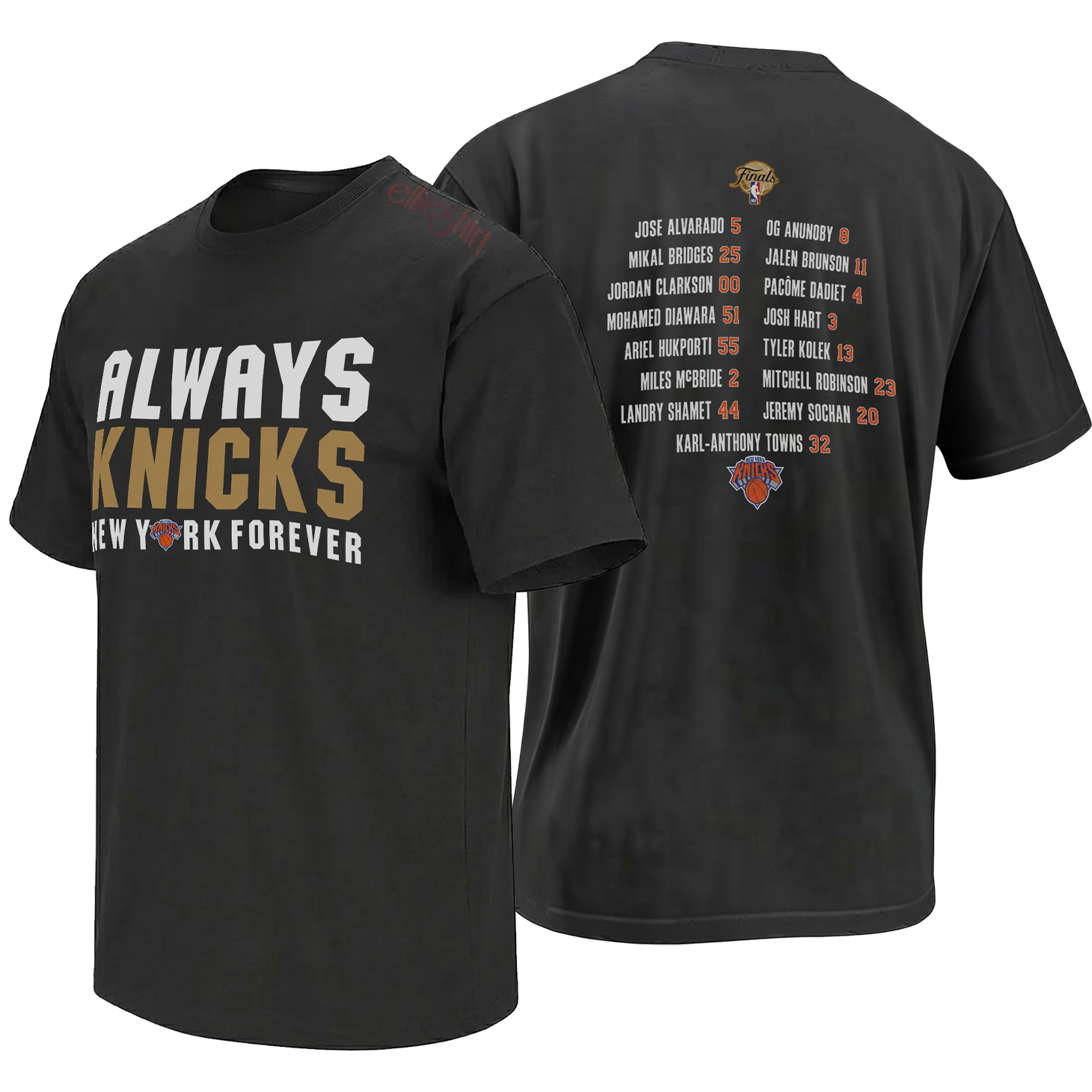
The Always Knicks Shirt divides that emotional idea across its front and back. The front carries the concise declaration: “Always Knicks” and “New York Forever.” It reads like a statement supporters could have worn before, during or after the championship.
The back places the 2026 championship roster inside the larger promise. That distinction matters. The front represents the permanent fan identity. The back identifies the specific group that finally gave that identity another title.
The Front Belongs to Every Era
A strong front graphic does not need to recount every event. Its power comes from reduction. “Always Knicks” is immediate, while “New York Forever” gives the phrase a larger civic frame. Together, the words communicate an identity before the viewer reaches the roster or trophy context.
The distressed athletic lettering prevents the declaration from feeling too polished. It resembles language that has been carried through seasons rather than created only after a championship. That worn texture is appropriate because the loyalty being described is not new.
The Knicks blue and orange supply recognition, but the black base gives the words streetwear clarity. It allows the piece to sit between championship apparel, old arena merchandise and a city loyalty graphic.
The Back Gives Forever a Set of Names
The back changes the emotional scale. Instead of speaking in permanent terms, it identifies the team that made 2026 permanent. The roster arrangement operates like the credit sequence at the end of a long film: the outcome is already known, and now the audience is asked to remember the people who created it.
Brunson may occupy the clearest place in the championship narrative, but a roster presentation resists reducing the season to one star. Karl-Anthony Towns, OG Anunoby, Mikal Bridges and Josh Hart each supplied a different part of New York’s identity. The wider rotation provided the possessions, minutes and role discipline required to carry the run through four playoff rounds.
That collective structure is why the roster belongs beneath the phrase “New York Forever.” Individual performances become permanent when they are connected to the team result.
Two Images for Two Kinds of Memory
The separate front and back graphics reveal how the design balances permanence with specificity. The front can exist beyond the championship season because loyalty does not expire. The back belongs unmistakably to 2026 because the roster is the historical evidence.
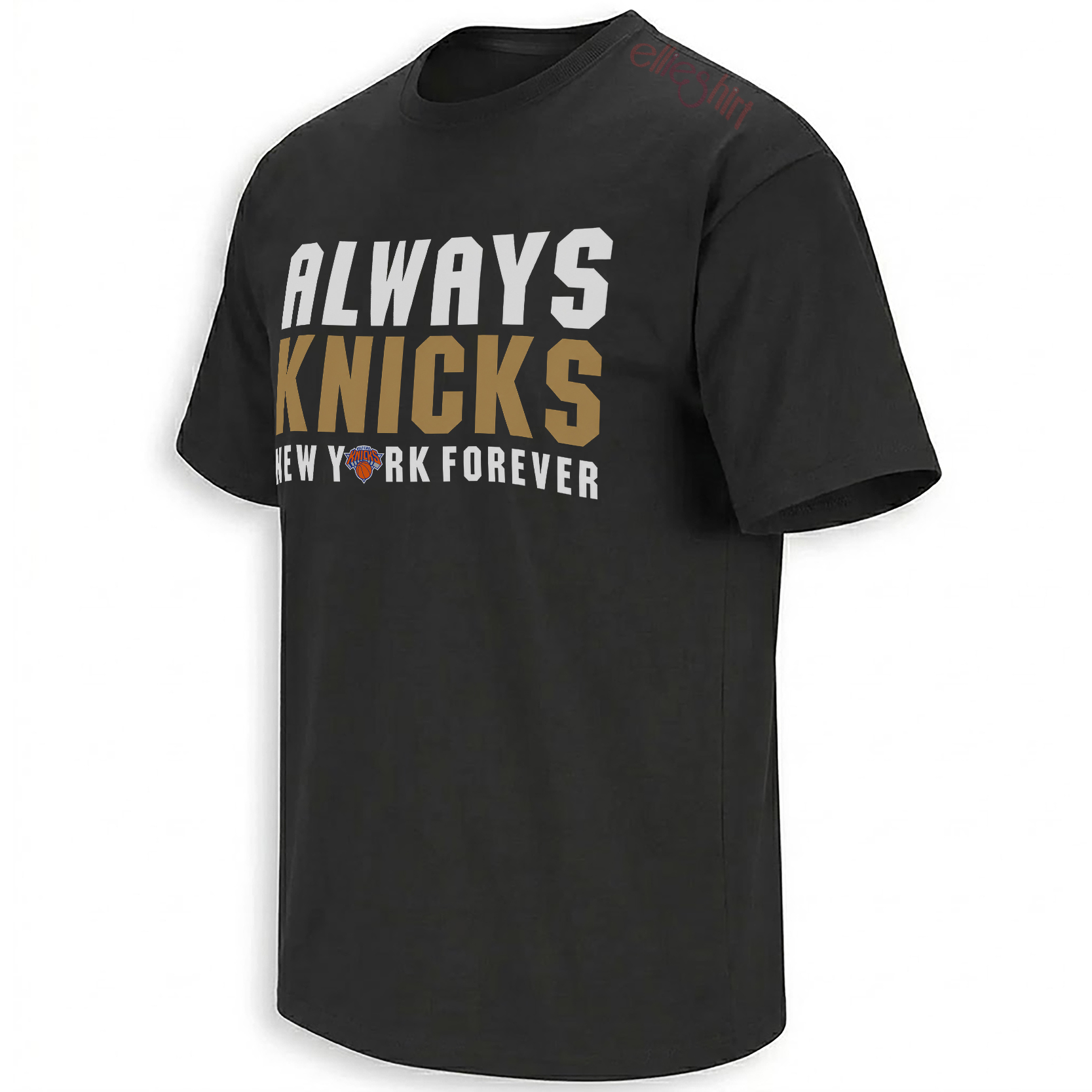
“Always Knicks” and “New York Forever” express a fan identity that existed before the title and will continue beyond the celebration.
Open the front design →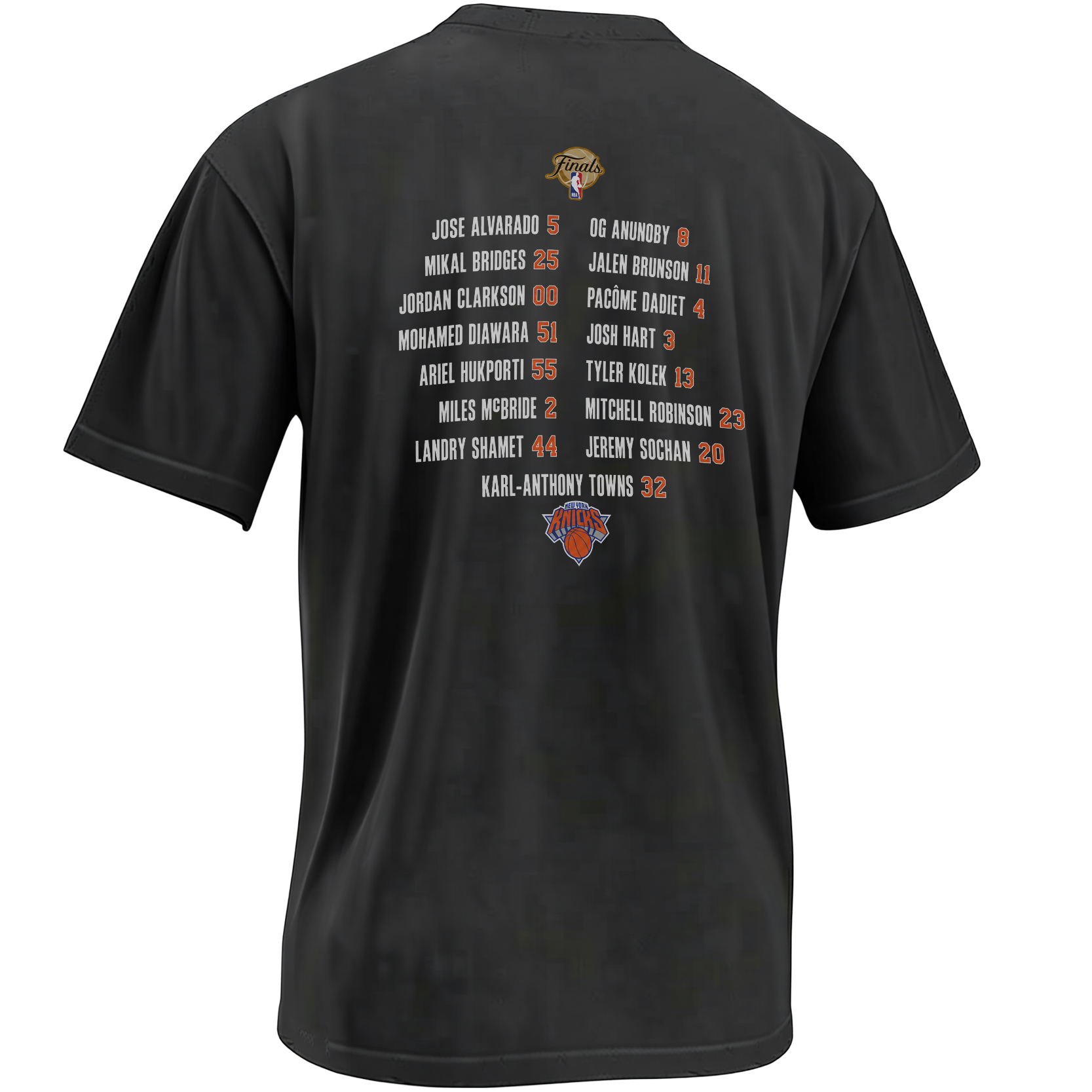
The roster names the specific team that converted decades of loyalty into New York’s first NBA championship since 1973.
Open the roster design →Why 53 Years Cannot Be Reduced to One Night
The final score is clean. The emotional history behind it is not. Fifty-three years contained different versions of the Knicks, different expectations and different generations of supporters. Some remembered the title teams. Others entered the fan base through Patrick Ewing and the 1990s. Many arrived later, during eras when hope had to be rebuilt repeatedly.
A championship does not make all those seasons disappear. It reorganizes them. The failed runs become part of the wait. The disappointments become evidence of endurance. The old highlight clips become a prehistory rather than the final chapter.
That is why “Always” may be the most important word in the design. It allows the title to honor the people who were present before winning became the dominant story.
For these supporters, the new title ended a wait measured against a championship they had once experienced directly.
The Ewing era and 1999 Finals run established the Garden as a national basketball stage without delivering the final trophy.
Younger supporters entered 2026 having never seen New York complete a championship run in their own lifetime.
The Brunson-led roster created a current title memory that can be passed forward rather than borrowed from the archive.
The Visual Language Feels Worn Because the Loyalty Is Old
Distressed lettering is often used as a general retro effect, but here it performs a more precise role. It makes the front statement feel carried rather than newly issued. The words appear to have existed through seasons, train rides, arena nights and years of debate.
The roster arrangement on the back creates a different texture. Repeated names form a dense field of information, giving the piece the feeling of a season record or championship program. The front is emotional shorthand. The back is documentation.
Orange creates the warmth and urgency of Knicks identity. Blue supplies structure and history. White improves visibility, while the black garment makes the entire composition feel closer to street-level New York apparel than a generic postseason announcement.
The worn treatment gives the loyalty statement the appearance of language that has survived seasons rather than arrived after one victory.
Blue, orange and white create immediate team recognition while the black base keeps the composition grounded and wearable.
The field of player names transforms the back from a slogan into a visual record of the complete 2026 championship group.
The Fans Took “New York Forever” to San Antonio
Game 5 supplied one of the clearest demonstrations that Knicks culture is not confined to home court. New York supporters traveled in enormous numbers, producing visible sections of blue and orange and bringing familiar chants into the building where San Antonio hoped to extend the series.
The image mattered because the championship was officially won far from Madison Square Garden. The crowd helped close that distance. For long stretches, the Spurs’ home floor carried the sound and visual presence of a traveling New York celebration.
Once the buzzer sounded, the emotion moved in both directions. It remained in the arena among fans who had witnessed the title directly, and it returned instantly to New York, where streets, bars and public gatherings became part of the same event.
The Roster Gave the Loyalty a Championship Ending
Brunson’s 45-point close will remain the individual performance most directly attached to Game 5. Yet the season had already demonstrated that New York’s strength came from layered contributions. The Knicks’ playoff run repeatedly required different players to occupy the center of the story.
Towns carried major scoring and rebounding responsibilities. Bridges provided the two-way wing presence and timely offense required across matchups. Anunoby’s defense and Game 4 tip-in became inseparable from the Finals comeback narrative. Hart turned rebounding and transition effort into part of the team’s emotional personality.
A roster graphic allows those contributions to coexist. It does not challenge Brunson’s Finals MVP status. It places that status inside the team architecture that made the award possible.
From Bandwagon Moment to Lifelong Identity
Every championship attracts new attention. Celebrations grow larger, familiar colors appear more frequently and people who were not present for the difficult years become part of the current moment. That expansion is normal. Winning opens the culture to a wider audience.
“Always Knicks,” however, speaks most directly to continuity. It recognizes the difference between discovering a team during its brightest hour and carrying that team through changing eras. The phrase does not need to police who belongs. Its value comes from honoring the people who can trace their attachment through more than the championship season.
The 2026 title gives both groups a shared destination. Longtime supporters receive the ending they had waited for. Newer supporters receive the first chapter of what may become their own lifelong relationship with the team.
A New Center for the Knicks’ Visual Archive
Before the title, Knicks graphics often revolved around belief, pain, comebacks, Garden mythology and the possibility that this era might finally be different. After June 13, all of those themes can be reorganized around a completed championship narrative.
The wider New York Knicks Shirts collection now works like a running archive of that transformation. Individual player moments, Game 4 references, Finals phrases and roster pieces are no longer isolated artifacts. They are connected pages from the same title run.
The broader NBA Shirts archive captures how basketball history moves into fan language across the league. Some pieces preserve a score or play. Others preserve the larger identity that made the result matter.
The Permanent Promise and the 2026 Proof
The Always Knicks, New York Forever design brings together two different timelines. The front represents the enduring attachment between the city and the team. The back identifies the roster that rewarded that attachment with a championship.
That structure gives the piece its emotional clarity: loyalty comes first, the roster follows and the 2026 title becomes the proof that “forever” can eventually contain the moment everyone was waiting to see.
Always Knicks FAQ
What does “Always Knicks, New York Forever” mean?
It expresses a permanent connection between Knicks fandom and New York identity. The phrase honors supporters whose loyalty continued through many different teams and seasons before the 2026 championship.
Why is the 2026 roster shown on the back?
The roster identifies the specific group that ended New York’s 53-year championship wait. It turns the back into a historical record of the team behind the title.
Why is the Knicks’ 2026 championship historically important?
It was the franchise’s first NBA championship since 1973, giving several generations of supporters their first opportunity to experience a Knicks title directly.
How do the front and back designs tell different stories?
The front presents the timeless loyalty statement “Always Knicks, New York Forever.” The back places that permanent identity inside the specific context of the 2026 championship roster.
Why does distressed typography fit the design?
The worn texture makes the loyalty statement feel carried through many seasons. It visually connects the new championship to the long history that preceded it.
New York did not become a Knicks city after Game 5. The championship simply gave its longest-running basketball relationship another permanent image: the words on the front, the roster on the back and 2026 as the year “always” finally included a trophy.
Always Knicks Shirt pairs the timeless “New York Forever” loyalty statement with a back graphic honoring the complete 2026 championship roster—the team that ended the Knicks’ 53-year NBA title wait.