
Patriots Barbell: Foxborough Football Under Load
New England’s preseason began with the least dramatic score possible — a 13–13 tie with Indianapolis — but the Patriots Barbell story was already being built before kickoff. Once pads came on in Foxborough, nearly two-hour practices, offensive-line one-on-ones and a more aggressive Will Campbell turned strength from offseason vocabulary into football evidence.
New England football has spent decades building an identity around details that are difficult to put on a highlight reel. Assignment discipline. Repetition. Situational football. Staying structurally sound when the opponent understands exactly what is coming.
A barbell belongs naturally in that vocabulary because lifting is also built on repeatability. One clean repetition is not the program. The athlete has to reproduce the movement under additional weight, maintain the same technical standards and return to the bar again later.
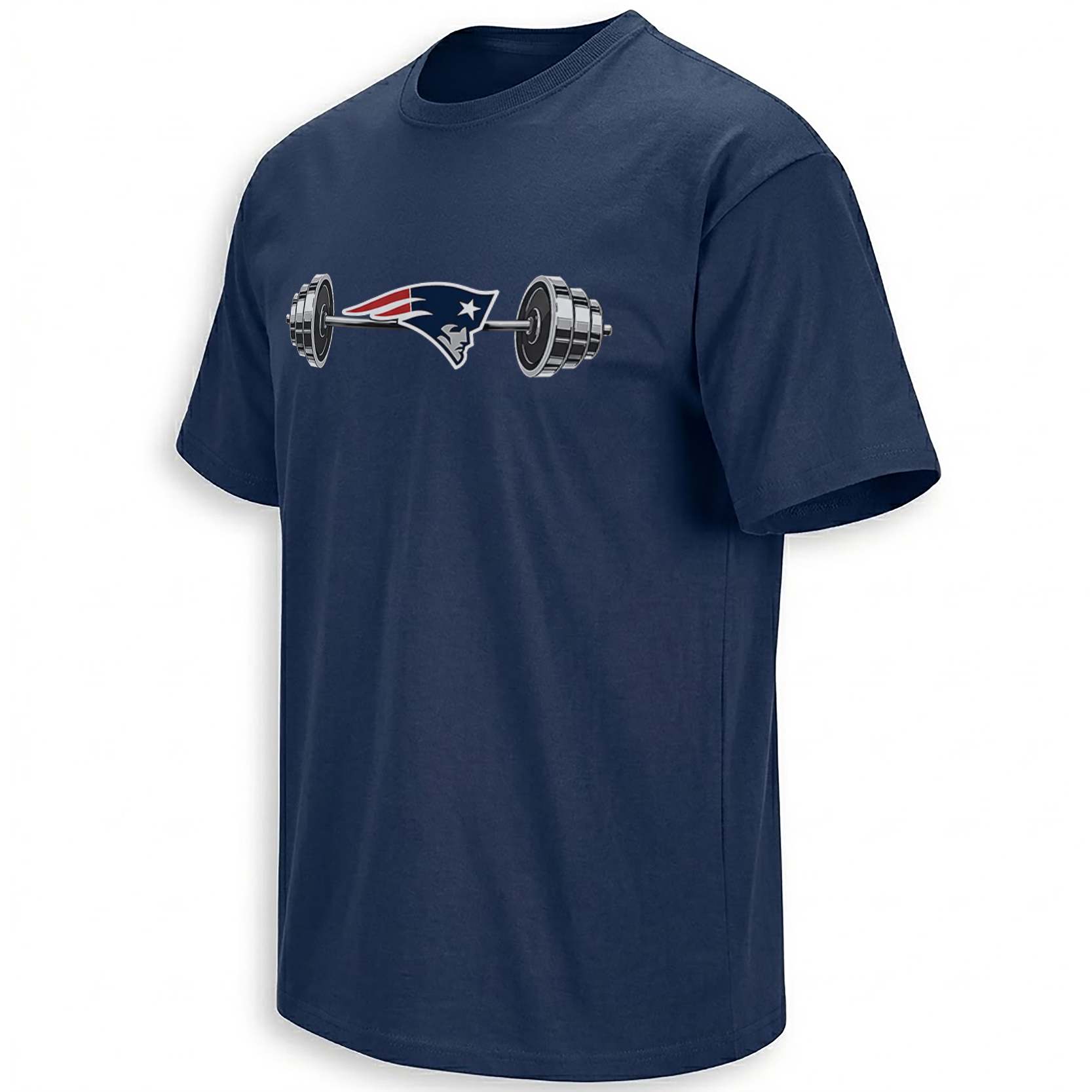
That makes the Patriots Barbell graphic particularly well timed for the 2026 camp. New England’s first padded sessions immediately moved attention toward the offensive and defensive fronts. Patriots.com described nearly two hours of padded work featuring drive-blocking drills, five-on-five run periods and direct offensive-line versus defensive-line battles.
In Foxborough, the barbell works less like a gym symbol and more like a test: can the same technique survive when the resistance keeps increasing?
The first padded practices put the trenches under examination
The moment pads arrive, offensive-line conversation becomes substantially more useful. Before that, a tackle can demonstrate foot quickness and hand placement, but the practice still cannot recreate the weight of another professional lineman driving through his frame.
New England’s July 30 and July 31 work introduced that missing resistance. The Patriots staged angle and drive-blocking periods before moving into five-on-five run work and direct one-on-one competitions. That sequence reads almost like strength programming itself: isolated technique first, greater resistance second, then integration into team football.
The barbell therefore does not need to mean that Patriots players are bodybuilders. It represents the broader logic of progressive resistance — exactly what pads bring back to an NFL practice.
Will Campbell gives the concept a current football face
Second-year left tackle Will Campbell is one of the clearest reasons the Barbell idea fits New England’s current moment. Patriots coverage identified Campbell’s development as one of the central trench questions entering the season, and his early padded work offered encouraging evidence.
Campbell went 3–0 during one early one-on-one period, with Patriots.com noting that he looked more aggressive in his pass sets. Instead of simply waiting to absorb the rusher, he appeared more willing to initiate the physical exchange.
That difference is important. Football strength is not only the ability to withstand weight. At tackle, the player must decide when to absorb, when to strike, when to redirect and how to maintain balance while reacting to a defender with multiple counters.

The 13–13 tie made evaluation more important than hype
New England and Indianapolis finished their August 13 preseason opener tied 13–13. With preseason overtime eliminated, that was the final score. It was also only the second preseason tie in Patriots history.
There is no reason to force that result into a dramatic victory narrative. The more useful preseason question is what the game revealed about players trying to move from camp reps into real competition.
For New England, offensive-line injuries and depth evaluation remained part of that conversation. Caleb Lomu received an extended opportunity at tackle, while the Patriots continued examining combinations behind their projected starting group.
That is precisely why Barbell works better as a preparation graphic than a score graphic. A tied preseason game is not an endpoint. It is another plate added to the evaluation.
Patriots navy provides the controlled base, silver gives the artwork a bare-metal training-room quality and small red accents keep the composition connected to New England without allowing the page to become loud. The concept should feel measured and disciplined rather than chaotic.
Mike Vrabel makes physical credibility part of the program
Mike Vrabel’s coaching presence adds another layer to the current strength narrative. His Patriots are not being constructed as a nostalgia copy of earlier New England teams; the program is developing its own roster and standards while retaining the franchise’s familiar emphasis on preparation.
The multiple padded practices and repeated trench analysis show where some of those standards are being tested most directly. A football team can discuss toughness endlessly in July, but a run-blocking period or OL-DL one-on-one creates an immediate answer.
The player either preserves his leverage or loses it. He controls the rep or the defender changes the picture. That binary nature is why Barbell imagery fits so well with line play.
The design works without depending on Drake Maye
Drake Maye remains the most visible current face of the Patriots offense, but Patriots Barbell becomes stronger by not depending on him. Quarterback graphics already have an obvious visual language. A team-level strength mark provides another perspective on the roster.
It points toward Campbell, Jared Wilson, Michael Onwenu, the defensive front and every player whose job begins with winning or surviving physical resistance.
Readers interested specifically in Campbell-related designs can continue through the Will Campbell product search, while the wider New England Patriots collection keeps the Barbell design inside the broader current and historical language of Pats Nation.
The NFL collection extends the idea across teams, where the same barbell structure can become Buffalo blue-collar strength, Detroit industrial power, Raiders iron or New England’s more disciplined Foxborough training-program aesthetic.
Frequently Asked Questions
Why does a barbell fit New England Patriots football culture?
The barbell represents repetition, preparation and strength under controlled resistance, themes that align naturally with New England’s trench-focused padded practices and football identity.
Why is Patriots Barbell especially relevant during the 2026 training camp?
The Patriots’ first padded practices put extensive attention on offensive- and defensive-line work, including run-blocking periods and OL-vs-DL one-on-ones.
Is Patriots Barbell a Will Campbell design?
No. Campbell provides a current example of strength translating into tackle technique, but Patriots Barbell represents the broader New England football strength identity.
What happened in the Patriots’ first 2026 preseason game?
New England and Indianapolis played to a 13–13 tie at Gillette Stadium on August 13, 2026.
Why does the Patriots version use navy, silver and restrained red?
The palette gives the design a disciplined training-program feel, with silver acting like bare metal while navy and red maintain New England’s football identity.
The Patriots Barbell graphic records the physical side of the current build, while the New England Patriots archive follows the players, memories and fan language surrounding the team.
Patriots Barbell Shirt turns New England football strength into a navy, silver and red weightlifting graphic, connecting Pats Nation with Will Campbell, padded 2026 training camp and the trench work shaping Foxborough’s current football identity.