Big Dog Andy Pages has turned No. 44 into one of Los Angeles’ most dependable run-producing identities
Sixteen home runs, 64 RBIs and an All-Star selection have moved Andy Pages beyond the role of promising supporting player. In 2026, the Dodgers increasingly need the production attached to No. 44.
Andy Pages reached the 2026 All-Star break with 16 home runs and 64 RBIs, numbers that placed him among the National League’s most productive run drivers. The significance was larger than one midseason selection. Pages had become dependable inside a Dodgers lineup where almost every player is surrounded by star-level expectation.
Los Angeles can make strong production look ordinary because the roster contains so many established names. Pages’ season resisted that effect. His improvement in contact, plate discipline and situational hitting made No. 44 increasingly difficult to treat as background.
“Big Dog” fits that changing role as fan language. The phrase does not describe his official status inside the organization. It captures the energy of a hitter who has grown into larger at-bats and begun producing with the confidence of someone who expects to matter.
Pages became essential by making the difficult thing look repeatable: delivering damage without needing the entire lineup to revolve around him.
Why “Big Dog” Fits the 2026 Version of Andy Pages
Baseball nicknames often begin as exaggeration. Their value comes from whether the player eventually grows into the language.
Pages’ 2026 season has made “Big Dog” feel less like playful hype and more like a description of responsibility. He has driven in runs at an elite pace, continued reaching double-digit home-run totals and supplied production while the Dodgers managed injuries, rotation changes and the constant demands of a championship roster.
The phrase also suits his physical style. Pages is not a delicate contact hitter. His strongest swings are direct, forceful and built around the expectation that a mistake should be punished.
A Supporting Player Became an All-Star
Pages entered the majors in 2024 as a highly regarded Dodgers prospect, but opportunity alone did not guarantee permanence. Los Angeles routinely has alternatives, prospects and veterans competing for every role.
His progress has therefore depended on becoming useful in multiple ways. Pages can defend the outfield, supply right-handed power and produce runs from different points in the order.
By 2026, that versatility had become sustained value. He reached 15 home runs in 66 games after needing 92 games to reach the same mark the previous season, a clear sign that the power was arriving more frequently.
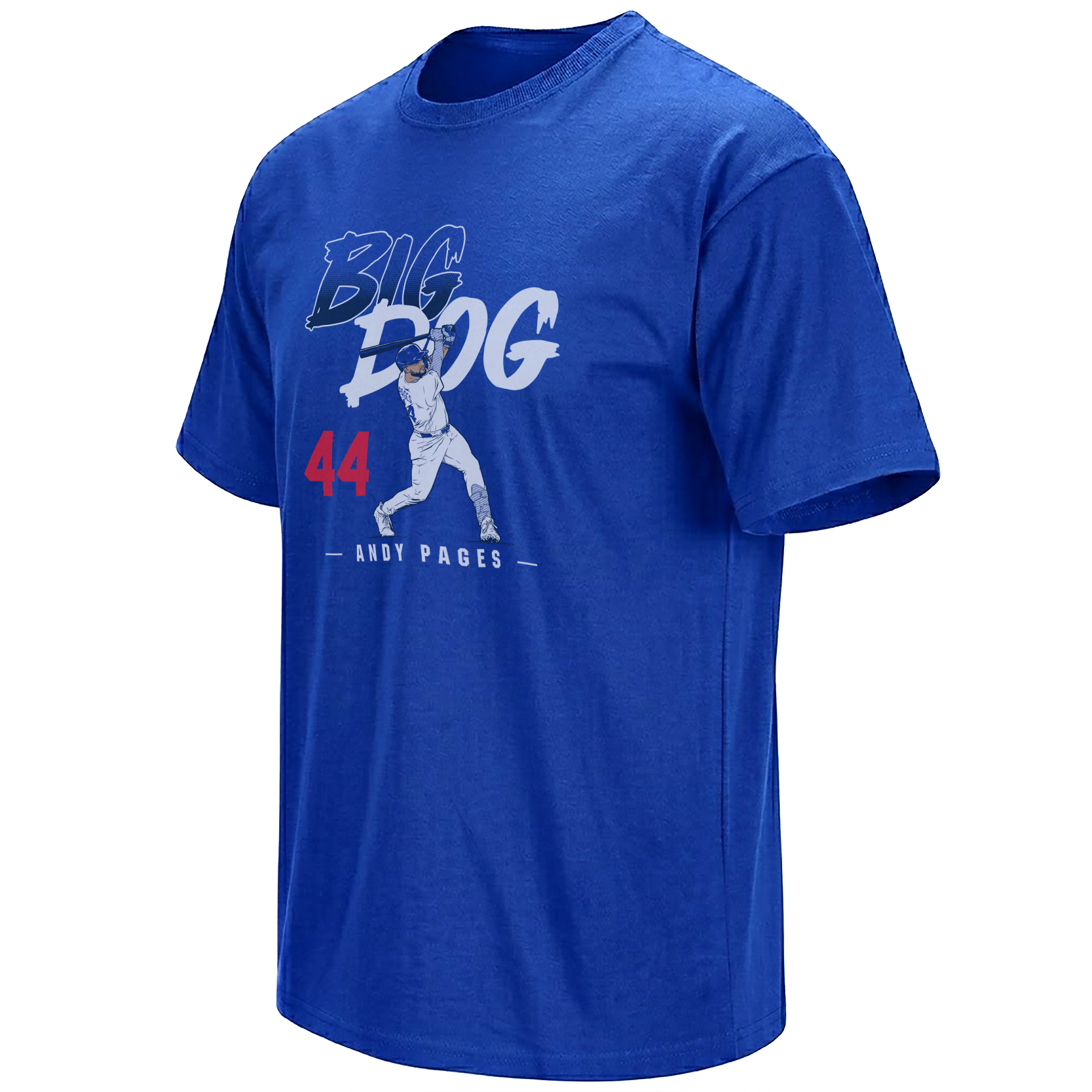
Bold Dodgers blue establishes the team context, while the nickname introduces clubhouse-style attitude. The red accent adds urgency without overwhelming the palette, and the swinging pose turns the composition into an active player identity rather than a static nameplate.
Why Run Production Matters on a Superstar Roster
The Dodgers are often discussed through their largest names, but elite teams depend on players who convert opportunity into runs outside the most famous positions in the lineup.
Pages’ RBI total reflects both context and execution. He has received opportunities because strong hitters reach base around him, but those runners still require a swing capable of bringing them home.
That is where his season became culturally important. Fans stopped seeing his at-bats as pauses between stars. Pages began creating his own expectation.
A Cuban outfielder with power, arm strength and a successful climb through the Dodgers system.
A young regular learning how to survive the daily competition inside a championship roster.
An All-Star run producer whose No. 44 now carries its own expectation in the lineup.
No. 44 Has Become His Visual Signature
Pages has worn No. 44 through the period when his Dodgers identity became permanent. The number is now attached to his outfield routes, strong throws and increasingly frequent home-run follow-throughs.
Numbers become culturally useful when they allow instant recognition before a face is fully visible. No. 44 now performs that function for Pages.
The graphic strengthens the association by placing the digits beside the exact motion most fans connect to his breakout: a right-handed swing generating middle-of-the-order damage.
Cuban Baseball Identity Inside Los Angeles
Pages’ path from Cuba to the Dodgers organization gives the season another layer. He left the island as a teenager and entered professional baseball through a difficult international route before signing with Los Angeles in 2018.
His rise therefore represents more than a standard developmental success. The current All-Star identity sits at the end of years shaped by separation, adaptation and competition.
That history is not visible in every swing graphic, but it gives the confidence of “Big Dog” deeper meaning. The phrase belongs to a player who has spent much of his life proving he could survive the next level.
The Nickname Works Because It Is Participatory
“Big Dog” sounds like something said immediately after a run-producing swing. It can function as a nickname, a reaction or a form of approval.
That flexibility makes it ideal fan language. The phrase does not require a formal explanation. It communicates that the player just handled a large moment.
On the artwork, the words operate almost like a caption placed over a highlight. Pages supplies the swing; the nickname supplies the emotional verdict.
The Wider Dodgers and MLB Moment
Pages’ All-Star rise is part of the constant renewal required by successful organizations. Even a roster filled with established stars must develop new players capable of becoming central before the older structure begins to change.
The Big Dog Andy Pages design captures that movement from useful prospect to All-Star run producer, while the broader MLB Shirts collection follows the player breakouts and nickname culture shaping the 2026 season.
Frequently Asked Questions
What number does Andy Pages wear for the Dodgers?
Pages wears No. 44 for the Los Angeles Dodgers.
Was Andy Pages selected for the 2026 All-Star Game?
Yes. Pages was selected to the National League All-Star roster during his breakout 2026 season.
How many RBIs did Pages have entering All-Star week?
He had 64 RBIs, placing him among Major League Baseball’s leading run producers.
What does “Big Dog” mean in the artwork?
The phrase acts as fan-facing nickname language for a hitter growing into larger responsibilities and delivering in important run-producing situations.
What does the Big Dog Andy Pages design represent?
The graphic captures Pages’ All-Star rise through his nickname, No. 44 and the powerful swing defining his expanding Dodgers role.
The Big Dog Andy Pages piece preserves the attitude surrounding his All-Star rise, while the broader MLB visual archive follows the breakout players and fan language defining baseball’s summer.
Big Dog Andy Pages Shirt captures the Dodgers outfielder’s 2026 All-Star rise through his No. 44 identity, powerful right-handed swing and nickname-driven fan energy.