Why Am I So Fly? A Minion becomes the internet’s least reliable wildlife expert
By placing a familiar yellow agent of chaos inside documentary-style framing, the graphic turns a simple pun into a collision between nature authority, cartoon absurdity and sixteen years of Minion meme history.
By 2026, Minions have spent sixteen years escaping the boundaries of the films that introduced them. They have appeared in Facebook jokes, profile-picture cults, advertising crossovers, ironic reaction images and cinema audiences dressed in formal suits.
Their cultural durability comes from flexibility. A Minion can represent genuine childlike humor, a parent’s social-media joke, Gen Z irony or deliberate visual nonsense without changing its basic expression.
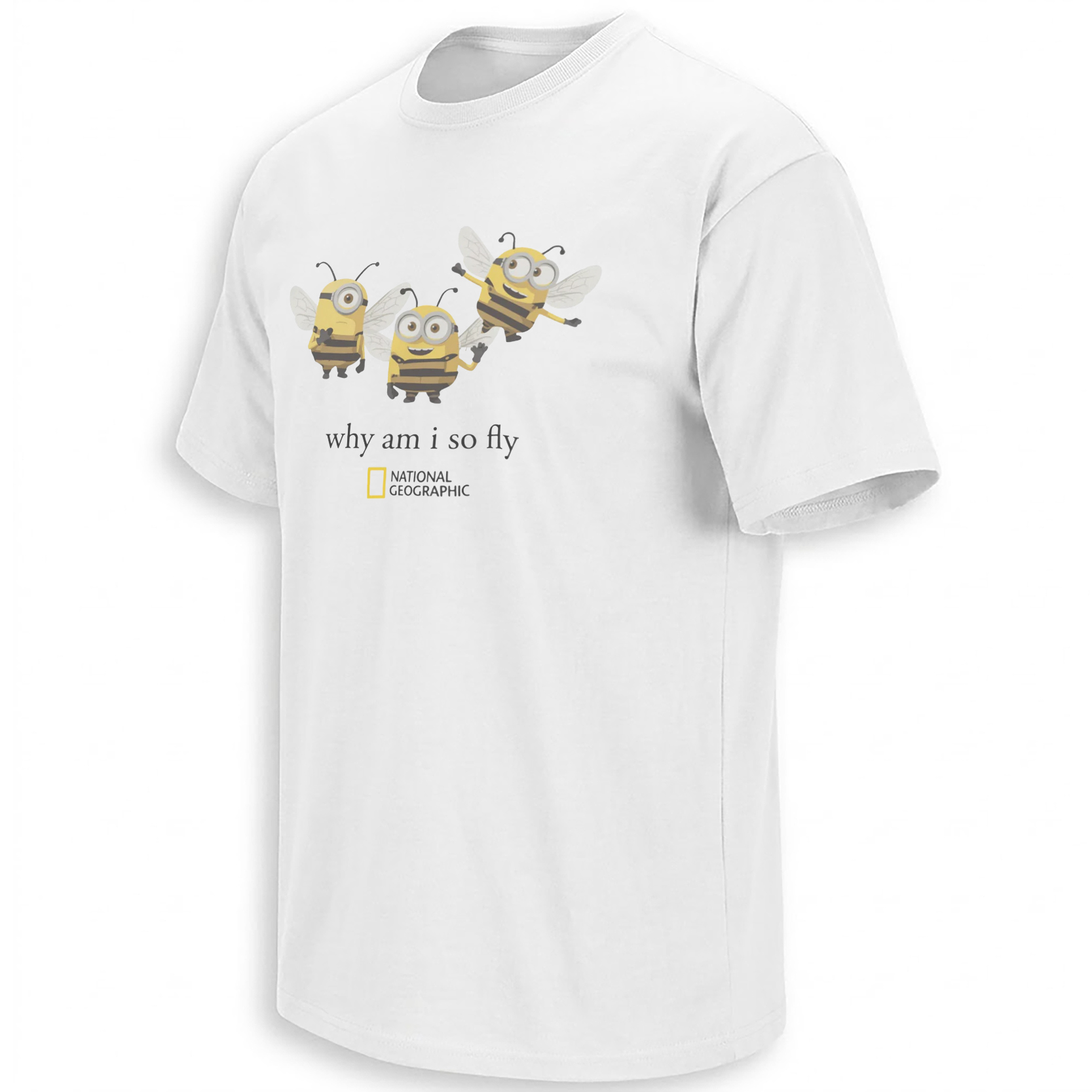
“Why Am I So Fly?” uses that flexibility by placing a Minion inside a National Geographic-style visual frame. The character appears to be both the wildlife subject and the person asking the scientific question.
The Minion does not answer why it is so fly. It simply assumes a documentary should have been made about the question.
Why Minions became universal meme material
Minions are visually simple enough to survive almost any edit. Yellow body, blue overalls, goggles and an expression that can appear innocent or suspicious depending on the caption.
That simplicity made them ideal for early social-media quote graphics. The character could be added beside jokes about coffee, Mondays, family, attitude or passive aggression without requiring any connection to the film.
Later internet communities embraced the excess itself. Minions became funny not only because of what they did, but because they had already appeared everywhere.
The question works because “fly” has two meanings
The phrase begins with an ordinary confidence joke: why am I so stylish, impressive or effortlessly cool?
The nature-documentary frame introduces the literal reading. Is this a scientific inquiry into flight? Is the Minion being classified as wildlife? Has a cartoon character mistaken itself for an insect?
The design never resolves the ambiguity. That unfinished logic is exactly what allows the joke to remain visually active.
“Fly” operates as slang for looking unusually good, giving the Minion exaggerated self-belief.
Documentary framing suggests the question may concern wings, species behavior or an entirely invented field of Minion biology.
The joke succeeds because the image refuses to explain which interpretation should be taken seriously.
Why the National Geographic parody is visually effective
National Geographic’s visual language carries immediate authority. A rectangular frame, documentary portrait and restrained typography suggest research, exploration and carefully observed reality.
A Minion destabilizes that authority instantly. The character belongs to slapstick animation, invented language and chaotic loyalty to villains.
The contrast allows the design to work before the words are read. The viewer understands that the image is pretending to document something that does not deserve a serious scientific investigation.
The strongest visual parodies preserve enough of the original format to trigger recognition, then insert one subject that makes the familiar authority of the format impossible to maintain.
From Facebook Minions to GentleMinions
The first major Minion meme era was associated with mass-shared quote graphics. The characters became blank vessels for jokes that frequently had little relationship to the films.
#GentleMinions transformed that relationship. Groups of teenagers and young adults wore suits to screenings of Minions: The Rise of Gru, performing exaggerated seriousness around a children’s animated movie.
That trend showed how Minion fandom had shifted. The characters could now support both sincere affection and fully self-aware irony at the same time.
Why the meme still works after sixteen years
Many meme characters disappear when their original joke becomes exhausted. Minions remain useful because they have never been attached to only one tone.
They can be cute, irritating, nostalgic, ironic, corporate, chaotic or strangely elegant. Every new caption selects a different version without destroying the others.
“Why Am I So Fly?” belongs to that layered history. A child can read it as a bright character joke. An adult can read it as a pun. An internet-native viewer can recognize the deeper joke of giving documentary prestige to a Minion.
A parody graphic that behaves like a fake magazine cover
The artwork is strongest when read as an impossible publication. It looks like a nature issue produced in a world where Minions are a field-research subject.
That makes the graphic less dependent on one movie scene. It uses the character as a cultural object and places it into another institution’s visual language.
The Why Am I So Fly parody design preserves that collision, while the newest Ellie Shirt archive follows other current graphics built from movie references, internet jokes and visual remix culture.
Frequently Asked Questions
What does “Why Am I So Fly?” mean?
The phrase uses “fly” both as slang for being stylish and as a literal reference to flight, creating an intentionally unresolved visual pun.
Why is the design styled like National Geographic?
The documentary-style framing gives false scientific authority to a cartoon character, creating the central parody.
Why are Minions so common in internet memes?
Their simple design, expressive faces and flexible personalities allow them to carry captions and emotions unrelated to their original movie scenes.
What was the GentleMinions trend?
GentleMinions was a viral trend in which groups dressed in formal suits to attend screenings of Minions: The Rise of Gru, mixing sincere fandom with exaggerated internet irony.
Why does the parody still feel recognizable?
It preserves the restrained layout and authority of a nature-documentary cover while replacing the expected wildlife subject with an agent of cartoon chaos.
The Why Am I So Fly graphic turns Minion confidence into fake documentary science, preserving another stage in the character’s unusually durable internet afterlife.
Why Am I So Fly Shirt combines a Minion-style character, National Geographic-inspired framing and a double-meaning caption that turns documentary seriousness into bright internet parody.