
Soxtober Is Sweet Again: Chicago Comes Home One Win From the ALCS
The White Sox have opened the 2026 postseason 4–0, taken a 2–0 ALDS lead over Cleveland and somehow added lucky ice cream to a South Side October already overflowing with improbable energy.
Chicago spent the first four games of this postseason refusing to lose. Now the White Sox are bringing that perfect October record home, where Rate Field is waiting for something the South Side has not seen in 120 years: a postseason series clincher in Chicago.
The numbers alone already feel strange enough to belong on a celebration poster. Chicago swept Houston in the Wild Card round, then went to Cleveland and won the first two games of the American League Division Series. Monday’s 4–3 comeback in Game 2 made the White Sox 4–0 in the 2026 postseason and put them one victory from their first ALCS appearance since the 2005 championship run.
Game 3 on October 7 changes the setting. The series moves to Rate Field, both potential Chicago games are sold out, and the club’s familiar Blackout atmosphere returns around a team whose rise has happened much faster than anyone on the South Side was trained to expect.
Soxtober works because the word carries two timelines at once: the memory of 2005 and the disbelief of watching 2026 become real.
The White Sox Arrive Home With the Series in Their Hands
Chicago had to trail before Game 2 could become another piece of this postseason mythology. Cleveland scored twice in the first inning, the first time the White Sox had been behind during the 2026 playoffs. Then the game bent back toward Chicago.
Braden Montgomery’s opposite-field double drove home two runs in the sixth and moved the White Sox in front. Chase Meidroth followed with another RBI, while Sean Burke delivered 5 1/3 innings of one-hit relief. It was not the same script as the 3–0 Game 1 shutout. That difference mattered. Chicago showed it could win when October stopped being comfortable.
“Soxtober” Already Had a Life Before 2026
The phrase is not a new social-media invention. “Soxtober” was already part of the language surrounding Chicago’s 2005 championship run, when the White Sox turned an entire October into South Side folklore. Even Paul Konerko became associated with the “Mr. Soxtober” nickname during the celebration of that title.
That history gives the word unusual flexibility. It can sound nostalgic without being trapped in nostalgia. Fans who remember 2005 hear an old signal coming back online; younger supporters can attach it to a completely different roster and a completely different type of surprise.
The 2026 team has earned that distinction through contrast. Recent White Sox seasons conditioned supporters for rebuilding language and distant timelines. This October offers the opposite emotional experience: everything is happening quickly, and every game is creating another reason to update the story.
Then the Clubhouse Discovered Lucky Ice Cream
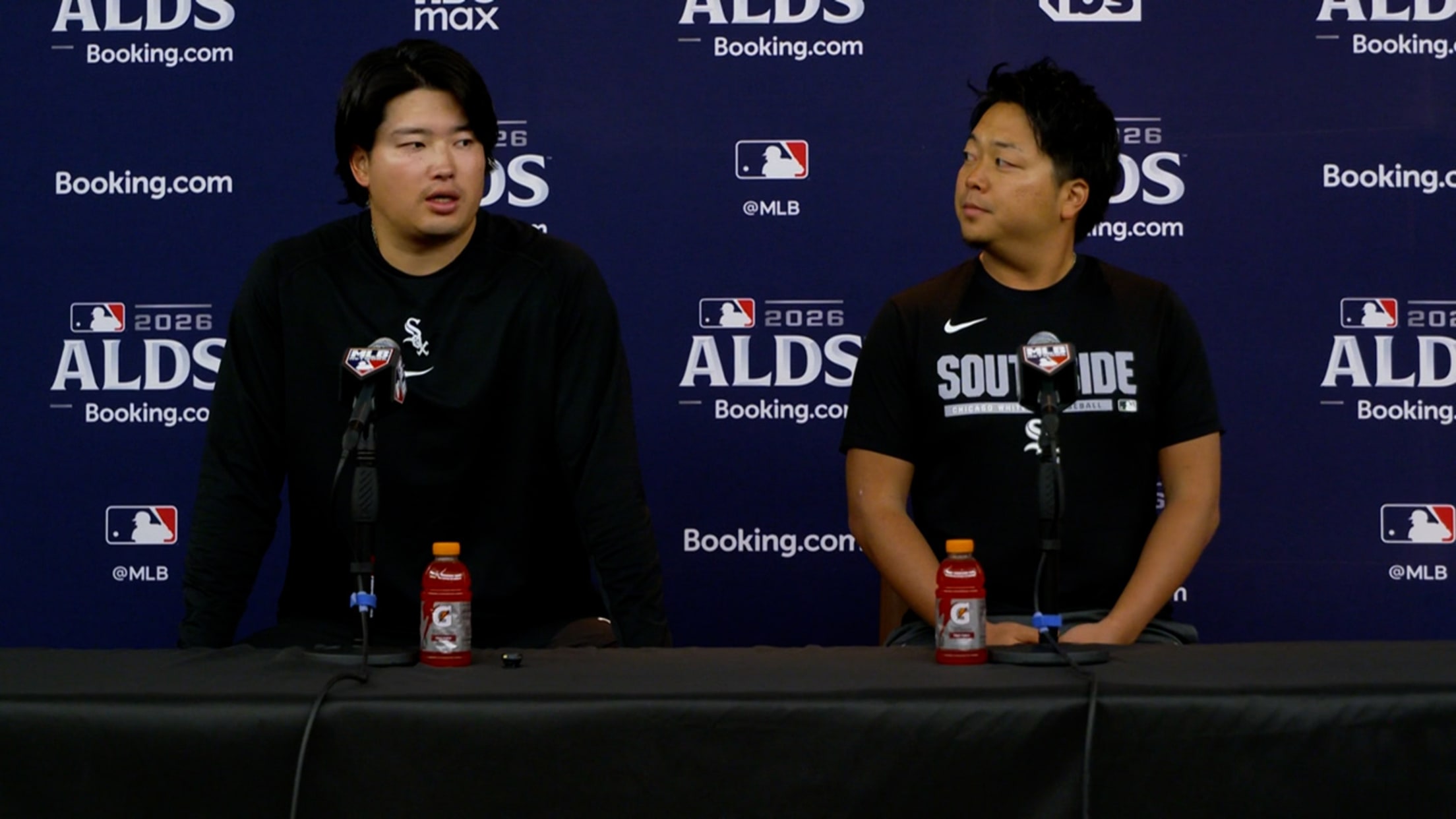
Somehow the actual postseason has become almost as playful as the candy artwork. Before Game 2, catcher Kyle Teel explained his belief that ice cream cones bring hits. The running joke started after Sam Antonacci revealed he had been eating an ice cream cone when Murakami launched the go-ahead homer in Game 1.
MLB’s coverage described Drumstick cones waiting back at Rate Field and noted how quickly the moment spread online. It is exactly the kind of tiny clubhouse superstition that becomes disproportionately meaningful when a team keeps winning.
There is no verified evidence that the candy artwork was created specifically from the Antonacci/Teel ice-cream superstition. The two ideas simply collide perfectly in the current moment: the graphic makes Soxtober visually sweet while the actual clubhouse has independently turned frozen treats into playoff luck.
Why Candy Changes the Meaning of the Soxtober Graphic
Most White Sox graphics naturally lean into black, Old English lettering, toughness and South Side severity. This one deliberately moves in the opposite direction.
The black base still anchors the design in Chicago baseball, but the center graphic behaves almost like a piece of candy-store signage. Large flowing white “Soxtober” script takes the central position. Beneath it, seven pinwheel candies create a horizontal sequence of blue, red, green and yellow. A compact fireworks burst sits above the word like punctuation.
That visual softness is what makes the design specific to this run. The 2026 White Sox story does not feel like a powerhouse completing a scheduled appointment with October. It feels surprising, youthful and slightly absurd. After years when meaningful October baseball felt remote, even a candy motif can communicate relief.
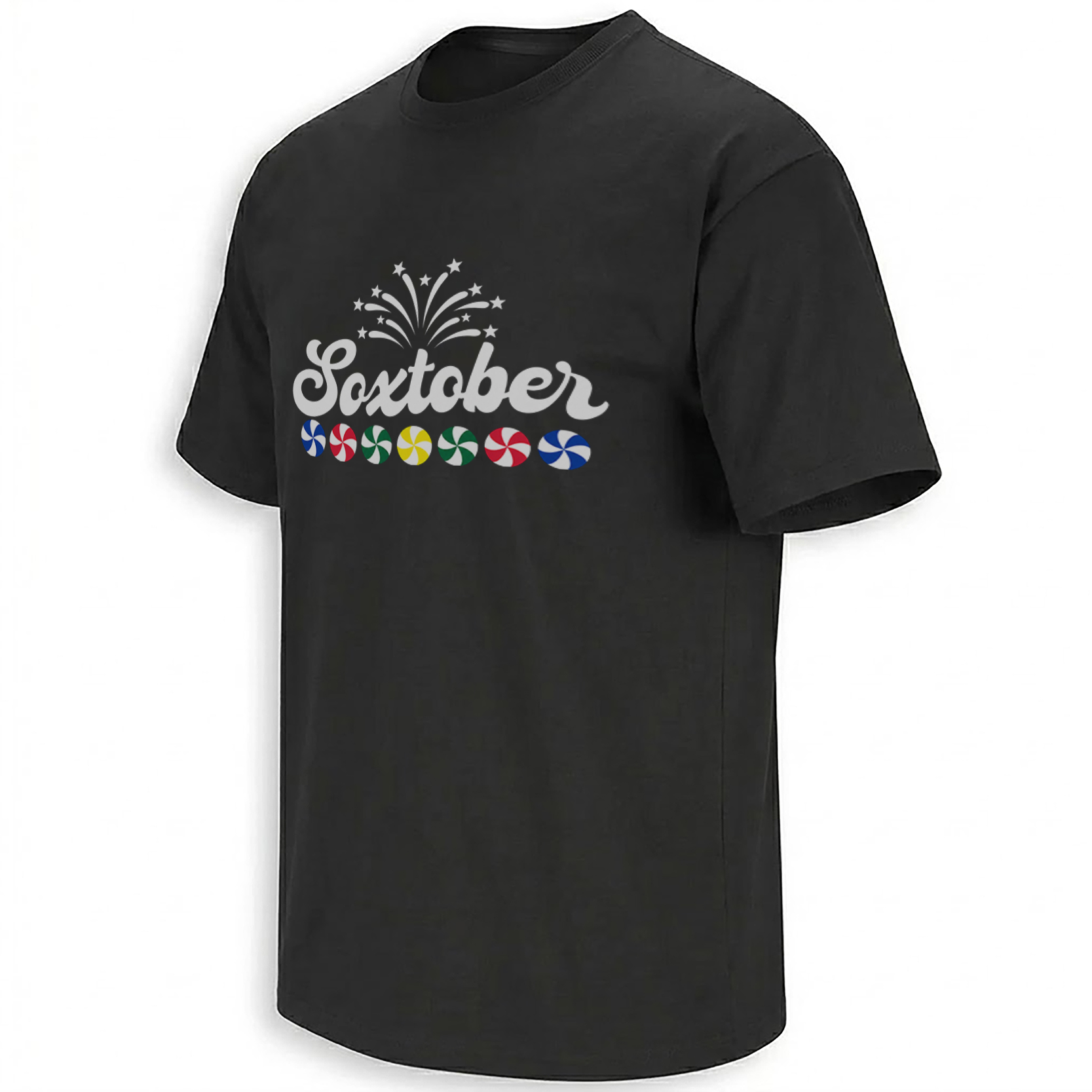
White script, multicolor pinwheel candies and small fireworks recast an old White Sox postseason word for a run that has felt unexpectedly joyful.
View the Soxtober piece →From 2005 Memory to a New South Side Archive
The wider Chicago White Sox collection now functions as a visual timeline of how quickly the emotional temperature around this team has changed. Postseason slogans, breakout players and October jokes preserve different pieces of a run that would have sounded improbable not long ago.
The broader MLB collection places Soxtober inside the larger language of playoff baseball, where a series can produce new phrases, rituals and images almost nightly.
That is why this particular graphic works better as a timestamp than as a prediction. It does not need to know how far Chicago ultimately travels. It records what October felt like at the moment the White Sox came home undefeated, one win from the ALCS, with candy on the shirt and ice cream in the clubhouse conversation.
Frequently Asked Questions
What does Soxtober mean?
Soxtober combines “Sox” and “October” and has long been used as shorthand for Chicago White Sox postseason baseball, including during the club’s 2005 championship era.
What is the White Sox ALDS situation on October 7, 2026?
Chicago leads Cleveland 2–0 in the best-of-five ALDS after winning the first two games on the road and returns to Rate Field needing one victory to advance to the ALCS.
Why are White Sox players talking about ice cream?
Sam Antonacci was eating an ice cream cone when Munetaka Murakami hit the go-ahead home run in ALDS Game 1, and Kyle Teel subsequently joked that ice cream cones bring hits and good luck.
Does the candy design officially represent the ice-cream superstition?
No verified source establishes that connection. The candy is best understood as a visual celebration device that happens to resonate strongly with the team’s current sweet-treat clubhouse story.
Why is the 2026 Soxtober run significant?
The White Sox opened the postseason with four consecutive victories and reached Game 3 of the ALDS one win from their first American League Championship Series appearance since 2005.
The Soxtober Candy graphic freezes that mood before the next pitch changes the story: undefeated postseason baseball, a sold-out return home and a clubhouse discovering its latest piece of October superstition.
Soxtober Candy Shirt captures the White Sox’s 4–0 start to the 2026 postseason with flowing white script, colorful candy and fireworks — a playful South Side timestamp arriving as Chicago takes a 2–0 ALDS lead and lucky ice cream becomes clubhouse lore.