
Turang Gang: How Brice Turang’s No. 2 Swing Became the Symbol of Milwaukee’s New Baseball Core
Brice Turang first earned attention through speed, range and some of the best second-base defense in baseball. Now the left-handed swing has caught up with the glove, turning Milwaukee’s new No. 2 into a complete player—and “Turang Gang” into a natural name for the fans following his rise.
By June 2026, Brice Turang no longer required a defensive highlight to explain his importance to Milwaukee. The numbers beside his name now included eleven home runs, twelve stolen bases and forty-four runs batted in, while the Brewers remained near the front of the National League Central race.
The glove had already made him essential. His range, footwork and ability to finish difficult plays had established him as one of baseball’s defining second basemen. The change came when the offensive production stopped feeling like a temporary bonus and began looking like another permanent part of his identity.
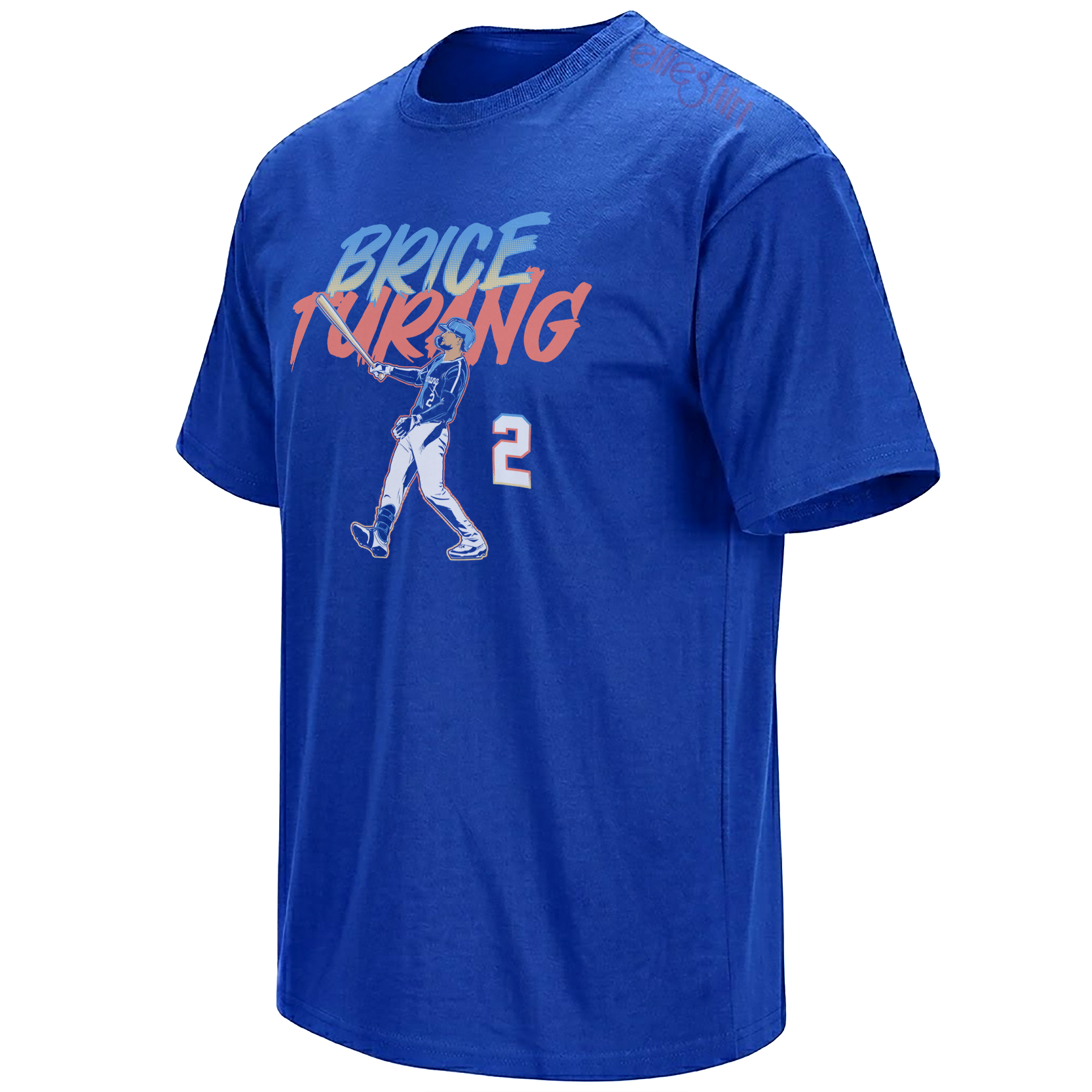
That development gave Milwaukee two equally useful images. One is the player image: Turang finishing a powerful left-handed swing beneath a large No. 2. The other is the fan image: “Turang Gang” written like a club name, a neighborhood script or a phrase already shared by everyone who has followed the ascent.
The glove made Turang valuable. The swing made him visible. “Turang Gang” gave Milwaukee fans a name for the community forming around both.
The Number Change Made the Breakout Feel Like a New Chapter
Jersey numbers often appear permanent only because fans become accustomed to them. When Turang changed to No. 2 during the 2026 season, the visual adjustment arrived at the same time his broader player identity was changing.
Number 2 fits the position naturally. It is compact, easy to recognize and historically connected to smooth middle-infield play. On Turang, it also creates a clean visual relationship with second base—the place where his defensive reputation was built.
The timing made the switch especially effective. Turang was no longer viewed only as a young defender searching for consistent offense. He had entered 2026 after another substantial offensive step and quickly developed into one of the Brewers’ central position players.
The large numeral in the design therefore does more than identify the uniform. It separates the current Turang from the earlier version of his career. No. 2 belongs to the player whose defense, speed and emerging power now occupy the same conversation.
A clean single digit creates immediate recognition and gives Milwaukee’s current version of Turang a distinct visual identity.
Second base remains the foundation of the story—the place where quick reads, smooth turns and elite range first made him indispensable.
The follow-through adds motion to the portrait and represents the offensive development that transformed him into a complete star.
The Swing Graphic Captures the Part of His Game That Changed Most
Defensive excellence can be difficult to condense into one static image. It lives in first steps, positioning, glove transfers and the fractions of a second required to complete a double play.
A swing is different. It creates one powerful silhouette: front leg stabilized, hands released and the bat finishing across the body after contact.
The Brice Turang No. 2 design centers that silhouette because offense is the part of his career that has undergone the most visible transformation.
The artwork does not erase the defender. Brewers colors, the large number and the controlled pose keep the image connected to the complete player. But the swing tells the audience why the current moment feels different from Turang’s first seasons.
Defense Built the Foundation Before the Power Arrived
Turang’s rise did not begin with home runs. It began with the reliability of his infield work.
His defensive value comes from more than spectacular dives. He reads contact quickly, takes efficient routes and remains balanced enough to make strong throws after reaching balls that many second basemen cannot turn into outs.
Those skills became especially visible around the bag. A double play requires timing between multiple fielders, but the second baseman often controls its rhythm. Turang can receive, avoid the runner, redirect his body and deliver the ball without making the sequence appear hurried.
That smoothness is why his best plays often look easier than they are. The athletic difficulty disappears inside the technique.
His Gold Glove and Platinum Glove recognition established the scale of that defense. The awards placed him beyond the category of a good young infielder and identified him as one of the league’s most complete defensive performers.
Turang’s first movement allows him to reach difficult ground balls while remaining controlled enough to complete the play rather than merely stop it.
Around second base, efficient steps and a quick transfer allow Milwaukee’s infield to convert pressure situations into clean double plays.
The Offensive Growth Changed His Place in Milwaukee’s Lineup
A defense-first second baseman can remain useful for a long time, particularly when speed and baserunning create additional value. A second baseman who provides all of that while becoming a middle-of-the-order threat changes the shape of the roster.
Turang’s offensive growth did not arrive through one simple adjustment. His plate appearances became more controlled, his contact began producing greater damage and pitchers had fewer comfortable areas in which to attack him.
The progress was already visible across the second half of 2025 and the opening months of 2026. Over an extended stretch beginning the previous August, Turang produced like one of the most effective position players in baseball rather than merely one of its best defenders.
Milwaukee could therefore use him in more situations. He could reach base ahead of the lineup’s power, create pressure with his speed or supply the extra-base hit himself.
- Contact created the original floor. Turang’s ability to put the ball in play allowed his speed to influence more plate appearances.
- Plate discipline raised the ceiling. Better control of the strike zone forced pitchers to give him more useful pitches to attack.
- Added impact changed the scouting report. The swing began producing enough extra-base damage that opponents could no longer treat him as only a table setter.
- Defense protected his value during every adjustment. Even when the bat moved through natural fluctuations, Milwaukee still received elite work at second base.
Why “Turang Gang” Works as Fan Language
The best fan phrases do not need a complicated explanation. They rhyme, repeat easily and allow supporters to place themselves inside the player’s story.
“Turang Gang” turns a surname into a collective identity. It does not merely describe people who like Brice Turang. It sounds like an organized group already occupying a section of the stadium.
The internal rhyme gives the words rhythm, while the repeated hard ending makes the phrase useful in captions, signs and chants. It is specific enough to belong to one player but flexible enough to feel like broader Brewers culture.
The phrase became more meaningful as Turang’s role expanded. A fan club surrounding a glove-first prospect carries one kind of affection. A fan identity surrounding a two-way star near the center of a division-leading team carries another.
The Script Version Feels Like a Club Mark Rather Than a Player Poster
The two designs interpret Turang from different distances.
The No. 2 swing piece is a player portrait. It focuses on body movement, uniform identity and the physical act that transformed his offensive reputation.
The Turang Gang script design is a community mark. The phrase can stand without a detailed action image because the lettering itself becomes the identity.
Script typography also connects naturally to baseball. The sport has long used handwritten marks across jerseys, scorecards, pennants and local-club graphics. A flowing signature can feel simultaneously personal and institutional.
In “Turang Gang,” that visual tradition makes a modern fan phrase look as though it has always belonged to Milwaukee baseball.
A player-first design built around the left-handed follow-through, new single-digit number and rising slugger identity.
View the swing design →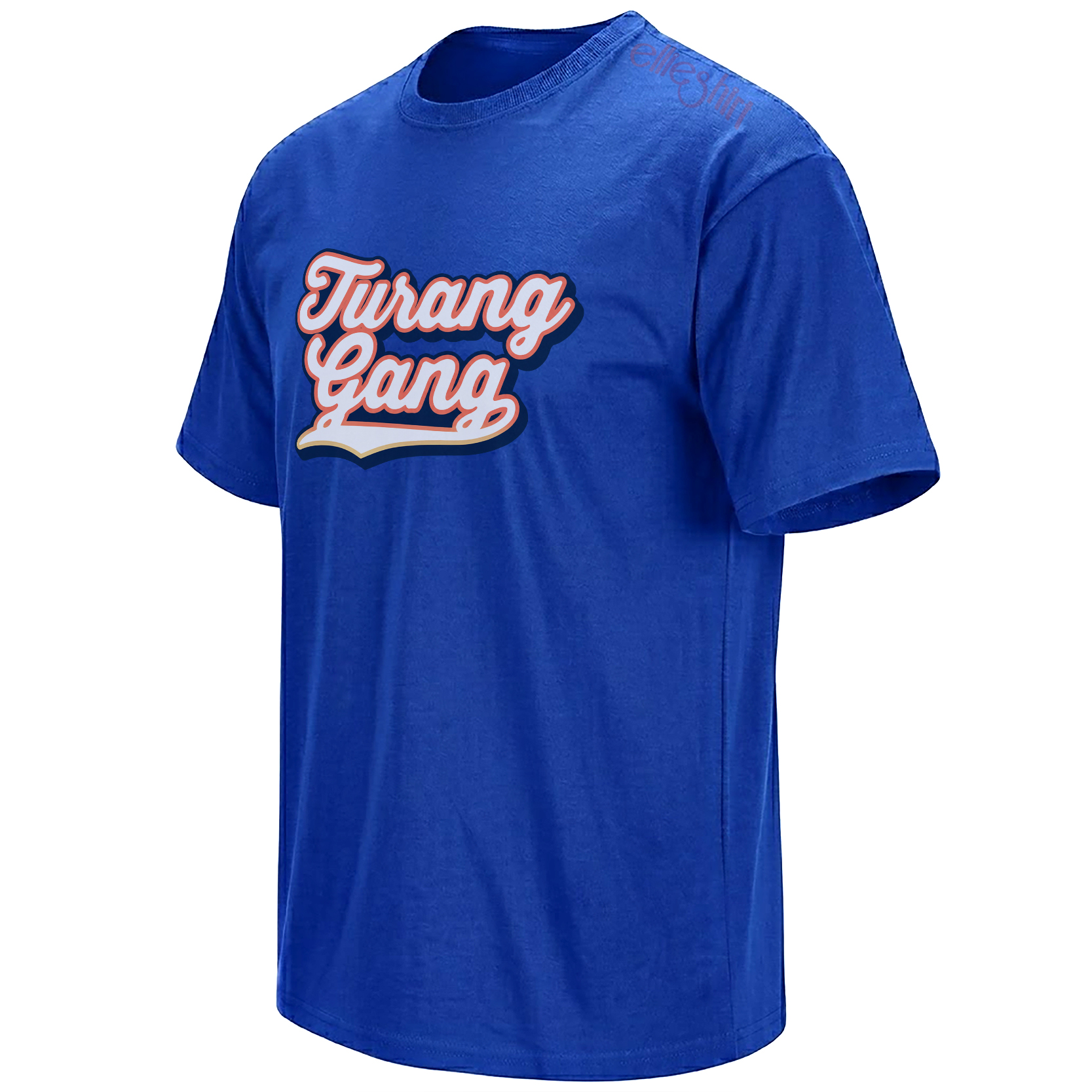
A fan-first identity mark that converts Turang’s name into a clean Milwaukee baseball club phrase.
Join the Turang Gang →Why the Designs Belong Together
One graphic explains the player. The other explains the audience forming around him.
The swing piece presents evidence: Turang in motion, No. 2 visible and the offensive identity placed at the center. It works like a contemporary player poster.
The script piece presents allegiance. It asks the wearer to identify with a group rather than only display a portrait.
Together, they map the complete cycle of a modern baseball breakout. Performance changes perception. Perception creates visual identity. Visual identity gives fans a phrase through which they can participate.
No. 2 is the player Milwaukee watches. Turang Gang is the name fans use when they decide the rise belongs to them too.
The Number 2 Creates a Cleaner Visual Era
Single-digit numbers carry unusual graphic strength. They remain readable at small scale, leave room for larger portraits and create a shape strong enough to function independently.
In Turang’s case, the number also reflects the simplicity of his best baseball. His defense is complex, but it looks smooth. His swing has grown more powerful, but its finished pose remains controlled.
The numeral communicates that same economy. No additional wording is needed to identify the current player once fans recognize the uniform and the stance.
This makes the design especially effective as a marker of a new phase. Earlier career imagery remains connected to another number. The 2026 version can now be recognized through one clean symbol.
Number 2 links position, uniform and career timing. It reads as a jersey identifier, a second-base reference and a dividing line between Turang’s early development and his current star-level role.
Team USA Expanded the Audience Beyond Milwaukee
Turang’s selection for Team USA in the 2026 World Baseball Classic placed his skill set in front of an international audience.
Tournament baseball rewards complete players. Defensive mistakes become magnified, extra bases matter immediately and managers need infielders capable of contributing without requiring one specific lineup role.
Turang’s combination of defense, speed and improving offense made him a natural fit. For Brewers fans, the event confirmed what had already become apparent locally: Milwaukee’s second baseman belonged in conversations beyond the division.
The experience also strengthened the visual meaning of No. 2. It became associated not only with a club breakout, but with a player trusted to represent his country on a major stage.
Milwaukee’s Current Core Is Built From Different Forms of Pressure
The Brewers’ strongest position-player group does not rely on one uniform type of offense. Jackson Chourio can change a game through explosive athleticism. William Contreras controls the middle of the order and the pitching staff. Christian Yelich supplies veteran credibility and left-handed quality.
Turang adds another form of pressure. He can lengthen an at-bat, reach base, steal, score from unusual positions and then take away a hit in the following half-inning.
That two-sided influence makes him especially valuable to a club whose identity depends on extracting advantages across the entire game.
“Turang Gang” fits the roster because it celebrates more than the obvious highlight. The phrase belongs to fans who recognize how many ways No. 2 can change an inning.
Why a Swing Can Become a Milwaukee Baseball Symbol
A swing becomes culturally recognizable when fans connect its shape to repeated results. The follow-through stops being one isolated photograph and becomes shorthand for the anticipation surrounding every plate appearance.
Turang’s left-handed motion is especially useful visually because it opens toward the design. The torso rotates, the arms extend and the bat creates a strong diagonal line across the composition.
The movement contrasts with his defensive reputation, which is often built from rapid but compact actions. At second base, efficiency hides the effort. At the plate, the full finish makes the effort visible.
This contrast explains why the swing is the correct image for the current moment. It shows the part of Turang’s game that Milwaukee fans have watched expand most dramatically.
From First-Round Prospect to Complete Major-League Player
Milwaukee selected Turang with the 21st overall pick in the 2018 Draft. His professional path required patience because his profile was built around several developing skills rather than one overwhelming tool.
He reached the majors in 2023 and immediately provided useful defense, speed and contact. The offensive results developed more gradually.
That progression is important to the current story. Turang did not become a star by abandoning the qualities that first earned him a place in Milwaukee’s lineup. He preserved them while adding greater offensive damage.
The result is a player whose floor remains extremely high. On a quiet day at the plate, he can still influence the game with his glove and legs. On a strong offensive day, he can control nearly every part of it.
Why Milwaukee Fans See More Than the Statistics
Baseball statistics explain output, but fan attachment often develops around style. Turang plays with a smoothness that allows difficult actions to appear natural.
He does not need to create visible chaos to generate pressure. A clean turn at second, a sharp line drive or a stolen base can alter an inning without theatrical celebration.
That understated quality makes the fan-club language more appealing. “Turang Gang” supplies the loud identity while the player himself remains controlled.
The contrast is useful. The performance does not have to shout because the audience can do it for him.
The Wider Milwaukee Baseball Archive
Turang’s rise belongs beside Jacob Misiorowski’s historic velocity, Chourio’s athletic power and the broader group keeping Milwaukee near the top of the division.
The Milwaukee Brewers Shirts collection preserves that current era through player poses, local phrases, nicknames and the visual language surrounding the club’s most important figures.
The broader MLB Shirts collection places the Turang designs inside baseball’s long tradition of turning numbers, swings and fan-created phrases into recognizable identity marks.
The No. 2 graphic records the player Turang has become. The script piece records the response from Milwaukee. One is performance. The other is belonging.
Frequently Asked Questions
What number does Brice Turang wear for the Milwaukee Brewers?
Brice Turang changed to jersey number 2 during the 2026 season, giving his current Brewers era a new single-digit visual identity.
What position does Brice Turang play?
Turang is Milwaukee’s primary second baseman and is recognized for elite range, footwork and double-play ability.
What does “Turang Gang” mean?
“Turang Gang” is a rhyming fan phrase for the community of Brewers supporters following Brice Turang’s rise into one of Milwaukee’s most complete players.
Why is Turang known for his defense?
His quick reads, efficient routes, smooth transfers and range allow him to complete difficult plays while making the movement appear controlled.
Has Brice Turang won a Gold Glove?
Yes. Turang has received both Gold Glove and Platinum Glove recognition for his work at second base.
How has Turang’s offense improved?
Better plate control and stronger contact have added meaningful power to the speed and bat-to-ball skill that originally defined his offensive profile.
What is the difference between the two Brice Turang designs?
The No. 2 design centers Turang’s left-handed swing and player identity, while the Turang Gang script design functions as a fan-club phrase and Milwaukee baseball community mark.
Explore the Brice Turang No. 2 swing design and the Turang Gang script piece as two connected records of Milwaukee’s complete second baseman and the fan identity forming around his rise.
Brice Turang’s No. 2 swing design and Turang Gang script shirt capture both sides of his Milwaukee breakout. One centers the powerful left-handed follow-through and new jersey identity; the other turns his name into a clean fan-club phrase for Brewers supporters celebrating his defense, speed and growing power.