
Trump Renamed Lake Ontario “Lake America.” Then the Internet Took Over.
A trade dispute became a map edit, the map edit became an executive order, and within hours “Lake America” was functioning as news headline, diplomatic provocation, patriotic slogan and punchline at the same time.
By Friday morning, the joke was no longer hypothetical. Donald Trump had signed an executive order directing the U.S. government to call Lake Ontario “Lake America,” a move announced from the Oval Office on August 27 while a Great Lakes map behind him already carried the new label. The order turned a name Trump had floated during his increasingly bitter dispute with Canada into official U.S. federal policy.
The practical reach of the decision is narrower than the spectacle. The United States can change how its own federal agencies, maps and Geographic Names Information System refer to the lake. It cannot compel Canada to change the name on Canadian maps, and the Canadian government has made clear it will not do so.
But practical limits have done very little to slow the cultural velocity. “Lake America” arrived during a U.S.–Canada trade confrontation, after negotiations broke down and both sides announced new tariffs. That made the rename instantly legible as something larger than cartography: it was a Trump-era political gesture whose absurdity, nationalism and diplomatic edge were designed for screens.
The lake did not move. The border did not move. What changed overnight was the language — and language was enough to start an international argument.
The Oval Office Map Became the Defining Image
Modern political moments often become memorable through one photograph. Here, it was the map: the Great Lakes arranged behind Trump, with the easternmost lake marked “LAKE AMERICA.” The image did almost all of the cultural work before anyone read the executive order.
It looked simultaneously official and meme-ready. That contradiction is central to the moment. A presidential order carries institutional power; a renamed lake displayed like a punchline carries the visual energy of a social-media stunt.

Trump beside the Great Lakes map carrying the new “Lake America” label — the visual that transformed an administrative name change into an instantly recognizable political image.
Then the White House Put the Rename Directly Into the Feed
The White House did not allow the executive order to remain an obscure government document. Its official X account posted the announcement in the blunt language of internet politics: “EFFECTIVE IMMEDIATELY,” followed by the new Lake America name.
That mattered because the rollout collapsed the distance between government communication and meme distribution. The same event existed simultaneously as a presidential action, an X post, a screenshot, an argument and a template for parody.
How “Lake America” Became an Instant Tourist Brand
The funniest visual response was not necessarily direct criticism. It was fake normality. If the government says “Lake America,” internet culture immediately asks what the souvenir shop would look like.
That is why tourism-bureau seals, retro sunset badges and “Est. 2026” heritage graphics fit the moment so naturally. They behave as if an overnight political rename already has decades of roadside nostalgia behind it. The joke is the impossible speed with which official language can manufacture “tradition.”
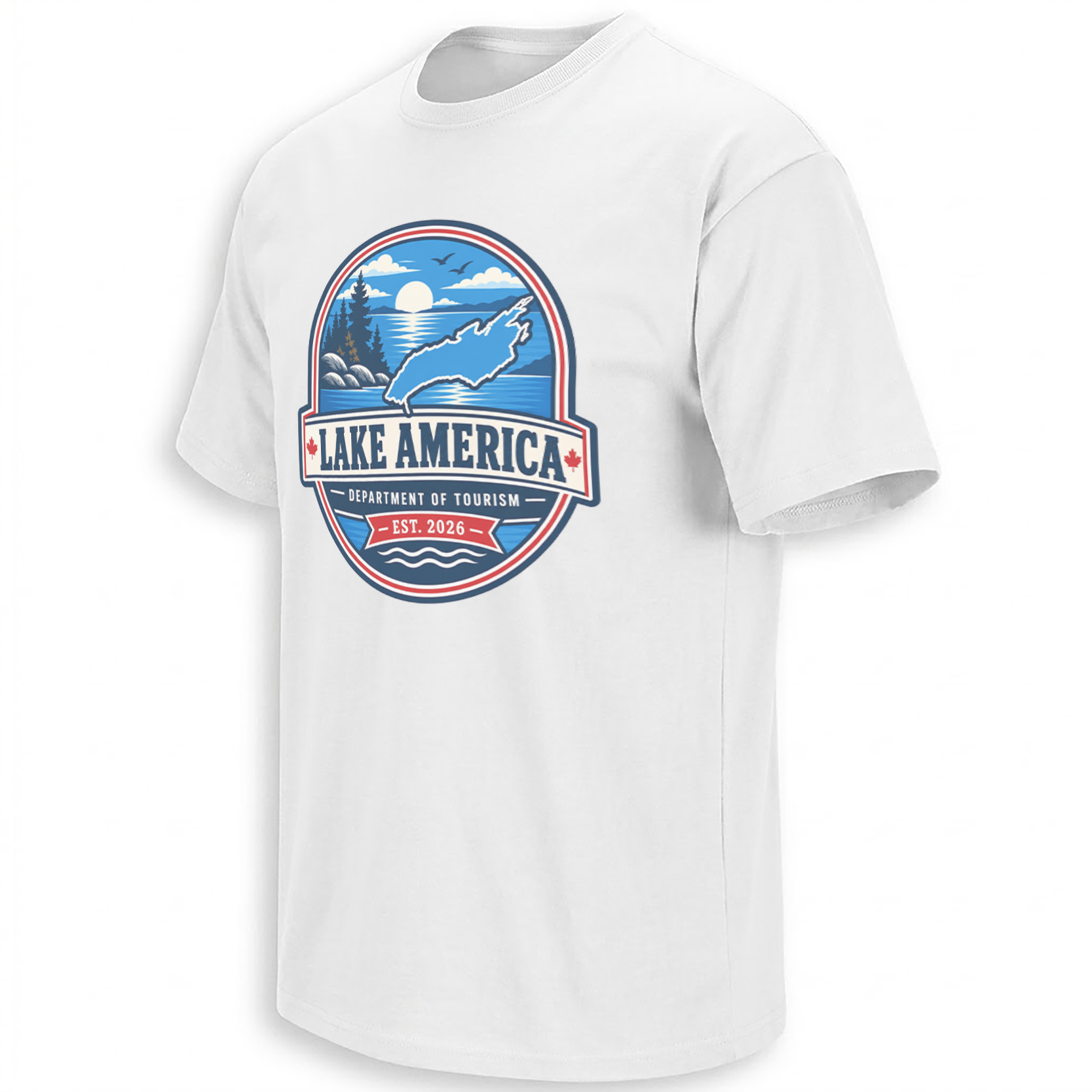
A fictional tourism office turns the overnight rename into instant government-souvenir culture.
View the visual →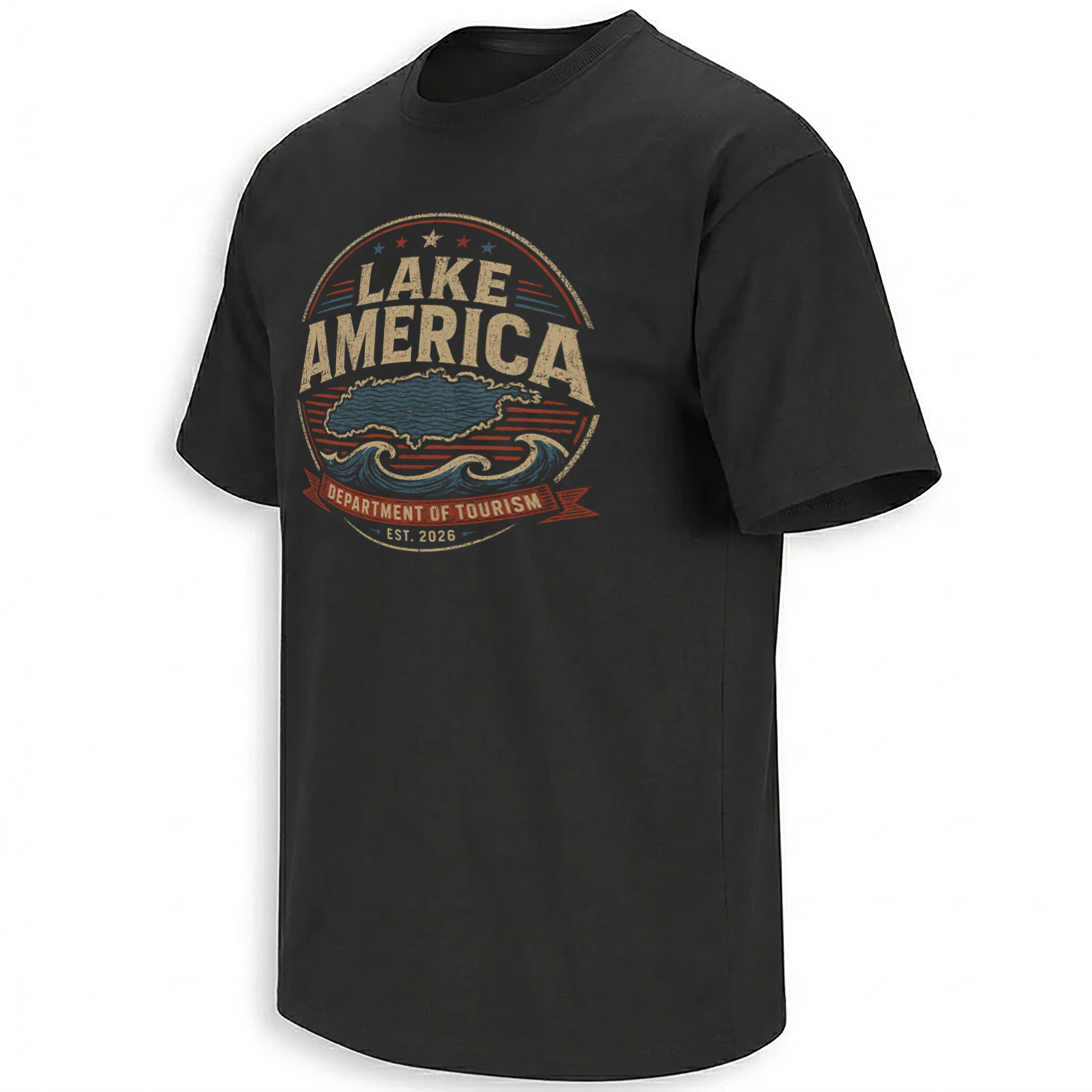
Retro lake graphics make a name born in 2026 look suspiciously like a century-old vacation destination.
Explore the badge →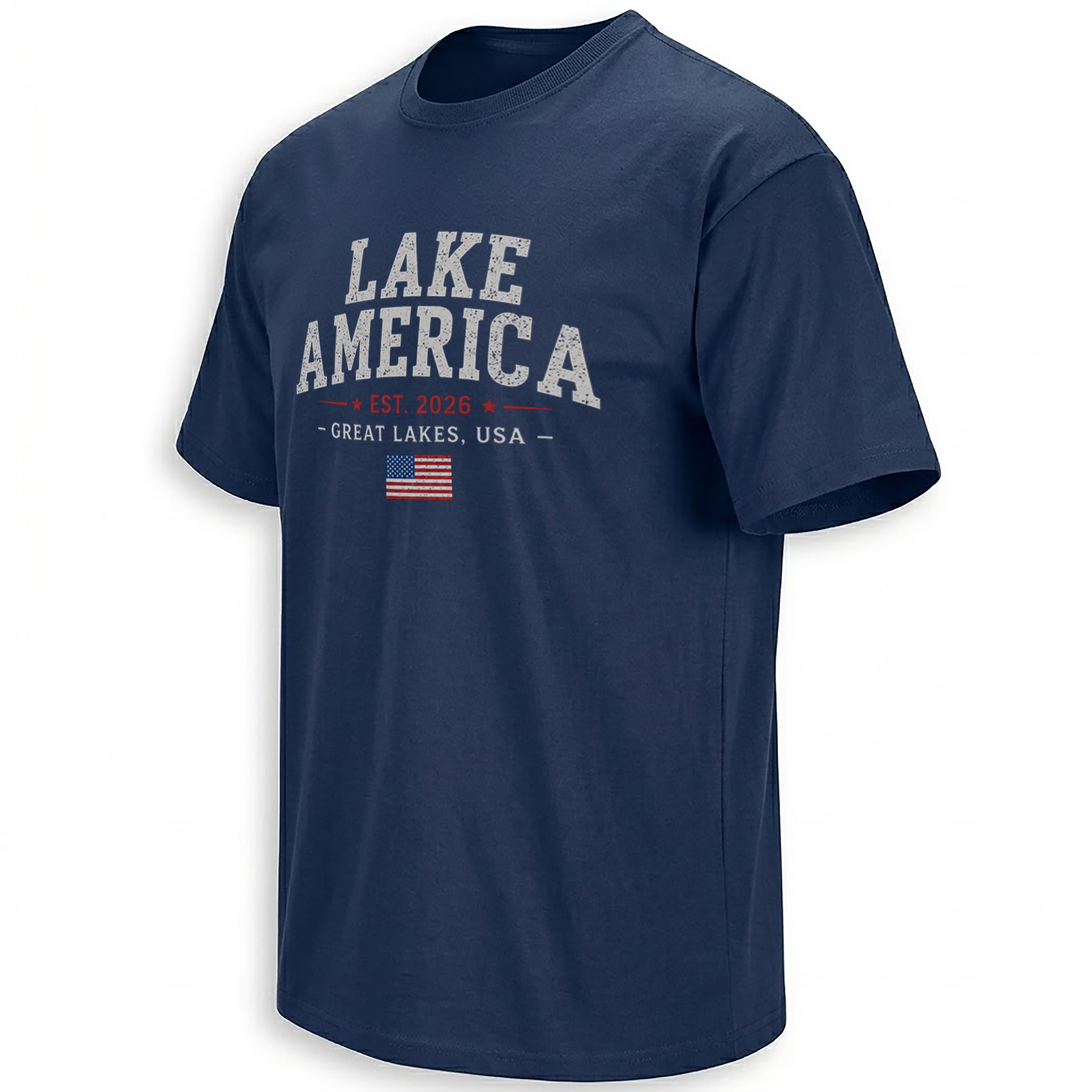
“Est. 2026” is the punchline: political rebranding presented with the confidence of inherited Americana.
See the graphic →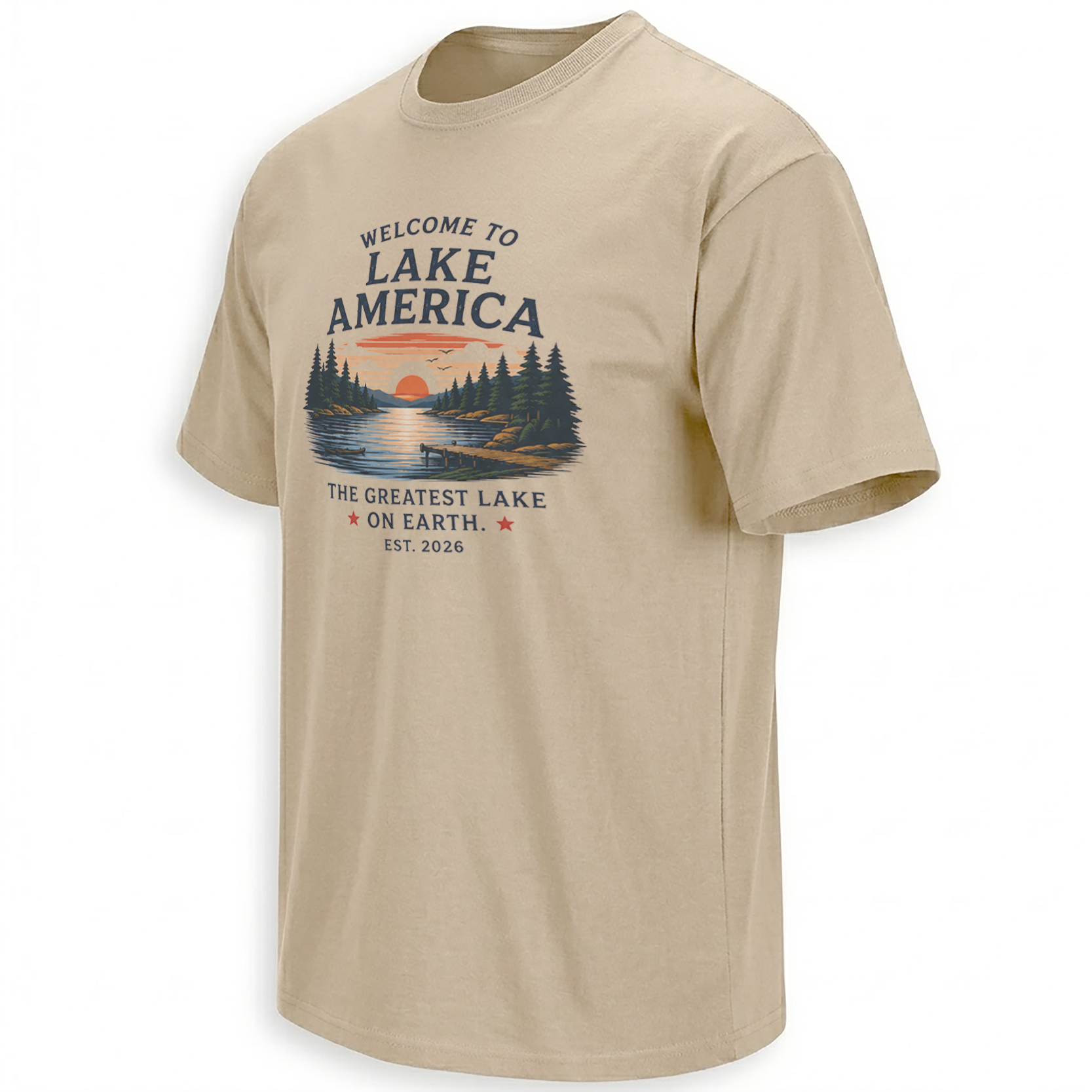
Superlative Trump-era language gets transplanted into the grammar of a roadside welcome sign.
View the piece →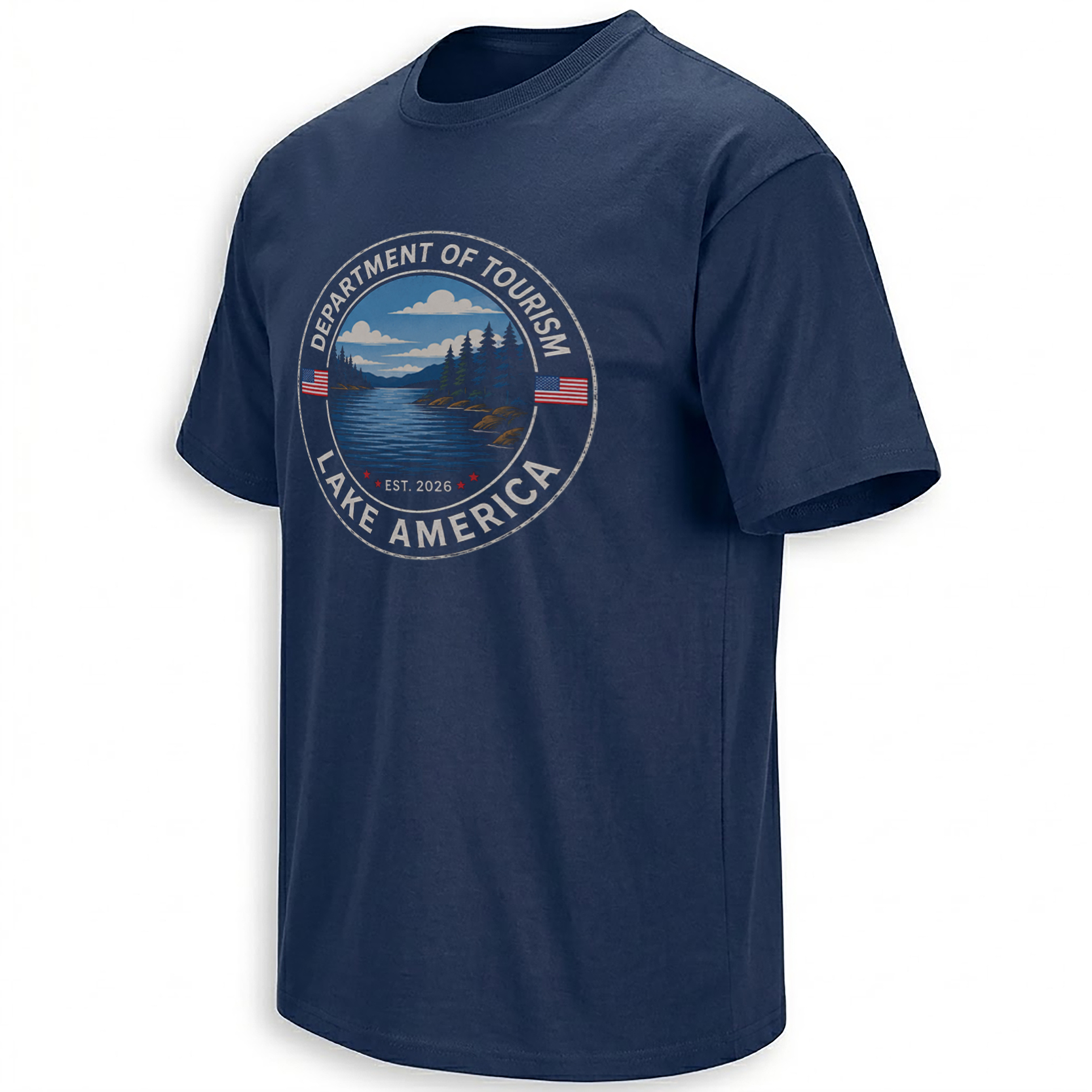
Institutional badge styling plays with the strange authority of a newly official federal name.
Open the design →Tourism seals and heritage badges are funny here because they normally imply permanence. Lake America has the opposite quality: it is fresh, disputed and politically specific. Dressing it as old Americana exaggerates that contradiction.
“Population: Everyone Arguing” May Be the Most Accurate Meme
As Canada rejected the new name and U.S. politicians also criticized the move, the story stopped being only about what a lake should be called. It became a running argument over who gets to name shared geography, what federal power means on a border, and whether the whole episode was policy, provocation or performance.
Meme designs naturally focused on the chaos itself: “Population: Everyone Arguing,” “I Survived the Lake Ontario Rebrand,” “Please Don’t Tell Canada” and a Great Lakes remix of Trump’s most famous campaign phrasing.
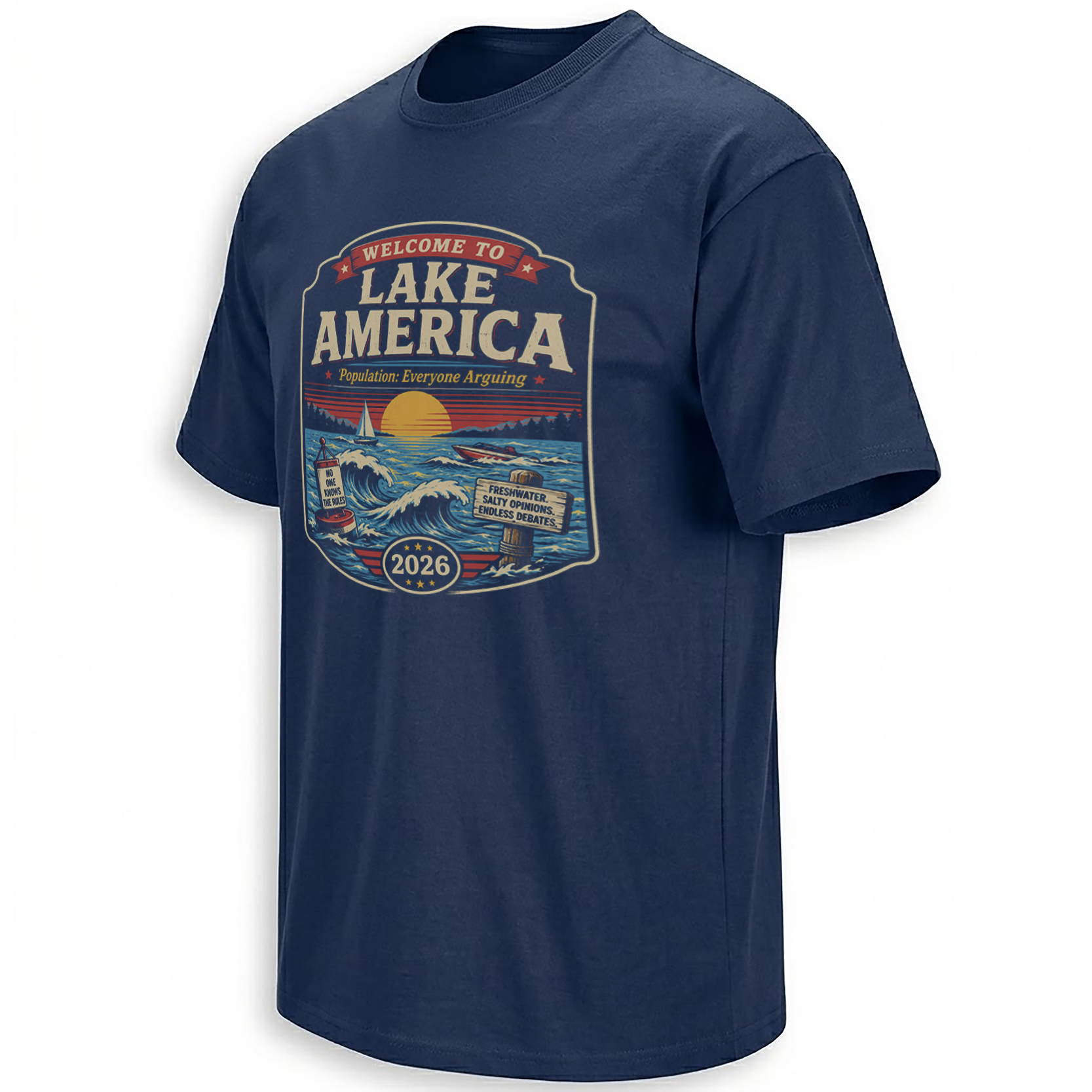
The design treats the controversy itself as the lake’s newest demographic fact.
See the meme →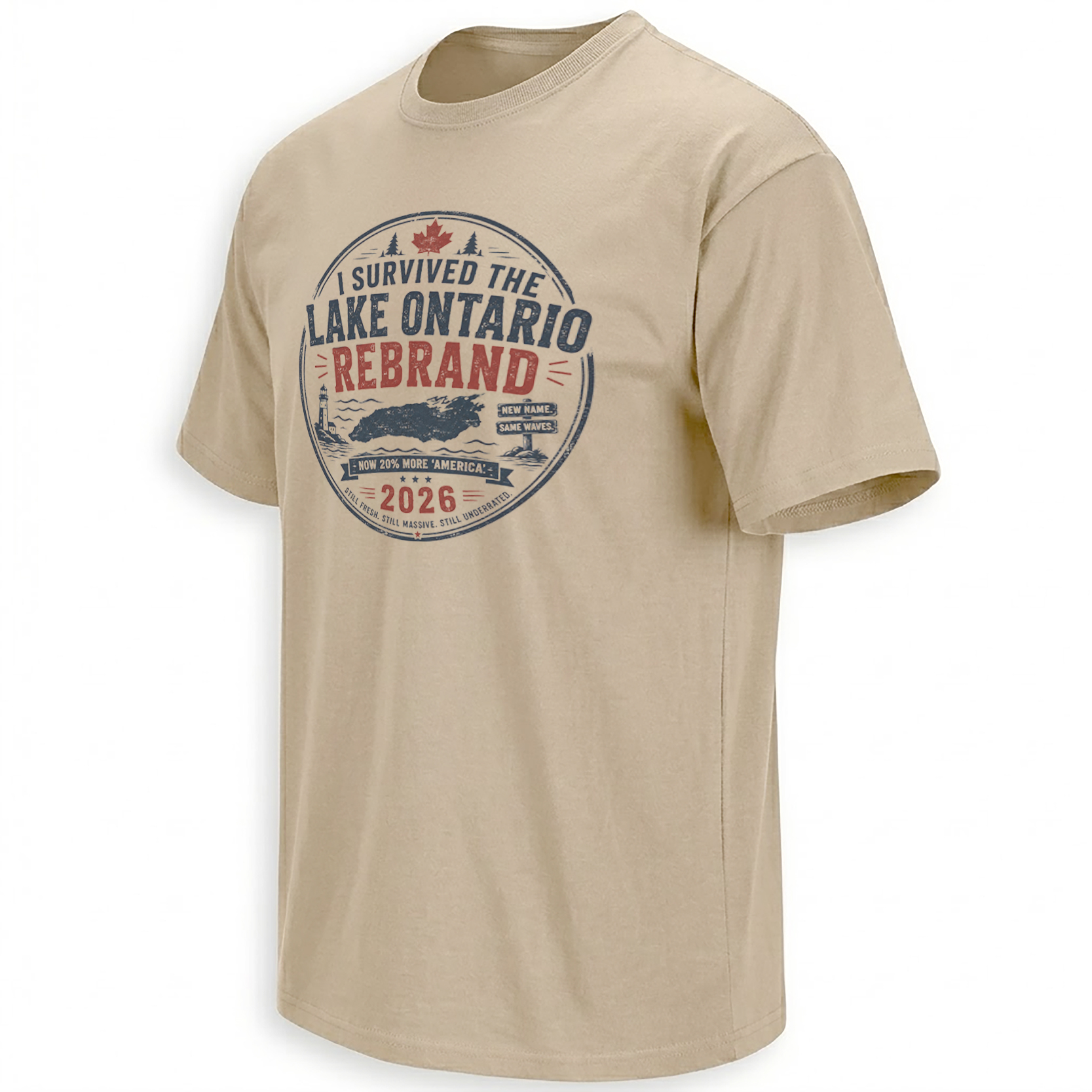
“New Name. Same Waves.” reduces a geopolitical naming fight to the indifference of the actual water.
View the graphic →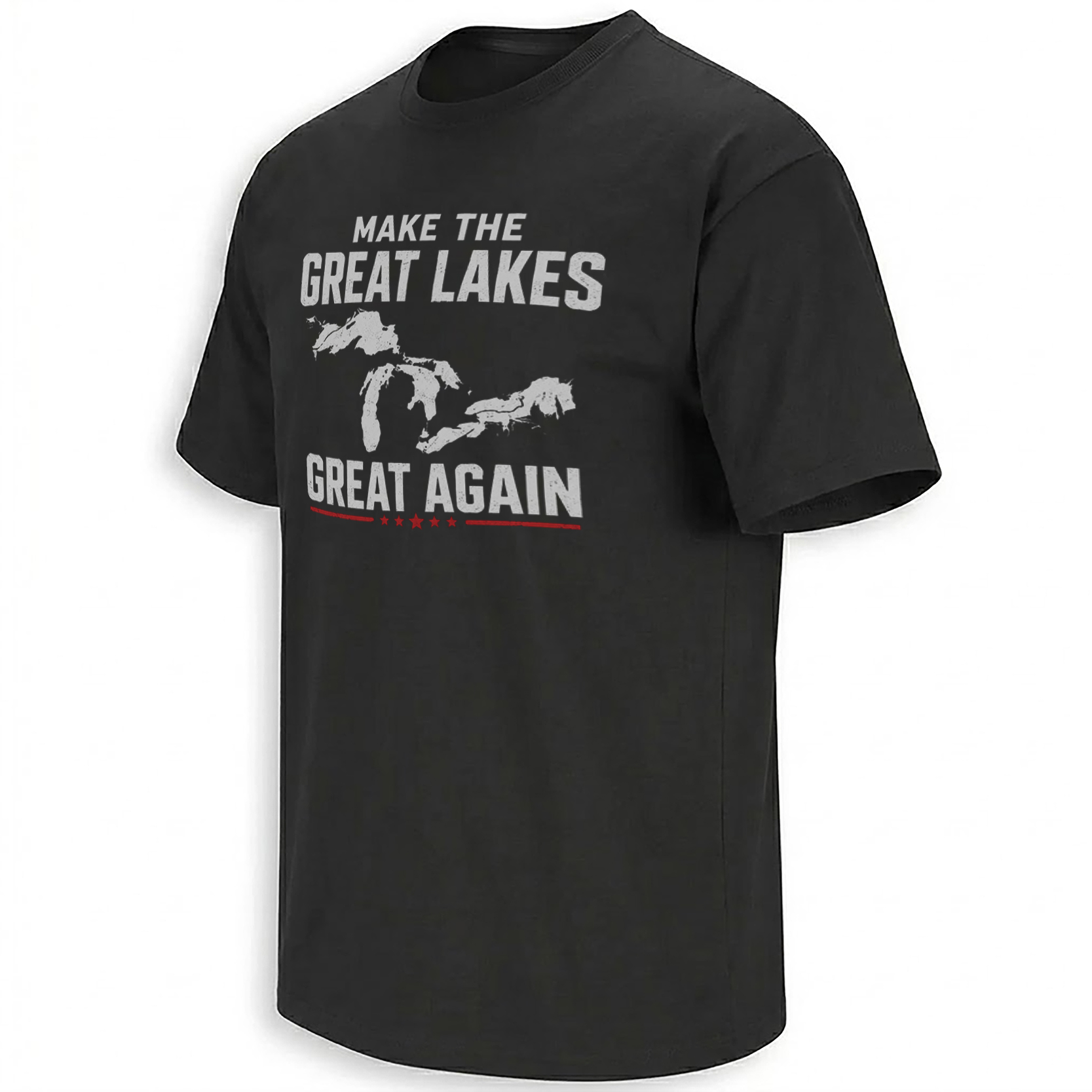
A familiar Trump slogan gets redirected into the absurdly specific geography of the current fight.
Explore the satire →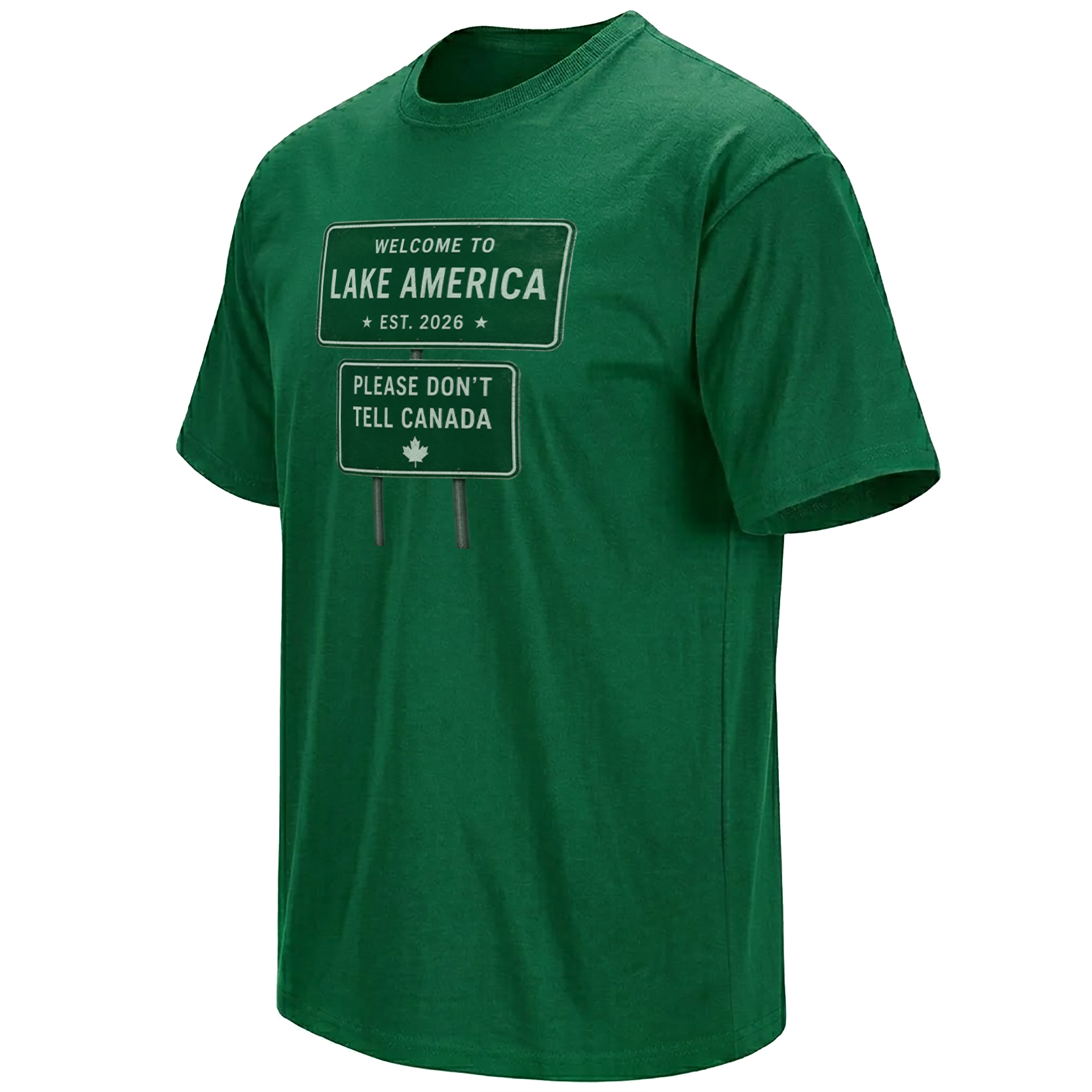
A postcard-style joke that understands the rename is only funny because half the story is across the border.
View the postcard →Why the Rename Is Bigger Than a Map Label
Lake Ontario sits between New York and Ontario. That shared geography is precisely what makes the episode different from a purely domestic name change. Water ignores administrative language. The U.S. can establish its own federal terminology while Canada continues using Lake Ontario.
The result is unusually fertile internet culture: one physical object carrying two political vocabularies at once.
The broader Lake Ontario political collection now functions like a visual timeline of that split — Lake America tourism parody on one side, Canadian refusal on the other, and an expanding middle zone devoted simply to how surreal the argument became. Because Trump is the central political figure behind the order, the Donald Trump design search also connects this controversy to the wider visual language surrounding his second presidency.
Frequently Asked Questions
Did Trump officially rename Lake Ontario to Lake America?
Trump signed Executive Order 14420 on August 27, 2026, directing U.S. federal agencies and geographic naming systems to use “Lake America.”
Does Canada have to call it Lake America?
No. The U.S. order governs American federal usage and does not require Canada or international organizations to adopt the name.
Why did the Lake America story become a meme so quickly?
The combination of a dramatic presidential announcement, a shared international lake, a visible map edit and an already tense U.S.–Canada relationship made the story unusually easy to turn into slogans, parody tourism graphics and social-media jokes.
What does “Est. 2026” mean in Lake America designs?
It is a satirical reference to the year the U.S. federal rename was ordered. The joke treats a brand-new disputed name as if it were an old heritage destination.
Where can readers see the wider Lake Ontario and Lake America design archive?
Ellie Shirt’s Lake Ontario political collection groups designs responding to the rename, Canadian reaction, Great Lakes identity and the meme culture created by the controversy.
The current Lake Ontario and Lake America visual archive captures how quickly the August 2026 controversy moved from executive-order language into postcards, tourism seals, political slogans and jokes about an argument nobody expected to be having.
Trump’s 2026 Lake America executive order transformed Lake Ontario into a U.S.–Canada political flashpoint and an instant meme. These Lake America designs preserve the tourism parody, map jokes and Great Lakes political language that followed.