
Tricycle: How Tristan Peters completed a White Sox cycle nobody saw coming
A double, single, home run and triple gave Tristan Peters one of baseball’s rarest offensive achievements—and gave the South Side a headline that turned four different hits into one unforgettable nickname.
The cycle was already within reach when Tristan Peters came to the plate in the seventh inning. He had doubled, singled and homered. Only the triple remained, the hit that is often hardest to manufacture because it depends on placement, speed and a ball refusing to stop where an outfielder expects it.
Peters drove the ball to right field and ran. By the time he reached third, Guaranteed Rate Field understood what had happened: the seventh cycle in White Sox history, the first for the club since José Abreu in 2017 and the defining performance of a 14–1 victory over the Athletics.
The sequence was even stranger than the achievement alone. Peters hit both the home run and the cycle-completing triple in the same inning, turning a traditional four-hit milestone into something with the timing and rhythm of an internet-era baseball clip.
“Tricycle” works because the night felt less like four separate hits and more like Peters kept circling the bases until history finally caught up.
Why the cycle still feels magical
A cycle is not baseball’s most powerful single-game achievement, but it may be one of its most satisfying. The player must collect four different kinds of hits, each requiring a different combination of contact, trajectory, timing and speed.
A home run removes the defense entirely. A triple places the defense at the center of the play. A double often rewards the gap, while a single may come from almost anywhere. Completing all four in one game creates the feeling that every part of a hitter’s offensive vocabulary has appeared at once.
Peters’ version carried extra drama because the final two pieces arrived during the same inning. The home run seemed to bring him closer to the cycle while also making the remaining triple feel less likely. Minutes later, he supplied it anyway.
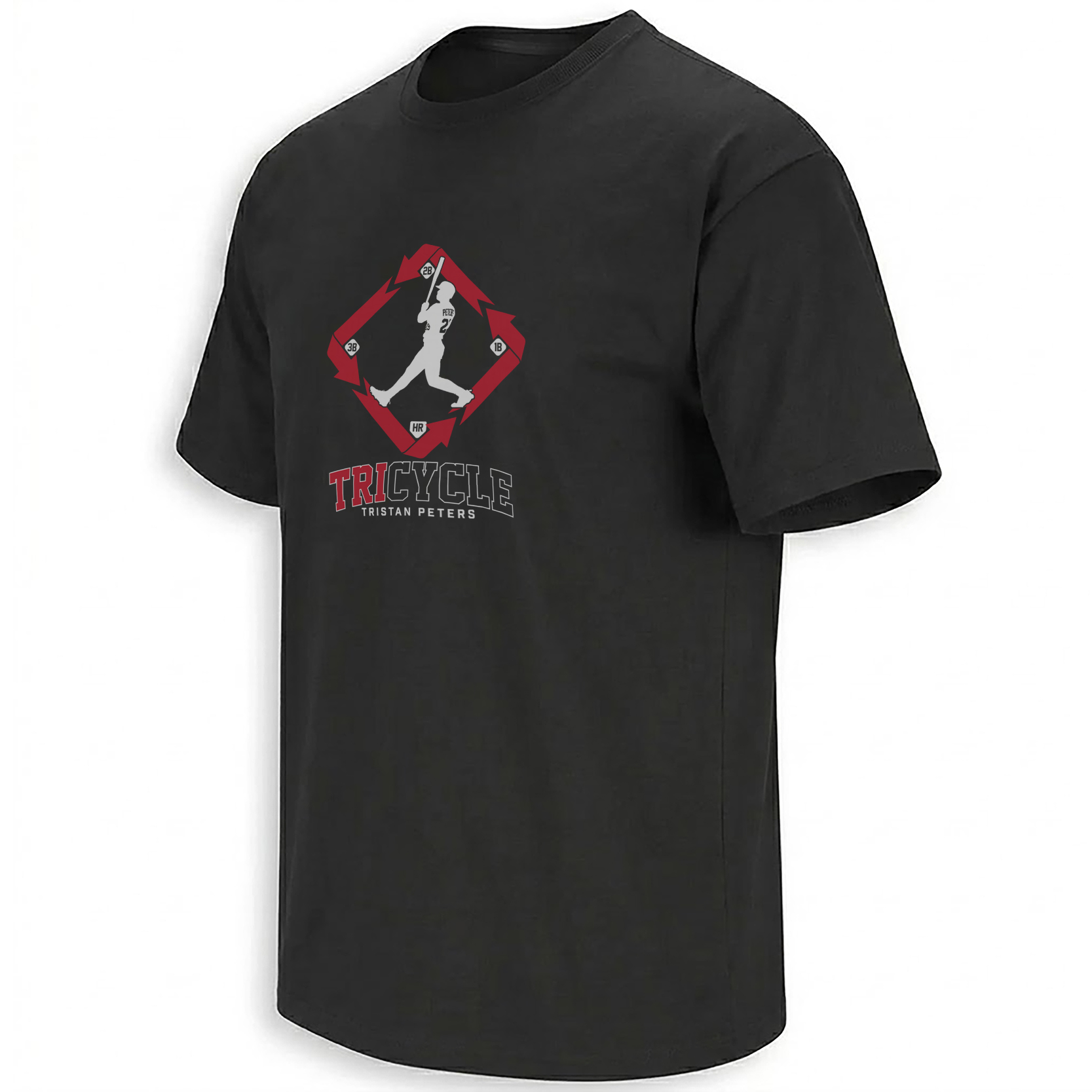
How “Tricycle” transforms the stat into fan language
Baseball statistics often become culturally durable only after fans find a phrase capable of carrying them. “Hit for the cycle” is precise, but “Tricycle” belongs to the moment in a different way.
The word folds Peters’ first name into the achievement while introducing a visual joke that can be understood before every game detail is known. It converts the night from a line in a record book into a nickname, image and wearable headline.
That playful tone does not reduce the accomplishment. It gives fans a compact way to repeat it. Years later, “Tricycle” may trigger the memory of the sequence faster than the box score itself.
A hit to reach first.
A gap to reach second.
Speed and placement for third.
A ball leaving the park.
A breakout performance inside a larger White Sox season
Peters’ cycle did not arrive as an isolated novelty. His 2026 season had already pushed him into a larger role, and the performance strengthened the sense that his emergence was becoming part of the White Sox’s evolving identity.
The timing made the story even larger. Shortly after completing the cycle, Peters was added to the American League All-Star roster, transforming one historic night into the clearest possible announcement of his arrival.
For a player whose career had moved through multiple organizations before reaching this point, the cycle offered something more durable than a hot streak. It gave him a place inside the franchise’s historical list.
Peters joined a short South Side list that includes Ray Schalk, Jack Brohamer, Carlton Fisk, Chris Singleton, José Valentín and José Abreu. The cycle links different White Sox eras through one rare offensive pattern.
Why the design feels like a modern baseball artifact
The strongest event graphics do not need to reproduce an entire box score. They isolate the visual idea that fans will use to remember the game.
Here, the word “Tricycle” carries the concept while the White Sox visual language establishes the setting. Black, white and silver keep the piece connected to the South Side, while the playful vehicle reference gives the historic achievement an internet-native edge.
The result feels less like generic player merchandise and more like the front page created after a very specific game: Peters, the cycle, Chicago and the strange sequence that made it possible.
From one night to the wider South Side archive
The Tricycle Tristan Peters design preserves one of the sharpest White Sox moments of the 2026 season.
The wider Chicago White Sox collection places it beside player breakthroughs, South Side humor and team-specific graphics, while the broader MLB collection connects the achievement to a larger baseball culture built from records, nicknames and single-game performances.
Frequently Asked Questions
When did Tristan Peters hit for the cycle?
He completed the cycle on July 10, 2026, during a 14–1 White Sox victory over the Athletics.
How did Tristan Peters complete the cycle?
He recorded a double, single, home run and triple, finishing the cycle with an RBI triple in the seventh inning.
Why was Peters’ cycle especially unusual?
He hit both the home run and the cycle-completing triple in the same inning, creating an uncommon route to the milestone.
How many White Sox players have hit for the cycle?
Peters became the seventh player in franchise history to accomplish it and the first since José Abreu in 2017.
What does “Tricycle” mean in the design?
The phrase combines Tristan Peters’ name with the cycle achievement and turns the historic sequence into a visual baseball pun.
The Tricycle graphic preserves Peters’ historic performance, while the White Sox visual archive follows the breakout players, South Side moments and baseball language surrounding the season.
Tricycle Shirt captures Tristan Peters’ historic 2026 White Sox cycle through South Side color, playful baseball imagery and the unforgettable night he homered and tripled in the same inning.