This Marlboro Light of Mine: How “Let It Shine” Became a Cigarette Parody
The joke starts with one of America’s most recognizable song structures, then swaps “little light” for the name of a cigarette line whose white-and-gold packaging became an advertising image of its own.
“This Marlboro Light of Mine, I’m gonna let it shine” works for the same reason a strong parody headline works: the audience knows what the sentence is supposed to say before it reaches the changed word.
The underlying rhythm comes from “This Little Light of Mine,” a song with a long history in American religious, folk and Civil Rights culture. Change “little light” to “Marlboro Light,” preserve the familiar “let it shine” response, and a serious musical phrase suddenly collides with cigarette-pack language.
Unlike an ordinary smoking joke, the visual reference is unusually specific. Marlboro Lights developed a recognizable white-and-gold identity during the twentieth century, with archival advertising repeatedly placing pale packs and gold accents against the much larger visual mythology of Marlboro Country.
The joke lands before the cigarette is even lit: the melody supplies “light,” the old package supplies “Marlboro,” and the viewer’s memory finishes the line.
The Gold-and-White Pack Has Its Own Visual History
Marlboro Lights appeared in the early 1970s as tobacco companies were aggressively developing “lighter” product categories. Internal advertising histories archived by Stanford show how the line was deliberately positioned close enough to Marlboro’s existing identity to inherit its recognition while still using lighter colors and prominent pack imagery to distinguish itself.
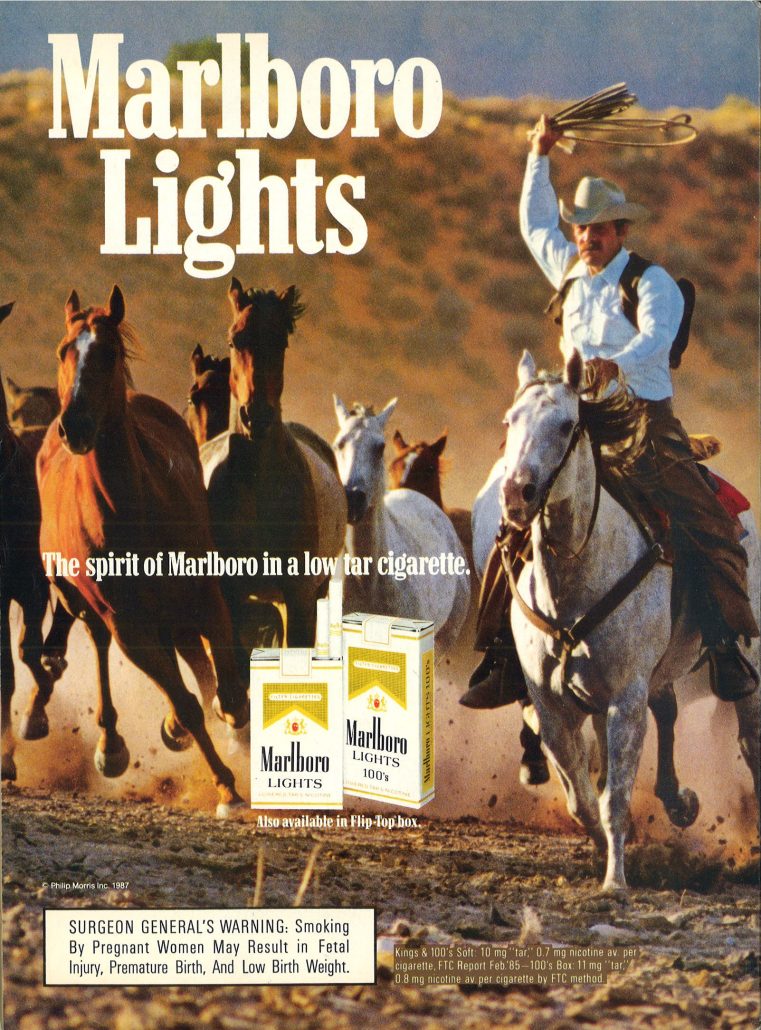
By the 1980s, that visual system was highly recognizable: white packaging, gold chevron elements, dark serif branding and Marlboro Country imagery. The Center for the Study of Tobacco and Society preserves a 1988 magazine advertisement that shows riders and horses above two Marlboro Lights packs — precisely the sort of graphic language the parody can reference without needing to reproduce an entire cowboy scene.
The Design Changes the Joke From Beer to Cigarettes
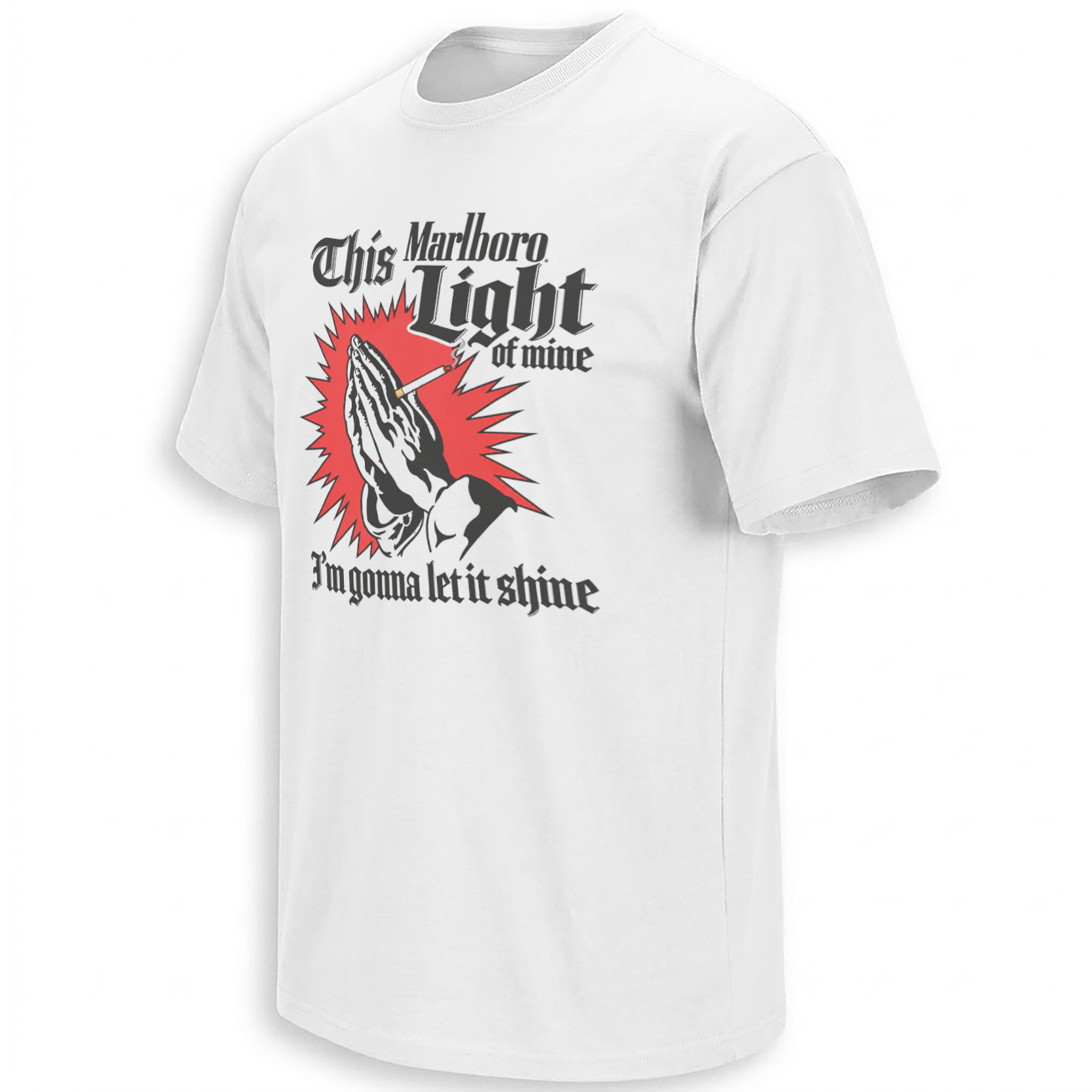
The This Marlboro Light of Mine Shirt follows the same language mechanism as the “This Miller Lite of Mine” beer joke but changes the object, color logic and cultural reference completely.
Here, the central prop becomes a cigarette rather than a beer can. The hand posture matters because it prevents the illustration from looking like somebody simply displaying a package. A cigarette held naturally between the fingers gives the artwork the silhouette of an old smoking illustration while keeping the pun readable as the real subject.
Gold is especially important. It immediately pushes the piece toward the historical Marlboro Lights palette rather than the red-and-white system most people associate with standard Marlboro imagery. Cream, tan and tobacco-brown accents then give the composition a faded-print quality that feels closer to an old magazine advertisement than contemporary branding.
Why “Light” Has More History Than the Pun Suggests
There is an important difference between the cultural memory of the name and what the term implies medically. In the United States, federal law restricts cigarette labeling with descriptors such as “light,” “low” and “mild” unless a product receives specific authorization.
The FDA explains that those terms historically created a misleading impression that certain cigarettes carried less health risk. Research cited by the agency finds that smokers of so-called light cigarettes do not reduce their risk of smoking-related cancers and other diseases simply by switching categories.
“Marlboro Lights” is used here as the historical brand language being parodied. “Light” should not be interpreted as meaning safer, healthier or lower-risk smoking.
Why the Phrase Sounds Older Than the Meme Actually Is
The exact “This Marlboro Light of Mine” wording does not currently show the same documented viral social footprint as the Miller Lite version. That is useful rather than disappointing, because it changes the editorial meaning of the design.
Instead of documenting one specific viral post, it operates like folk parody: a familiar song template that can be rebuilt around any phrase that fits the sound. “Little Light,” “Miller Lite” and “Marlboro Light” share enough rhythm for the brain to make the substitution instantly.
That makes the piece less dependent on one screenshot or social account. Its reference system is broader: old American song memory on one side, highly recognizable twentieth-century cigarette advertising on the other.
Research did not surface a strong, verifiable social post establishing the exact Marlboro wording as a major current meme. Rather than inventing one, the article treats the design as visual and linguistic parody grounded in documented advertising history.
From Advertising Icon to Internet Remix Material
Much of modern parody culture works by taking imagery that once carried enormous commercial authority and flattening it into reusable internet vocabulary. Cigarette advertising is especially suited to that treatment because twentieth-century tobacco campaigns invested heavily in typography, color systems and instantly identifiable lifestyle images.
The result is a graphic that looks backward and sideways at the same time. It recalls a historical cigarette identity, but its sentence construction belongs to contemporary meme culture. The vintage pack becomes raw material rather than the object being advertised.
That visual remix approach fits naturally within Ellie Shirt’s Newest collection, where parody, internet language and recognizable cultural references regularly collide inside current graphics.
Frequently Asked Questions
What does “This Marlboro Light of Mine, I’m Gonna Let It Shine” mean?
It is a wordplay parody of “This Little Light of Mine,” replacing “Little Light” with “Marlboro Light” while preserving the familiar “let it shine” rhythm.
Were Marlboro Lights a real cigarette product?
Yes. Marlboro Lights became a major historical cigarette line with distinctive white-and-gold packaging and extensive advertising.
Why does the design use gold instead of classic Marlboro red?
Gold and pale packaging are visual references to the historical Marlboro Lights identity rather than the better-known red Marlboro package.
Does “light” mean the cigarettes were safer?
No. The FDA states that “light” cigarette descriptors created misleading impressions about health risk, and switching to light cigarettes does not eliminate smoking-related risks.
Is “This Marlboro Light of Mine” a confirmed viral 2026 meme?
Research did not find strong evidence that the exact wording is currently a major standalone viral meme. The design works primarily as a song-and-advertising parody.
The This Marlboro Light of Mine design turns one familiar song phrase and one highly recognizable advertising identity into a piece of vintage-looking parody — without pretending the historical “light” label ever meant harmless.
This Marlboro Light of Mine Shirt reworks “This Little Light of Mine” through vintage Marlboro Lights visual language, combining gold-and-cream cigarette imagery with the familiar “I’m gonna let it shine” parody line.