
The Super Knicks Became a Cartoon Because New York Needed the Whole Roster to Feel Larger Than Life
With the Knicks carrying a 2-0 Finals lead back to Madison Square Garden, the city has stopped treating this run like a normal playoff story. It has become a borough-wide comic panel of belief, superstition, jokes, faces, rituals, and old basketball ache.
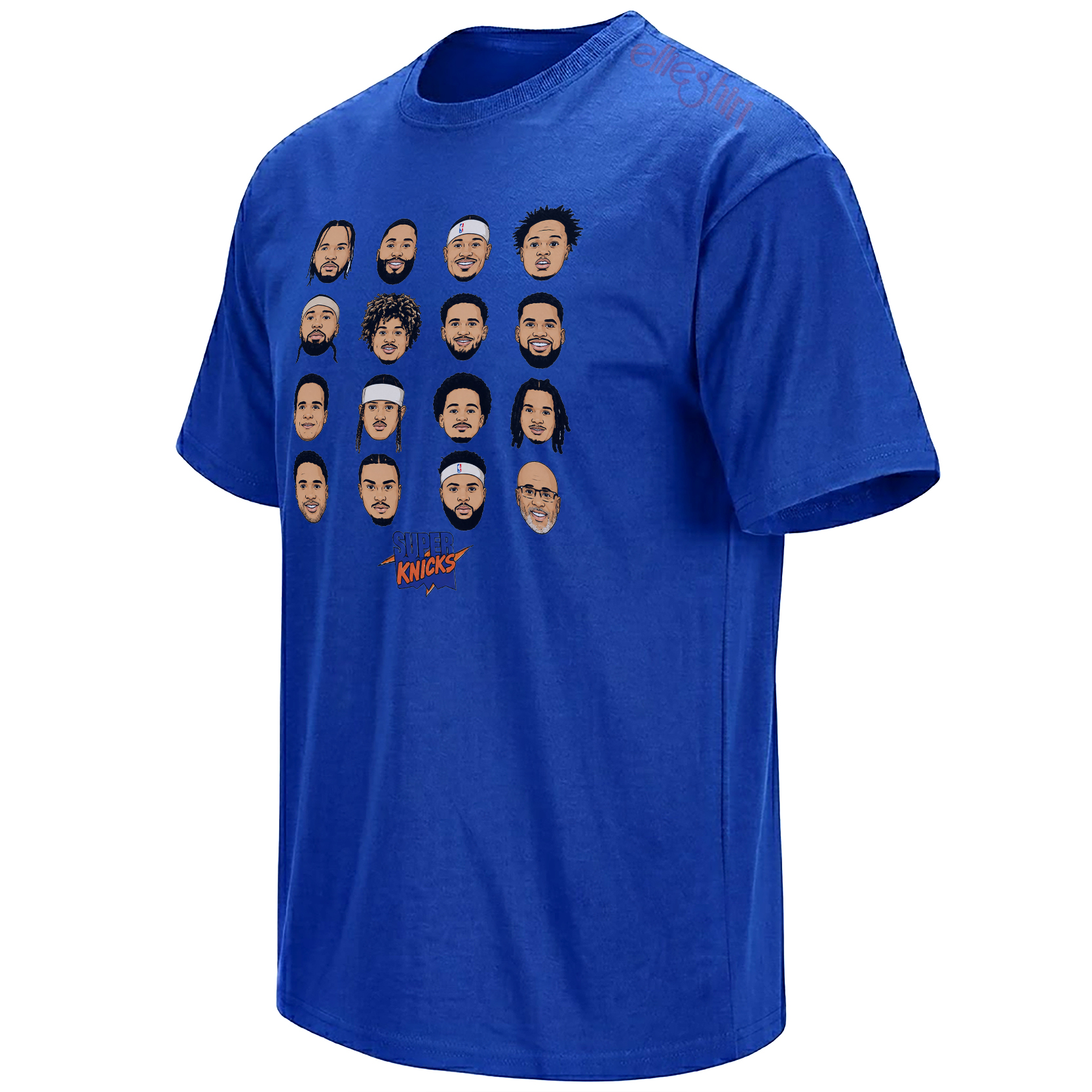
New York did not wait for the trophy to start turning the Knicks into folklore. The series moved back to Madison Square Garden with the Knicks up 2-0 on San Antonio, and the city reacted the way it often does when sports stops being background noise: it made the team part of daily life.
The mood is not only confidence. It is hunger with memory attached. This is the first NBA Finals game at the Garden since 1999, and the franchise is still carrying the long shadow of a championship wait that reaches back to 1973. That kind of timeline does not produce normal fan behavior. It produces rituals, arguments, street corners, deli references, watch-party superstition, and a sudden need to make every player feel like a character in the same New York myth.
That is why a “Super Knicks” visual language makes sense right now. It captures the way the internet has started processing the roster: not as a clean depth chart, but as a cast. Brunson as the gravitational center. Towns as the second engine. Bridges, Hart, Anunoby, Robinson, and the rest of the group as familiar faces in a city comic strip where every possession feels drawn with thicker lines.
Why the Finals Return Made the Knicks Feel Like a Citywide Story
The Knicks’ 2-0 lead changed the emotional weather. Before the Finals, New York had hope. After two road wins in San Antonio, the city had something more dangerous: a reason to start picturing the ending. That is why Game 3 at Madison Square Garden carries so much charge. It is not simply a home game. It is the city’s first chance in decades to see the Finals under its own roof again.
Across New York, the run has already escaped the arena. Local food spots, sidewalk watch parties, street art, influencer rituals, and small neighborhood jokes have turned the Knicks into a civic language. The team is not just being followed; it is being folded into the city’s routines. That is usually the point where fan culture becomes visual culture.
In plain terms, the Super Knicks idea works because the 2026 Finals run has made the Knicks roster feel like New York’s temporary public cast — a group of faces everyone recognizes, debates, exaggerates, and emotionally assigns a role to.
The Internet Did Not Make One Hero; It Made a Team Cartoon
Brunson is the center of the current Knicks imagination, and that part is obvious. He has turned doubt into a New York belief system, and his Finals performances have pushed him into the MVP conversation. But the reason this roster feels so internet-native is that the city is not only watching one star. It is assigning personalities to everyone.
Towns has become part of the redemption and validation arc. Hart carries the chaotic connective energy that fans love to turn into memes. Bridges and Anunoby give the run a defensive face. Robinson becomes a symbol of the physical, bruising version of New York basketball that old fans recognize. The bench and supporting cast become the kind of background characters who suddenly matter because the whole city is reading every possession like a panel.
Design Language: Comic Faces, Finals Pressure, and New York Exaggeration
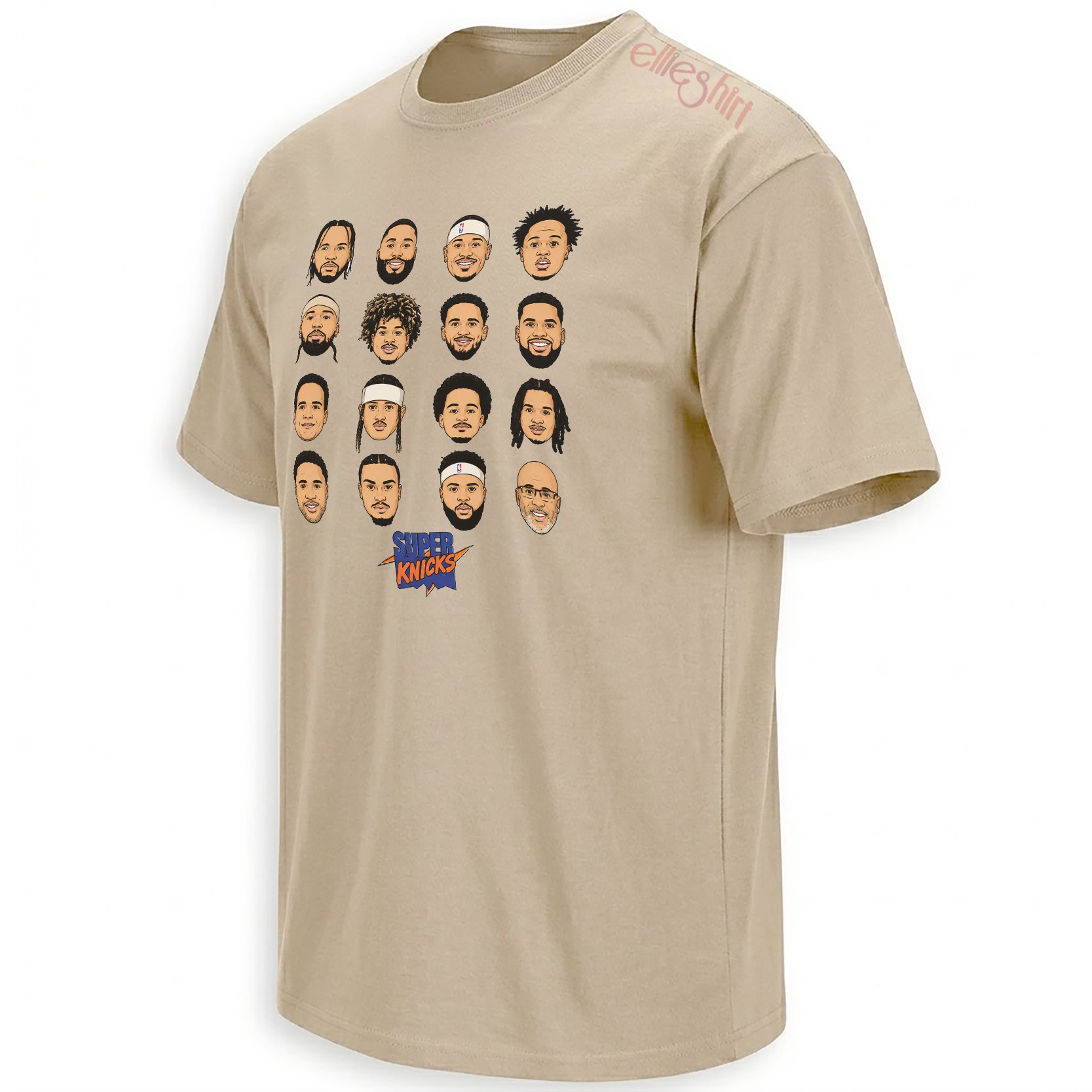
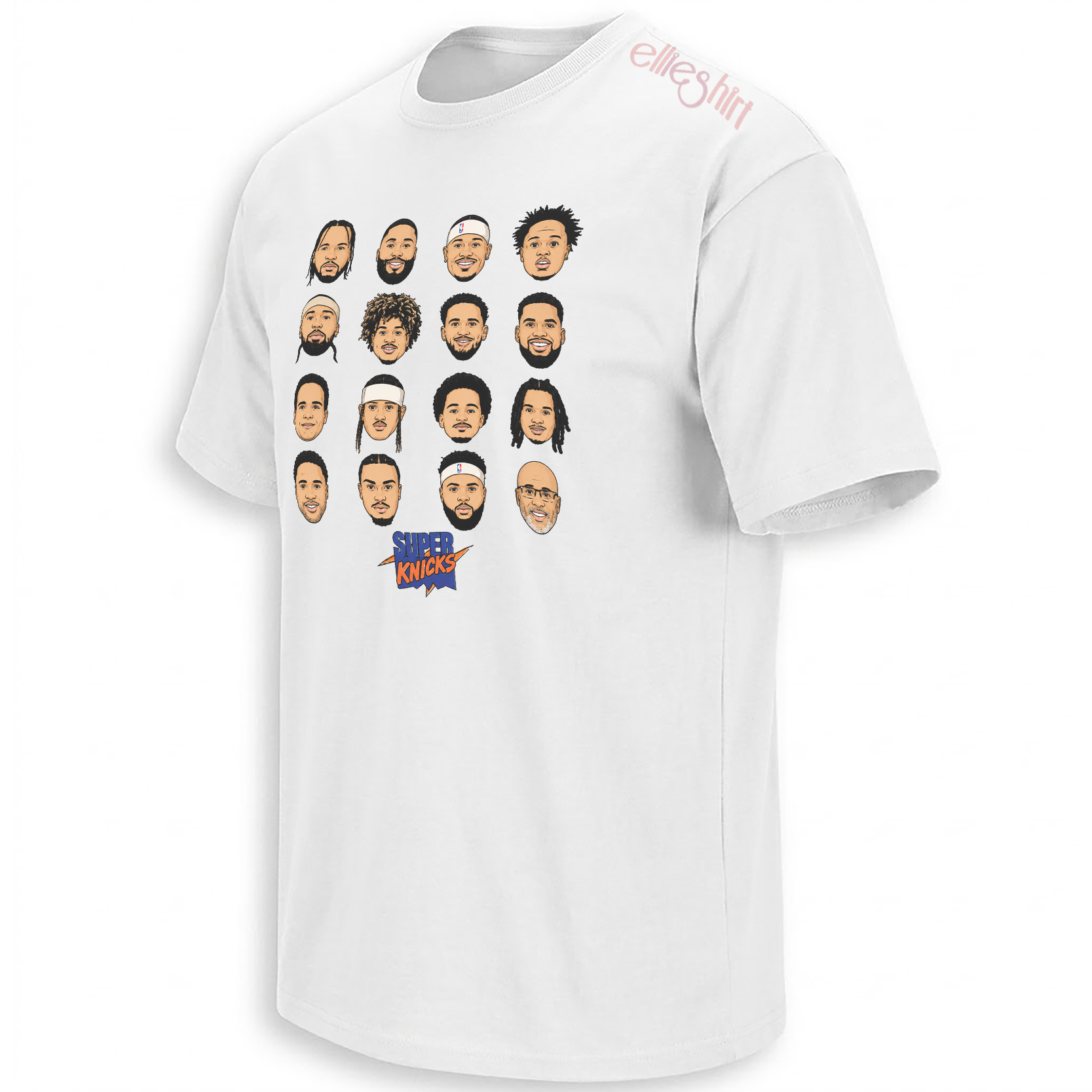
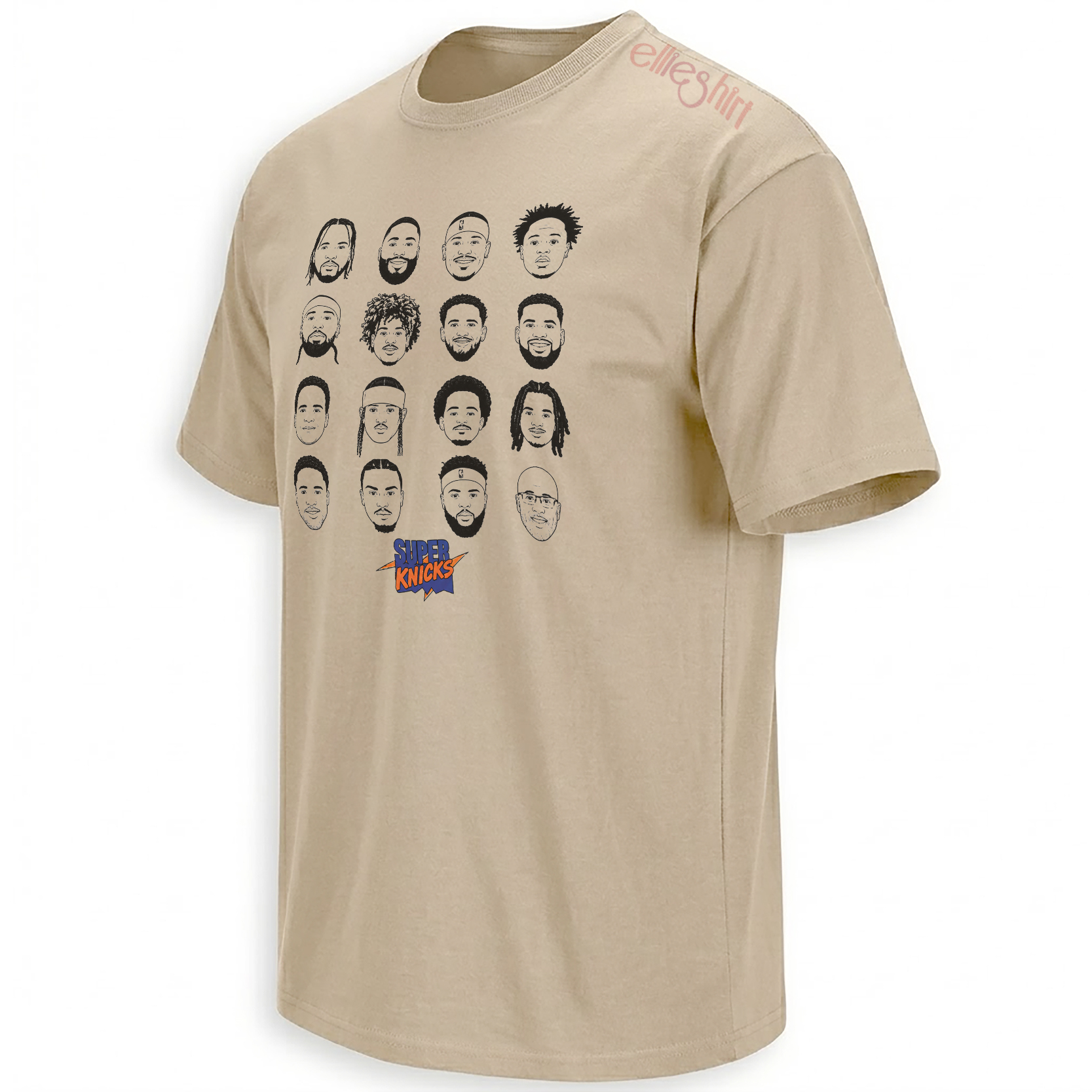
The artwork fits the moment because it does not treat the roster like a formal team photo. It turns the players into caricature, which is closer to how New York sports culture actually works during a run like this. The city exaggerates everything: confidence, frustration, superstition, loyalty, panic, swagger, and memory.
The royal blue version gives the graphic immediate Knicks visibility, while the orange and white details keep the energy close to the team’s classic visual identity. The cartoon faces matter because this run has become personality-driven. It is not just “Knicks vs. Spurs.” It is Brunson’s calm, Towns’ validation, Hart’s chaos, OG’s stillness, Mikal’s length, Mitch’s physicality, and the city trying to turn a roster into a legend before the series is even finished.
The layout has a bootleg street-poster feeling: crowded, emotional, slightly loud, and built for a moment that is already moving faster than official history can write it down. It feels like something that could appear outside the Garden, on a train platform, or in a fan’s camera roll next to blurry celebration videos.
Why 1999 Keeps Haunting the 2026 Conversation
Every Knicks Finals sentence seems to carry 1999 somewhere inside it. That was the last time the Garden hosted this stage, and the gap has turned the current run into a memory collision. Older fans remember the old version of Knicks hope. Younger fans have inherited the pain through stories, clips, jokes, and the strange civic education of being a New York basketball fan.
That is why cartoon language feels strangely appropriate. It gives the run a bright surface, but underneath it is decades of waiting. The design does not need to spell out every year or claim to be a complete history. It works more like a fan-facing memory map: the 2026 roster drawn at the exact moment the city is trying to decide whether hope is finally safe.
Inside the wider New York Knicks collection, graphics like this begin to feel less like a product category and more like a running archive of the city’s basketball mood. Around the broader NBA shirts and apparel archive, it belongs to the Finals-era pieces that only fully make sense if you remember how loud New York got before the ending was known.
The Spurs Matchup Gives the Cartoon Its Stakes
The Spurs are not just a backdrop. Victor Wembanyama’s presence gives the series a futuristic scale, which makes New York’s team-caricature energy feel even more dramatic. The Knicks are not simply trying to win a title; they are trying to beat the league’s next giant while carrying a city that has waited too long to be calm.
That contrast is part of the reason the roster matters. Against a singular basketball figure like Wembanyama, New York’s emotional counter-image is collective. The Super Knicks idea captures that: not one superhero floating above the city, but a group of exaggerated, specific, deeply argued-over characters trying to pull the same story across the line.
The Super Knicks graphic sits inside that conversation as a visual record of the roster becoming mythology while the series is still alive. It is not the story itself. It is one of the artifacts produced by the pressure around the story.
As a reference piece, the cartoon captures the exact fan emotion of this stage: New York turning its roster into a cast before anyone knows how the final chapter will read.
FAQ
Why does the 2026 Knicks Finals run feel so emotional in New York?
The run connects the current 2-0 Finals lead with decades of waiting, the franchise’s 1973 title drought, and the Garden hosting its first Finals game since 1999.
Why does a roster cartoon fit this Knicks moment?
The city is treating the roster like a cast of public characters. A caricature style reflects how fans exaggerate personalities, roles, rituals, and pressure during a rare Finals run.
How are fans turning the Knicks run into culture outside the arena?
The run has moved into watch parties, food references, street art, social media rituals, and neighborhood conversations, making the Knicks part of daily New York life during the Finals.
Why does the Spurs matchup matter to the story?
San Antonio’s Victor Wembanyama gives the series a giant individual figure, while New York’s counter-image is collective: a full roster carrying a city’s belief and pressure.
A Cartoon Before the Ending Is Known
The strangest part of Finals culture is that memory begins forming before the result is final. New York is already collecting signs, jokes, faces, and rituals because the city knows how rare this feels. The Super Knicks image belongs to that unfinished archive.
Maybe it becomes part of a championship memory. Maybe it becomes part of the nervous mythology of a series that forced New York to feel everything at once. Either way, the roster has already crossed into cartoon form, and that tells the truth about where the city is emotionally: too close to history to stay realistic.