Peter Parker or Spider-Man? “I’m Both.”
One quiet answer at the climax of Spider-Man: Brand New Day turned Peter Parker’s divided life into the line viewers carried out of theaters and onto X: the man and the mask were never competing identities.
The line began moving through X almost as soon as opening-day audiences could quote it. “Are you Peter Parker or Spider-Man?” is a familiar superhero question, built to force a choice between the vulnerable person and the public symbol. Peter’s answer in Spider-Man: Brand New Day is only two words: “I’m both.”
The exchange arrives during the film’s climactic Damage Control confrontation, after Peter has spent much of the story trying to contain dangerous new abilities and the fear attached to them. Jean Grey asks him to be honest about who he is. Rather than surrender Peter Parker to the mask—or reject Spider-Man as the source of his isolation—he accepts the complete self.
That brevity helped the scene travel. X collected the conversation under a dedicated trend summary on July 31, while viewers repeated the question and answer across posts, clips, GIFs and reaction images. The wording is easy to remember, but its emotional force comes from everything Peter has lost since No Way Home and everything he still chooses to carry.
Why “I’m Both” Is the Answer Peter Needed
Peter’s conflict has never been solved by choosing only one half. Peter Parker supplies the compassion, guilt, humor and ordinary human attachments that give Spider-Man a moral center. Spider-Man expresses the responsibility Peter cannot ignore when someone needs help. Remove either side and the character becomes incomplete.
Brand New Day sharpens that problem because the world remembers the hero while forgetting the person. Spider-Man still exists as a visible figure in New York, but Peter has been cut away from the relationships that once confirmed his life outside the suit. The question therefore lands on a person already living the consequences of being reduced to the mask.
His answer is not a slogan of effortless confidence. It is a decision to stop treating his humanity and power as enemies. When Peter removes the inhibitor and still refuses to kill, the film gives that decision physical proof: accepting the dangerous part of himself does not require surrendering the conscience that makes him Peter.
Peter does not become whole by escaping the mask. He becomes whole by refusing to let the mask erase the person underneath it.
Why the Line Resonated Across Spider-Man Fandom
Spider-Man stories repeatedly return to dual identity, but this line feels unusually direct. It does not romanticize Peter’s isolation or claim that heroism makes ordinary life unnecessary. Instead, it tells viewers that contradiction can be part of a stable identity: frightened and brave, wounded and responsible, Peter Parker and Spider-Man.
That reading also explains why the quote escaped the boundaries of plot discussion. Fans used it as a reaction line, an identity caption and a compact summary of Tom Holland’s latest character arc. The viral language was not built around a punchline or spoiler spectacle. It was built around recognition—the feeling that Peter had finally said aloud what audiences already understood about him.
The contrast with Bruce Banner and Hulk strengthens the theme. Both stories ask whether power creates a separate self or reveals something already present. Peter’s answer is specifically his own, but the film surrounds it with other characters who know what it means to be feared, divided or defined by abilities they cannot simply leave behind.
Three Visual Records of One Defining Scene
The three “I’M BOTH” designs preserve different parts of the same cultural moment. The split portrait makes dual identity visible on a single face. The red-and-black typographic composition turns the exchange into a stark movie-poster declaration. The portrait-led version restores Peter’s uncovered expression to the center, insisting that the human face matters as much as the emblem.
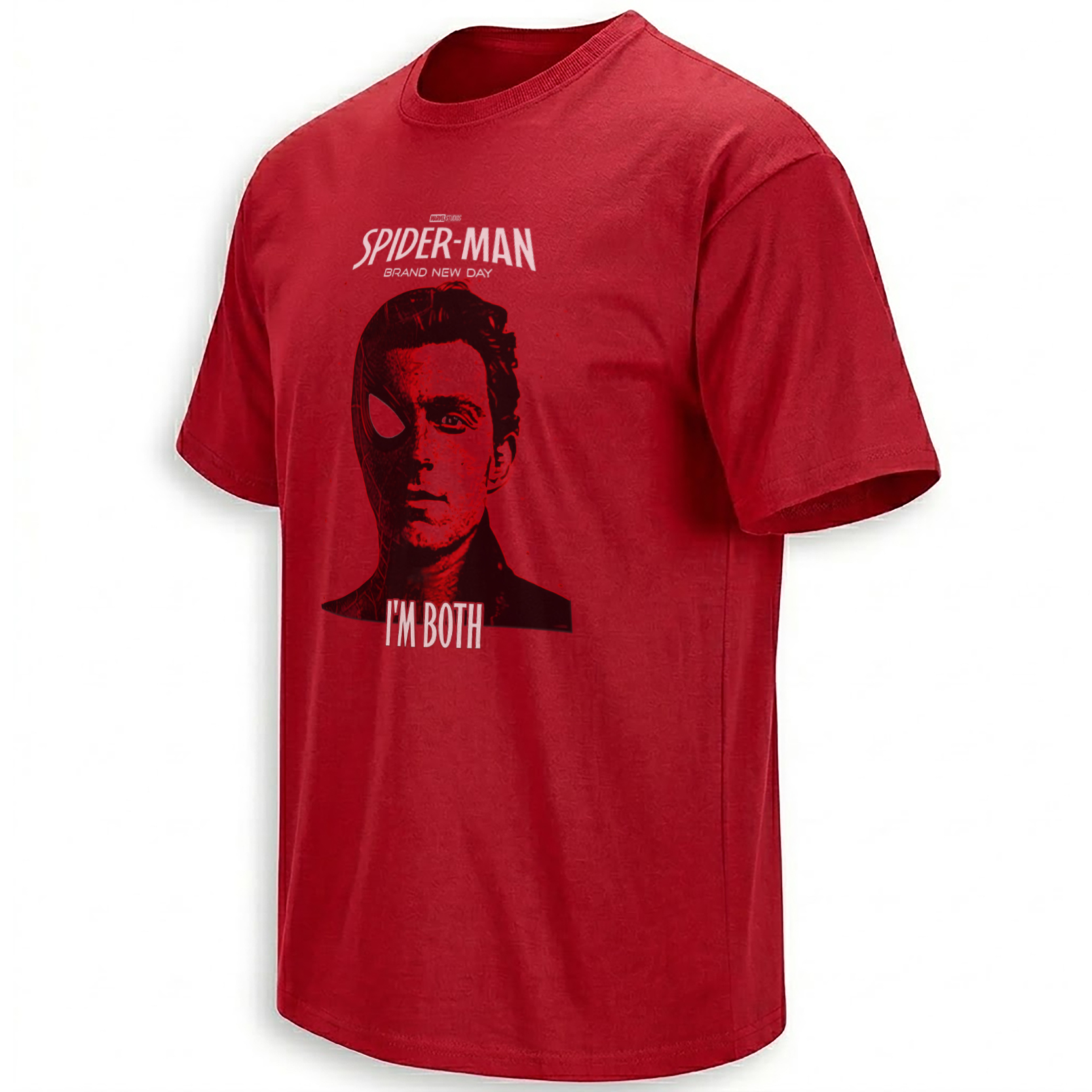
The divided portrait makes the movie’s identity question visible without separating the person who must answer it.
View the split portrait →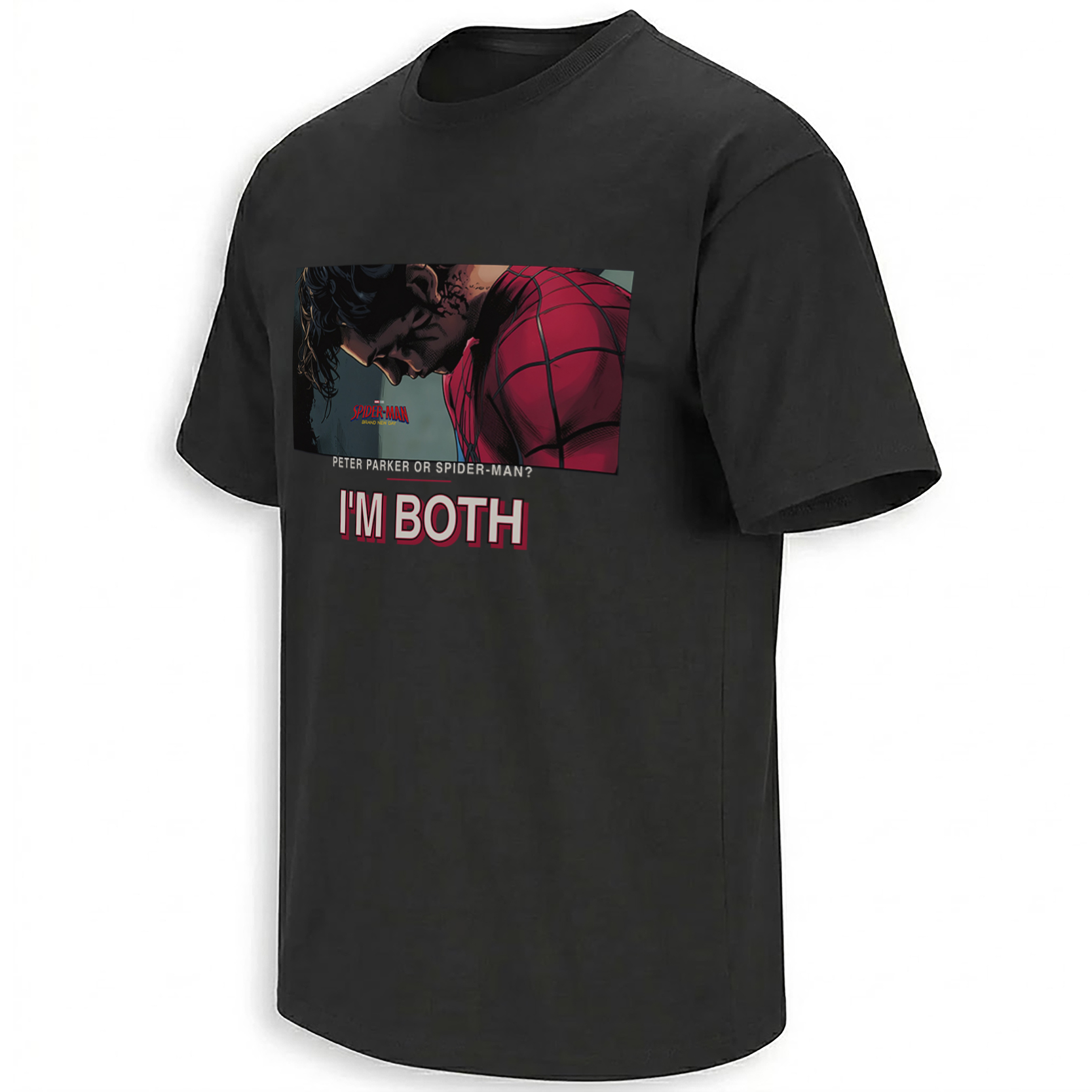
Red, black and web textures compress the exchange into the fast visual rhythm of a cinematic identity poster.
Open the quote design →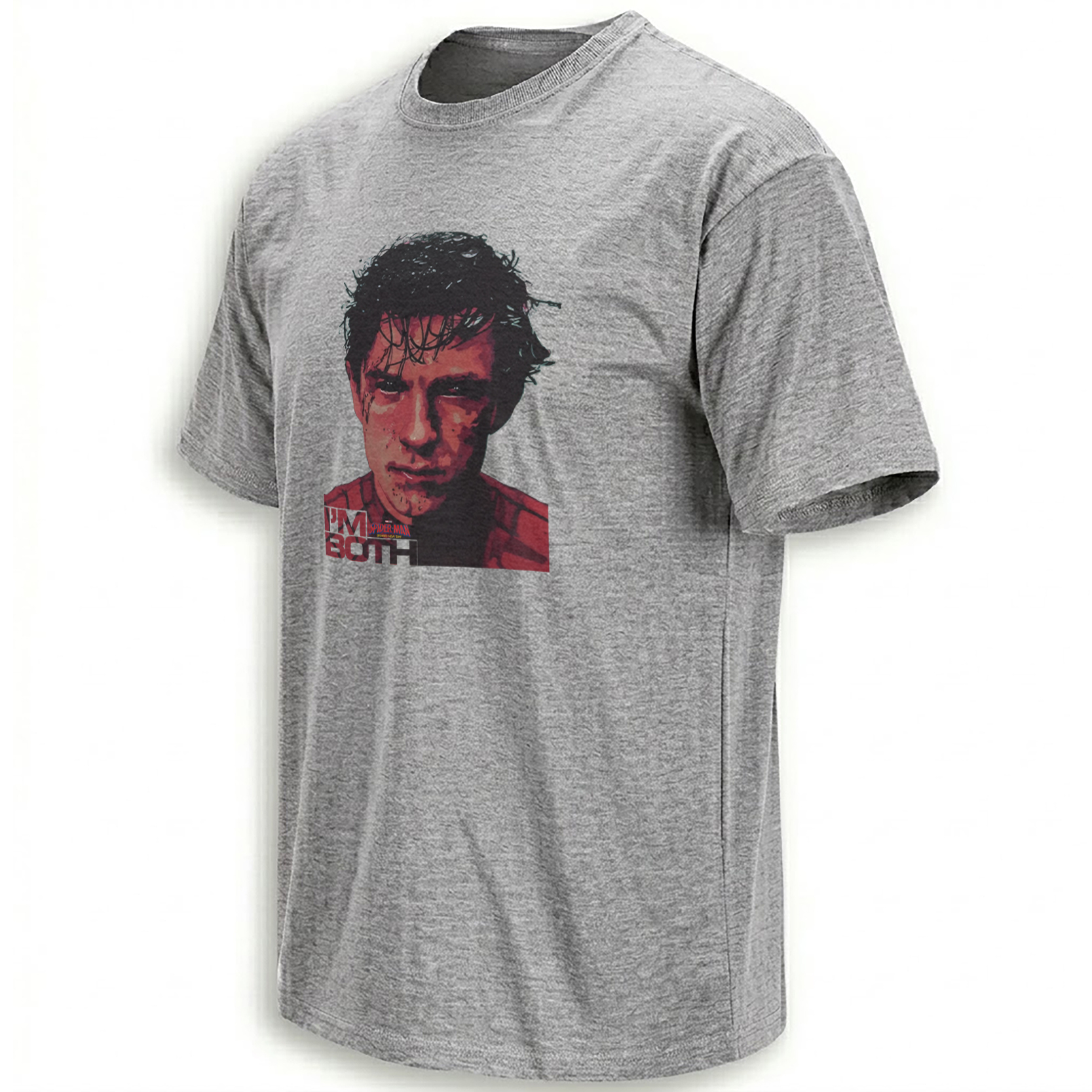
Keeping Peter’s uncovered face dominant turns the quote into a defense of the person behind Spider-Man’s public symbol.
See the portrait piece →How the Designs Translate Identity Into Graphic Language
Red and black carry the immediate visual authority of Spider-Man’s screen world, while the split compositions create tension before the words resolve it. A hard divide normally suggests opposition: civilian against hero, face against mask, ordinary life against responsibility. “I’M BOTH” bridges that division and changes the graphic from a conflict into a completed statement.
This is why the images work as timestamps rather than plot summaries. They do not need Jean Grey, Damage Control or the entire final battle in the frame. The face, the mask and the answer preserve the part of the scene that audiences converted into shared language. Inside the wider Spider-Man collection, the three pieces form a focused identity chapter beside graphics centered on suits, villains and New York action. The newest releases archive records how quickly a theatrical line became visual fan culture.
Scene context: GamesRadar ending breakdown. Contemporary fan discourse: X trend summary and opening-day quote post.
Frequently Asked Questions
Who asks Peter, “Are you Peter Parker or Spider-Man?”
Jean Grey asks Peter the question during the climactic confrontation in Spider-Man: Brand New Day.
What does Peter mean when he says, “I’m both”?
Peter rejects the idea that his civilian and superhero identities can be separated. Peter Parker gives Spider-Man his conscience and emotional purpose, while Spider-Man expresses the responsibility Peter chooses to carry.
Why is the “I’m both” scene important to Brand New Day?
It completes the film’s identity arc by showing Peter accept his full self and use his power without surrendering empathy or moral control.
Why did the “I’m both” quote go viral?
The exchange is brief, emotionally clear and easy to repeat. Fans used it to summarize Peter’s arc and shared it through posts, clips, GIFs and reaction images after the film opened.
What do the three “I’m both” designs represent?
They interpret the same identity moment through a split Tom Holland portrait, a direct question-and-answer composition and a Peter Parker portrait that emphasizes the person beneath the mask.
The split portrait, question-and-answer graphic and Peter Parker portrait preserve the instant Brand New Day stopped asking Peter to choose.
“I’M BOTH” captures the defining Spider-Man: Brand New Day exchange through split Peter Parker and Spider-Man imagery, viral quote typography and the identity theme at the center of Tom Holland’s latest chapter.