Randy Wolf, the Wolf Pack and Philadelphia Baseball Under a Full Moon
Two Randy Wolf graphics reconnect the Phillies left-hander’s number 43 era with the fans who called themselves the Wolf Pack, the immortal absurdity of Three Wolf Moon and the monster-movie logic hidden inside his name.
In July 2026, Randy Wolf is not returning to the Phillies rotation, and no new box score is responsible for the sudden appearance of moons, howling animals and a powder-blue number 43. The moment is being driven by something baseball nostalgia does especially well: taking a player whose name already felt like folklore and finally giving him the visual mythology it always promised.
Wolf pitched for Philadelphia from 1999 through 2006, emerging from the organization’s late-Veterans Stadium years and helping carry the club toward the core that would soon redefine Phillies baseball. He was a left-handed starter, a 2003 National League All-Star and, most importantly for the culture surrounding these designs, the center of an actual fan section known as the Wolf Pack.
That history makes the new graphics feel less like random wordplay. One sends three versions of Wolf howling toward the moon in a direct baseball remix of an early internet classic. The other treats number 43 like the subject of a forgotten creature feature, catching the pitcher halfway through a full-moon transformation.
Philadelphia did not need to invent a mythology for Randy Wolf. His name, his number and the Wolf Pack had already written the opening scene.
Why Randy Wolf Still Feels Like a Phillies Character
Baseball memory is not distributed only according to championships, awards or Hall of Fame arguments. Certain players remain vivid because their names, habits, fan sections or visual associations give them a role larger than a statistical line.
Wolf fits that tradition. The Phillies selected him in the second round of the 1997 draft, and he reached the major leagues two years later. By 2003, he had become an All-Star starter, winning 16 games and establishing himself as one of the recognizable pitchers of the franchise’s transition toward Citizens Bank Park.
His surname also gave fans something instantly usable. At home games, the Wolf Pack gathered as a dedicated cheering section, turning a routine pitcher introduction into an opportunity for costumes, signs and collective howling. The group made “Wolf” part of the atmosphere rather than merely the name printed on a roster.
That is why number 43 still activates a specific memory for Phillies followers who watched the team before the championship era fully arrived. It belongs to a period of gradual transformation: Scott Rolen giving way to a new core, Veterans Stadium giving way to Citizens Bank Park and Philadelphia baseball beginning to sense that a different decade was coming.
The Wolf Pack matters because it made the metaphor communal. Randy Wolf was not simply a pitcher with a convenient surname; he had a section of Philadelphia fans who turned starts into a shared baseball ritual.
Three Wolf Moon Was Built for This Baseball Remix
Long before every viral image became a social-media template, Three Wolf Moon demonstrated that a T-shirt could become an internet joke through collective reinterpretation. The original design showed three wolves howling beneath a bright moon, arranged with the majestic seriousness of fantasy art.
Its Amazon page became famous in 2009 when users began posting exaggerated reviews describing the shirt as if it possessed supernatural powers. The comedy came from treating an ordinary piece of mall and gift-shop imagery as an object capable of transforming confidence, romance and destiny.
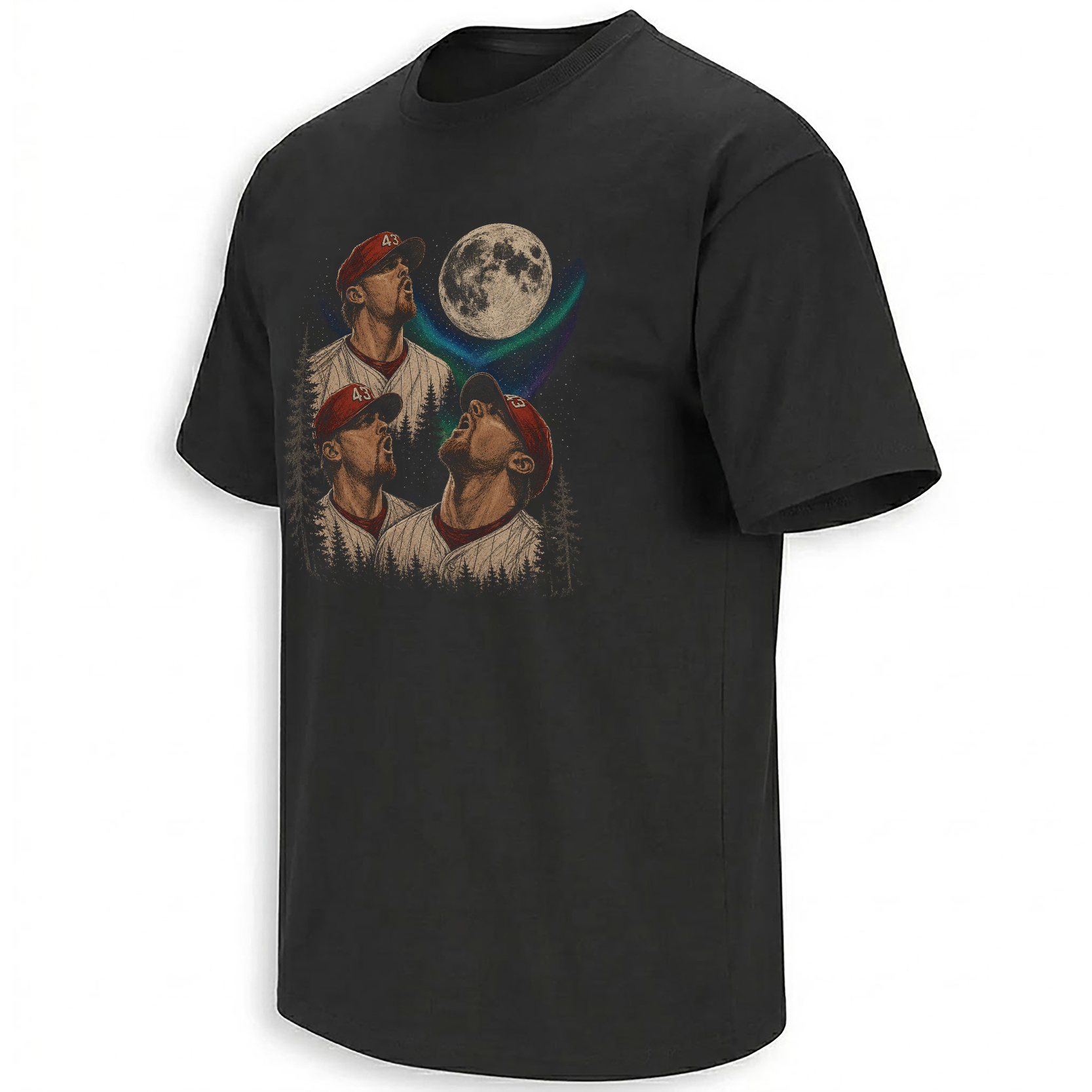
The Randy Wolf Three Wolf Moon Shirt closes that cultural loop. Instead of three anonymous animals, the composition presents three Randy Wolf figures emerging from the same moonlit fantasy structure.
One version faces forward in a Phillies uniform. Another tilts upward as if preparing to howl. The third appears deeper in the composition, allowing the player’s head and number 43 identity to replace the three escalating wolves of the original meme.
The Joke Works Because the Original Meme Took Itself Seriously
Three Wolf Moon was never visually timid. Its airbrushed animals, supernatural lighting and dramatic nocturnal landscape treated the subject with complete sincerity. The internet’s response added irony, but the graphic itself never acknowledged the joke.
The Randy Wolf version preserves that commitment. It does not surround the player with cartoon speech bubbles or explain the pun. The full moon, mist, forest and blue glow are presented as though a Philadelphia pitcher genuinely belongs inside fantasy wilderness art.
That straight-faced presentation creates the humor. Randy Wolf’s name supplies the connection, while the visual language behaves as if the connection were mythologically important.
The design also performs a second act of nostalgia. It remembers a Phillies pitcher from the turn of the century through an internet artifact that became famous near the end of the same decade. Baseball memory and early meme culture occupy the same moonlit frame.
The Powder-Blue Uniform Softens the Fantasy Landscape
The cool blue Phillies treatment is crucial to the composition. A modern bright-red uniform would compete with the night sky and push the design toward conventional team graphics. Powder blue allows the portraits to merge naturally with moonlight, fog and the faded colors of fantasy T-shirts.
It also gives the image a deliberately unstable sense of time. Wolf’s Phillies tenure belongs mainly to the club’s red-pinstripe era, while powder blue evokes an earlier Philadelphia baseball history. The design is therefore best read as a fan-made dreamscape rather than a documentary uniform record.
That looseness suits the Three Wolf Moon reference. The graphic is not reconstructing one game or one exact photograph. It is building a memory object from recognizable pieces: Wolf, Philadelphia, number 43, moonlight and the theatrical grandeur of an internet-famous shirt.
The Werewolf Design Turns the Name Into a Transformation Scene
The second graphic abandons internet parody for horror-poster logic. In the Randy Wolf Werewolf Shirt, Wolf appears in profile beneath a full moon while a shadowed wolf form rises behind him.
The central idea is not simply “baseball player plus animal.” The overlapping faces suggest an active transformation. The human profile remains visible, but fur, teeth and an elongated snout begin to occupy the same silhouette.
Number 43 appears below like a movie billing block or jersey identification, grounding the supernatural image in Phillies memory. Above it, Wolf’s name uses an angular vintage-horror treatment that feels closer to a video-store creature feature than a standard sports wordmark.
An early-internet icon rebuilt as a Phillies memory scene, with three Wolf portraits howling through moonlight and powder-blue nostalgia.
See the meme remix →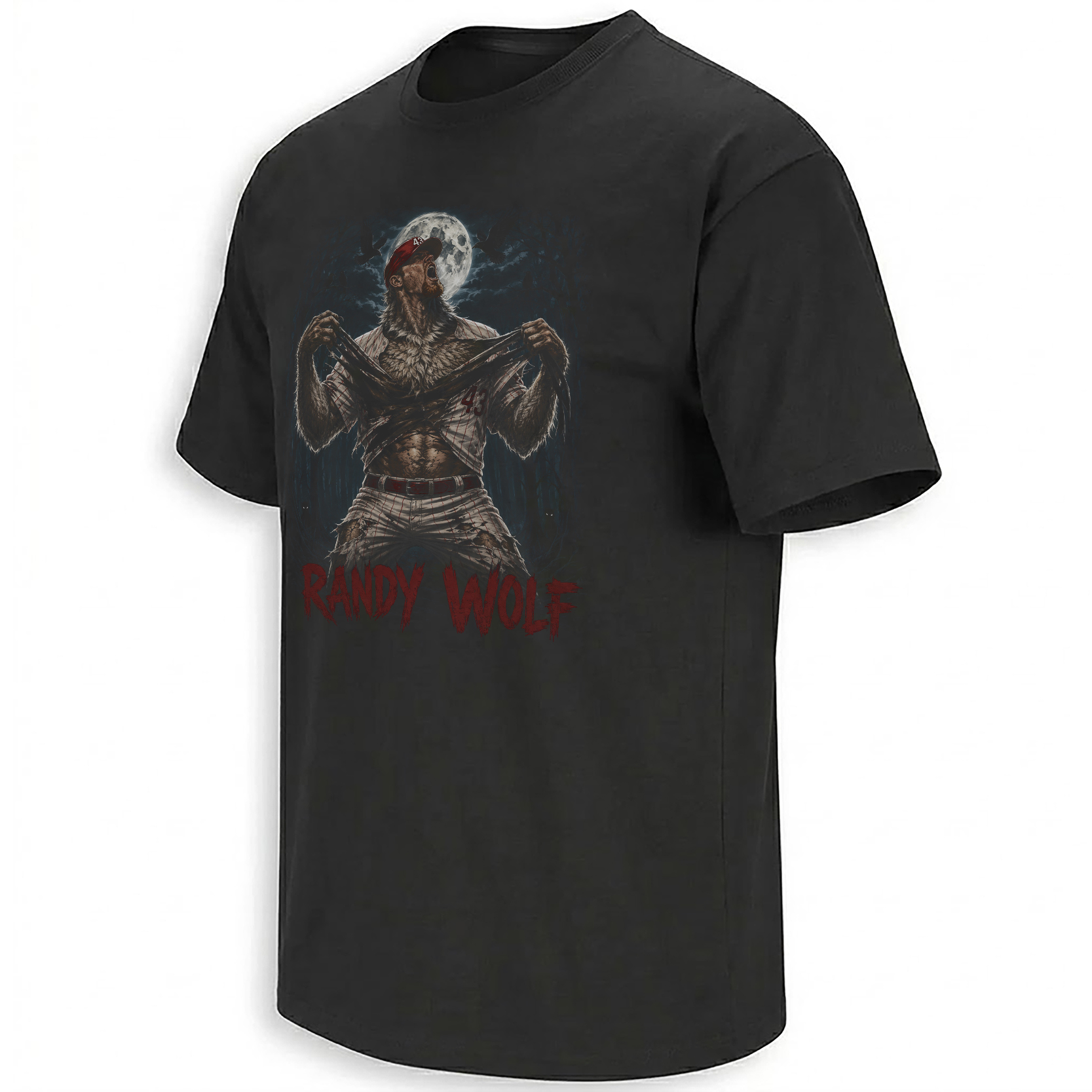
A monster-movie interpretation of the Phillies left-hander, merging his human profile with a wolf beneath a blood-red moon.
Explore the transformation →Two Designs, Two Different Types of Fan Memory
Three Wolf Moon remembers Randy Wolf through the visual language of an early viral T-shirt, using repetition, fantasy scenery and complete deadpan seriousness.
The werewolf graphic treats number 43 like the star of an old horror poster, turning a familiar baseball name into an on-screen transformation.
Both approaches begin with the same fact: “Wolf” is a name that already carries an image. Yet they reach different parts of fan culture. The Three Wolf Moon version belongs to internet memory, novelty graphics and the pleasure of recognizing a template. The werewolf version belongs to monster movies, pulp posters and seasonal horror art.
Together, they demonstrate why sports nostalgia can be more expressive than a conventional portrait-and-stat design. The player’s identity is not limited to what happened on the mound. It includes how fans pronounced the name, dressed for his starts and carried those associations years after the final Phillies appearance.
The Wolf Pack Made Philadelphia Part of the Artwork
Without the Wolf Pack, these images would still produce a clean name-based joke. With the Wolf Pack, they become connected to a real Phillies crowd tradition.
Fan sections give baseball a form of recurring theater. They assign costumes, gestures and sounds to the calendar. A strikeout can trigger a howl. A scheduled start can become a reason for the same group to gather beneath the same signs.
Randy Wolf’s starts offered exactly that kind of ritual. The fan group converted his surname into an identity that could be performed collectively, long before social media made every stadium joke instantly shareable.
The moon graphics extend that ritual beyond the ballpark. They preserve the call-and-response logic of the original section: Wolf takes the mound, the pack appears and Philadelphia howls.
Randy Wolf’s Place in the Phillies Timeline
The Phillies selected Wolf from Pepperdine in the second round, beginning an association that would define the opening phase of his major-league career.
Wolf entered the rotation during the final years of Veterans Stadium and began establishing himself as one of the club’s dependable young starters.
His 16-win season earned a National League All-Star selection and placed him among the most visible left-handed starters in baseball that year.
Wolf’s Phillies tenure bridged two stadiums and helped define the period immediately before Philadelphia’s championship core fully took control.
Why These Graphics Feel Different From Ordinary Throwbacks
Most nostalgia pieces aim for historical clarity. They reproduce a familiar photograph, season, uniform or statistical milestone. These designs operate through association instead.
The moon is not a career statistic. The werewolf is not an official mascot. Three Wolf Moon has no direct connection to a particular Phillies game. Yet every element makes intuitive sense because Randy Wolf’s baseball identity was already surrounded by animal language and fan participation.
That approach makes the artwork feel closer to folklore than biography. The player becomes a character remembered through repetition: number 43, left-handed delivery, Wolf Pack signs and an entire stadium section prepared to howl.
The broader Philadelphia Phillies collection records many forms of the city’s baseball memory, from current players and playoff moments to older names rediscovered through visual jokes. The MLB Shirts collection expands that archive across the league, where nicknames, fan sections and forgotten rituals often carry as much cultural weight as official milestones.
Frequently Asked Questions
Who was Randy Wolf for the Philadelphia Phillies?
Randy Wolf was a left-handed starting pitcher who played for Philadelphia from 1999 through 2006. He wore number 43 and represented the Phillies as a National League All-Star in 2003.
What was the Randy Wolf Wolf Pack?
The Wolf Pack was a dedicated group of Phillies fans who attended Randy Wolf’s starts and turned his surname into a ballpark identity through signs, costumes and collective howling.
What is the Three Wolf Moon reference?
Three Wolf Moon is a fantasy-style graphic showing three wolves howling beneath a moon. It became an internet phenomenon in 2009 after Amazon users posted exaggerated satirical reviews about its supposed powers.
Why does the Randy Wolf design show three versions of the pitcher?
The repeated portraits replace the three animals in the original Three Wolf Moon composition, turning Randy Wolf’s name and Phillies history into a baseball-specific meme remix.
What does the Randy Wolf werewolf graphic represent?
The werewolf graphic interprets his surname as a monster-movie transformation, combining Wolf’s profile, a supernatural animal form, a full moon and his Phillies number 43.
The Three Wolf Moon remix and number 43 werewolf design preserve two sides of Randy Wolf folklore, while the wider Phillies visual archive follows the players, jokes and crowd rituals that continue to live beyond their original seasons.
Randy Wolf Phillies shirts transform number 43 and Philadelphia’s original Wolf Pack into two moonlit artifacts: a Three Wolf Moon internet-meme remix and a vintage werewolf transformation graphic.