
Pete Crow-Armstrong’s MVPete Season Is Becoming Chicago Baseball History
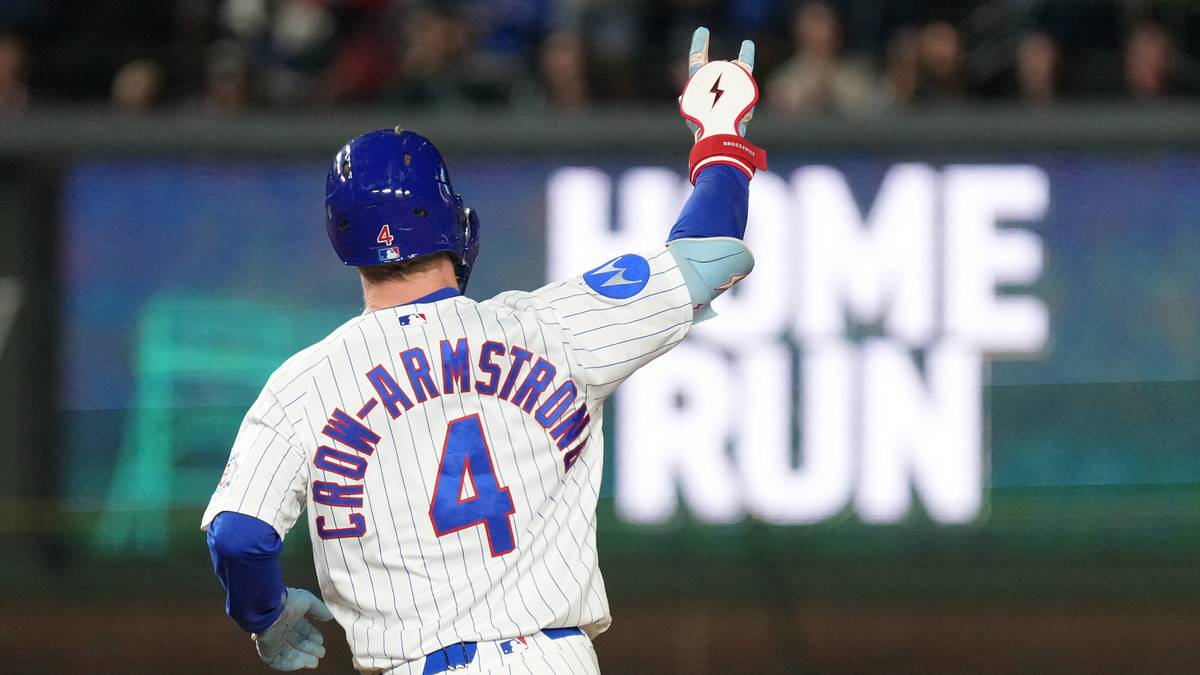
Pete Crow-Armstrong is no longer living inside an early-season MVP argument. With 42 home runs, 37 stolen bases and October pressure rising around the Cubs, “MVPete” has become shorthand for one of the most complete individual seasons Chicago has seen in years.
The timing could hardly be more dramatic. On September 14 at Wrigley Field, Pete Crow-Armstrong answered a short slump with four hits, four RBI, his 42nd home run and stolen base No. 37 as Chicago beat Atlanta 7–3. One night later, the Cubs lost 6–3, Milwaukee clinched the NL Central, and Chicago’s season officially became about surviving the Wild Card race rather than chasing the division.
That tension is exactly what gives the MVP conversation its current weight. PCA is not accumulating numbers in a quiet September. Every home run, steal and defensive play now arrives inside games carrying playoff consequences. The Cubs need their center fielder to be spectacular at the same moment award voters are deciding how much spectacular really matters.
The result is a rare collision between team anxiety and individual history. Chicago may have lost the division, but Crow-Armstrong’s season keeps expanding. Forty-two homers tied Billy Williams’ franchise mark for a left-handed Cubs hitter, while 37 steals left PCA only three short of the 40–40 line.
“MVPete” works because the nickname is no longer trying to create an MVP case. It is trying to keep up with one.
September Turned MVPete From Campaign Language Into Scoreboard Reality
Crow-Armstrong first crossed 40 home runs on September 6 in Miami. That milestone placed him among a small group of Cubs hitters to reach the number and made the possibility of 40–40 impossible to ignore. The chase matters because PCA’s value has never been confined to the batter’s box: speed, center-field range and game-changing defense are central parts of why his season feels different.
The 2026 campaign had already produced another piece of Cubs history in August. Crow-Armstrong became the first player in franchise history to record consecutive 30-homer, 30-steal seasons. During the August 18 Crosstown game, he opened the night with a homer and ended it with a walk-off blast in the tenth, sending “M-V-P” chants down Wrigley’s ramps and into the surrounding streets.
The Swing Is Now Part of the MVP Story
That is where the MVPete No. 4 Swing design fits into the season. The artwork does not read like a statistics graphic. It reads like the poster Chicago would create after watching a player turn one summer into a personal mythology.
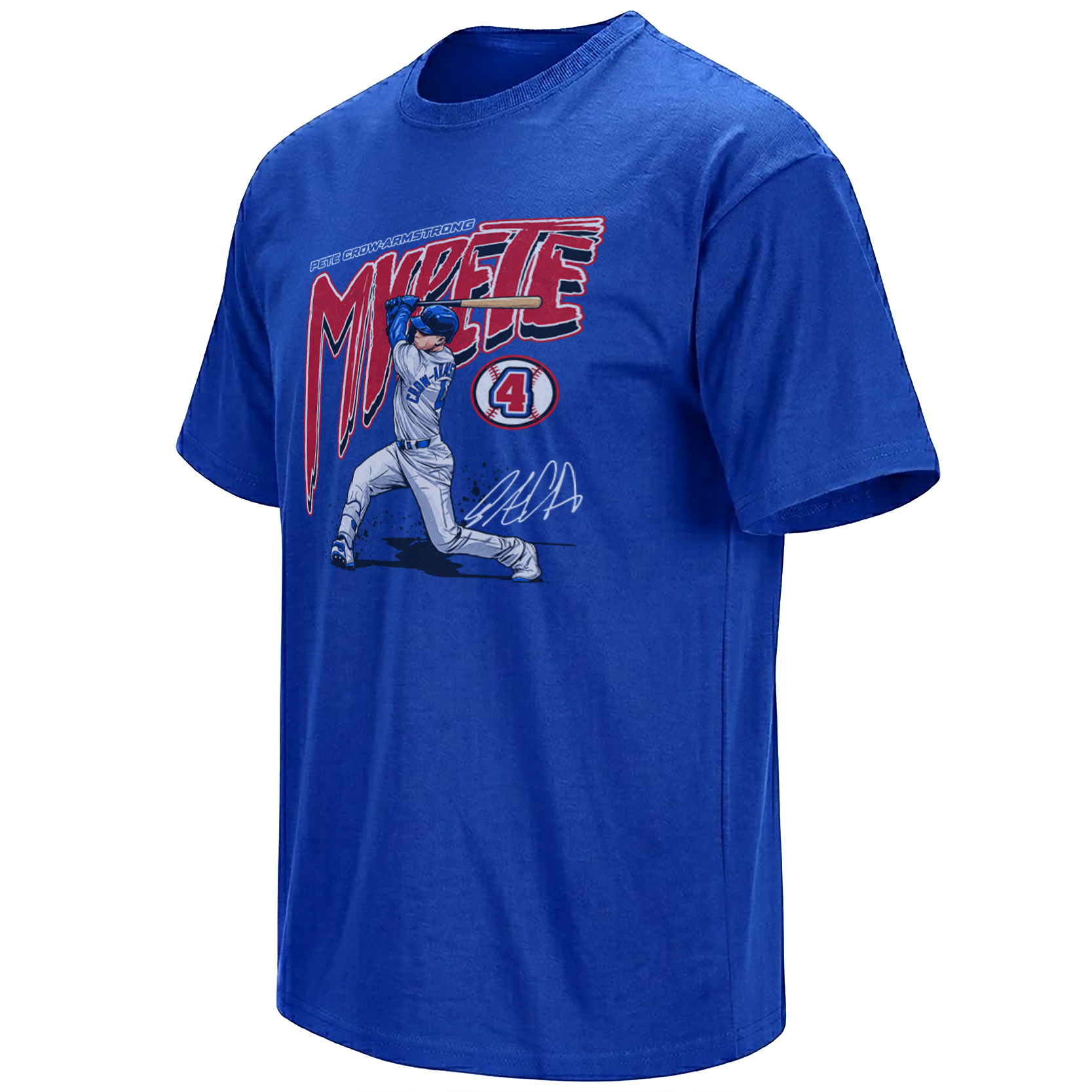
The visual hierarchy matters. “MVPETE” is large enough to work as the headline, but Crow-Armstrong’s swing cuts through the typography so the slogan never separates from the player who earned it. The No. 4 badge gives the composition an immediate jersey reference, while the autograph treatment pushes the graphic toward trading-card and signed-poster language.
That distinction makes the piece useful as a cultural timestamp. If PCA reaches 40–40, the design will point back to the chase. If he wins the award, it becomes connected to the result. Even if the ballot breaks another direction, it still records the month when Wrigley was openly debating whether its center fielder was the most valuable player in the National League.
The Internet Is Tracking the History in Real Time
The MVP conversation is being built one unusual stat at a time. After the September 14 game, baseball researcher Sarah Langs noted that Crow-Armstrong had produced eight games in 2026 with both a home run and a stolen base, breaking a Cubs mark associated with Ryne Sandberg.
That kind of stat explains why “MVPete” feels native to fan culture. It is short enough for a chant, a sign, a caption or a graphic, but broad enough to contain several different arguments at once: power, speed, defense, WAR, late-game moments and the feeling that something can happen every time No. 4 enters the frame.
Chicago’s Wider PCA Archive Keeps Growing
The larger Chicago Cubs collection now reads like a running record of how fans experienced PCA’s rise rather than a static team category. The broader MLB collection places that story beside the other players, races and September moments shaping baseball in 2026.
For Crow-Armstrong specifically, the Pete Crow-Armstrong product search shows how quickly his season has generated its own visual language: speed concepts, MVP slogans, milestone pieces and player-centered graphics. That volume itself says something about the year. Fans keep receiving new reasons to redraw the same player.
Frequently Asked Questions
How many home runs and stolen bases did Pete Crow-Armstrong have after September 14, 2026?
He had 42 home runs and 37 stolen bases after his four-hit performance against Atlanta.
Why is PCA chasing 40–40?
With more than 40 home runs already and 37 steals, Crow-Armstrong entered the final stretch only three stolen bases away from a 40-homer, 40-steal season.
What does MVPete mean?
MVPete combines “MVP” with Pete, turning Pete Crow-Armstrong’s first name into fan shorthand for his 2026 National League MVP campaign.
Why is the No. 4 important in the artwork?
No. 4 is Crow-Armstrong’s Cubs jersey number and helps the graphic read immediately as a player-specific PCA design.
Why does the MVPete design fit September 2026?
It arrives while Crow-Armstrong is simultaneously chasing 40–40, franchise history, an MVP award and a postseason position with Chicago.
The MVPete No. 4 Swing graphic preserves PCA’s 2026 award chase as a player-poster moment, while the wider Cubs archive follows the milestones that keep changing the argument.
MVPete Shirt captures Pete Crow-Armstrong’s 2026 Cubs MVP run through his No. 4 swing, signature-style artwork and a season that reached 42 homers, 37 steals and a late chase for 40–40.