
Pete Crow-Armstrong’s MVP Race Has a New Name: MVPete
Pete Crow-Armstrong entered August as a serious National League MVP candidate. Then he traded home runs with Shohei Ohtani at Wrigley Field, helped Chicago sweep Los Angeles and gave Cubs fans a one-word campaign slogan that suddenly felt very easy to believe.
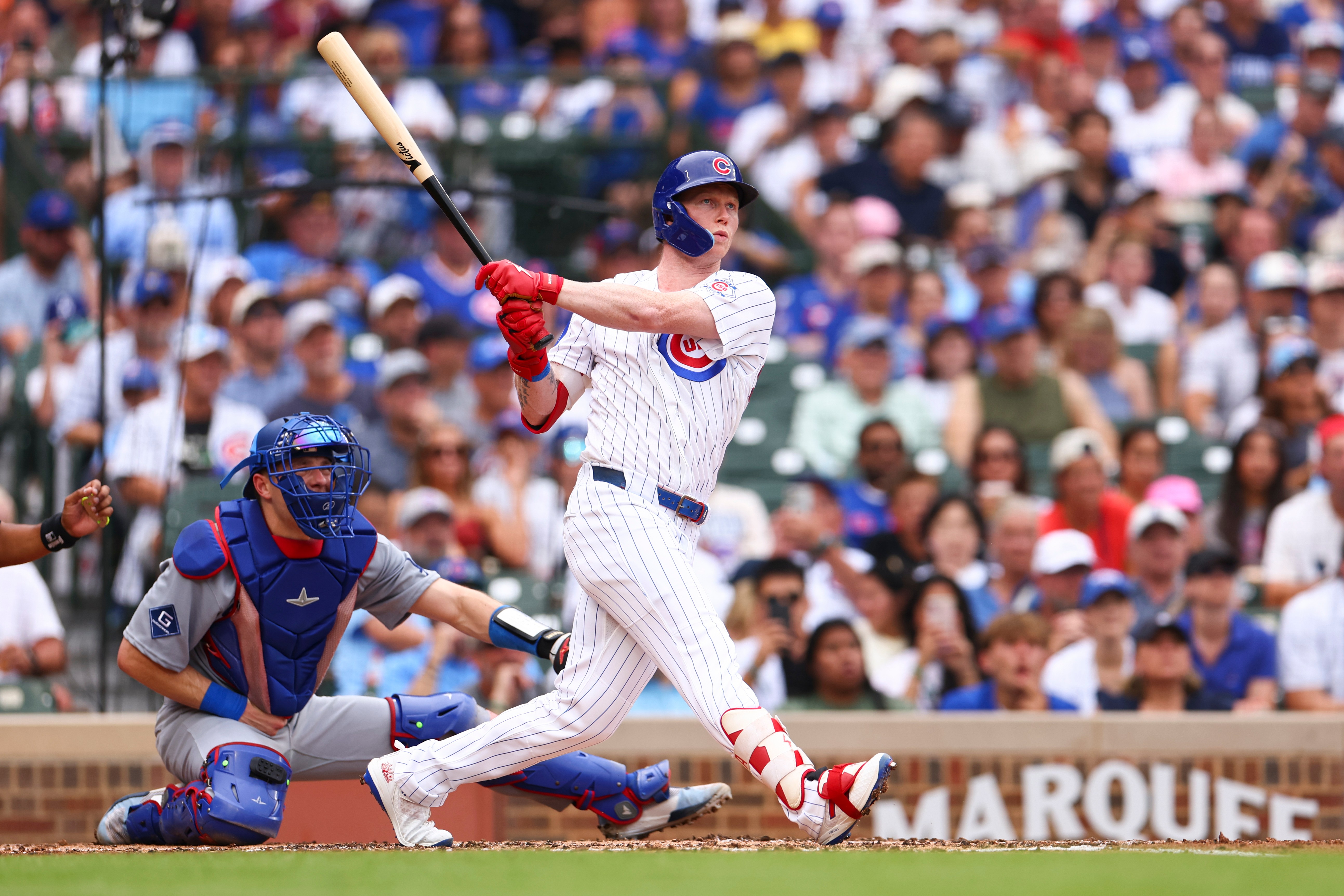
Wrigley Field did not need a graphic to tell it that Pete Crow-Armstrong had entered the MVP conversation. On August 5, the evidence arrived in real time. Shohei Ohtani opened the Cubs-Dodgers finale with a home run. Crow-Armstrong answered with one of his own in the bottom of the first. Later, both did it again.
By the end of Chicago’s 7–6 victory, PCA had two home runs, an RBI double and four runs driven in as the Cubs completed a three-game sweep. Most importantly for the atmosphere surrounding his season, Wrigley’s familiar “P-C-A!” rhythm had begun mutating into something bigger: “M-V-P!”
That is the environment in which “MVPete” makes sense. It is not a nickname trying to manufacture an award campaign before the baseball exists. The baseball came first. The word followed.
“MVPete” works because the MVP label does not sit beside Pete’s name. It takes over the name itself.
The Day the MVP Race Became a Wrigley Show
The most useful thing about the Dodgers series was that the argument stopped being abstract. Ohtani and Crow-Armstrong, two of the players at the center of the National League discussion, stood in the same ballpark and produced an almost absurdly convenient comparison point.
Ohtani homered first. PCA answered immediately. Crow-Armstrong doubled home a run in the second and launched another homer in the fourth. Ohtani later responded with his second homer in the eighth. Dodgers manager Dave Roberts described the two stars as going “toe to toe,” while Cubs manager Craig Counsell framed PCA’s season as the kind fans remember long after the numbers are finalized.
Crow-Armstrong was characteristically less interested in turning the afternoon into an individual referendum. He acknowledged how meaningful it was to share an MVP conversation with Ohtani, but redirected attention toward October and what this Cubs group could become in the postseason.
This Is Not Just a Home-Run Campaign
The easiest way to reduce PCA is to count home runs and stolen bases. Those numbers are spectacular enough, but they miss why his candidacy feels different. Crow-Armstrong can alter a game in center field before he ever reaches the plate.
MLB’s July examination of his candidacy pointed to a Statcast-era record for five-star catches and baseball-leading defensive value, while also documenting the dramatic change in his plate discipline. His swing rate had dropped sharply from 2025, his walk rate had climbed and his on-base percentage had become a new weapon rather than a weakness.
That matters because the 2025 version of PCA already possessed the highlight tools: speed, power and defense. The 2026 version is increasingly difficult to dismiss as simply an electric player. He is becoming a complete one.
An MVP campaign around Crow-Armstrong is unusual because a highlight reel can legitimately include a home run, a stolen base and a center-field catch that almost no other player reaches. “MVPete” compresses that multi-tool case into one chant-sized word.
Why the MVPete Logo Looks Like a Campaign Button
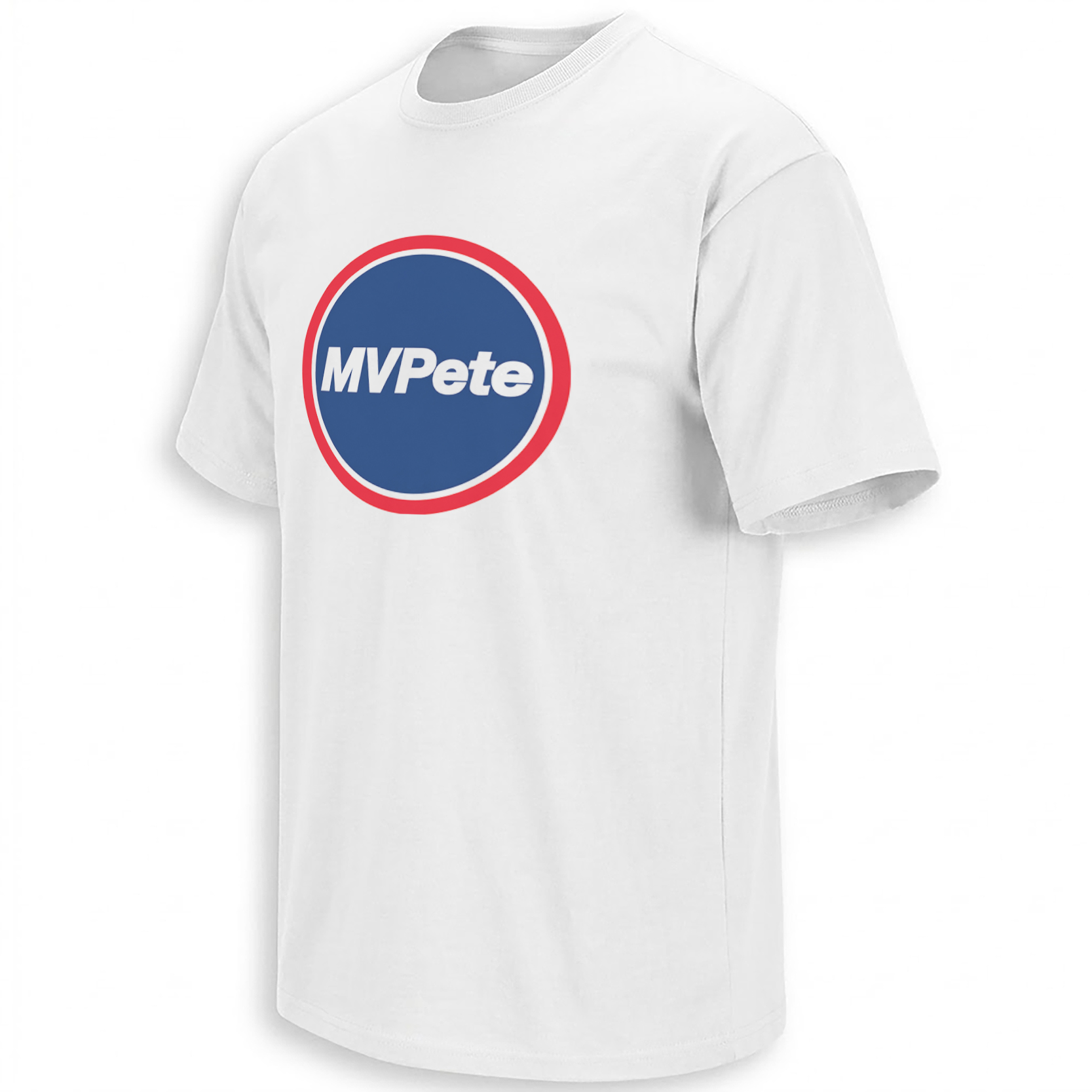
The design deliberately refuses to use a player portrait. Instead, a navy circular field, red outer ring and bold white “MVPete” lettering turn the entire season into something closer to a political campaign button or old baseball badge.
That simplicity is useful. An elaborate PCA collage would describe the player. This graphic describes the conversation around him. The message is not “here is Pete Crow-Armstrong.” The audience already knows who he is. The message is “here is what Cubs fans think Pete Crow-Armstrong should become.”
MLB’s Own Feed Is Now Asking the Question
The conversation is no longer confined to Cubs fan accounts. MLB’s social coverage of the Dodgers series explicitly framed Crow-Armstrong as a potential new MVP front-runner after his two-homer performance. That matters culturally because league-level amplification changes a local campaign into a national argument.
That is how MVP races become fan culture rather than spreadsheet debates. Statistics build the case; highlight clips give it velocity; the crowd creates a chant; social media gives the chant a larger audience; then a phrase such as MVPete becomes shorthand for everything happening at once.
A Cubs Milestone Makes the Nickname Harder to Dismiss
Crow-Armstrong’s August explosion also pushed him into franchise territory. Against Los Angeles he became the first Cubs player to produce consecutive seasons with at least 25 home runs and 25 stolen bases. That followed his 2025 breakout, when he became only the second player in Cubs history to record a 30-homer, 30-steal season.
The significance is not merely numerical. Chicago has had extraordinary power hitters, gifted defenders and dangerous baserunners. PCA’s appeal comes from combining those identities in the same body — and doing it with the theatrical quality of a player seemingly designed for Wrigley highlights.
That developing archive now sits naturally inside Ellie Shirt’s Chicago Cubs collection, where PCA moments live alongside other pieces of North Side fan language. The broader MLB collection places the MVPete graphic inside the wider 2026 baseball conversation.
Frequently Asked Questions
What does MVPete mean?
MVPete combines “MVP” with Pete Crow-Armstrong’s first name, turning his 2026 National League MVP campaign into a compact Cubs fan nickname.
Is Pete Crow-Armstrong really an NL MVP candidate in 2026?
Yes. MLB has directly framed Crow-Armstrong as one of the leading candidates in the 2026 National League race alongside Shohei Ohtani.
Why was the August 5 Dodgers game important to the MVP conversation?
Crow-Armstrong and Ohtani each homered twice, while PCA added an RBI double and finished with four RBI as Chicago completed a three-game sweep.
Why are Cubs fans chanting MVP for PCA?
His combination of power, baserunning, elite center-field defense and improved on-base ability has turned an exciting season into a legitimate award campaign.
Why does the MVPete design use a simple circular logo?
The badge-like layout makes the nickname feel like an unofficial MVP campaign mark rather than a standard player portrait graphic.
The MVPete Shirt preserves the point in 2026 when Cubs fans stopped discussing PCA only as an emerging superstar and started chanting for baseball’s biggest individual award. The wider Chicago Cubs archive follows the other player moments and phrases defining the season.
MVPete Shirt captures Pete Crow-Armstrong’s 2026 National League MVP push through a clean red, white and navy campaign-style logo inspired by the “M-V-P!” energy now surrounding PCA at Wrigley Field.