
When People Talk Behind Your Back, Apparently You Have a Fan Club
The quote does not ask gossip to stop. That would give the gossip too much importance. Instead, it promotes every critic to unpaid fan-club membership and keeps moving.
Hearing that people are talking behind your back is supposed to create anxiety. Who said what? Why did they say it? Who else heard it? The normal response is to investigate. “People talk about me behind my back and I just sit here like damn, I got myself a fan club” refuses that entire ritual.
The speaker does not chase the story. They do not request screenshots. They do not need names.
They simply reinterpret the attention.
If somebody is spending enough time discussing your life when you are not even present, perhaps “critic” is not the funniest possible label. “Fan” is better. The insult becomes free publicity, the gossip becomes proof of relevance and the person being discussed takes control of the joke without actually confronting anybody.
No celebrity origin is necessary for the joke to work
Variations of the full sentence now appear across apparel listings, quote graphics and internet-humor products. The wording is recognizable, but research does not identify one reliable celebrity, film, television show or verified original social account responsible for creating it.
That makes this different from a sports catchphrase or movie quote. There is no hidden reference a viewer has to understand first.
Anyone who has experienced workplace gossip, family drama, former friends, jealous acquaintances or an aggressively interested social circle can understand the setup immediately.
The complete “fan club” quote is circulating across multiple online apparel marketplaces, but searches do not establish a trustworthy single origin. This article therefore treats it as evergreen internet sarcasm rather than attaching a false celebrity or viral-post attribution.
The strongest part of the joke is not that people are talking. It is that the speaker has decided their attention is flattering.
2026 is giving text-first humor another fashion moment
The sentence itself is not dependent on 2026, but fashion’s current appetite for direct language makes the timing unusually good.
Slogan T-shirts have returned visibly across current runway collections. Vetements’ Spring/Summer 2026 show, for example, used a fitted white tee carrying a deadpan sentence as the entire graphic. Fall/Winter coverage from Coveteur and London Fashion Week has documented the same broader return: the T-shirt is once again being treated as a place to communicate rather than simply a blank base layer.
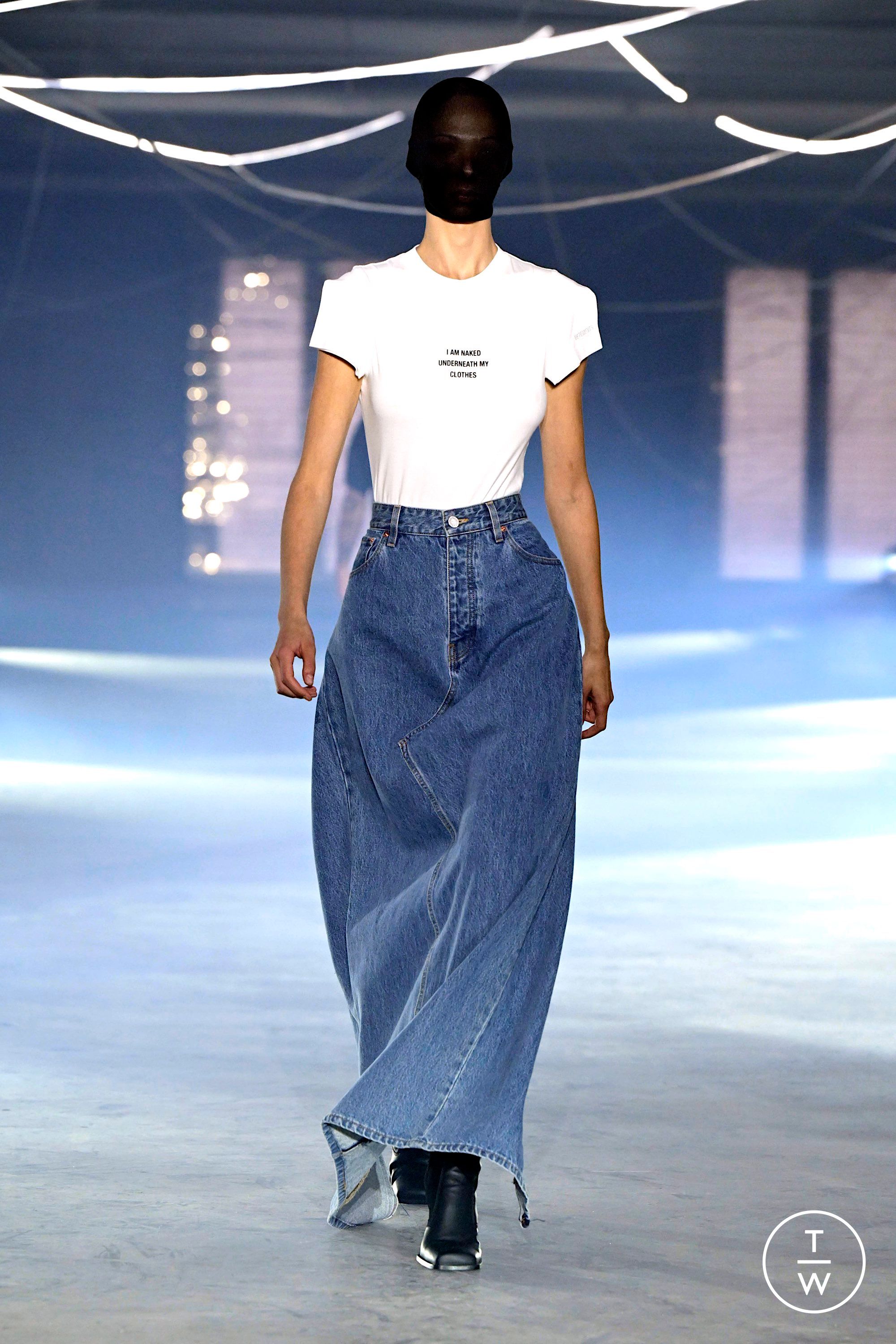
That revival suits gossip humor particularly well. A sentence like this behaves almost exactly like a social caption. It does not decorate the wearer so much as narrate their attitude.
“Stop talking about me” asks the gossipers to change their behavior and admits that their attention is irritating.
“Keep talking” removes the demand entirely and converts the same behavior into a joke about the speaker’s supposed importance.
The design delays its biggest word until the joke turns
The People Talk About Me Behind My Back Shirt is built around pacing rather than illustration.
The opening lines — “People Talk About Me Behind My Back” — use stacked serif typography with selected words enlarged. That section establishes the social problem.
Then a ribbon-like divider introduces “AND I JUST SIT HERE LIKE,” almost as if the graphic is pausing before delivering a response.
“DAMN” receives the hardest visual hit. It sits inside a rough black brushstroke block in oversized white lettering, changing the energy of the composition immediately.
Only after that visual beat does “I Got Myself A Fan Club” arrive.
The hierarchy mirrors the joke perfectly: gossip first, indifference second, exaggerated confidence last.
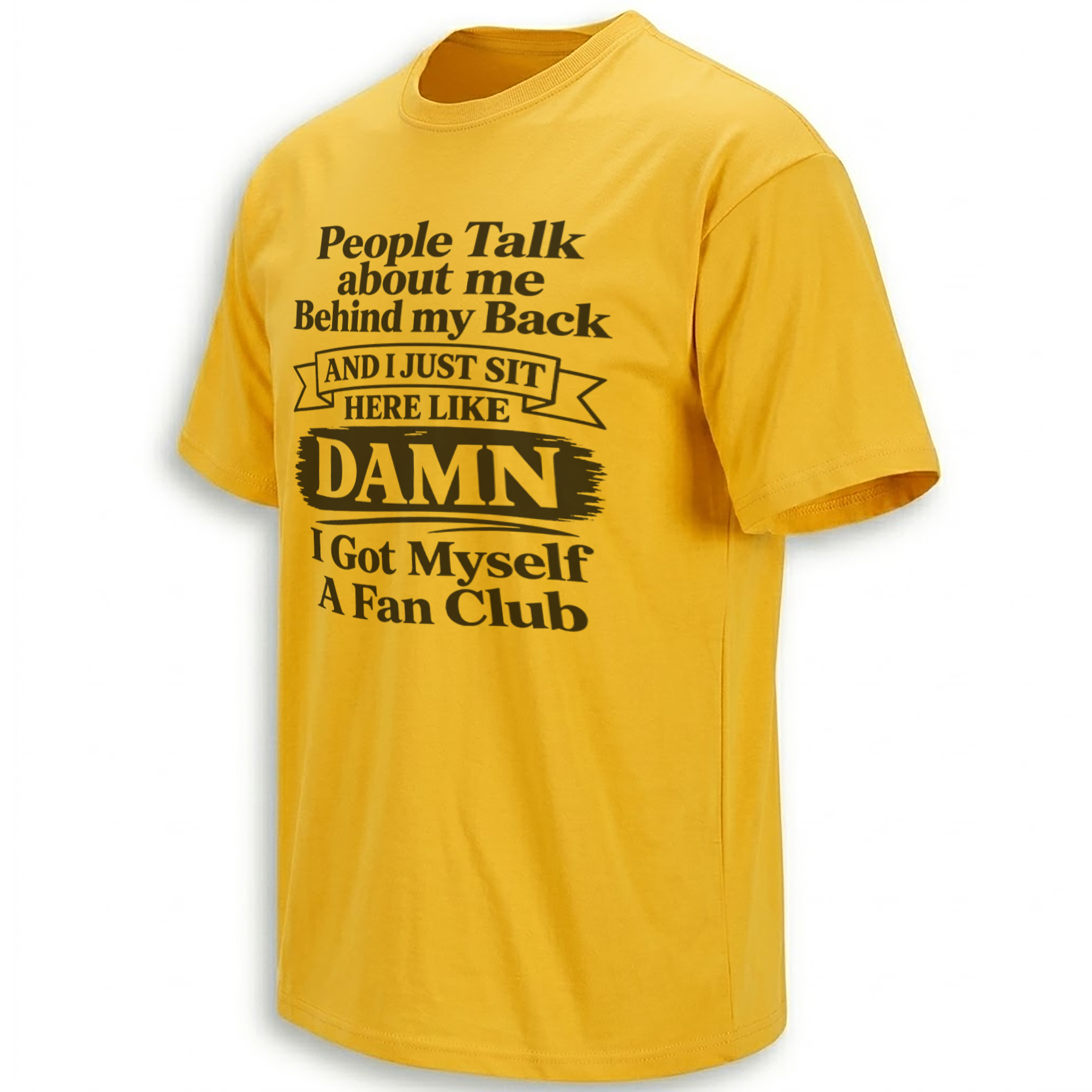
Stacked retro serif type, a mid-quote banner and oversized “DAMN” lettering turn ordinary gossip into an intentionally overconfident fan-club punchline.
View the design →Why gossip humor has unusually long shelf life
News memes require the audience to remember a headline. Celebrity jokes require the celebrity to remain relevant. Gossip does not have that problem.
Offices generate it. Families generate it. Friend groups generate it. Schools generate it. Online communities can industrialize it.
That makes this kind of phrase evergreen because the situation continually recreates itself. The names change, but somebody is always discovering that a conversation about them happened in a room they were not in.
The “fan club” line gives that person an intentionally unserious response: if people are going to spend the time anyway, they may as well receive imaginary membership cards.
Where the Fan Club quote sits inside Ellie Shirt
The current product page confirms this design inside Ellie Shirt’s Newest collection. Because no narrower gossip or sarcasm collection is currently confirmed, this article keeps the internal structure clean instead of inventing one.
People Talk Behind My Back FAQ
What does “damn, I got myself a fan club” mean?
It sarcastically suggests that people who spend significant time gossiping about you must be paying attention like fans.
Where did the full fan-club quote originate?
No reliable single celebrity, movie, television show or verified original social post has been established.
Why is “DAMN” the biggest visual element?
It marks the moment when the sentence stops describing gossip and begins delivering the fan-club punchline.
Why does the phrase feel unbothered rather than angry?
The speaker does not ask anyone to stop talking. Instead, the attention is jokingly treated as flattering.
Why does this type of slogan fit 2026 fashion?
Text-first T-shirts have returned visibly across 2026 runway and streetwear culture, making direct personality statements part of the graphic again.
Gossip usually gives the person doing the talking the final word. The “fan club” joke reverses that arrangement without demanding an argument. More newly released personality and culture graphics can be found in Ellie Shirt’s Newest collection.
People Talk About Me Behind My Back Shirt turns gossip into “damn, I got myself a fan club,” using retro typography and deliberately unbothered humor to transform unwanted attention into a confidence joke.