Payton Tolle’s No. 70 Fastball Is Becoming Fenway’s New Pitching Attraction
A 101 mph fastball, elite extension and seven scoreless innings against New York have transformed Payton Tolle from Boston’s top pitching prospect into one of the defining young arms of the 2026 season.
On June 26 at Fenway Park, Payton Tolle carried an illness into one of baseball’s most public rivalries and responded with seven scoreless innings. The Yankees managed one hit. Tolle walked off the mound beneath a standing ovation from more than 33,000 people.
That night compressed the entire fascination surrounding the 6-foot-6 left-hander. The fastball arrived from an unusually extended release point, appearing faster than the radar reading already suggested. Hitters reacted late. Fenway reacted immediately.
By the end of June, No. 70 was no longer discussed only as the best pitching prospect in Boston’s system. Tolle had become a Major League starter with a 3.39 first-half ERA, 74 strikeouts in 74⅓ innings and several performances that already felt larger than ordinary rookie development.
Tolle’s fastball is compelling because it does not simply move quickly. It reaches the hitter from a place the hitter is not accustomed to seeing.
The Fastball Changed the Timeline
Tolle was selected in the second round of the 2024 Draft and reached the Major Leagues little more than a year later. That speed reflected more than organizational urgency. His fastball gave Boston a weapon capable of surviving before every secondary pitch had reached its finished form.
The pitch sits in the upper 90s and has touched 101, but velocity alone does not explain the swings. Tolle’s long frame and exceptional extension allow him to release the ball closer to home plate than most pitchers.
The result is perceived velocity: a fastball that appears to cover the final distance too quickly for comfortable reaction. The hitter knows the number on the scoreboard. The body experiences something even faster.
Why the Pitching Collage Fits No. 70
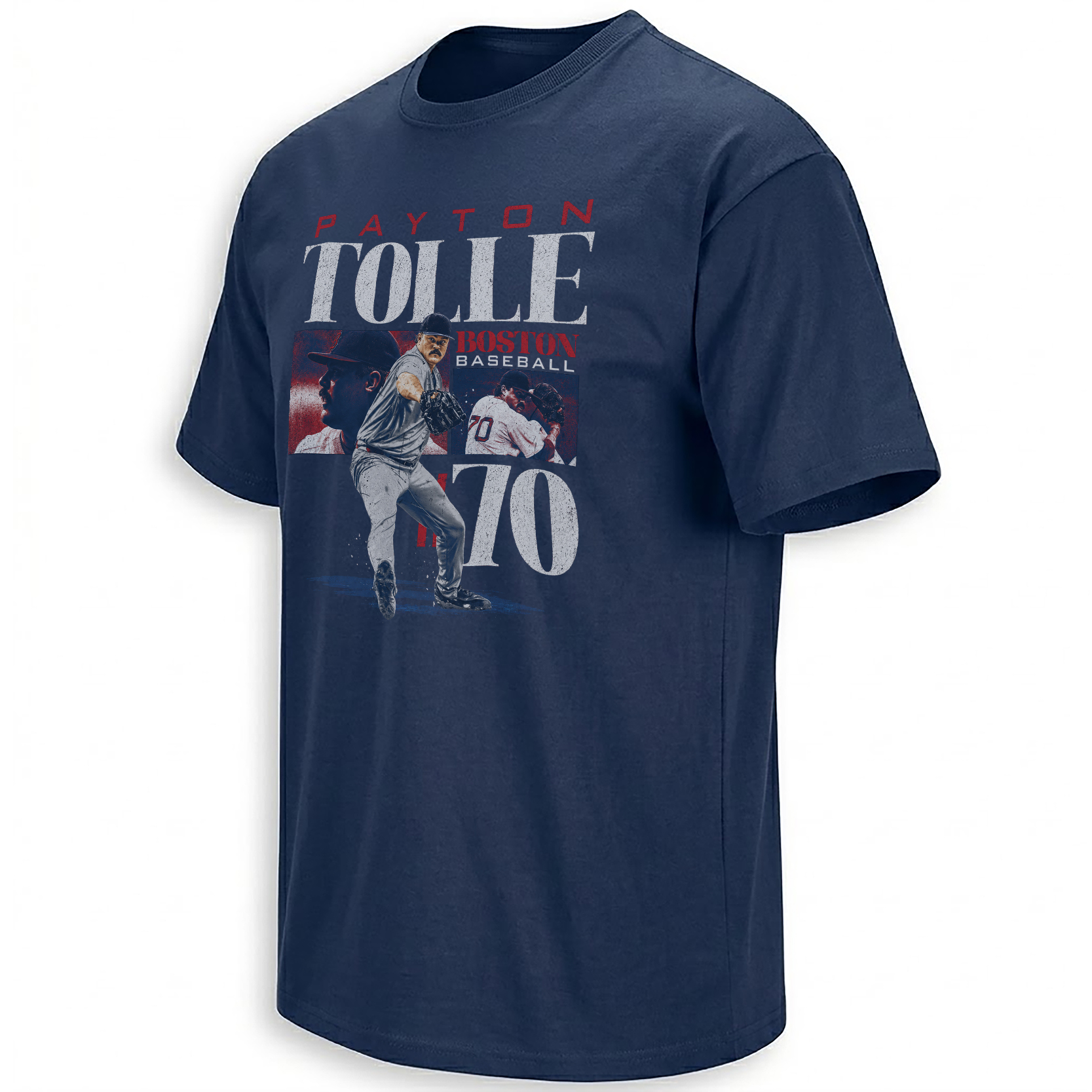
The artwork does not depend on one isolated delivery frame. Multiple images present Tolle through different phases of the motion: leg lift, rotation, release and finish.
That collage structure matches the way pitchers are studied. A hitter, coach or fan does not understand a delivery through one still image. The meaning appears across sequence — where the hands begin, how the body moves down the mound and where the ball leaves the fingers.
No. 70 anchors the composition and keeps the visual story tied to Boston. The number has become recognizable because it belongs to a pitcher whose physical dimensions and release point already look unusual before the ball is thrown.
Fenway Quickly Recognized the Pitching Personality
Young pitchers often need time before a home crowd understands what to anticipate. Tolle’s identity arrived faster because his best pitch creates an immediate visual and audible reaction.
Each elevated fastball produces the possibility of a late swing. Each strikeout creates a louder response as the crowd begins to recognize the pattern. By the June start against Baltimore, Fenway already sounded confident whenever Tolle reached two strikes.
The New York performance then gave that confidence a rivalry setting. Seven scoreless innings against the Yankees can turn a promising young pitcher into a local attraction in one evening.
Upper-90s velocity, elite extension and a difficult release point create the visual signature at the center of Tolle’s rise.
Continued improvement in his breaking ball and command will determine whether the overpowering first impression becomes a durable rotation identity.
The Number 70 Feels Like a Prospect Number Becoming Permanent
High jersey numbers often carry the temporary atmosphere of Spring Training or a first call-up. They can look like placeholders before a player establishes enough permanence to choose something more conventional.
Tolle’s No. 70 is beginning to work differently. Repetition at Fenway, television strikeout clips and the June performance against New York have attached the number to a specific delivery and fastball.
That process gives the graphic its cultural value. It preserves the stage when a number that once looked temporary begins to feel inseparable from the player wearing it.
Boston’s Pitching Development Has a New Public Example
Tolle’s rapid rise also matters organizationally. Boston has invested heavily in pitching development, mechanical refinement and turning draft traits into Major League weapons.
His fastball jump, improved athleticism and quick movement through the Minor Leagues provide a visible example of that system working. The story is therefore larger than one rookie starter. It is evidence of what the current Red Sox development structure wants to produce.
The wider Boston Red Sox collection follows that changing team identity through Fenway imagery, current players and pitching graphics.
Inside the broader MLB Shirts collection, the No. 70 collage belongs to baseball’s recurring visual tradition of documenting the season when a prospect’s mechanics become part of Major League culture.
Frequently Asked Questions
Who is Payton Tolle?
Payton Tolle is a 6-foot-6 left-handed pitcher drafted by Boston in the second round in 2024 who reached the Major Leagues in 2025 and joined the Red Sox rotation again in 2026.
What number does Payton Tolle wear?
Tolle wears No. 70 for Boston, and the number appears prominently in the pitching collage.
How fast does Payton Tolle throw?
His fastball sits in the upper 90s and has reached approximately 101 mph.
How did Tolle pitch against the Yankees on June 26?
He threw seven scoreless innings, allowed one hit and left the mound to a standing ovation at Fenway Park.
Why is Tolle’s fastball difficult to hit?
His height and unusually long extension allow him to release the ball closer to home plate, making the pitch appear even faster to hitters.
The Payton Tolle pitching collage preserves the long left-handed delivery and sequence behind his rookie rise, while the Red Sox visual archive follows the larger Boston pitching story forming around him.
Payton Tolle Shirt captures Boston’s No. 70 through a layered left-handed pitching collage, bold Red Sox color treatment and the extended delivery behind his 101 mph fastball.