Patrick Kane Returns to Chicago: Why Showtime Coming Home Feels Bigger Than Nostalgia
Patrick Kane’s return to the Chicago Blackhawks restores one of modern hockey’s most recognizable player-city relationships while placing a three-time champion inside the franchise’s next chapter.
Chicago did not need an explanation when the word “Showtime” returned to its hockey vocabulary. On July 23, 2026, Patrick Kane agreed to a two-year contract that brought him back to the Blackhawks, the franchise that drafted him first overall in 2007 and built an era around his creativity, timing and instinct for unforgettable moments.
The agreement carries a reported value of $16 million, but the emotional value cannot be measured as neatly. Kane spent his first 16 NHL seasons in Chicago, helped the Blackhawks win the Stanley Cup in 2010, 2013 and 2015, and became inseparable from the team’s transformation from a dormant Original Six name into the center of the hockey world.
His return arrives after three seasons with Detroit and at a moment when Chicago is attempting another transformation. This time, Kane is not the teenage cornerstone entering a rebuild. He is the decorated veteran returning to a young room led by Connor Bedard, carrying both the memory of what Chicago became and practical knowledge of how a talented group learns to win.
This is not Chicago trying to recreate 2015. It is Chicago inviting one of that era’s architects to help shape whatever comes next.
Why “Showtime” Still Belongs to Chicago
Hockey nicknames often fade when a player changes teams, but “Showtime” never fully detached from Kane’s Chicago identity. It described more than puck skill. It described anticipation—the feeling that a routine possession might suddenly become a highlight, an overtime ending or a celebration repeated across the city.
Kane’s defining Chicago images remain embedded in modern NHL memory: the delayed realization after his 2010 Stanley Cup-clinching goal, the spinning passes, the controlled entries, the “Heartbreaker” celebration and the confidence of a player who seemed most comfortable when a game reached its most uncomfortable moment.
That history explains why the homecoming produced immediate emotional force. Fans were not simply reacting to a transaction. They were reconnecting a familiar name, number and visual language with the uniform and arena where those symbols acquired their meaning.
The Official Image Behind the Homecoming
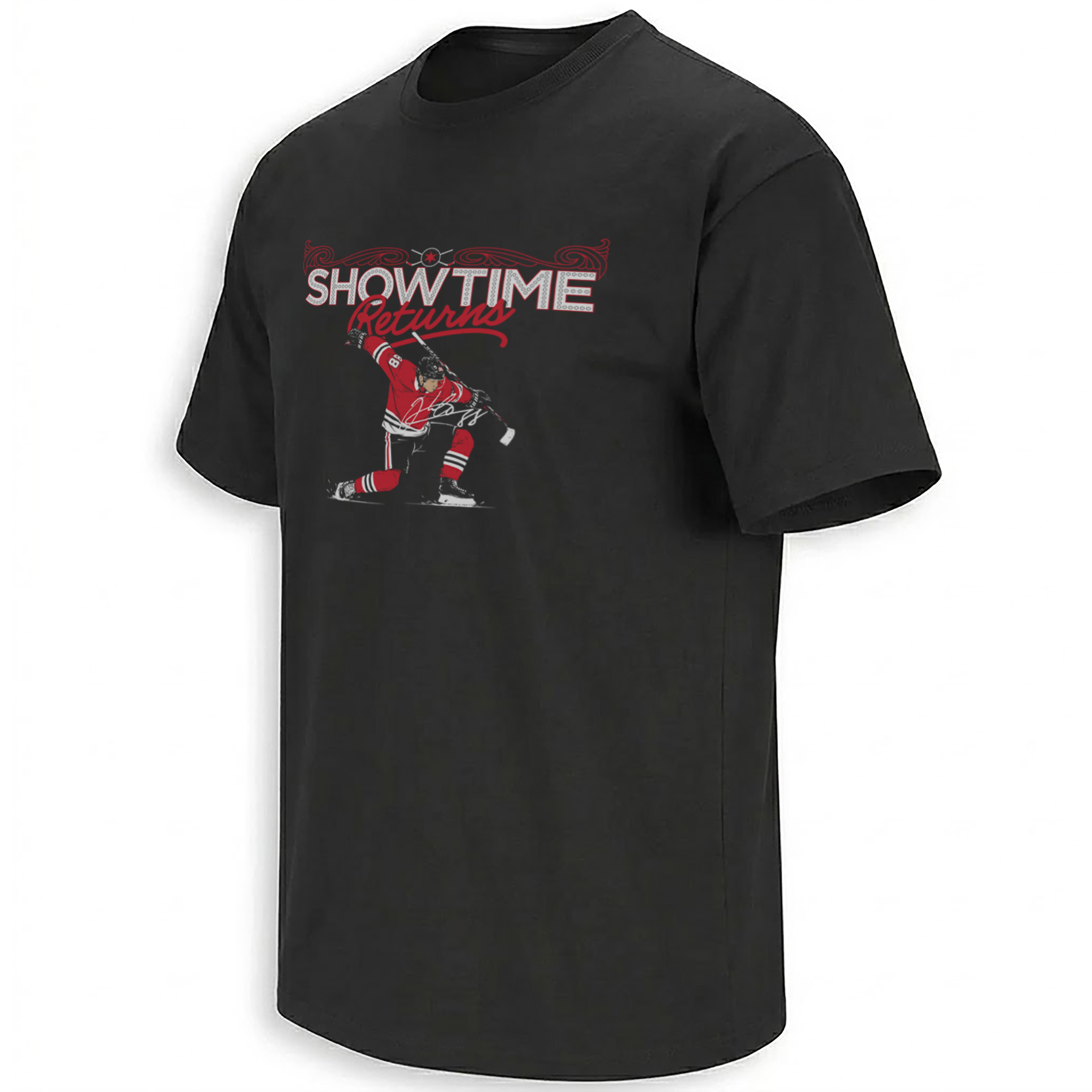
NHL coverage presented Kane’s return through the visual that still defines him for many fans: skating in Chicago red, wearing No. 88 and celebrating with the confidence associated with his championship years. That image works because the reunion requires almost no new symbolism. The old symbols remain immediately readable.

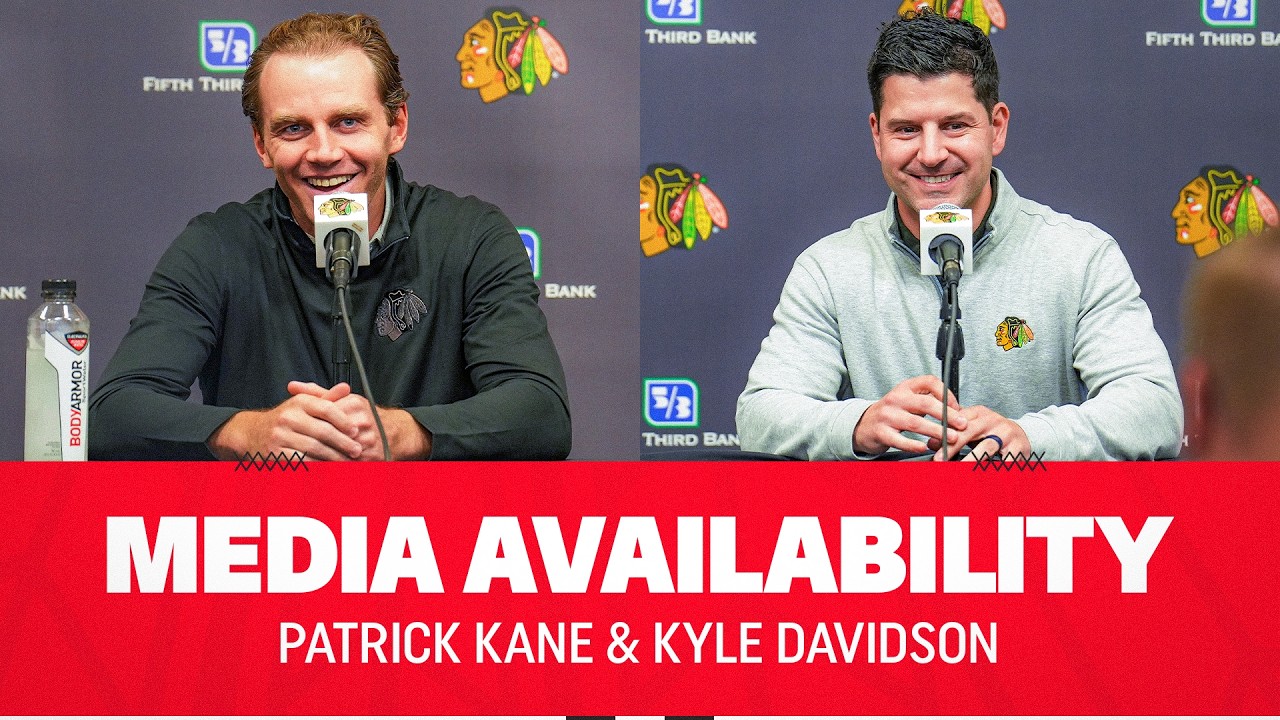
Watch Patrick Kane Discuss His Return
A Second Act Built Around Bedard and the Next Generation
The most important question is not whether Kane can reproduce his prime. Chicago is not asking a 37-year-old player to become the 2016 Hart Trophy winner again. The more relevant question is how his vision, power-play intelligence and experience can alter the environment surrounding the organization’s younger players.
Connor Bedard publicly described the possibility of playing with Kane as “incredible” before the signing became official. The pairing immediately became the central narrative of the reunion: a franchise legend once drafted first overall returning to work beside the organization’s newest first-overall centerpiece.
Their timelines are different, but their reputations share an important trait. Both entered the NHL as players expected to create offense through imagination rather than force. Kane can provide Bedard and Chicago’s developing core with something coaching cannot fully simulate—the perspective of someone who has lived through a rebuild, a championship breakthrough, sustained expectations and the decline of an era.
Kane’s first Chicago chapter was about becoming the future. His second is about helping the next future understand what the city, the sweater and the pressure eventually demand.
How the Design Uses Chicago’s Hockey Memory
The Showtime Returns artwork uses the language of an arena announcement rather than a conventional player portrait. Large typography gives “Showtime” the status of a marquee, while the return message functions like the moment the lights go down before a familiar name appears on the United Center screen.
Red creates the immediate Chicago connection, but the black field is equally important. It supplies theatrical contrast and makes the graphic feel like a night event rather than a simple retrospective. The composition carries a faint concert-poster quality, fitting for a nickname built around performance.
Kane’s image acts as the bridge between eras. The design does not attempt to catalog every award or championship. Instead, it preserves the simplest emotional fact of July 2026: the player Chicago once called Showtime belongs to Chicago again.
Why the Return Resonated Across Blackhawks Fan Culture
Online reaction moved quickly between celebration and debate. Some fans treated the signing as the restoration of a relationship that should conclude where it began. Others focused on roster construction, Kane’s age and whether a rebuilding club should invest heavily in a veteran.
Those positions are not mutually exclusive. The reunion can be both emotional and strategic, both a legacy decision and a hockey decision. Kane produced 57 points in 67 games during his final Detroit season and returned to Chicago after reaching major career milestones, including 500 goals and the NHL scoring record for a United States-born player.
The uncertainty is part of what makes the second act compelling. A ceremonial farewell would have offered a clean ending. A multi-year playing contract creates risk, expectation and the possibility of new memories that do not simply imitate the old ones.
Chicago’s Hockey Archive Is Open Again
Kane’s homecoming immediately reconnects current Blackhawks conversation with the championship era, but it also gives future games a fresh emotional frame. Every power-play pass, United Center introduction and interaction with Chicago’s young core will be interpreted through both histories at once.
The wider Chicago Blackhawks collection functions as a visual archive of those overlapping eras, from championship memory to Bedard’s generation and Kane’s unexpected second chapter. The broader NHL collection places the reunion inside hockey’s larger culture of franchise legends, late-career returns and player-city relationships.
Frequently Asked Questions
When did Patrick Kane return to the Chicago Blackhawks?
Chicago announced Kane’s return in July 2026 after he agreed to a two-year contract with the franchise.
What is Patrick Kane’s new Blackhawks contract worth?
The contract was reported at two years and $16 million, carrying an average annual value of $8 million.
Why is Patrick Kane called “Showtime”?
The nickname reflects Kane’s ability to create dramatic goals, passes and high-pressure moments, particularly during Chicago’s championship era.
How many Stanley Cups did Kane win with Chicago?
Kane won three Stanley Cup championships with the Blackhawks in 2010, 2013 and 2015.
Why does Kane’s return matter to Connor Bedard’s generation?
Kane gives Chicago’s young core direct access to a player who experienced the franchise’s previous rebuild, championship breakthrough and years of intense expectations.
The Showtime Returns graphic preserves the instant Kane’s Blackhawks story reopened, while the Chicago hockey archive follows the legends, young stars and fan language surrounding the next chapter.
Showtime Returns Shirt captures Patrick Kane’s 2026 Chicago Blackhawks homecoming through No. 88 imagery, theatrical red-and-black styling and the return of one of the city’s defining hockey relationships.
NHL.com contract announcement, NHL.com analysis of Kane’s second Chicago chapter, NHL video coverage and Patrick Kane’s 2026 media availability.