Olivia Miles’ Signature Afro and the Rookie Style Reshaping Minnesota Lynx Basketball
The passing vision introduced Olivia Miles to WNBA audiences. Her production made the league pay attention. Her unmistakable silhouette completed the image, giving Minnesota a rookie whose style can be recognized before a name or jersey number enters the frame.
Olivia Miles entered Minnesota with two forms of recognition already attached to her. Basketball followers knew the advanced passing imagination, the ability to change pace and the uncommon comfort of a guard who sees an opening before the defense understands that it exists. Visually, they also knew the silhouette.
Her signature afro is not separate from the basketball story. In photographs, broadcasts and social clips, it becomes part of the movement: a clear outline above a low dribble, a fast change of direction or the upright posture she carries while scanning the floor.
That recognizability gained new importance after Minnesota selected Miles with the second overall pick in the 2026 WNBA Draft. The Lynx did not merely add a young point guard. They placed one of the draft’s most visually and tactically distinctive players inside a franchise defined by championship standards and established leadership.
Miles does not disappear inside Minnesota’s structure. Her passing, pace and signature silhouette give the system a new visual center every time she controls the ball.
A Rookie Arriving Inside a Championship Standard
Minnesota is not the kind of organization where a highly drafted player is asked to become the entire identity overnight. The Lynx already possess institutional memory, veteran leadership and a system shaped by years of contention. For a rookie, that creates opportunity and pressure at the same time.
Miles entered that environment as a point guard whose greatest strength is interpretation. She can manipulate a defender with pace, hold the ball long enough to shift help coverage and then deliver a pass into the space she created. That approach makes her valuable inside a team that does not need random volume; it needs decisions that preserve structure while adding imagination.
Her early performances showed how quickly that balance could become visible. Miles recorded double-doubles, produced a 24-point and eight-assist night against Toronto and began generating rookie highlights that felt controlled rather than accidental. The larger story was not simply that she could score. It was that she could change the geometry of a possession.
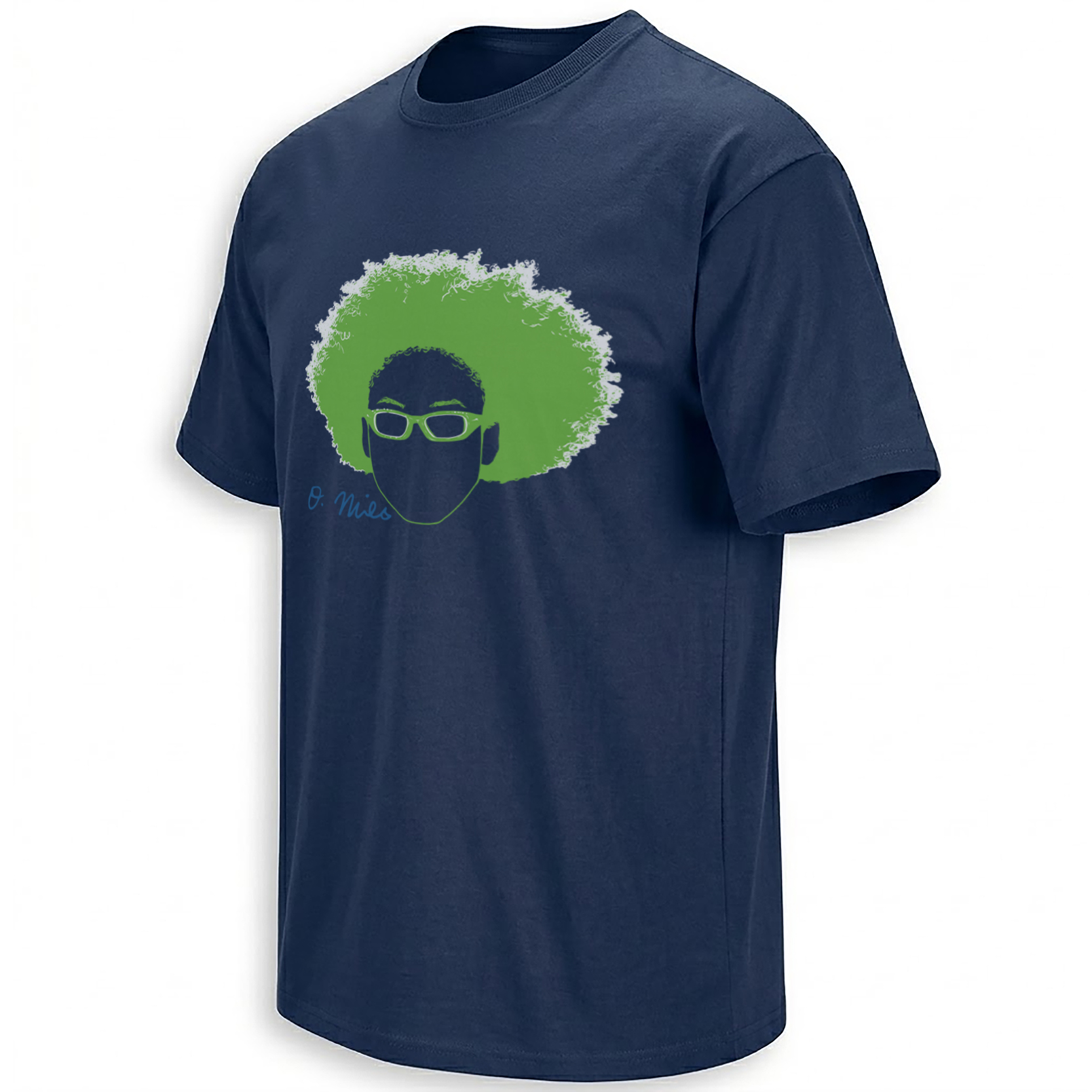
Why the Afro Is Central to the Artwork
Sports portraiture often depends on uniform details. A number, team wordmark or color palette tells the viewer who is represented. Miles offers another possibility because her hairstyle provides an immediate personal outline.
The afro gives the artwork rhythm and scale. It creates a circular outer shape around the face, allowing the eyes and expression to remain the emotional center. The resulting portrait feels closer to a cultural icon graphic than a conventional action photograph.
Natural hair also carries meaning within women’s sports imagery. It communicates individuality without requiring an added slogan. Rather than flattening Miles into a generic rookie archetype, the design preserves the element that makes her instantly identifiable across draft-night photographs, interviews and game footage.
The hairstyle supplies the silhouette, the face supplies composure and the limited portrait composition mirrors Miles’ game: controlled, clear and confident enough to avoid unnecessary visual noise.
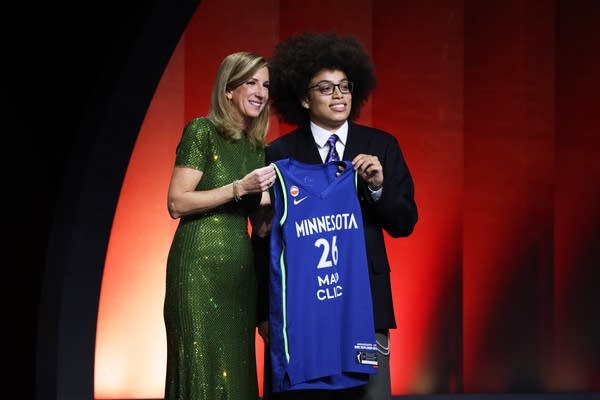
The Draft-Night Image That Introduced Her to Minnesota
The photograph below comes from MPR News coverage of Miles’ arrival in Minnesota. It shows her holding a Lynx jersey after becoming the second overall selection, placing the signature portrait inside the documented beginning of her professional career.
Watch the Original Minnesota Introduction Directly
Minnesota’s introductory press conference gives the article another source beyond the product image. Readers can hear Miles discuss joining the organization and see the natural hairstyle that became the visual basis of the portrait.
The Double-Double Post That Showed the Rookie Production
A portrait becomes culturally meaningful when the visual identity is supported by real performance. Minnesota’s official X account marked Miles’ second career double-double after she combined scoring, playmaking, rebounding and an unusual four blocks from the guard position.
The original Lynx post is embedded below. Its media and engagement interface load directly inside the blog through X’s official widget.
The post demonstrates why Miles’ rookie story is larger than aesthetics. Her hairstyle makes the image instantly readable, but the numbers and film give that image authority. The visual identity travels because the basketball keeps producing reasons for the audience to see it again.
Passing Vision as Personal Style
“Style” in basketball is often reduced to clothing, celebrations or signature accessories. Miles’ strongest style marker is actually temporal. She plays at a pace that appears personal to her, slowing defenders down and then accelerating the possession with one pass.
That rhythm explains why her highlights feel different from pure speed. She frequently creates the impression that everyone else has entered the correct position only after she has already decided what the possession will become.
The portrait design captures the calm side of that identity. Instead of selecting the most chaotic action frame, it emphasizes her expression and silhouette. The visual suggests control—the same quality that allows her to enter a veteran Minnesota lineup without playing like she must prove everything on one possession.
A New Face Inside the Minnesota Lynx Archive
Great team identities need continuity, but they also need new images. Miles represents the next stage of Minnesota’s guard tradition: a young playmaker entering a franchise with established expectations while developing a visual language of her own.
Her rookie graphics now sit naturally inside the wider Minnesota Lynx collection, where current players, championship memory and new fan language form a continuing team archive. The broader WNBA collection shows how the league’s expanding culture increasingly values personal identity alongside performance.
The Signature Afro piece therefore works less like a standard player illustration and more like an introduction. It records how Miles looked when Minnesota’s new era first took shape and preserves the silhouette fans were beginning to recognize during her first professional season.
Frequently Asked Questions
When did the Minnesota Lynx draft Olivia Miles?
Minnesota selected Miles with the second overall pick in the 2026 WNBA Draft after her college career at Notre Dame and TCU.
Why is Olivia Miles’ afro central to the portrait design?
Her natural hairstyle creates an instantly recognizable silhouette and preserves an important element of her individual visual identity.
What made Miles stand out during her rookie season?
Her combination of passing vision, pace control, scoring growth and all-around performances allowed her to contribute within Minnesota’s veteran system.
Why does the design use a face portrait instead of an action pose?
The portrait focuses attention on Miles’ composure and signature silhouette, creating an image that remains recognizable without depending on one specific game.
The Olivia Miles Signature Afro portrait preserves her rookie visual identity, while the wider Minnesota Lynx archive follows the players and moments shaping the franchise’s next chapter.
Olivia Miles Face Shirt captures the Minnesota rookie’s signature afro, composed portrait and instantly recognizable identity during a breakout first WNBA season built on creative passing and all-around production.