
Munetaka Murakami Is Becoming a Chicago Story — and the Cartoon Version Already Makes Sense
Munetaka Murakami arrived in Chicago carrying enormous Japanese baseball expectations. By August 2026, the White Sox had something bigger than a new power hitter: they had a player whose home runs, bobbleheads, fan graphics and “Mune” language were becoming part of the South Side’s visual culture.
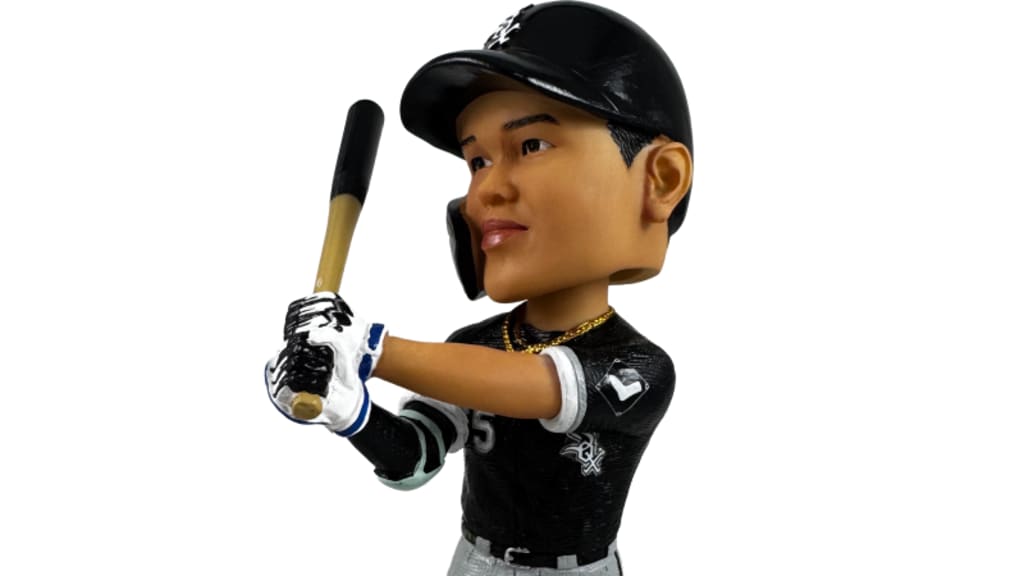
The easiest way to understand Munetaka Murakami’s first summer in Chicago is not to begin with a stat line. Begin with a bobblehead. On July 26, the White Sox distributed a figure recreating his first Major League home run. Then Murakami spent the afternoon making the collectible feel immediately outdated, hitting two more home runs and driving in six in a 12–3 win over Houston.
It was the kind of baseball coincidence the internet understands instantly: a player receives an animated miniature version of himself and then spends the same day producing new scenes that deserve their own miniature versions. MLB’s official coverage described the afternoon as another demonstration of how deeply Murakami’s arrival had already changed the atmosphere around the White Sox.
The story kept moving. On August 8, Murakami hit his 26th homer of the season as Chicago beat Cleveland 6–3 and ended a four-game losing streak. The number matters, but the larger development matters more: the Japanese slugger had become recognizable enough in Chicago that his batting stance, No. 5 and left-handed power could function almost like visual shorthand.
Murakami’s first Chicago season is becoming recognizable not only through numbers, but through poses, objects and visual jokes fans can identify before reading a caption.
Why the Bobblehead Moment Matters
Baseball has always been unusually good at turning players into objects. Cards freeze swings. Stadium giveaways exaggerate faces. Scorecards reduce games to symbols. Vintage programs transform athletes into illustrations. Long before social media, baseball understood that fandom survives by repeatedly converting movement into collectible imagery.
Murakami fits naturally into that tradition because his arrival already carries two visual histories. In Japan, he was a superstar associated with enormous left-handed power and the Yakult Swallows. In Chicago, he is being translated into a new set of signs: black-and-white uniforms, the No. 5, Rate Field, “Mune” nicknames and the visual rhythm of American baseball collectibles.
From Athlete to Animated Character
That context is what makes the Murakami Shirt visually interesting. Its animated-player treatment does not attempt to reproduce a documentary photograph. Instead, it uses the older language of sports cartoons and collectible characters: recognizable pose, simplified personality and repetition.
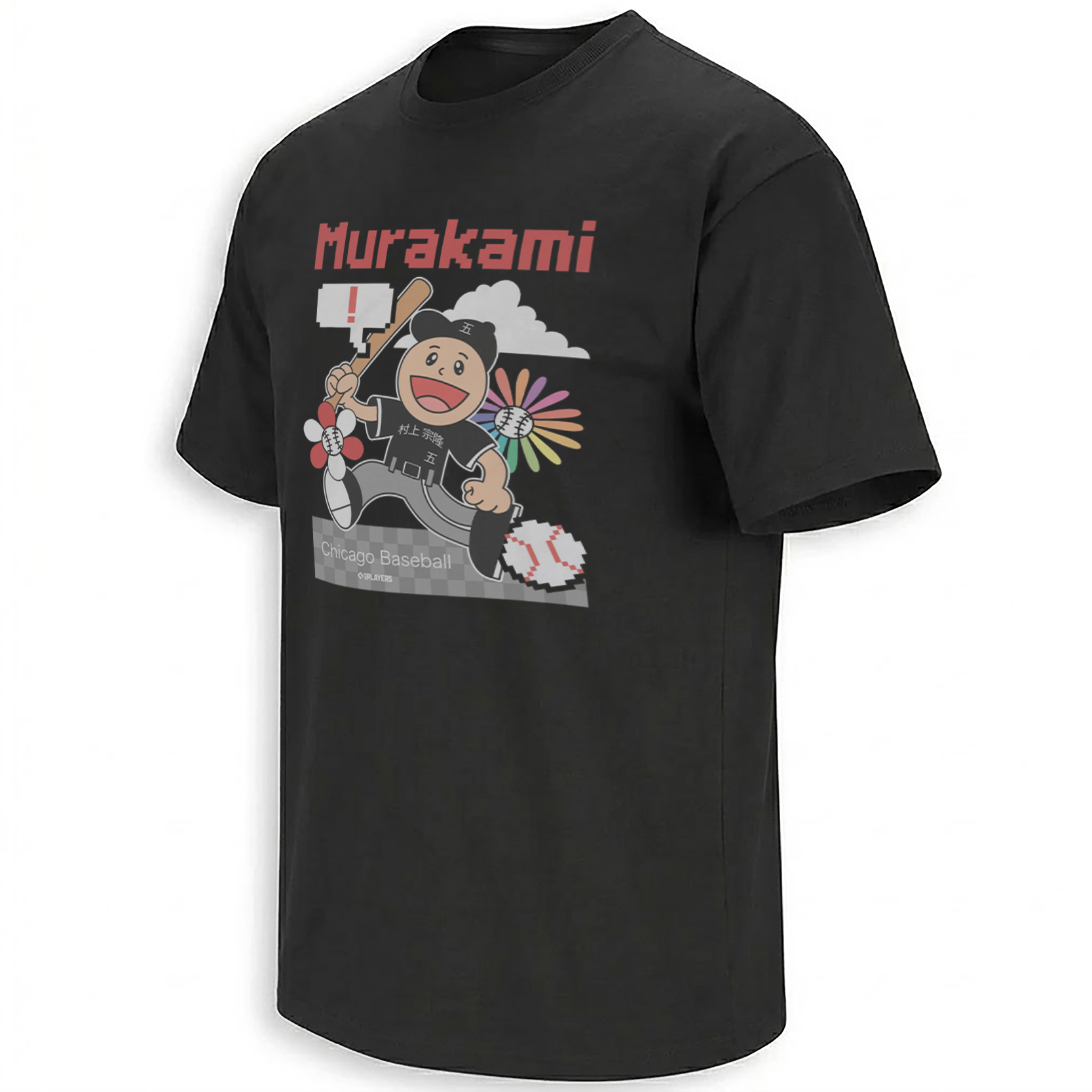
Repetition is important here. A normal portrait says, “this is the player.” A row of animated versions says something different: this player now has enough recognizable gestures to become a character. That is an old baseball idea updated for an era when GIFs, stickers, reaction images and short clips circulate almost as rapidly as box scores.
The White Sox Are Building a Mune Visual Vocabulary
The organization itself has participated in that process. Murakami’s first-home-run bobblehead included the phrase “I have power.” His arrival also generated “Muneshot” language around ballpark food, while team and league social accounts repeatedly turned his big swings into compact, instantly shareable pieces of media.
That official post is particularly relevant to the animated-player graphic because it confirms that this visual language is not being invented after the fact. During the season itself, Murakami is already being converted from baseball action into character-like memorabilia.
A Japanese Baseball Star Rewritten in Chicago Black and White
Murakami’s cultural importance also comes from movement between baseball worlds. Japanese stars arrive in MLB with an audience that already knows their history, while American fans encounter them inside new uniforms, ballparks and rivalries. The transition creates a rare kind of double nostalgia: Japanese fans recognize the player they followed before Chicago, while White Sox fans are building the first chapter of their own Murakami memory.
Visually, the animated treatment helps bridge those worlds. Character illustration has deep roots in Japanese popular culture, while caricature and mascot-style sports art are equally familiar inside American baseball. The graphic does not have to choose one tradition. It sits comfortably between them.
The restrained black-and-white palette also does useful work. Rather than turning Murakami into a brightly colored cartoon disconnected from the team, it keeps the figures inside the visual identity of Chicago baseball. Small hits of color become accents rather than the whole story.
Why Murakami Feels Bigger Than a Rebuild Story
Before the season, Chicago’s direction was frequently discussed through the language of rebuilding. By late July, MLB’s own coverage was describing Murakami as a player who had changed the franchise’s atmosphere, with the White Sox sitting atop the American League Central at that point in the schedule.
That change in mood is precisely where fan graphics become meaningful. They do not need to predict how the season will end. Their job is to preserve what a particular stretch of the season felt like while it was happening. Murakami’s animated figures capture a summer when a new Japanese star was becoming familiar enough in Chicago to be drawn, repeated, nicknamed and collected.
MLB reported Murakami’s two-homer, six-RBI bobblehead day on July 26, while Reuters reported his 26th home run in Chicago’s August 8 victory over Cleveland. The external image above comes directly from MLB’s feature rather than from another merchandise seller.
Where the Design Fits in the White Sox Archive
For Chicago fans following the season through graphics as well as games, the piece belongs naturally beside other current moments in the Chicago White Sox collection. The broader MLB collection tracks the same phenomenon across baseball: players, jokes and short-lived moments turning into visual memory almost as quickly as they appear on the field.
Frequently Asked Questions
Why is Munetaka Murakami such a major White Sox story in 2026?
Murakami arrived from Japanese baseball with an established power-hitting reputation and quickly became one of Chicago’s most visible hitters, while his personality and imagery also became part of the team’s fan culture.
What happened on Munetaka Murakami’s bobblehead day?
On July 26, 2026, Murakami hit two home runs and drove in a career-high six runs as the White Sox beat Houston 12–3 on the same day Chicago distributed a bobblehead commemorating his first MLB home run.
Why does an animated-player design fit Murakami?
His 2026 season has already produced bobbleheads, social graphics and other collectible imagery, making a simplified animated version feel connected to the way fans are experiencing his first Chicago season.
What does the Murakami Shirt design emphasize?
The graphic emphasizes repetition, recognizable player poses and Chicago’s black-and-white baseball palette rather than presenting Murakami as a conventional photographic portrait.
The Murakami animated-player graphic captures the character-building side of that story, while the White Sox archive follows the wider visual language growing around Chicago’s 2026 season.
Murakami Shirt turns Munetaka Murakami’s breakout Chicago chapter into an animated baseball character study, connecting his No. 5 identity, White Sox fan culture and the collectible imagery surrounding his 2026 MLB season.