
Murakami’s “I AM JAPANEEEESE!” Became the White Sox Playoff Meme Nobody Could Script
The White Sox clinched October. Munetaka Murakami rated the celebration 100 out of 10, estimated 100 champagne bottles, then answered an entirely different question by screaming “I AM JAPANESE!” — reviving one of baseball’s most beloved Japanese interview memes in the process.
The best clubhouse interviews are usually impossible to plan. Chicago had just beaten Kansas City 9–1 on September 24 and secured its first postseason berth since 2021. Champagne and beer were already flying, players were yelling over each other, goggles had replaced caps, and Chicago Sports Network reporter Brooke Fletcher was trying to conduct something resembling an interview.
Munetaka Murakami made normal interviewing impossible almost immediately. Asked to rate his first Major League playoff celebration from one to 10, the White Sox rookie rejected the scale entirely: “One hundred!” Asked how many bottles he had opened, he reused the same answer. “Hundred!”
Then Fletcher asked what it meant to celebrate the postseason berth with his teammates. Murakami could have given the standard answer about chemistry, Chicago or working hard together. Instead, while teammates continued soaking him, he shouted: “I AM JAPANESE!”

The Clip Went Viral Because Every Answer Escalated
The structure of the interview is part of the joke. “One hundred” would have been enough to become a clip. Using “hundred” again when asked about bottles created a running bit. By the time the final question arrived, viewers expected another exaggerated number.
Murakami instead changed subjects entirely. The surprise is what makes the stretched online spellings — “JAPANEEEEEESE,” “JAPENEEEEESSSE” and every other version fans typed afterward — feel natural. People were trying to reproduce the sound, not the dictionary spelling.
On Reddit, the reaction thread quickly turned into its own soundboard: “ONE HUNDRED,” “NOT TEN,” “HUNDRED” and increasingly long versions of “I AM JAPANESE.” Some fans said they had already watched the clip repeatedly. Others immediately recognized the deeper reference. :chatgpt-content-reference{index=”3″}
The meme is funny because the quote makes almost no sense as an answer — until you know the baseball history hiding behind it.
Munenori Kawasaki Is the Missing Half of the Joke
Murakami later explained that the phrase was not invented in the moment. The reference goes back to Munenori Kawasaki, the charismatic Japanese infielder who became a Toronto Blue Jays cult favorite.
After a walk-off double against Baltimore in 2013, Kawasaki took over a postgame interview, introduced himself and enthusiastically declared that he was Japanese. The delivery became one of the defining viral baseball interviews of that era.
After Murakami’s White Sox celebration, he explicitly acknowledged Kawasaki on X. He explained that “I am Japanese” had become a phrase people around baseball joked with regularly and that it simply came out instinctively in the interview. That turns the September 2026 clip into something much richer than accidental broken-English comedy: Murakami was knowingly participating in an MLB meme passed from one Japanese personality to another.
Munenori Kawasaki, Toronto 2013 → one of MLB’s most beloved chaotic interviews → the phrase remains recognizable → Murakami revives it during Chicago’s 2026 postseason celebration.
The White Sox Posted the Chaos Exactly as Fans Experienced It
The moment also arrived inside a larger White Sox story. Chicago’s postseason return followed two years in which the organization had lost at least 100 games, making the 2026 clinch an unusually sharp reversal. Murakami’s chaotic joy therefore did not distract from the meaning of the night. It gave the turnaround a personality.
Two Designs, Two Different Ways to Preserve the Same Shout
The first I AM JAPANEEEEEESE!!! design uses the quote as the dominant visual. Huge white typography fills the composition while Murakami appears mid-shout in celebration goggles. His face interrupts the words instead of sitting beneath them, which makes the lettering feel like sound exploding around him.
The second I AM JAPANEEEESE! No. 5 design leans harder into player identity. The portrait is larger and more distressed, the bright green goggle strap becomes the only aggressive color accent, and the Japanese characters 村上宗隆 anchor the bottom half.
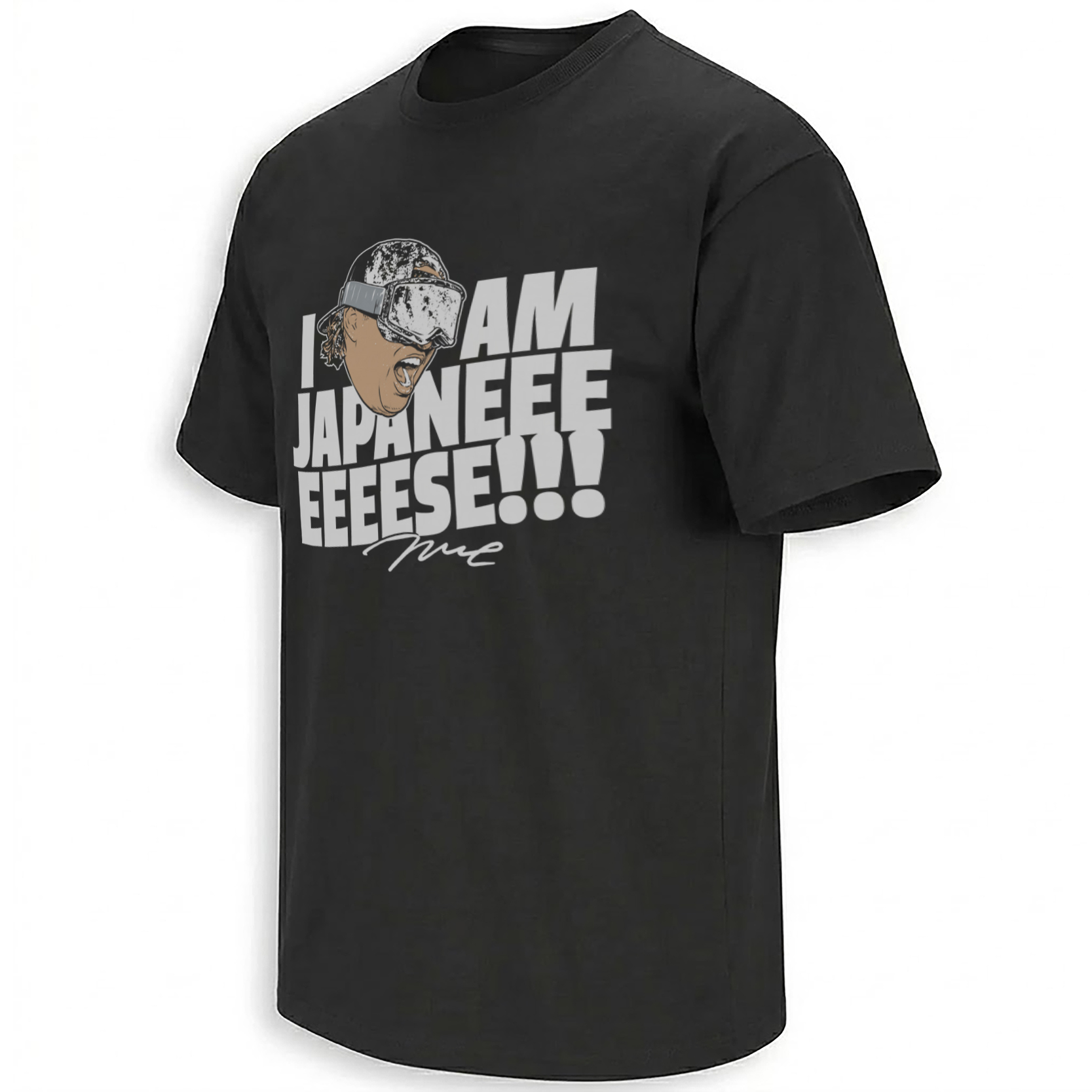
Oversized white lettering, champagne goggles and Murakami’s shouting face reconstruct the quote primarily as sound and meme typography.
View the typography version →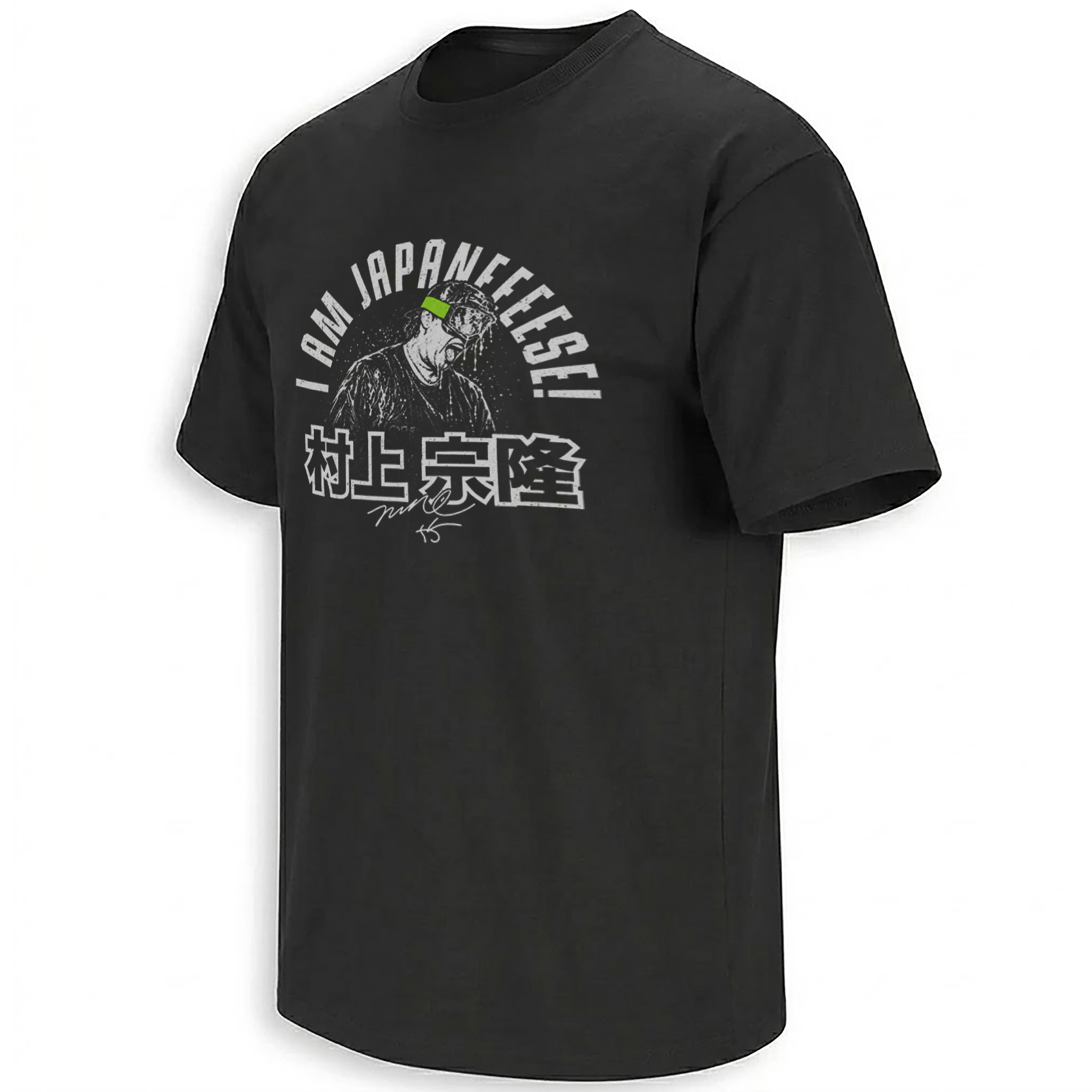
A distressed black-and-white Murakami portrait, neon-green goggle strap, Japanese name typography and No. 5 detail push the same meme toward underground sports-poster territory.
View the No. 5 version →The Next Night Turned One Viral Line Into a Running Gag
The story could have ended with the clubhouse clip. Instead, Murakami returned to Rate Field less than 24 hours later and hit two home runs against fellow Japanese pitcher Tomoyuki Sugano as Chicago beat Colorado 6–1.
Then came another interview. This time Murakami delivered the sequel: “I am Japanese 2!” MLB explicitly framed it as a tribute to Kawasaki. That continuation matters because it confirms the first line was not simply a misunderstood question that happened to sound funny. Murakami knew exactly what cultural thread he was pulling.
September 24: “I AM JAPANESE!” during the clinching champagne party. September 25: two home runs, then “I am Japanese 2!” in Chicago. The meme became part of Murakami’s late-season identity almost overnight.
Why the Goggles Matter as Much as the Words
Both designs understand that the quote alone is not the complete memory. Murakami’s protective celebration goggles, soaked clothing and open-mouth expression instantly place the words inside a playoff clubhouse rather than an ordinary interview.
The first version keeps those details small enough for the quote to dominate. The second reverses the hierarchy: Murakami’s face becomes the poster while the words curve around him. The neon-green strap works because almost every other element is black, white or gray. One streak of color recreates the strange brightness of champagne goggles under clubhouse lighting.
Readers following him specifically can browse the Munetaka Murakami search archive. The broader Chicago White Sox collection tracks the team’s 2026 postseason return and South Side fan language, while the MLB collection connects the moment to the wider culture of playoff celebrations, player personalities and baseball memes.
Frequently Asked Questions
When did Munetaka Murakami say “I am Japanese”?
He shouted the phrase during a clubhouse interview after the White Sox beat Kansas City 9–1 and clinched a postseason berth on September 24, 2026.
Why did Murakami say “I am Japanese”?
Murakami later explained that the phrase was a familiar joke and a reference to former Japanese MLB player Munenori Kawasaki’s famous 2013 postgame interview.
What does “One Hundred” mean in the Murakami celebration?
Before the viral final line, Murakami rated his celebration 100 on a scale from one to ten and also answered “hundred” when asked how many champagne bottles he had opened.
What do the Japanese characters 村上宗隆 mean?
They are Munetaka Murakami’s full name written in Japanese kanji.
Did Murakami use the joke again?
Yes. After hitting two home runs the following night, he delivered “I am Japanese 2!” during another postgame interview.
The two Murakami celebration graphics preserve different visual versions of the same clubhouse chaos, while the White Sox archive follows the larger postseason turnaround surrounding it.
I Am Japaneeeeese Shirt captures Munetaka Murakami’s viral White Sox playoff celebration through champagne goggles, stretched meme typography and the Munenori Kawasaki reference behind his unforgettable shout.