Milwaukee’s Comeback Crew Became an Identity, Not Just a Nickname
The Brewers have spent 2026 turning late innings into tests of patience. By mid-August, “Comeback Crew” was no longer merely fan slang — Milwaukee itself was using the phrase to describe a team whose stubbornness had become part of its baseball personality.
On August 13 at Dodger Stadium, Milwaukee reached the ninth inning trailing Los Angeles 4–2 and sitting three outs from another frustrating night. One out later, the Brewers began doing what has defined so much of their season: refusing to let the scoreboard make the emotional decision for them.
Joey Ortiz singled. David Hamilton singled. Jackson Chourio singled. Garrett Mitchell singled. The game was tied. Jake Bauers then punched another ball through the right side to make it 5–4. No dramatic three-run blast was required. Milwaukee simply passed the inning from one hitter to the next until the Dodgers no longer had the lead.
Afterward, Mitchell called it “Brewers baseball.” The team’s own social account was even more direct: “NEVER DOUBT THE COMEBACK CREW.” That phrase is the key to understanding why the nickname feels different in 2026. It describes a method as much as an outcome.
The Brewers’ comeback identity is built on a simple idea: one more plate appearance, one more baserunner, one more chance to make the other team finish the job.
The Team Itself Put a Name on the Feeling
Baseball nicknames usually become interesting when the organization begins speaking the same language as the fans. Milwaukee’s official August 13 post did exactly that. “Comeback Crew” stopped being merely a convenient phrase and became a piece of team-facing identity.
The phrase works because “Crew” already belongs naturally to Milwaukee baseball language. Adding “Comeback” does not create a new mascot or force a marketing concept onto the club. It simply describes the version of the Brewers supporters have repeatedly watched emerge after the game seems to tilt away from them.
The Dodgers Rally Was the Cleanest Example
The August 13 comeback mattered beyond one win. Milwaukee entered Los Angeles after being swept in San Diego and struggling badly with runners in scoring position. Against the Dodgers, the same problem appeared ready to continue until the ninth inning.

What made the rally especially Brewers-like was its lack of spectacle. Five singles did the damage. Milwaukee did not wait for one player to rescue everybody else. The lineup kept creating the next opportunity.
Then the Same Team Won 22–0
Five days after needing every remaining out to escape Los Angeles, Milwaukee produced almost the opposite kind of baseball game. The Brewers scored 22 runs against Seattle on August 18, tying the franchise record for runs in a game and matching the largest shutout margin of MLB’s modern era.
That contrast makes the Comeback Crew identity even more interesting. The nickname does not mean Milwaukee must trail every night. It means the 2026 club has developed multiple ways to break a game open. One night it takes a chain of ninth-inning singles. Another night the offense overwhelms the opponent long before the final innings.
Two Designs, Two Ways to Preserve the Same Team Mood
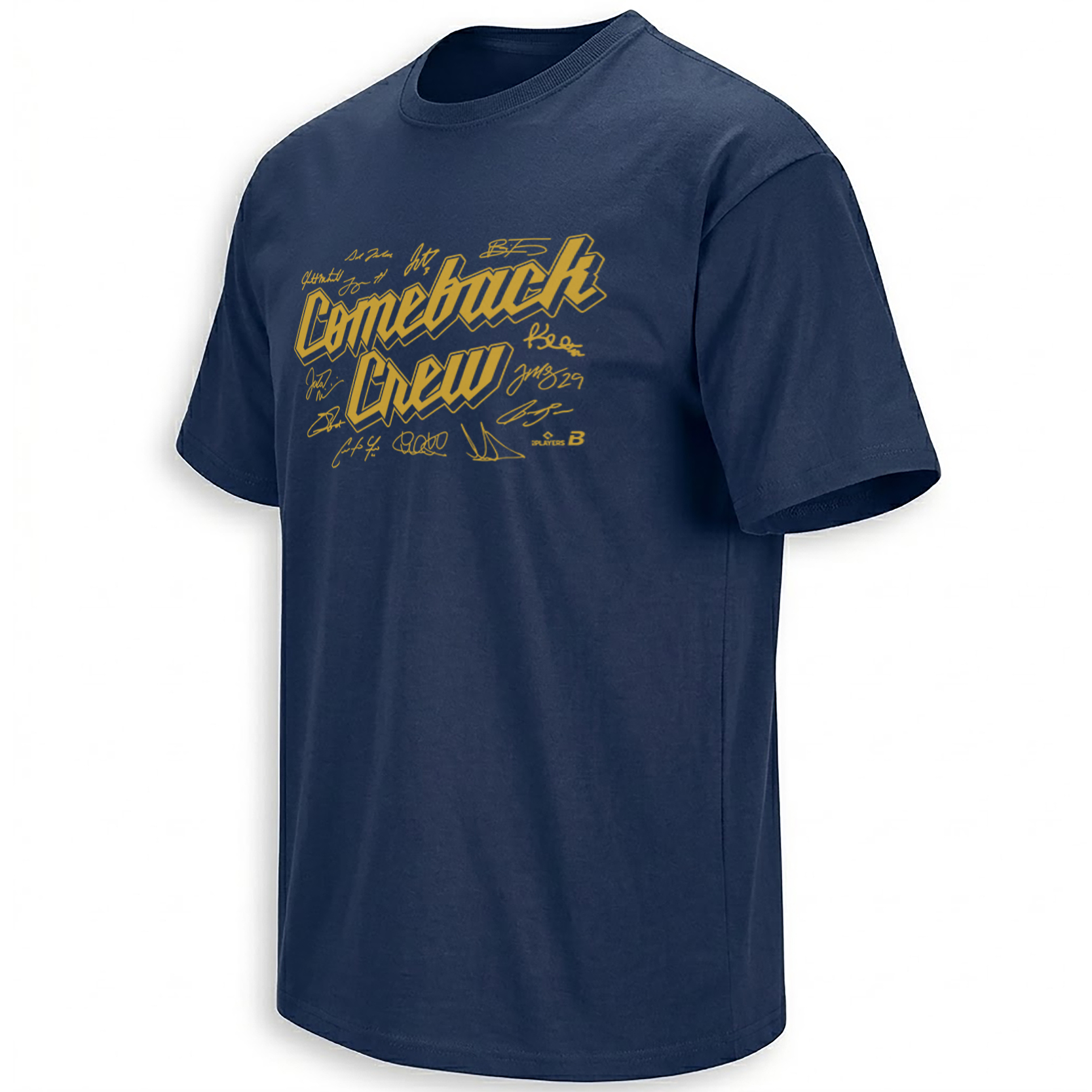
The first Comeback Crew design reads like a rally artifact. The signature treatment makes it feel closer to a team-inscribed memory than a standard scoreboard graphic. The phrase is the headline, but the surrounding marks give the impression that the identity belongs to a whole clubhouse.
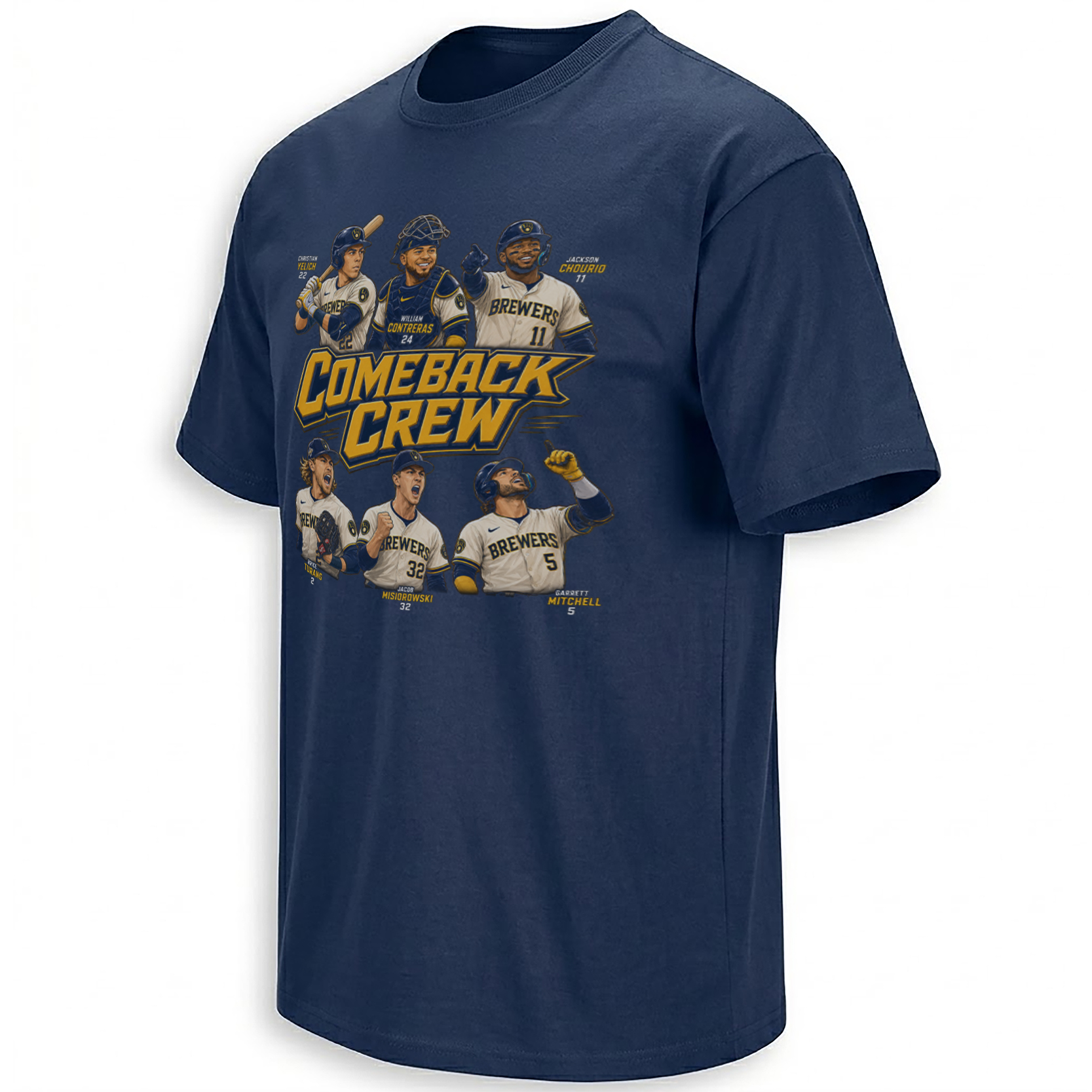
The Brewers team collage version takes the opposite route. Instead of reducing the idea to one slogan, it turns the roster itself into the visual story. That fits a comeback culture built around contributions moving from hitter to hitter.
Why “Comeback Crew” Works Better Than a Normal Slogan
The phrase contains no date, no opponent and no single player. That gives it room to accumulate meaning across a season. Every late rally makes the old words feel new again.
It also reflects Milwaukee’s broader underdog psychology. The Brewers routinely exist in baseball conversations beside organizations with larger markets, payrolls and celebrity gravity. A comeback identity fits a club whose appeal has often centered on collective execution rather than inevitability.
For readers following the wider baseball archive, Ellie Shirt’s MLB Shirts collection places these Milwaukee moments inside the larger visual language of the 2026 season. Player-specific pieces can also be found through the Milwaukee Brewers product search.
Frequently Asked Questions
Why are the 2026 Milwaukee Brewers called the Comeback Crew?
The nickname reflects Milwaukee’s repeated ability to rally late, and the Brewers’ official social account used “NEVER DOUBT THE COMEBACK CREW” after the August 13 comeback against Los Angeles.
What happened in the Brewers’ August 13 comeback against the Dodgers?
Milwaukee entered the ninth inning trailing 4–2 and produced five singles during the rally, tying the game before Jake Bauers drove in the go-ahead run in a 5–4 victory.
Why is the comeback nickname important to Brewers fan culture?
“Crew” is already embedded in Milwaukee baseball language, so “Comeback Crew” feels like a natural extension of the club’s identity rather than a detached promotional slogan.
What happened in Milwaukee’s 22–0 win?
The Brewers scored 22 runs against Seattle on August 18, tying the franchise record for runs in one game and matching the largest shutout margin of MLB’s modern era.
What do the two Comeback Crew designs represent?
One uses signature-style visual language to frame the slogan as a shared team identity, while the collage version emphasizes the collective roster behind Milwaukee’s 2026 run.
The signature Comeback Crew piece and team collage preserve two versions of the same 2026 identity, while the MLB archive follows the wider season around them.
Comeback Crew Shirt captures the Milwaukee Brewers’ 2026 rally identity through signature and team-collage artwork inspired by a season of late-inning resilience and the club’s viral “Comeback Crew” language.