
Mike Ditka Dies at 86: Chicago Bears Mourn “Da Coach” (1939–2026)
The death of Mike Ditka has brought Chicago back to the 1985 Bears, the No. 89 jersey, and a football personality whose legacy reached from the field into American popular culture.
Chicago lost one of its defining sports figures on Friday, October 9, 2026. Mike Ditka, the Pro Football Hall of Fame tight end who coached the Bears to victory in Super Bowl XX, died at age 86, his family announced. For generations of Chicago football supporters, the news marked the end of a familiar voice, face and attitude associated with the city’s sporting identity.
The Chicago Bears confirmed his death and honored a figure who had influenced the franchise as both player and coach. Across football media and social platforms, remembrances returned to his mustache, sweater vest, fierce sideline presence and unmistakable nickname: Da Coach.
Yet the emotion surrounding Ditka’s passing reaches beyond one championship. It reflects the unusual way one man became shorthand for an entire era of Chicago football — its toughness, humor, pride and stubborn refusal to back down.
Chicago will remember the championship. But it will also remember the man who made the city’s football personality impossible to mistake.
Who Was Mike Ditka, and Why Did He Mean So Much to Chicago?
Before he became the famous coach with crossed arms and dark sunglasses, Ditka helped redefine the tight end position. Drafted fifth overall by Chicago in 1961, he recorded 1,076 receiving yards and 12 touchdowns as a rookie, bringing a new dimension to an offensive role often associated primarily with blocking.
He was part of the Bears’ 1963 NFL championship team and later played for the Philadelphia Eagles and Dallas Cowboys. His career eventually brought him to Canton in 1988, when he became the first tight end inducted into the Pro Football Hall of Fame.
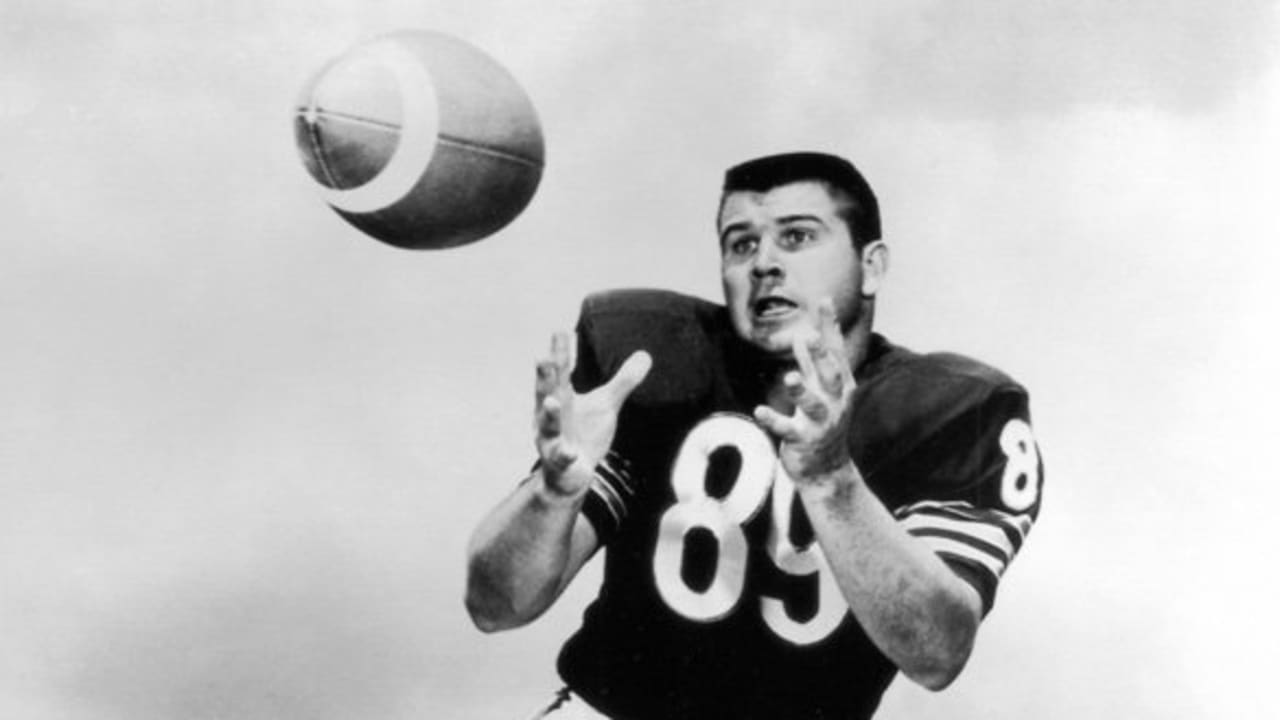
Three words describe the different chapters of Ditka’s career. He helped Chicago win as a player, returned to lead the team as head coach, and became a nationally recognizable symbol of Bears football.
How the 1985 Chicago Bears Made “Da Coach” Immortal
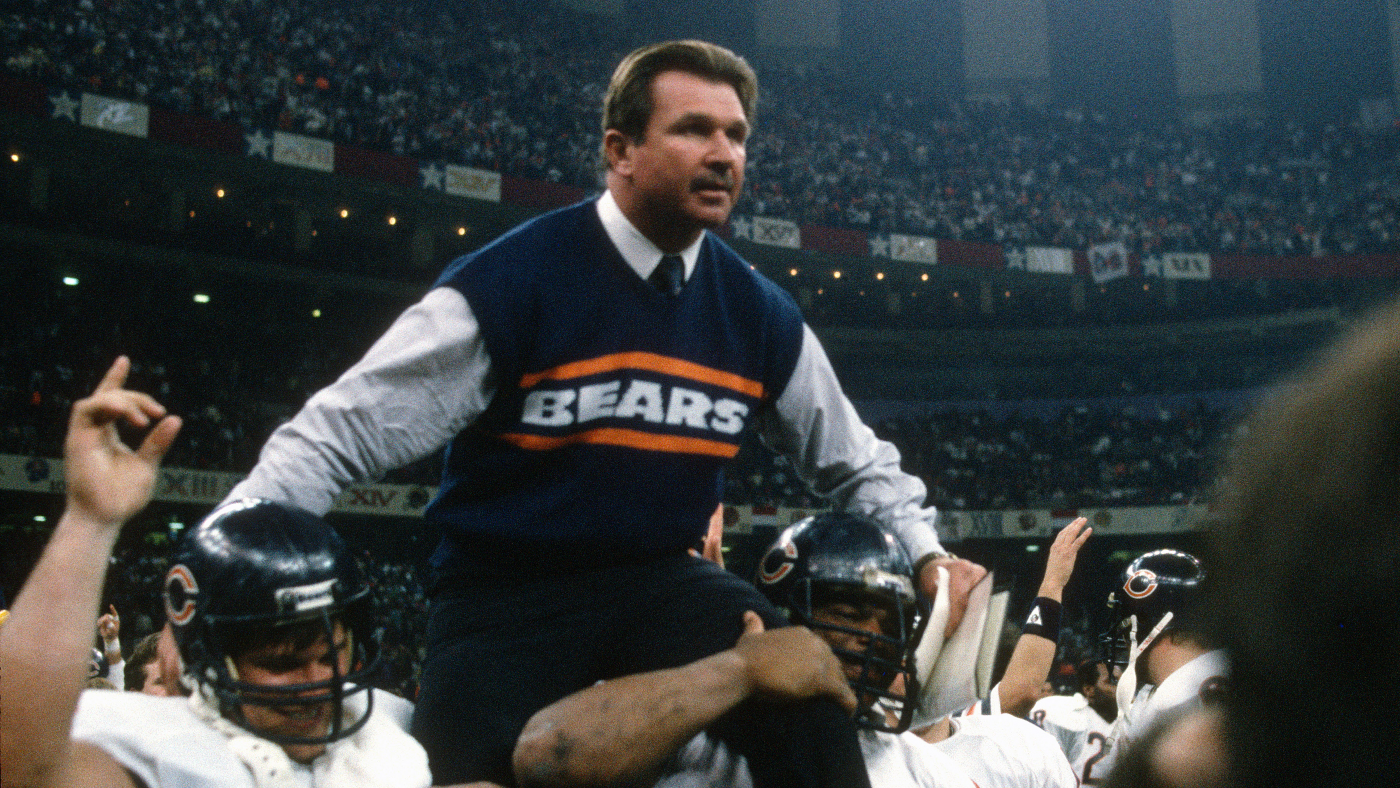
Ditka returned to Chicago as head coach in 1982. Three years later, the 1985 Bears went 15–1 in the regular season and dominated the playoffs. Their journey ended on January 26, 1986, with a 46–10 victory over the New England Patriots in Super Bowl XX.
Walter Payton, Jim McMahon, Mike Singletary, Richard Dent, William Perry and their teammates became part of a season remembered for its extraordinary defense and outsized personality. Ditka stood at its center, even as defensive coordinator Buddy Ryan and the players contributed their own defining chapters.
The team’s fame extended into popular culture through the “Super Bowl Shuffle,” national television and Chicago’s growing reputation as a football city with an instantly recognizable attitude. The championship also gave Ditka a rare historical distinction: he had won an NFL title with the Bears as a player and returned to win another as their head coach.
Why “Da Coach” and “Da Bears” Became Cultural Language
Ditka’s fame was never confined to coaching diagrams. His distinctive voice, aviator sunglasses, mustache and cigar became elements of an easily recognized public image. Even people who rarely followed NFL football could recognize the character associated with Chicago’s championship era.
Saturday Night Live’s “Bill Swerski’s Superfans” sketches helped turn “Da Bears” into a national catchphrase. Ditka became both a football authority and a pop-culture reference, with his larger-than-life reputation inspiring affectionate parody.
That history explains the visual language of today’s memorial graphics. A few orange strokes, a pair of sunglasses, a mustache or the words “Da Coach” can recall an entire period of Chicago sports culture without requiring a lengthy explanation.
How Chicago and the NFL Remembered Mike Ditka
Tributes arrived from the Bears organization, former players, sports broadcasters and teams across Chicago. Current Bears head coach Ben Johnson called Ditka the “gold standard” at the franchise, acknowledging the influence still attached to the position he now holds.
Jarrett Payton, son of Bears great Walter Payton, shared a personal remembrance, while the NFL and Pro Football Hall of Fame recognized Ditka’s contributions to the sport. Those responses reflected different dimensions of his legacy: coach, teammate, friend, television personality and city icon.
Six Memorial Graphics, Six Ways of Remembering Iron Mike
The response to Ditka’s death also has a visual dimension. Portraits, old photographs, championship typography and familiar Chicago expressions offer different ways to preserve the same memory. Ellie Shirt’s six-piece Mike Ditka memorial collection interprets those references through distinct graphic styles.
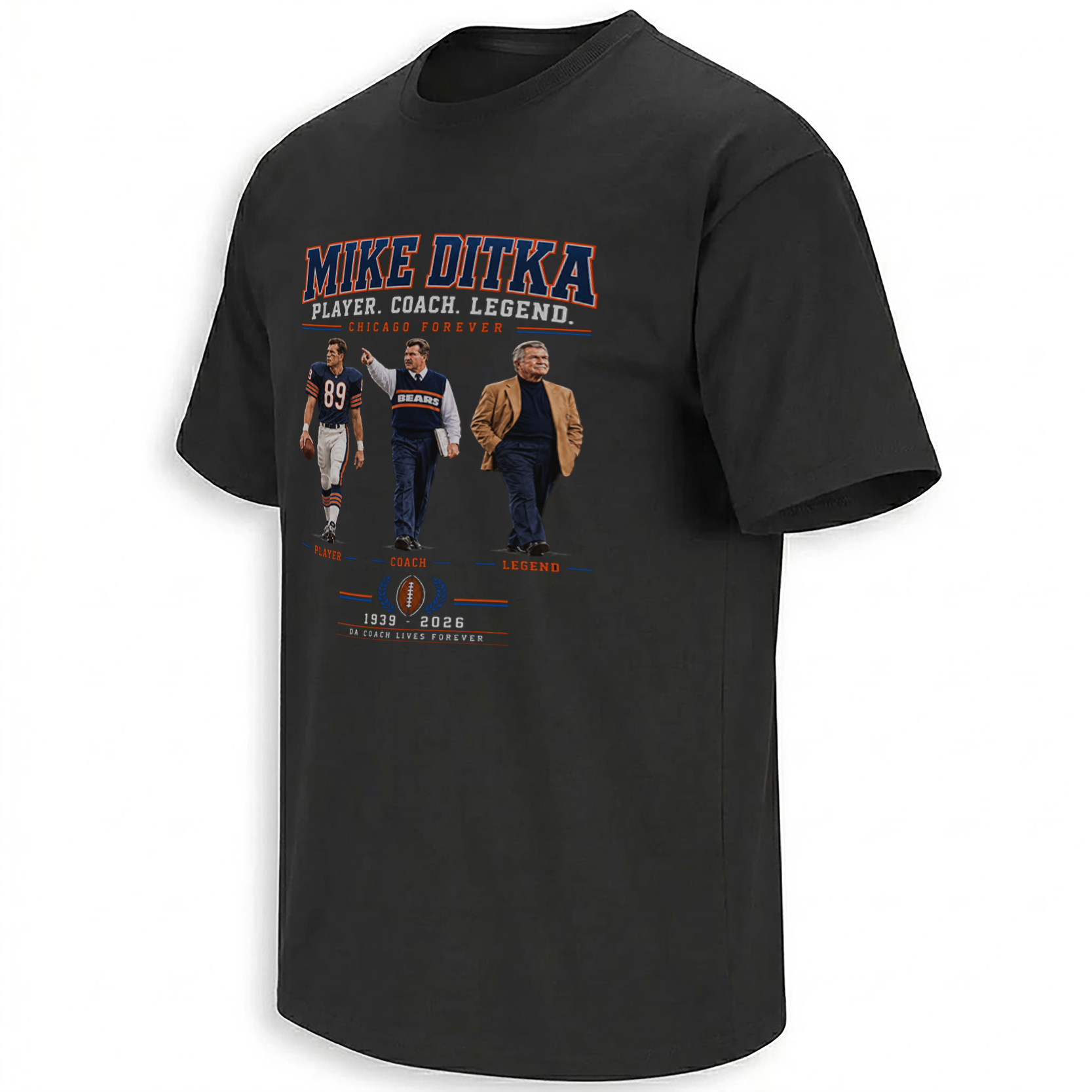
Three portraits trace the journey from No. 89 to the sideline and lasting Chicago icon.
View the tribute →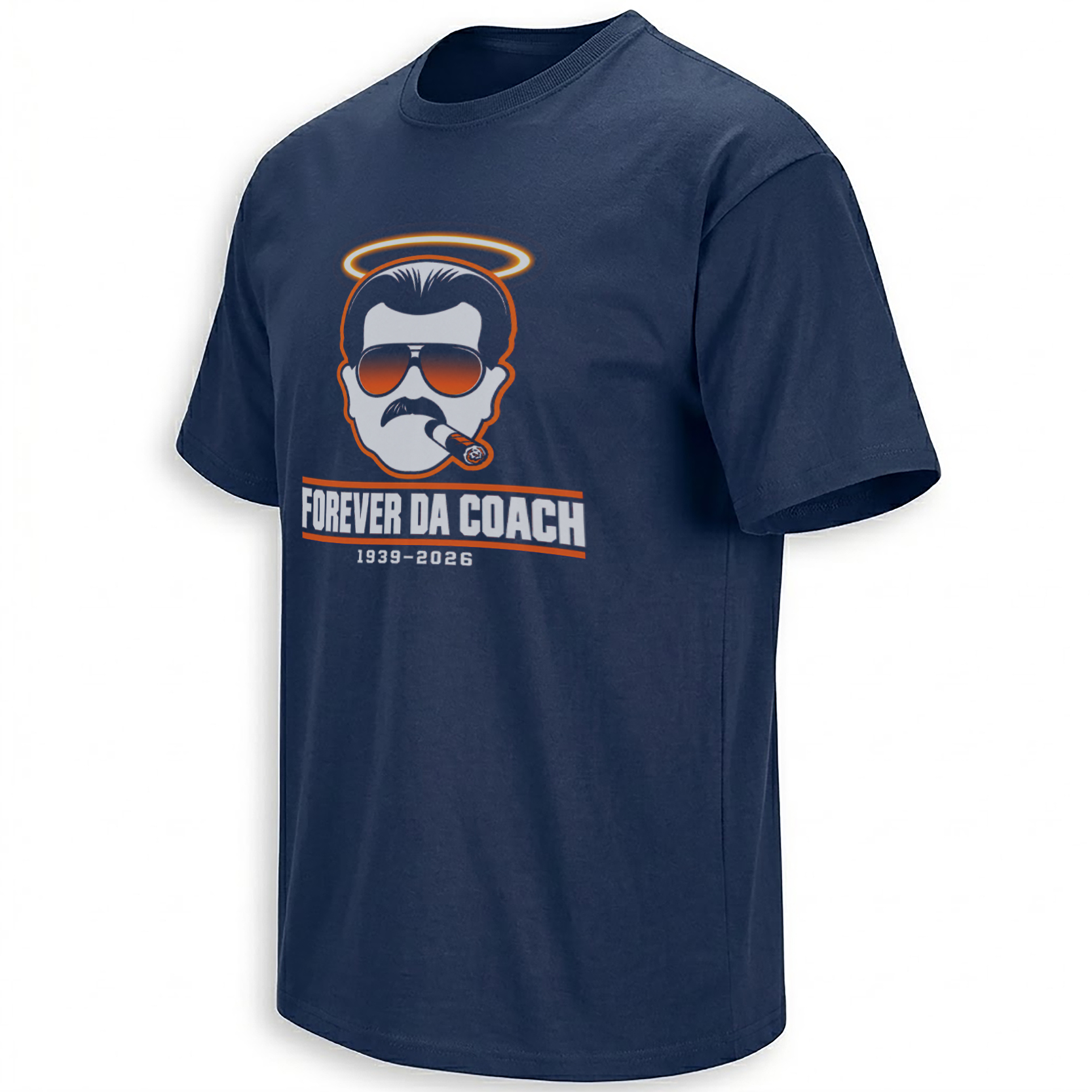
A halo transforms his familiar cigar-and-sunglasses silhouette into a playful remembrance.
See the graphic →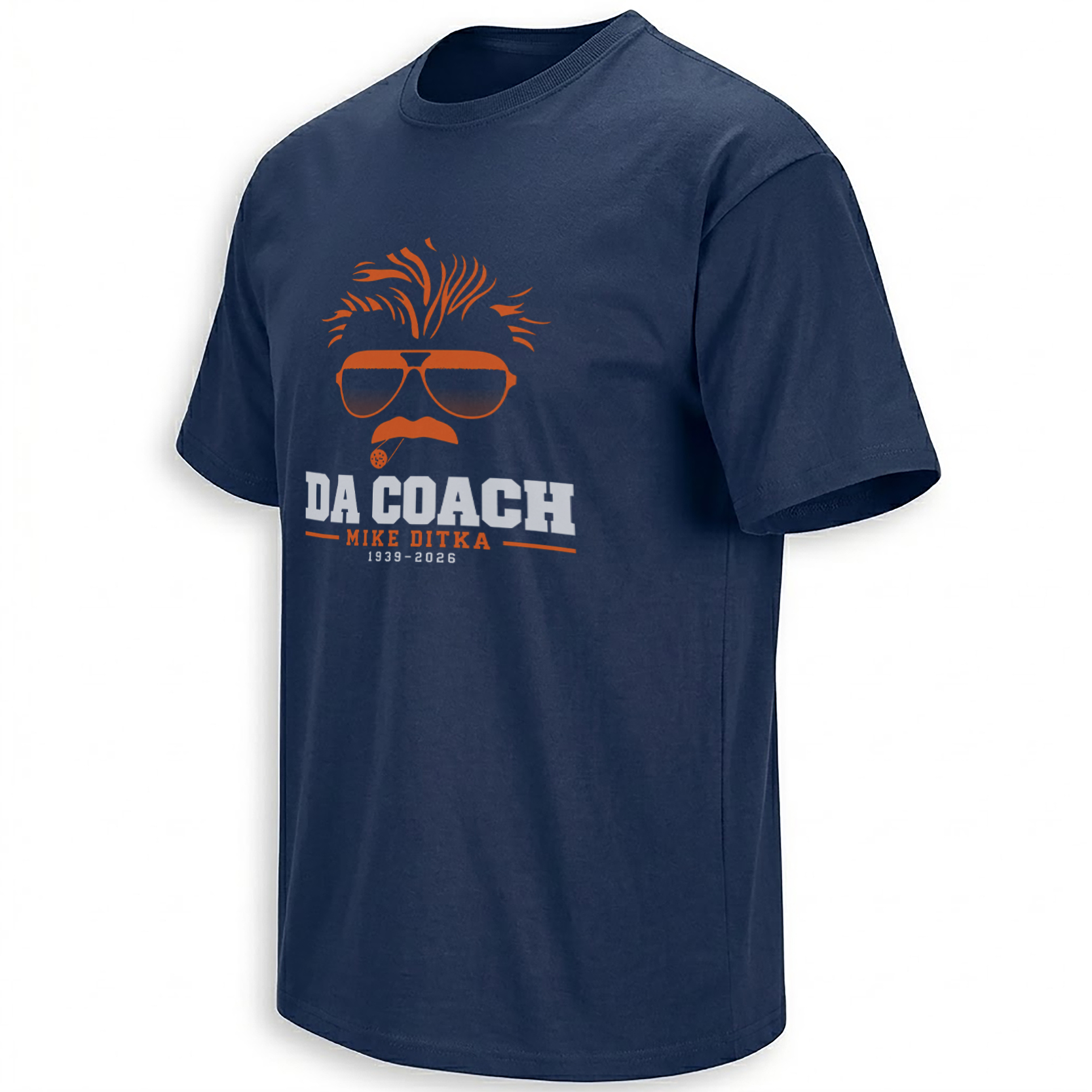
A minimal portrait shows how a few recognizable details can preserve an entire personality.
Open the design →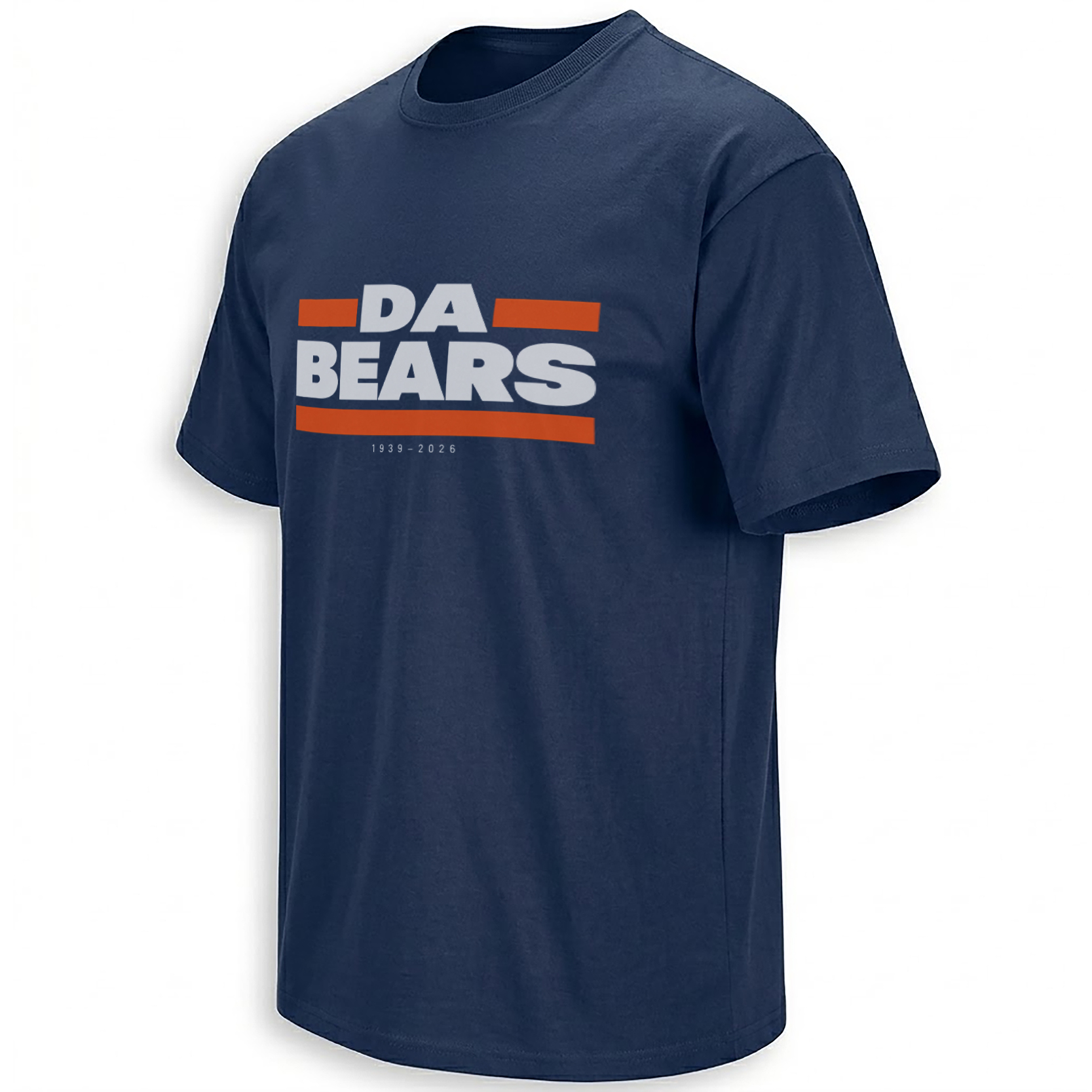
Bold orange-and-white lettering recalls the Chicago catchphrase connected to Ditka’s era.
Explore the typography →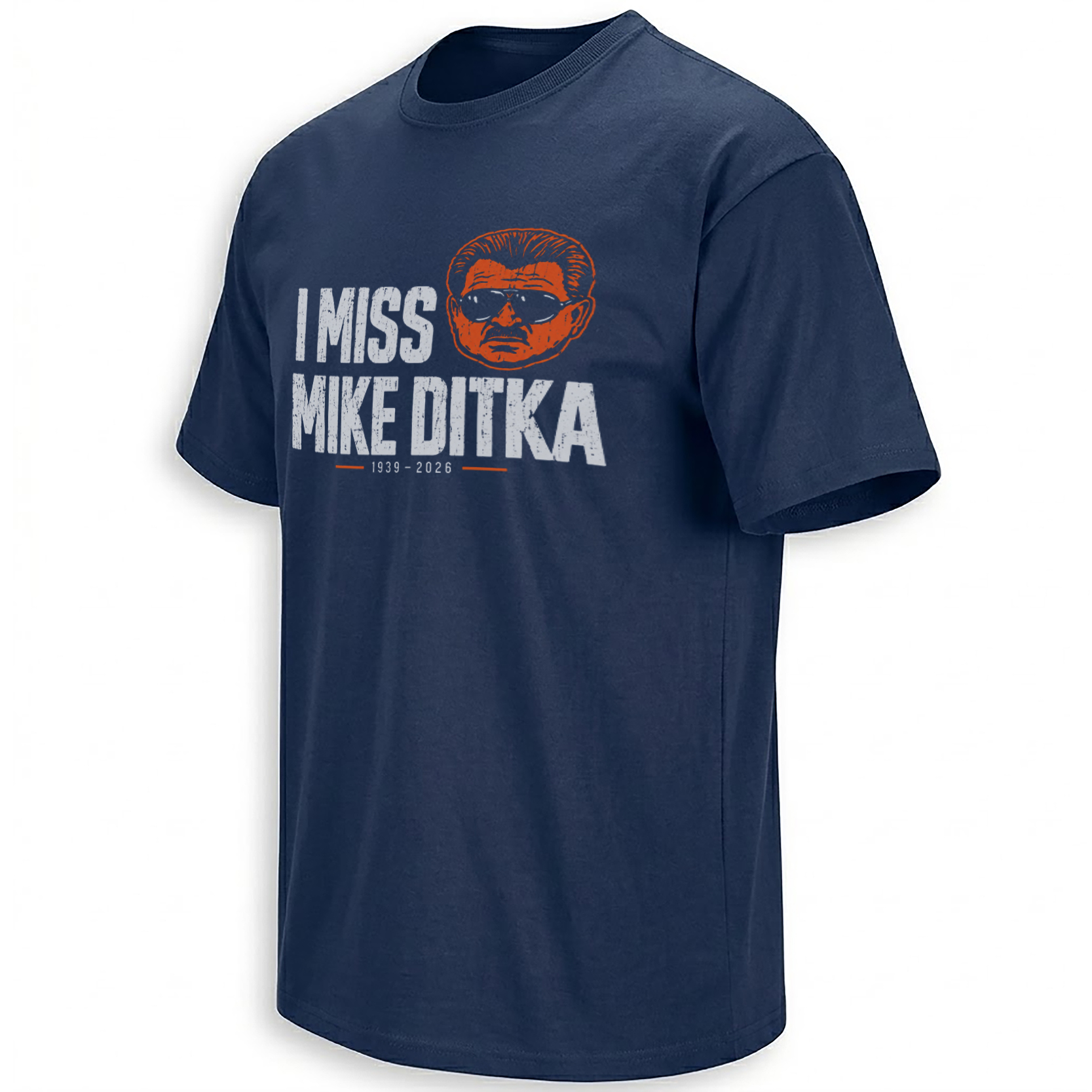
A distressed portrait and direct emotional message give the tribute an intimate voice.
View the remembrance →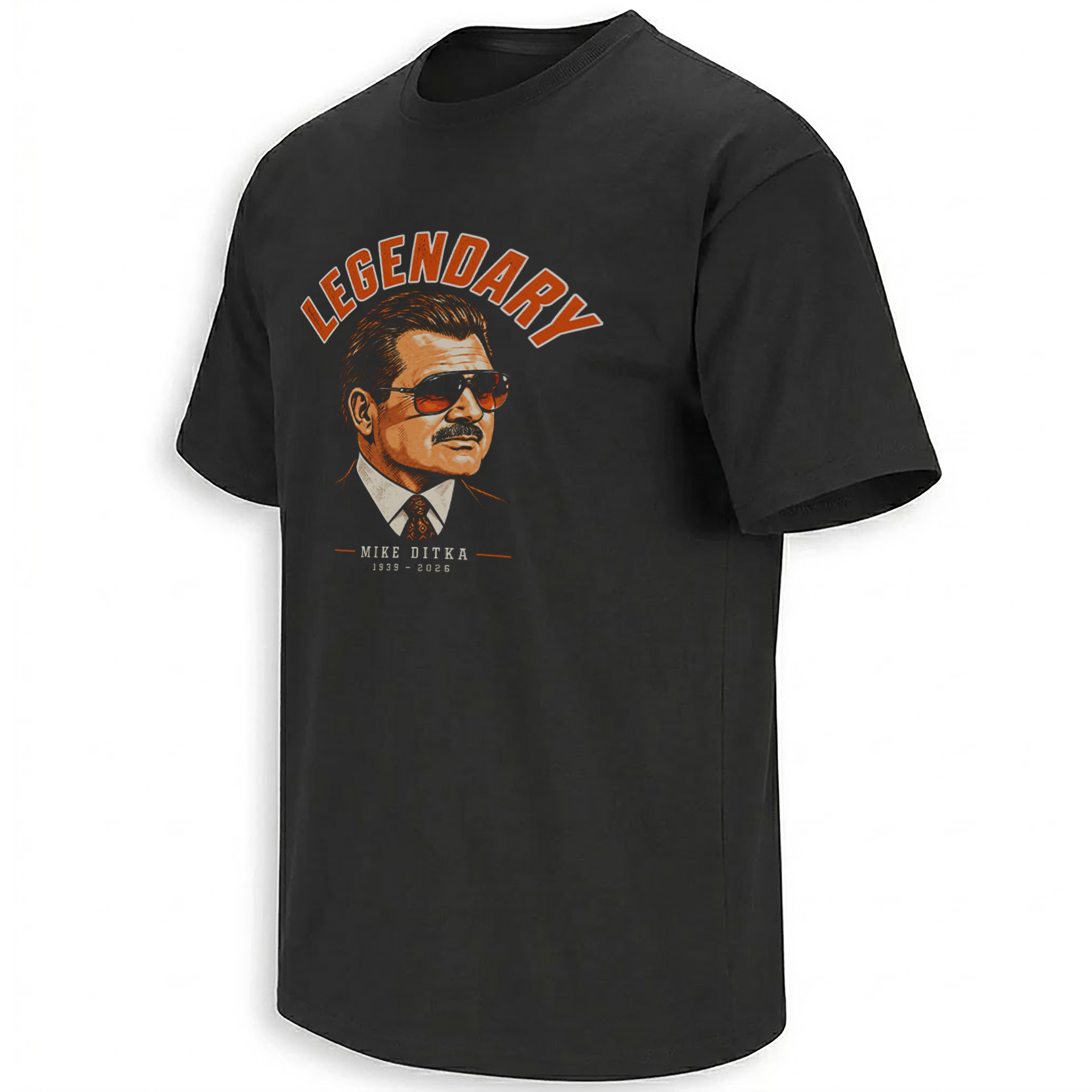
The tailored suit and expressive portrait evoke the commanding style of the Bears coach.
See the portrait →The designs move between documentary-style tribute, minimal iconography and affectionate fan language. Their common thread is the recognizable identity Ditka built over decades in football and public life.
What Does Mike Ditka’s Legacy Mean for the Next Generation?
The 1985 championship will remain central to the Chicago Bears visual archive, but Ditka’s impact extends into the wider story of NFL football culture. He helped redefine a position, became a Super Bowl-winning coach and influenced how a city saw its football team.
Years from now, younger fans may first discover him through a photograph, a classic television sketch or the words “Da Coach.” Those references lead back to a real football career and a larger Chicago story that deserves to be remembered in full.
Frequently Asked Questions About Mike Ditka
When did Mike Ditka die?
Mike Ditka died on October 9, 2026, at age 86. His family announced his passing, which was confirmed by the Chicago Bears.
How old was Mike Ditka when he died?
He was 86 years old. Ditka was born on October 18, 1939, in Carnegie, Pennsylvania.
Did Mike Ditka win the Super Bowl with the Chicago Bears?
Yes. Ditka coached the 1985 Chicago Bears to victory in Super Bowl XX on January 26, 1986, defeating the New England Patriots 46–10.
Why was Mike Ditka called “Da Coach”?
“Da Coach” became a familiar nickname associated with Ditka’s Chicago identity, distinctive personality and the popular culture surrounding the Bears.
What does the Mike Ditka memorial collection represent?
The six graphics interpret Ditka’s player-to-coach journey, signature appearance and connection to Chicago fan culture through portraits, typography and tribute imagery.
Mike Ditka’s chapter in Chicago football history is complete, but the memories remain. Explore the Mike Ditka tribute archive or find more Mike Ditka-inspired graphics preserving his place in Bears culture.
Remember Mike Ditka (1939–2026), the Hall of Fame tight end and legendary Chicago Bears coach who led the 1985 team to Super Bowl XX glory. Explore his enduring “Da Coach” legacy, Chicago’s tributes and six illustrated memorial designs inspired by a football icon.