
Mason Miller Has Turned the Ninth Inning Into A Speed Limit Test
The Padres closer entered the second half of 2026 with an All-Star appearance, 25 saves in 25 opportunities and the kind of fastball that makes a three-digit radar reading feel like the beginning of the story rather than its ending.
Mason Miller walked into a bases-loaded, no-out ninth inning in Kansas City on July 17 and struck out three hitters in succession. San Diego eventually lost in extra innings, but the sequence still captured why Miller has become such a strange source of calm for Padres fans: the situation looked chaotic until the closer began throwing.
That escape arrived only days after Miller represented San Diego at the 2026 All-Star Game. His appearance lasted four pitches and one strikeout, a compressed version of his entire appeal. There was no slow construction of suspense. The radar reading, the hitter’s reaction and the final strike arrived almost at once.
Through July 17, Miller owned a 0.89 ERA, had converted all 25 of his save opportunities and had struck out 75 hitters. Those numbers explain his effectiveness. They do not completely explain the atmosphere. To understand that, it helps to watch how a ballpark reacts when the scoreboard flashes another pitch above 100 mph.
Miller does not merely end innings. He changes how the final three outs sound, look and move.
Why 105 Functions as Baseball Mythology
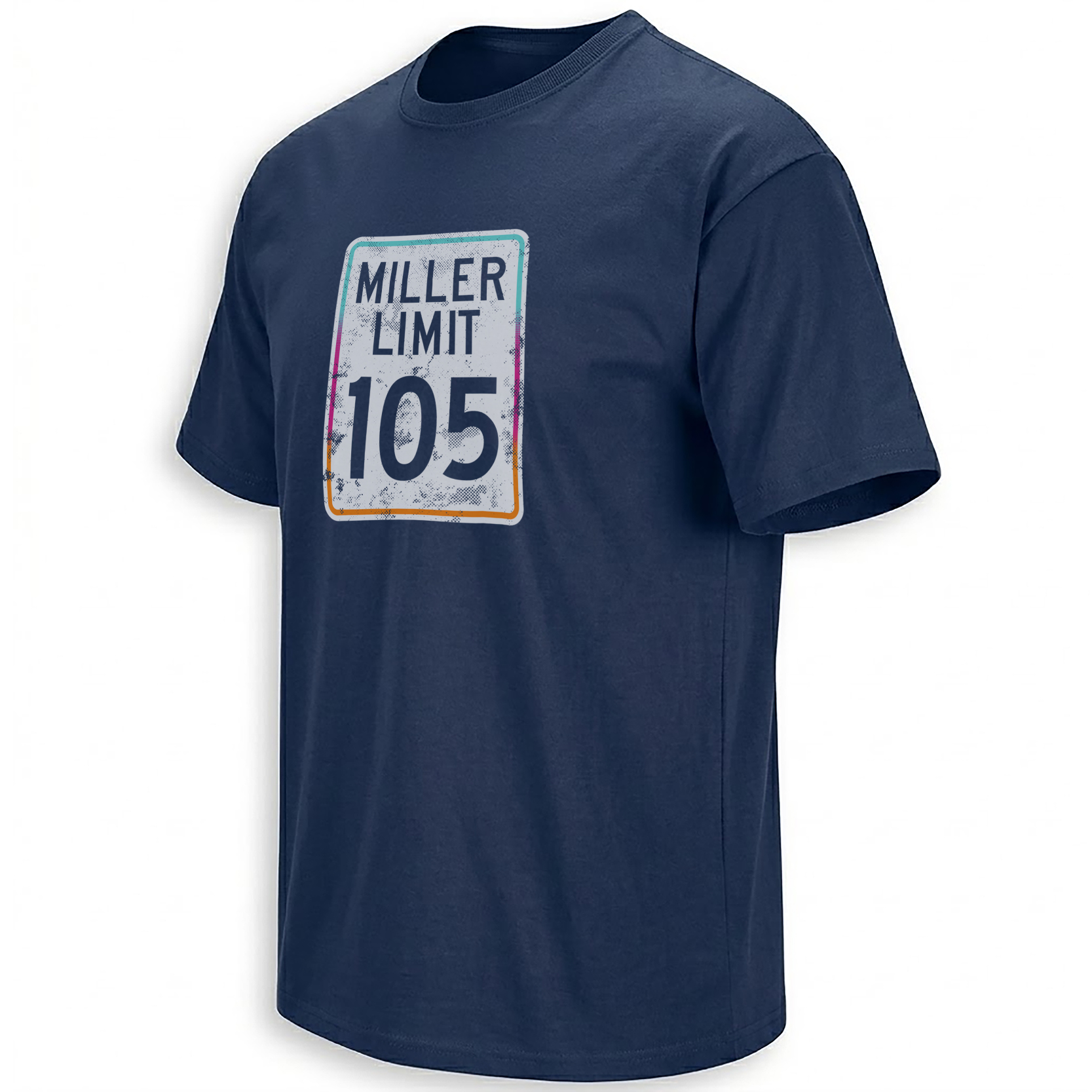
“Miller Limit 105” reads like a road sign, but its real subject is baseball’s continuing fascination with the outer boundary of human velocity. Miller established a postseason Statcast record with a 104.5 mph fastball in October 2025. The number 105 therefore works as the next imaginary marker—the clean, almost impossible threshold hovering just beyond what fans have already seen.
The distinction matters. The graphic does not need to claim that every fastball reaches 105 mph. It captures the sensation that accompanies Miller’s appearances: the scoreboard could display something previously reserved for speculation, video games or the hardest throwers in baseball history.
Pitch velocity has become its own spectator language. Fans no longer wait for the television broadcast to explain that a pitch was exceptional. The stadium number appears instantly, circulates as a screenshot and becomes part of the reaction before the next delivery.
The Design Looks Like a Warning Posted for Hitters
The rectangular composition is immediately readable because it borrows a visual system drivers already understand. “Miller Limit” replaces the expected instruction, while the oversized 105 occupies the position normally reserved for the legal boundary. The joke lands before the viewer needs any additional explanation.
Distressing across the white sign keeps it from looking digitally perfect. It resembles an object that has survived road dust, ballpark walls and a full season of late-inning pressure. The navy typography provides the authority of official signage, while narrow flashes of teal, pink and orange prevent the design from becoming a generic black-and-white speed meme.
The artwork converts Statcast velocity into public signage. Its message is not simply “Miller throws hard.” It imagines 105 mph as the posted operating condition whenever San Diego hands him the ninth inning.
From Blockbuster Acquisition to San Diego’s Final-Inning Identity
San Diego acquired Miller from the Athletics at the 2025 trade deadline in a deal that immediately carried enormous expectations. By the following October, he was producing record-level postseason velocity. In 2026, the spectacle became sustained reliability: an All-Star selection, an ERA below one and an unbroken run of converted saves through the break.
That combination is important for Padres culture. Pure velocity can be treated like a sideshow when it does not produce outs. Miller’s current run joins the visual drama to actual ninth-inning control. The fastball supplies the screenshot; the saves give the image staying power.
His rise now occupies a distinct place inside the San Diego Padres collection, where player nicknames, Petco Park energy and season-specific moments form a visual record of the club’s changing identity. The wider MLB collection shows how radar readings, celebrations and individual performances become the shorthand through which modern baseball seasons are remembered.
The Internet Loves a Number It Can Screenshot
A 100-plus-mph pitch is unusually compatible with internet baseball. It can be understood without a long statistical argument. One number on a broadcast graphic tells viewers that they have seen something physically extreme.
Miller’s appeal intensifies because the number arrives with a recognizable late-inning role. The entrance, the pressure and the velocity form a repeatable sequence. Fans know what they are waiting to see, yet the exact radar reading still carries uncertainty. That is how performance becomes ritual.
Frequently Asked Questions
What does “Miller Limit 105” mean?
It is a speed-limit parody built around Mason Miller’s extreme fastball velocity, imagining 105 mph as the boundary hitters face when he enters a game.
Did Mason Miller throw a 105 mph pitch?
The design treats 105 mph as a symbolic velocity threshold. Miller’s verified 104.5 mph pitch in the 2025 postseason established a Statcast postseason record and placed him remarkably close to that number.
Why was Mason Miller selected for the 2026 All-Star Game?
Miller entered the selection period with a 0.78 ERA and tied for the National League lead with 21 saves, making him San Diego’s All-Star representative.
Why does the road-sign design fit Mason Miller?
A speed-limit sign communicates velocity instantly, allowing the artwork to turn Miller’s radar-gun reputation into a visual joke that baseball fans can read in seconds.
The Miller Limit 105 graphic preserves the radar-gun mythology surrounding San Diego’s closer, while the Padres archive follows the wider player stories shaping the 2026 season.
Miller Limit 105 Shirt turns Mason Miller’s record-level fastball velocity and dominant 2026 Padres season into a distressed speed-sign graphic built for baseball’s radar-gun era.