Let the Bodies Hit the Floor
A familiar image of a fall is given the least reassuring soundtrack imaginable—and two pieces of early-2000s cultural memory suddenly occupy the same room.
The design shows an older woman on the floor beside a bed, framed by medical-alert colors and a yellow cross. Above her, “Let the bodies” appears in urgent red; the smaller “hit the floor!” completes a phrase most viewers hear in the roar of Drowning Pool’s signature song.
This is not a frame from the recent AI-style “woman falls through floor” videos circulating on social platforms. The shirt’s visual language points instead to the long-running American memory of medical-alert advertising and its famous fallen-person scenario.
A home emergency, an older adult on the floor and a device presented as the route to help.
The instantly recognizable refrain from “Bodies,” Drowning Pool’s 2001 nu-metal single.
Two sentences that should never meet
The medical-alert phrase asks the audience to take a fall seriously. The Drowning Pool refrain turns falling bodies into percussive repetition. The meme swaps one cultural script for the other, replacing reassurance with a soundtrack so aggressively inappropriate that the mismatch becomes the punchline.
The image does not need a band logo. The opening words alone carry a remembered vocal delivery, guitar riff and counting sequence for listeners who encountered “Bodies” through radio, wrestling, movies, gaming edits or early online video.
The meme works because the viewer supplies the audio. A still image of a quiet bedroom suddenly arrives with the loudest possible internal soundtrack.Ellie Shirt music and meme desk
Why the medical-alert image is already cultural shorthand
Life Alert’s own history traces the familiar advertising concept to the late 1980s. The fallen-person setup became recognizable far beyond the service itself because the line was repeated, parodied and sampled across popular culture.
That history gives the shirt a double nostalgia. One memory comes from daytime and late-night television commercials; the other comes from the peak era of nu metal. The design places them in one deliberately low-tech image, like a joke assembled from two television channels left playing in the same childhood house.
Literal captions are a durable meme engine
Many image memes begin by taking figurative language too seriously. “Let the bodies hit the floor” describes mosh-pit movement in the song’s context. Placed above a single person who has literally fallen, the plural becomes absurd and the lyric becomes a badly chosen instruction.
The medical cross and warm bedroom scene intensify that literal reading. They make the image resemble a safety notice at exactly the moment the text abandons safety.
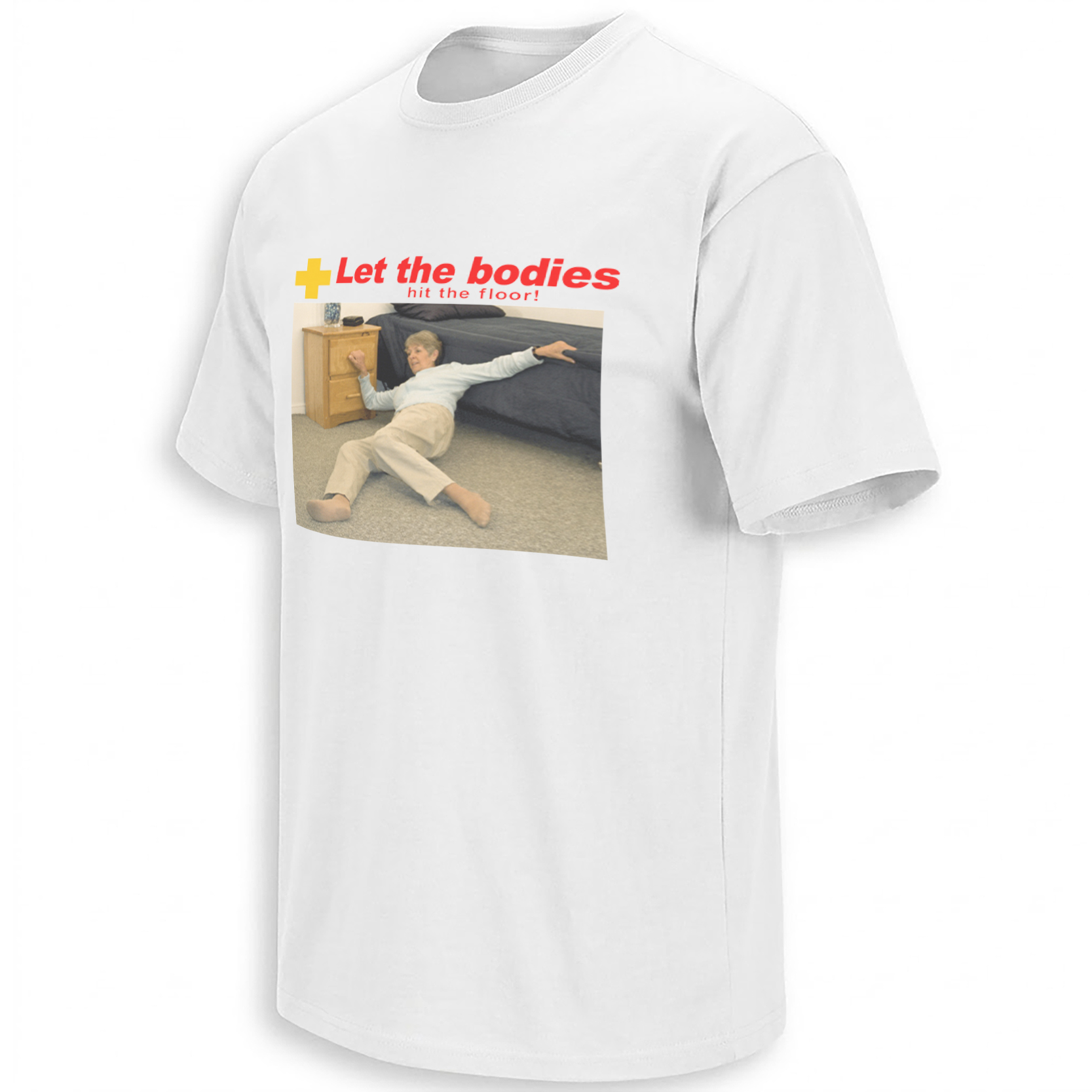
Let the Bodies Hit the Floor Shirt
A deliberately mismatched caption transforms a familiar fallen-person scene into a compact crossover of medical-alert advertising, heavy music and dark meme timing.
A timestamp from two media eras
The design is strongest as a cultural collage. It does not require the viewer to remember one exact commercial or music video shot; it depends on broader recognition of two media languages that remained quotable for decades.
On the shirt, the fallen figure creates the setup. The red headline triggers the song. The viewer’s memory performs the final edit—and that invisible burst of sound is what turns a still picture into a meme.
Reporting and official sources
Frequently asked questions
What is the Let the Bodies Hit the Floor shirt referencing?
It combines a medical-alert-style image of an older woman who has fallen with the famous refrain from Drowning Pool’s 2001 song “Bodies.”
Is the picture from the viral woman-falls-through-floor video?
No. The shirt shows a woman on the floor beside a bed and uses medical-alert visual cues; it is not a frame from the recent falling-through-floor clips.
What is Drowning Pool’s “Bodies” actually about?
The band has said it was written about the energy and brotherhood of the mosh pit, not an instruction to harm people.