Kevin McGonigle Is Leaving Claw Marks Across Detroit’s Future
Detroit opened 2026 by placing one of baseball’s youngest everyday players directly inside a contender’s lineup. Three months later, Kevin McGonigle’s left-handed swing, fearless defense and expanding collection of late-game moments have made him feel less like a visiting prospect and more like part of the city’s permanent plan.
Kevin McGonigle’s first Major League summer has moved too quickly for the usual prospect language to keep up. He entered Opening Day at 21 years old, joined a historic list of young Tigers and immediately began converting the predictions attached to his Minor League résumé into moments Detroit could recognize without a scouting report.
By June, those moments were arriving in several forms. On June 7 at Comerica Park, McGonigle homered to tie Seattle and later lined the walk-off single into right field. Eight days later in Houston, he drove his fifth home run of the season to right. In between, his work at third base produced diving stops, leaping catches and throws that made his transition to the Major League infield feel unexpectedly natural.
That combination explains why the conversation around him has changed so rapidly. Detroit is no longer discussing only what McGonigle might become after several years of development. The city is watching a player shape meaningful innings now, while the organization has already committed to keeping him at the center of its future.
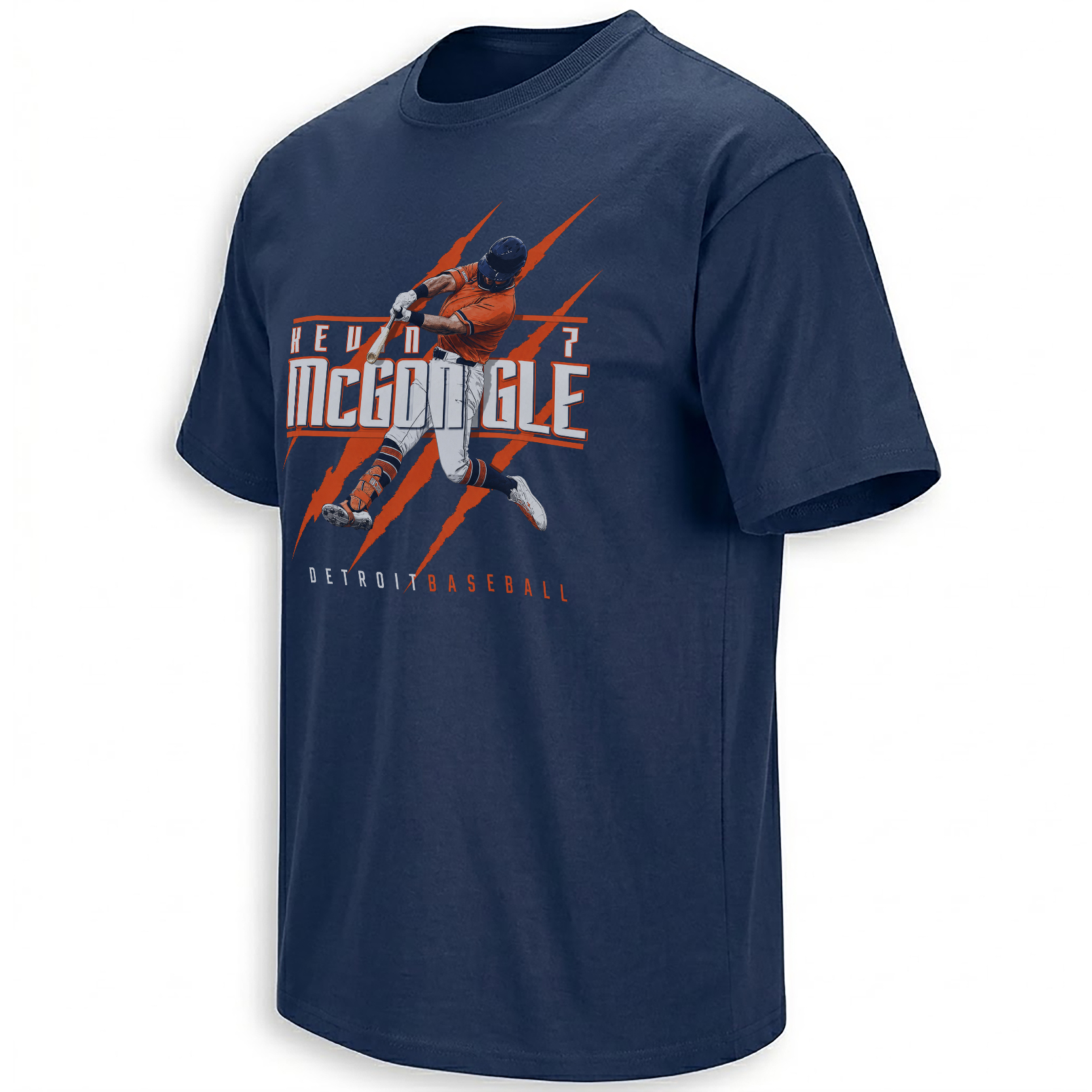
The claw-mark image works because McGonigle’s rookie season has not felt like a cautious introduction. It has felt like a young player cutting directly into Detroit’s present.
Opening Day Removed the Waiting Period
Most elite prospects enter a season surrounded by conditional language. They may arrive after an injury. They could force a promotion by midyear. Their defense might determine how quickly the organization is prepared to move.
Detroit removed that uncertainty before the season began. McGonigle earned a place on the Opening Day roster and joined a small group of Tigers who entered an opening lineup before turning 22, a franchise lineage that includes some of the most important young players in Detroit baseball history.
The comparison did not guarantee his career path, but it established the scale of the opportunity. The Tigers were not giving him a ceremonial glimpse of the Major Leagues. They were asking him to contribute to a team with current expectations.
The Swing Has Always Been the First Attraction
McGonigle’s reputation was built around one of the most refined left-handed bats in the Minor Leagues. His strike-zone control and ability to produce more walks than strikeouts created the profile of a hitter whose decisions could survive increasingly difficult pitching.
In Detroit, the swing has become more visually recognizable. The hands move quickly, the barrel enters the zone without an exaggerated load and the finish often carries enough extension to make a line drive feel like it has been released rather than forced.
The June 7 game against Seattle offered the full version of that identity. McGonigle first supplied power with a game-tying home run, then adjusted to the late-game situation and delivered the walk-off single. One swing changed the score through distance. The other changed it through placement.
The home-run swing shows that his compact approach can still create enough force to change a game before the defense becomes involved.
The walk-off single showed the other side of the same offensive identity: control of the barrel, awareness of the situation and no need to manufacture unnecessary force.
Why the Claw-Mark Graphic Fits McGonigle
Tiger imagery often becomes literal very quickly. Large animal faces, roaring mouths and traditional striped patterns can communicate the team identity, but they can also overwhelm the player.
The Kevin McGonigle graphic uses the claw mark more selectively. Three diagonal tears break across the composition like the surface of a poster has been opened, revealing the young hitter’s swing inside the Detroit color field.
The effect creates two readings at once. The claw marks belong to the Tigers, but they also describe McGonigle’s arrival. He is not placed politely inside a clean rectangular frame. His movement appears to break through it.
Detroit Navy and Orange Carry Different Kinds of Energy
Navy provides the historical weight. It connects the graphic to the Tigers’ traditional visual identity and gives the composition the atmosphere of an evening game at Comerica Park.
Orange carries the disruption. It appears through the claw marks, name treatment and highlighted edges, creating the feeling of heat breaking through a colder city palette.
That contrast reflects McGonigle’s position inside the franchise. He is entering an organization with more than a century of visual memory, but his appeal comes from making the present feel newly active.
The graphic does not present a completed superstar mythology. Its torn edges, layered player frames and aggressive diagonal movement preserve the unstable phase when a prospect is becoming recognizable faster than the audience can settle on a final interpretation.
The Defense Made the Rookie Story Larger
Young hitters are often allowed to build their first identity almost entirely at the plate. Defensive uncertainty is treated as a separate problem, something to resolve after the bat has earned enough patience.
McGonigle’s June work at third base disrupted that pattern. Diving plays and leaping catches gave Detroit fans another way to understand his athleticism. The same anticipation associated with his strike-zone decisions appeared in the field through his first step, balance and release.
Those defensive moments matter culturally because they broaden the highlight vocabulary. A rookie who only appears through batting clips can feel like an offensive specialist. McGonigle has already supplied images of the complete inning: the swing that creates a lead and the play that protects it.
An Eight-Year Deal Changed the Meaning of “Prospect”
Detroit’s long-term extension with McGonigle transformed the timeline around him. The agreement did not simply reward an encouraging start. It declared that the organization views his earliest Major League months as the beginning of a shared era.
That changes how each current image is read. The first home runs, walk-off contact and defensive highlights no longer feel like isolated auditions. They begin to function as opening scenes in a story the Tigers expect to continue through the next decade.
The wider Detroit Tigers collection works as a visual archive of that transition, placing McGonigle’s rookie imagery beside established Detroit stars, Motor City language and the moments shaping the current roster.
Inside the broader MLB Shirts collection, the claw-mark piece belongs to a familiar baseball tradition: preserving the season when an elite prospect stops belonging mainly to scouting lists and begins belonging to a city.
Frequently Asked Questions
Who is Kevin McGonigle?
Kevin McGonigle is a left-handed-hitting Detroit Tigers infielder selected in the 2023 MLB Draft. He entered 2026 as one of baseball’s highest-ranked prospects and earned a place on Detroit’s Opening Day roster.
How old was McGonigle on Opening Day 2026?
McGonigle was 21 years old, making him one of the youngest players ever to appear in a Tigers Opening Day lineup and Detroit’s youngest opening-day starter since 2003.
What happened in McGonigle’s June 7 game against Seattle?
He hit a game-tying solo home run and later delivered a walk-off single in the ninth inning to give Detroit a 5–4 victory.
Why does the Kevin McGonigle design use claw marks?
The claw marks connect the artwork to Detroit’s Tigers identity while symbolizing the force and speed with which McGonigle has broken into the Major League conversation.
Why is McGonigle important to Detroit’s future?
His advanced left-handed hitting, strike-zone control, developing power and defensive versatility give the Tigers a young infielder capable of becoming a long-term foundation piece.
The Kevin McGonigle claw-mark graphic preserves the left-handed swing and torn-frame energy of his rookie arrival, while the Detroit Tigers visual archive follows the larger Motor City story developing around the club’s young core.
Kevin McGonigle Shirt captures the Detroit rookie’s rapid 2026 rise through a powerful left-handed swing, torn claw-mark framing and a navy-and-orange graphic rooted in Tigers baseball culture.