
Junior Caminero Power: La Máxima Takes Center Stage
Forty-two regular-season home runs established Junior Caminero as a rising force. One towering postseason blast gave Tampa Bay its defining power-hitting image on the way to the 2026 World Series.
The ball hung in the air long enough for Junior Caminero to wonder whether it would stay fair. When it struck the left-field foul pole at Tropicana Field, the uncertainty disappeared. Tampa Bay had its home run. Caminero had his breakthrough October moment.
It was October 19, 2026, Game 6 of the American League Championship Series. Facing Cleveland closer Cade Smith in the seventh inning, Caminero drove a first-pitch splitter toward the left-field corner for a two-run homer. The blast extended the Rays’ lead to 5–1, and Tampa Bay eventually secured a 7–3 victory to clinch the American League pennant.
For a player whose reputation had been built around extraordinary bat speed and enormous home runs, the timing felt appropriate. Caminero’s first career postseason homer arrived on one of the biggest nights of his career. Yet his story had already become compelling long before that swing.
How Junior Caminero Became Tampa Bay’s Power-Hitting Attraction
Caminero’s hitting style stands out because of the violence and confidence of his swing. He is capable of driving pitches enormous distances, turning ordinary at-bats into moments of anticipation even before contact is made.
That quality became unmistakable during the 2026 regular season. Caminero finished with 42 home runs, giving the Rays a centerpiece hitter whose power was evident in highlight reels and established across a full season.
On June 25, he produced his first three-home-run Major League game against the Kansas City Royals, driving in six runs during Tampa Bay’s 13–2 victory. The three homers covered a combined 1,152 feet, according to MLB’s official coverage. His production helped turn raw physical potential into an established offensive identity.
For a young franchise star, the distinction matters. One enormous homer can make a highlight. A season filled with them changes how opponents approach the hitter and how fans anticipate his next plate appearance.
La Máxima: The Dominican Identity Behind the Power
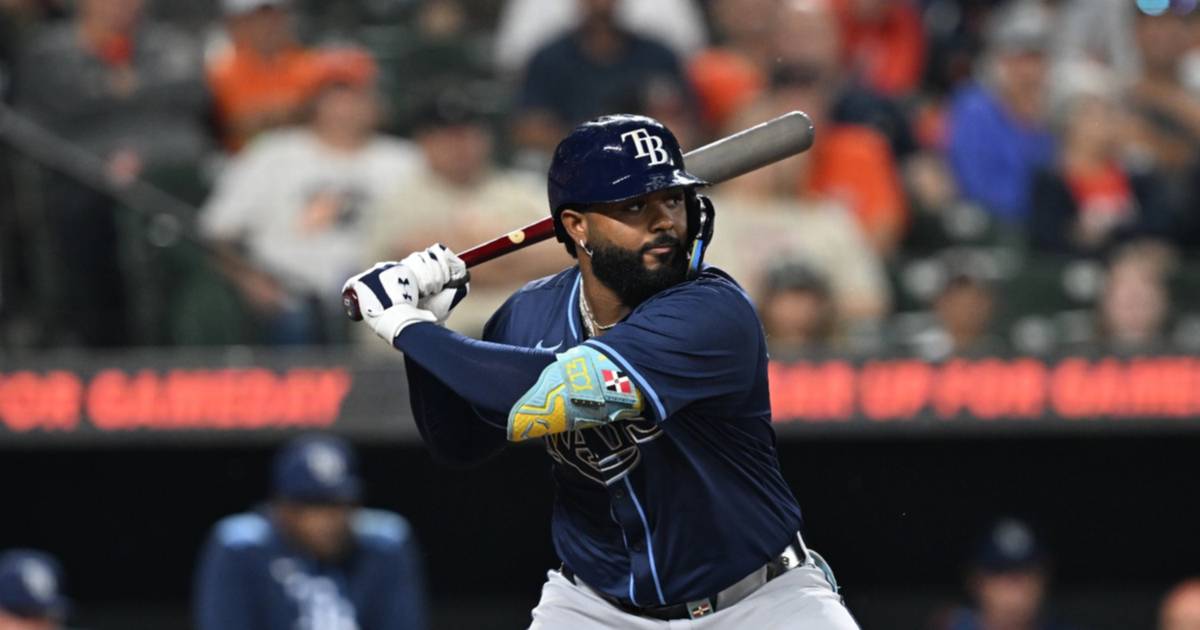
Caminero was born in Santo Domingo, Dominican Republic, a country whose baseball tradition has produced generations of internationally celebrated hitters. His nickname, La Máxima, fits a player whose game often appears built around maximum impact.
His path to Tampa Bay was not entirely straightforward. Cleveland originally signed him as a young international prospect, but traded him to the Rays in November 2021. Years later, that transaction became a compelling part of the 2026 ALCS narrative as Caminero faced the organization that had once moved him.
The connection added personal context to an already important series. His emergence was not simply a case of Tampa Bay developing an exciting young hitter. It became an example of the organization’s ability to identify and cultivate talent that another club had been willing to trade.
That Dominican identity also gives his power a distinctive cultural language. The celebration, the swagger, the Spanish expressions and the pride surrounding a young Dominican star all influence how supporters recognize him beyond a conventional stat line.
The Home Run That Turned Power Into October History
Caminero entered ALCS Game 6 without a postseason home run across the first 34 postseason at-bats of his career. Against Cleveland, the stage was enormous, and the pressure to produce a decisive swing had been building.
When he connected against Smith, the resulting ball flight supplied the drama. Its distance was unmistakable, but its direction remained uncertain until it made contact with the foul pole.
Then came the celebration. Caminero slowly rounded the bases, pounding his chest, acknowledging the crowd and taking 38.66 seconds to complete his home run trot. MLB identified it as the second-slowest uninterrupted home run trot tracked by Statcast since 2015.
Before touching home plate, Caminero crossed his arms in a tribute to former Rays postseason star Randy Arozarena, who was watching from the stands. The gesture connected Tampa Bay’s 2020 World Series generation with the young star helping lead its return in 2026.
The moment was particularly powerful because Arozarena had become one of the recognizable faces of Tampa Bay’s previous World Series run. With the former Rays star watching, Caminero’s tribute looked like an acknowledgment of the club’s recent postseason culture.
Why the Caminero Power Design Uses a Retro Baseball Poster Style
The Caminero Power Shirt approaches the player through the broader identity of a feared slugger, rather than depicting only the exact home run against Cleveland.
Its golden-yellow base supplies the immediate visual energy. Navy lettering brings the graphic back toward Tampa Bay’s color identity, while racing-inspired typography suggests speed and physical force. The illustrated figure wearing No. 13 provides an unmistakable player reference.
The Spanish slogan, “¡La Máxima conecta los jonrones más monstruosos!”, intensifies the character of the artwork. It speaks to the spectacle of Caminero’s home run power and gives the piece a connection to Dominican baseball language.

A golden-yellow retro slugger graphic that translates Caminero’s towering home runs, Dominican personality and unmistakable jersey number into vintage sports-poster language.
View the Caminero Power design →The visual approach is deliberately different from a standard postseason championship graphic. There is no need to make a pennant the central element. The imagery celebrates a player trait that exists across the full season: the ability to turn one swing into a defining baseball moment.
The yellow background creates an optimistic, high-energy setting; large, assertive type gives the design the character of a vintage power-hitter poster; and the No. 13 illustration links the entire concept directly to Caminero. Its cultural identity comes from the combination of baseball power and Dominican personality.
From Cleveland Prospect to World Series Headliner
The trade history adds another layer to Caminero’s breakthrough. Five years after Cleveland sent the teenage prospect to Tampa Bay, he delivered one of the decisive offensive plays in the series that ended the Guardians’ season.
That development illustrates the unpredictable nature of baseball talent evaluation. Caminero was not traded as an established superstar. The Rays acquired a young player who still needed years of development before his potential could translate into Major League performance.
By 2026, he was an All-Star power hitter with a 42-home-run season. When the Rays needed a momentum-changing swing on the road to the World Series, he provided it against his former organization.
It is a satisfying narrative for Tampa Bay supporters, but it also creates expectations for what comes next. The World Series against Milwaukee will be a different challenge, with an opposing pitching staff attempting to limit the power that has made Caminero so dangerous.
How Caminero Fits Tampa Bay’s New Baseball Identity
The Rays have long been associated with creative roster construction, pitching development and competitive efficiency. Caminero adds a more visibly explosive personality to that identity: a middle-of-the-order hitter capable of transforming the atmosphere with one swing.
Supporters can encounter different sides of that personality in the broader Tampa Bay Rays collection, where individual player artwork sits alongside playoff moments and throwback franchise references.
The MLB collection provides wider context for contemporary baseball design, while a dedicated Junior Caminero product search connects graphics centered specifically on the Rays’ No. 13.
That range of imagery matters because Caminero’s appeal does not depend on one postseason result. His home run power, on-field emotion, Dominican heritage and growing place in Tampa Bay history provide several different ways to interpret the same player.
The Next Chapter for La Máxima
Tampa Bay will open the 2026 World Series against Milwaukee on October 23. Neither franchise has previously won the championship, giving the matchup a distinctive significance in a postseason often dominated by teams with much longer title histories.
For Caminero, this creates a chance to carry his regular-season reputation onto baseball’s biggest stage. His first postseason homer arrived late enough to feel like a release of pressure, but early enough to become a memorable part of the Rays’ championship pursuit.
Whatever happens in the World Series, the ALCS swing has already added a new dimension to his story. Caminero is no longer simply the young slugger whose home runs travel extraordinary distances. He is also a player who delivered when his team was one win from the pennant.
Frequently Asked Questions
How many home runs did Junior Caminero hit in 2026?
Caminero hit 42 home runs during the 2026 regular season with the Tampa Bay Rays.
When did Caminero hit his first postseason home run?
His first career postseason homer came on October 19, 2026, in Game 6 of the ALCS against the Cleveland Guardians.
Who surrendered Caminero’s ALCS Game 6 home run?
Cleveland closer Cade Smith surrendered the two-run homer on a first-pitch splitter in the seventh inning.
Why did Caminero celebrate like Randy Arozarena?
Caminero crossed his arms to honor former Tampa Bay postseason star Randy Arozarena, who attended the ALCS clincher.
What does the Caminero Power design represent?
The design celebrates Junior Caminero’s home run power, Dominican baseball identity, No. 13 jersey and retro slugger personality through bold yellow and navy artwork.
From a 42-home-run season to an unforgettable ALCS swing, Caminero has given Rays supporters a new visual language for power hitting. The Caminero Power graphic captures that personality as Tampa Bay prepares for the World Series.
The Caminero Power Shirt celebrates Junior Caminero’s 42-home-run 2026 season, Dominican slugger identity and breakthrough ALCS moment with golden-yellow retro baseball artwork featuring La Máxima and No. 13.