
Josue De Paula Is No Longer a Prospect Graphic — No. 95 Is Already a Major League Story
The first Josue De Paula designs were about how he reached Los Angeles. This one arrives after the answer changed. No. 95 has a Major League homer, a Dodgers uniform and an October conversation surrounding him.
A prospect can remain hypothetical for years. Josue De Paula needed three Major League games to make that status feel outdated.
Los Angeles called the 21-year-old directly from Double-A Tulsa on September 11, bypassing Triple-A and placing one of baseball’s highest-ranked prospects inside a veteran clubhouse during a pennant race.
Two days later, De Paula saw a 98 mph fastball from Miami’s Eury Pérez and produced the first Major League hit of his life.
It traveled 416 feet.
The three-run homer left his bat at 108.2 mph and landed in the second deck in right field. De Paula later doubled, walked and finished 2-for-2. The Dodgers lost the game, but the rookie’s personal timeline changed permanently.
“Straight Outta Double-A” explained how De Paula arrived. No. 95 now explains who arrived.
The Homer Turned the Jersey Number Into a Timestamp
Prospect jerseys can feel temporary because young players often change numbers when rosters settle. No. 95 currently belongs to something unusually specific: De Paula’s first Major League chapter.
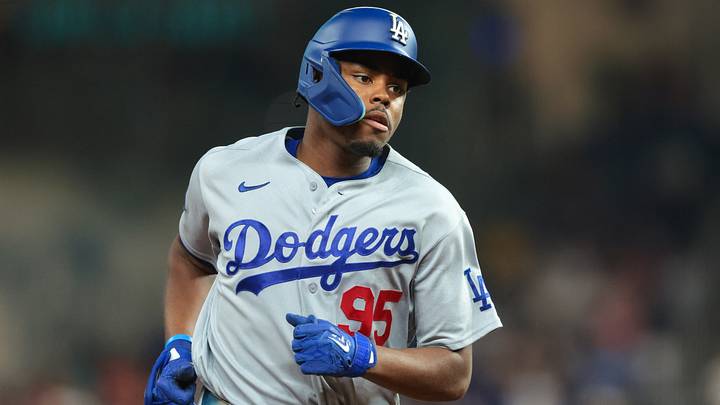
De Paula’s first two games had already shown something important. He was not chasing simply because he wanted a hit. He drew four walks across his first Major League series and maintained the strike-zone discipline that helped make his Double-A season so productive.
Then, when Pérez finally attacked the zone, De Paula produced the kind of contact that explains why scouts had been talking about his left-handed power for years.
The Clean Slugger Graphic Fits a Different Stage Than the Call-Up Meme
The earlier “Straight Outta Double-A” design worked because the route itself was unusual. This graphic deliberately removes that storyline.
There is no Double-A wording, no prospect ranking and no joke about skipping Triple-A. The artwork presents De Paula the same way an established big-league player might be presented: name, stance, uniform and number.
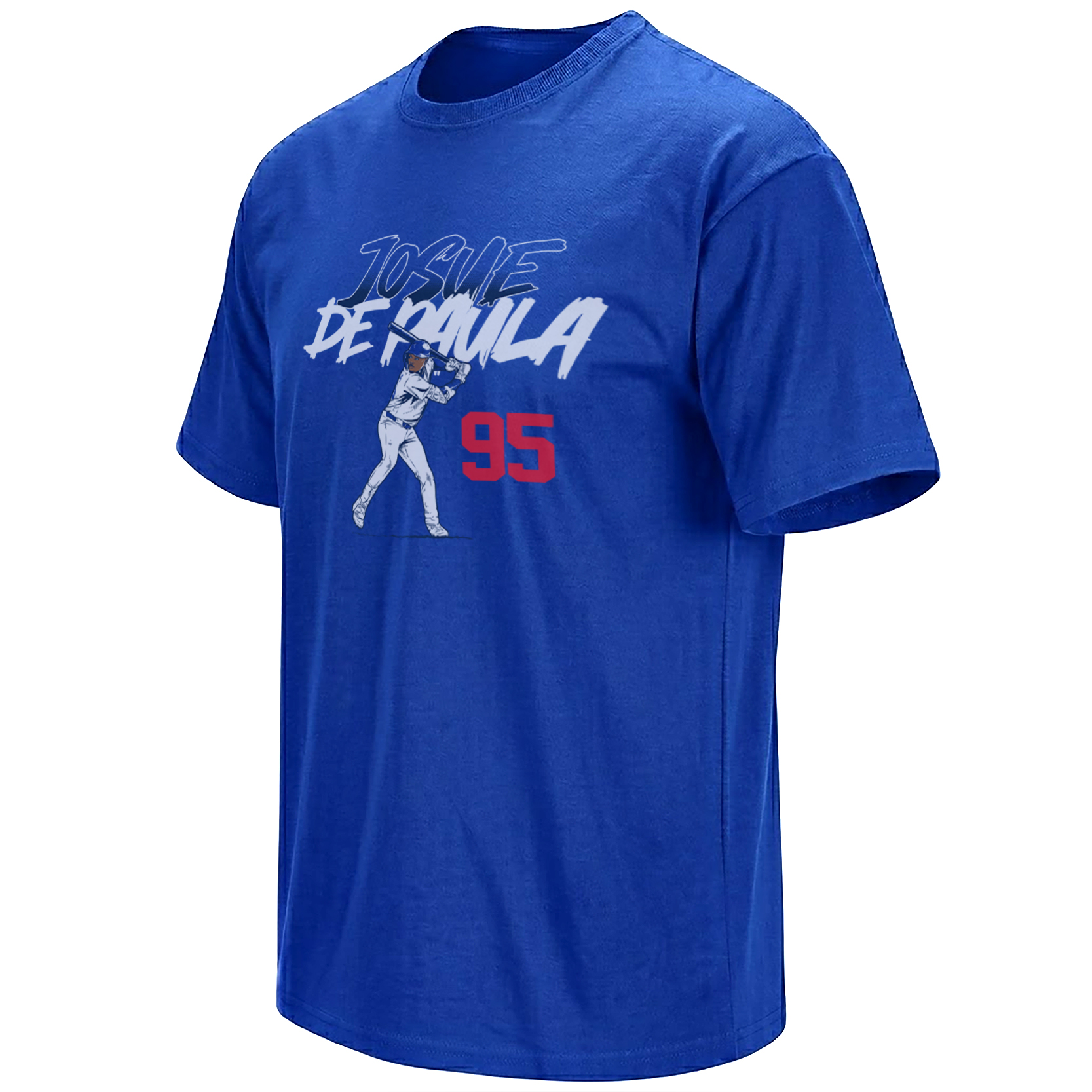
Royal blue supplies the Los Angeles base, white brush lettering keeps the name loose and energetic, and the red No. 95 functions like a card-number stamp. The artwork is deliberately cleaner than the “Straight Outta Double-A” version because this stage is about the player, not the promotion route.
De Paula Arrived With October Already in the Room
Timing changes how rookie debuts are experienced. A May call-up can spend months developing without every at-bat being treated like a roster referendum. September is different.
Los Angeles was already closing in on a postseason berth when De Paula arrived, and the Dodgers officially clinched their playoff spot immediately after his debut weekend. That means every encouraging at-bat naturally creates a second question: could a player who began September in Double-A have any role when October begins?
Nobody should treat one homer as an automatic postseason roster decision. But De Paula’s plate discipline, left-handed power and athleticism make the conversation legitimate rather than purely promotional.
Manager Dave Roberts also emphasized the energy De Paula brought into the clubhouse, noting how strongly veteran teammates reacted to the rookie’s success. That matters on a team built around experienced stars: sometimes a September call-up changes the emotional temperature before he changes the depth chart.
The Official Reaction Was as Loud as the Swing
That highlight became the first proof that prospect video and Major League reality could look almost identical. De Paula’s long frame, quick barrel and pull-side power translated immediately against a 98 mph fastball.
From Farm-System Future to Dodgers Present
The broader Los Angeles Dodgers collection can now treat De Paula alongside current Major League stories rather than only prospect culture, while the MLB collection places No. 95 inside a larger wave of young players arriving during the 2026 season.
More De Paula graphics can be followed through the Josue De Paula archive, where the difference between the Double-A design and the No. 95 slugger design already creates a miniature timeline of his first week in Los Angeles.
Frequently Asked Questions
What number does Josue De Paula wear for the Dodgers?
De Paula currently wears No. 95, the number featured prominently in his first Major League player-focused artwork.
What was Josue De Paula’s first MLB hit?
His first Major League hit was a three-run home run against Miami on September 13, 2026.
How far did De Paula’s first homer travel?
Statcast measured the home run at 416 feet with a 108.2 mph exit velocity.
Does Josue De Paula bat left-handed?
Yes. De Paula is a left-handed hitter, and the shirt freezes him in a left-handed batting stance before the swing.
How is this different from the Straight Outta Double-A design?
Straight Outta Double-A focuses on De Paula’s unusual promotion path. The No. 95 Slugger Swing design presents him as a current Dodgers player and centers his Major League identity.
The Josue De Paula No. 95 graphic catches the narrow moment when Los Angeles stopped looking at him only as a prospect, while the Dodgers archive can follow whatever the rookie creates next.
Josue De Paula Shirt captures the Dodgers rookie’s first Major League identity through his left-handed slugger stance, oversized No. 95 and the momentum created by a 416-foot first career home run.