I’ve Cooked for People I Should Have Poisoned — Apparently That Counts as Self-Control
The joke starts in the safest possible place: making food for other people. Then one line later it swerves into exaggerated darkness, before landing on a strangely wholesome conclusion — congratulations, you demonstrated restraint.
Not every internet joke has a single viral video, celebrity or tweet sitting behind it. Some spread more quietly. They move through screenshots, mugs, aprons, craft files, Pinterest boards and T-shirts until the phrase itself becomes the recognizable object.
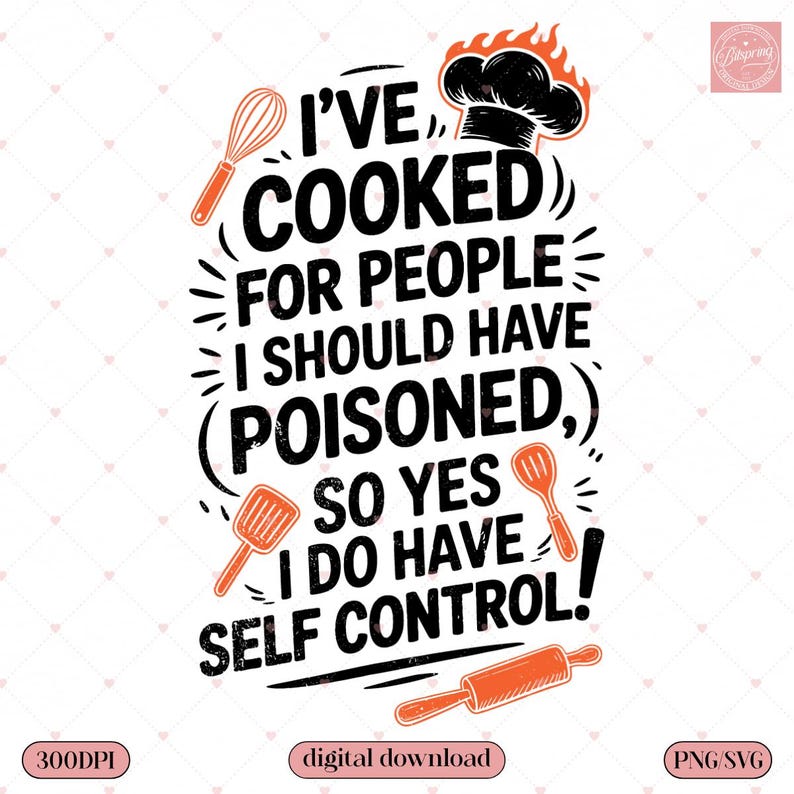
“I’ve cooked for people I should have poisoned, so yes, yes, I have self control” belongs to that second category. Variations of the line have circulated across craft and merchandise platforms, often paired with chef hats, whisks, knives, rolling pins or simple stacked typography.
The persistence makes sense because the joke does not require lore. A reader understands it before reaching the bottom of the shirt: the speaker has dealt with irritating people, continued behaving normally and would now like some credit for that achievement.
The line sounds outrageous only because it uses the most exaggerated possible language to describe something ordinary: surviving difficult people without losing your composure.
Why does this dark cooking joke keep circulating?
Its structure is unusually efficient. “I’ve cooked for people” creates a domestic, generous image. Cooking suggests care, effort and service. Someone spent time preparing something so another person could eat.
Then the sentence snaps in the opposite direction.
“I should have poisoned” is deliberately excessive. The humor depends on the reader understanding that excess immediately. It is not presented as a literal plan; it is the verbal equivalent of saying a coworker, relative, customer or dinner guest tested your patience beyond normal human specifications.
Finally, “so yes, I have self-control” reframes the entire setup as a résumé bullet point. The speaker is not confessing bad behavior. They are congratulating themselves for the bad behavior that never happened.
The phrase already lives beyond one design
That distinction matters editorially. This is not a shirt borrowing relevance from one famous person. The phrase has developed its own quote-culture footprint.
External listings show the same core wording appearing as digital craft files, chef graphics and apparel, which is a useful signal that the joke has become reusable language rather than a one-off caption.
Why cooks and service workers understand the joke instantly
Cooking adds more emotional weight than a generic “people annoy me” slogan. Food preparation requires time. Restaurant and hospitality work adds deadlines, heat, customer expectations and constant repetition. Home cooking can carry the same dynamic through family gatherings, holidays or the person who somehow ends up feeding everyone every time.
That makes the phrase feel like exaggerated occupational therapy. The real joke is not violence; it is labor plus restraint.
Someone complained about dinner. Someone sent food back. Someone announced a dietary restriction after everything had been prepared. Someone who contributed nothing suddenly became the loudest critic in the room. The shirt converts that familiar frustration into a sentence dramatic enough to make it funny.
Research surfaced the phrase across multiple merchandise and craft platforms, but not a credible original X, TikTok or celebrity source. Rather than inventing a viral origin, the article treats it accurately as distributed quote humor.
Why the Ellie design keeps the typography simple
Ellie Shirt’s version avoids adding a chef character, skull or kitchen illustration. That choice keeps attention on the timing of the sentence itself.
“I’VE COOKED” establishes the scene in oversized black lettering. “HAVE POISONED” receives another major visual emphasis because that is where the harmless setup becomes dark comedy. The final “SELF CONTROL” section provides the resolution.
On a white base, the black text reads almost like a handwritten kitchen notice that became progressively more inappropriate while someone was writing it. The slightly playful letterforms prevent the piece from becoming horror imagery. It stays dry, domestic and intentionally ridiculous.
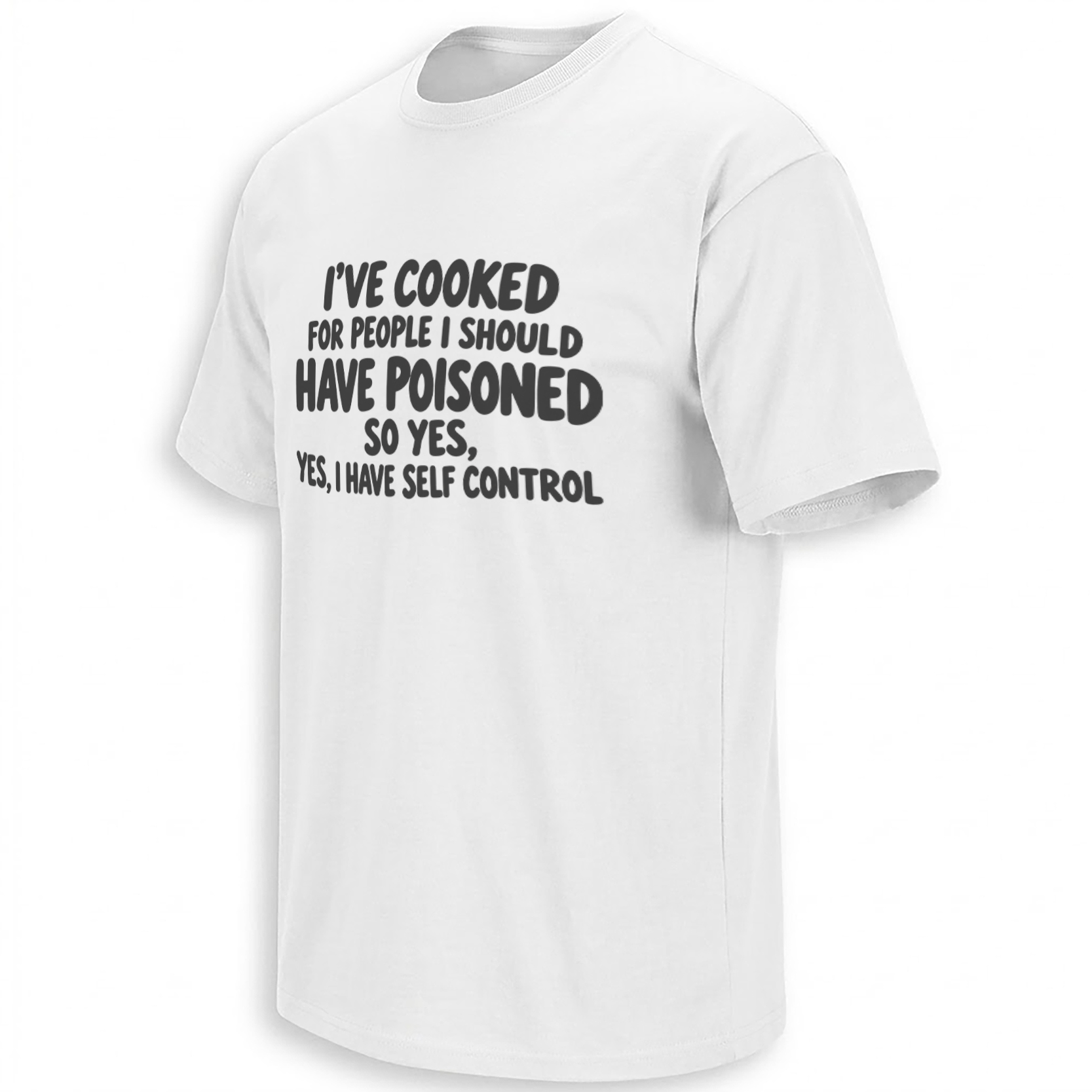
A text-only version that lets the setup, dark turn and self-control punchline perform in sequence without competing illustrations.
View the quote design →Why personality quotes keep working on shirts
The strongest quote shirts operate almost like social filters. Someone who dislikes dark humor may read this and keep walking. Someone who has spent years in a kitchen, behind a bar, in customer service or feeding a demanding family may stop halfway through and laugh before finishing the sentence.
That instant recognition is the cultural function. The wearer does not need to explain a fandom. The graphic announces a sense of humor and lets people decide whether they speak the same language.
More text-driven releases appear in Ellie Shirt’s Newest collection, while related kitchen humor can be explored through the Cooking search archive.
Frequently Asked Questions
What does “I’ve cooked for people I should have poisoned” mean?
It is exaggerated dark humor about dealing patiently with frustrating people while continuing to behave normally.
Is the poisoning line meant literally?
No. The humor depends on obvious exaggeration. The actual punchline is that the speaker considers their restraint proof of exceptional self-control.
Where did the quote come from?
No reliable single original celebrity, show or viral social post was identified. The phrase circulates broadly through quote graphics, cooking merchandise and craft culture.
Why is the joke associated with cooks?
Cooking is an act of effort and service, so pairing it with frustration makes the sarcastic self-control punchline stronger.
Why is the Ellie design text-only?
The joke already contains its own setup, escalation and punchline, so typography can carry the entire concept without a character or illustration.
The I’ve Cooked For People design turns a widely circulating piece of kitchen sarcasm into a cleaner typographic artifact — less chef merchandise, more deadpan evidence that somebody has been extremely patient.
I’ve Cooked For People Shirt turns the darkly sarcastic “I should have poisoned” quote into a text-driven joke about difficult people, kitchen patience and the strange pride of maintaining self-control.