Hilladelphia Is Real: Derek Hill’s Grand Slam Turned a Phillies Comeback Into Fan Language
Philadelphia trailed Washington by three runs until Derek Hill cleared the bases in the seventh inning. One swing changed the score, rescued the night and gave Phillies fans two immediate reactions: Hilladelphia and “Thank God for Derek Hill.”
The most important swing of Philadelphia’s night came from a player whose role had been described through platoon matchups and roster depth. Derek Hill stepped into the seventh inning with the bases loaded, the Phillies trailing 3–0 and Citizens Bank Park waiting for one reason to believe the game had not already slipped away.
Tom Cosgrove left a 75.9 mph sweeper in a hittable location. Hill drove it toward left-center field and watched it clear the wall. Four runners scored, a three-run deficit became a 4–3 lead and the ballpark moved from frustration to complete release in a single flight.
Bryce Harper later added a two-run home run, but Hill’s grand slam remained the emotional center of Philadelphia’s 6–3 victory. It was the Phillies’ first go-ahead grand slam in the seventh inning or later since Brad Miller accomplished the feat in July 2021.
Hill did not gradually return Philadelphia to the game. He replaced three innings of frustration with one swing and a new city nickname.
Why “Hilladelphia” Appeared So Quickly
Philadelphia fan language moves fastest when a player’s name naturally fits the city. Hill becomes Hilladelphia with almost no explanation, allowing the phrase to work as a headline, chant, caption and celebration simultaneously.
The timing gave the word authority. A nickname created before an important performance can feel forced. “Hilladelphia” arrived after the grand slam had already transformed Citizens Bank Park, so the phrase felt like a description of what had happened rather than a marketing invention.
For one inning, Philadelphia belonged to Hill. The graphic preserves that playful exaggeration: the player does not merely contribute to the Phillies; his surname temporarily rewrites the city.
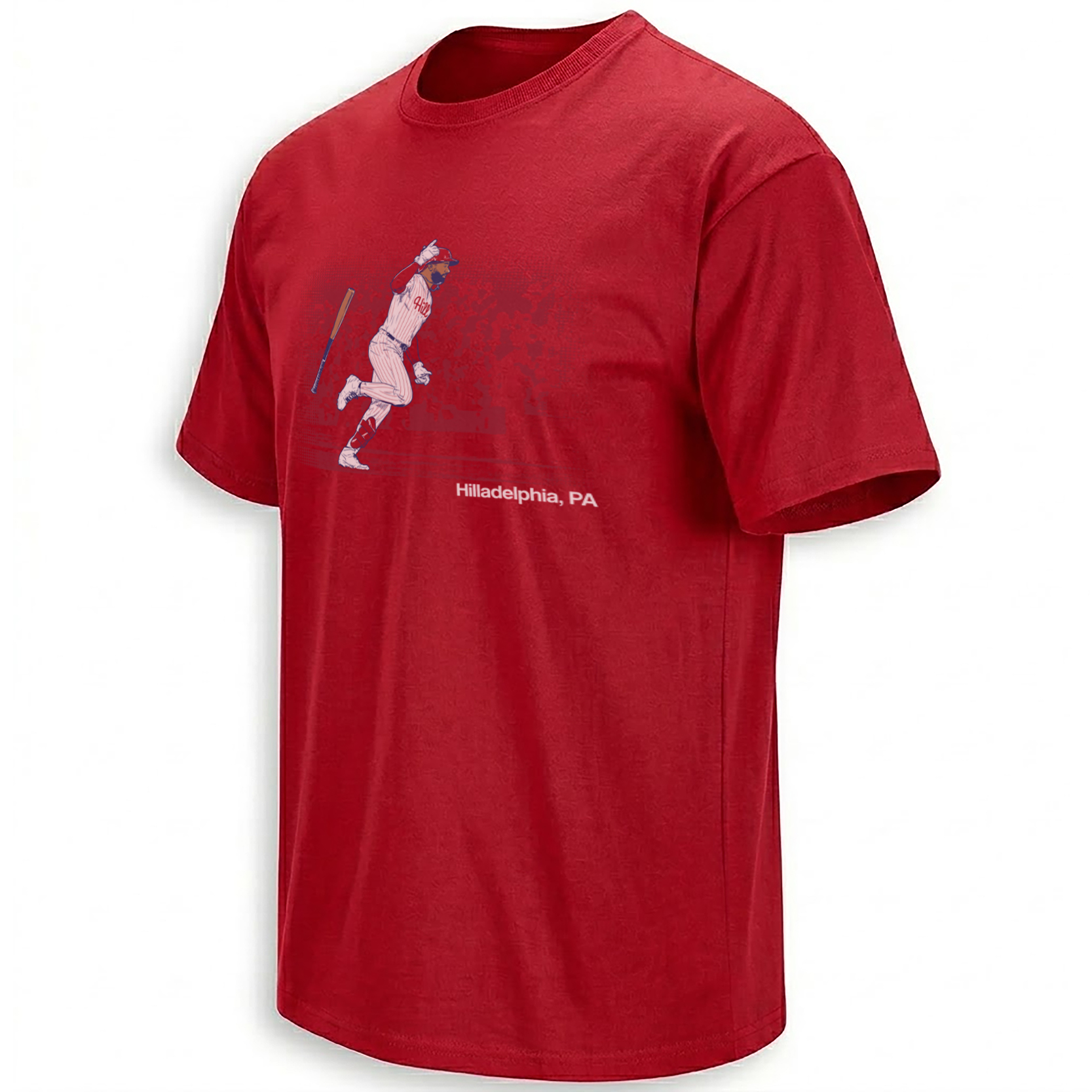
A city-name remix built around the celebration that followed Hill’s go-ahead seventh-inning grand slam.
View the celebration piece →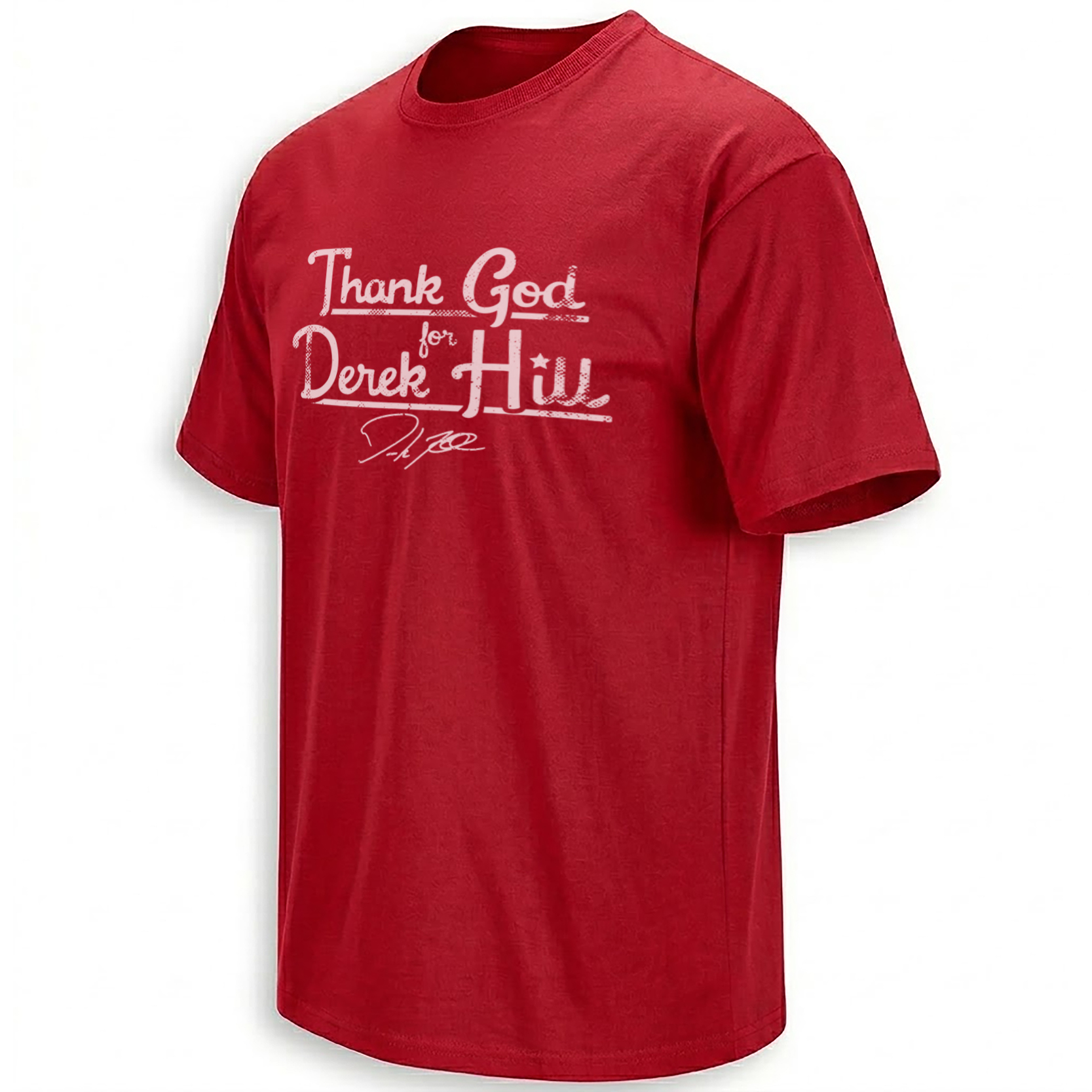
The exaggerated relief of a fan base that watched one unexpected swing rescue an increasingly tense night.
Open the reaction design →Watch the Original Phillies Post Directly
Philadelphia’s official Facebook video captures the swing and immediate celebration. The embedded player below allows the clip to be watched inside the blog instead of displaying only a link to the social platform.
See the Grand Slam From MLB’s Field View
MLB’s alternate angle shows the shape of the moment from the field: Hill’s contact, the flight toward left-center and the dugout beginning to react before the ball has completed its journey.

Why “Thank God for Derek Hill” Fits the Night
The second design uses the emotional grammar of immediate sports relief. Fans invoke gratitude when an unlikely player produces exactly the result a game appears to require.
The phrase is intentionally larger than a normal recap. It does not claim Hill solved an entire season. It captures the feeling inside one seventh inning, when Philadelphia had produced little offense and suddenly received four runs from one swing.
That distinction is why the wording works as internet culture. It resembles the spontaneous message a fan might type before the replay has finished circulating: direct, emotional and uninterested in sounding measured.
Hilladelphia celebrates ownership of the city, while “Thank God for Derek Hill” captures relief. One design turns the player into a place; the other records what the fan base felt when the ball disappeared.
From Platoon Player to the Center of the Night
Philadelphia acquired Hill from the Chicago White Sox on June 11. His role was expected to involve outfield depth, speed, defense and matchups against selected pitchers rather than a guaranteed everyday place.
That background made the grand slam more emotionally effective. Baseball’s most memorable regular-season moments often come from players outside the usual headline hierarchy. The lineup’s established stars create expectation; a role player can create surprise.
The Phillies later explained their deadline roster decisions partly through recent production from Hill and Bryan De La Cruz. Hill’s swing therefore carried meaning beyond one game. It strengthened the argument that Philadelphia’s existing outfield options could contribute without another major acquisition.
The Catch That Protected the Comeback
Hill’s contribution did not end with the grand slam. In the eighth inning, he made a tumbling catch in the outfield, adding a defensive image to the offensive highlight.
That sequence gave the night a complete shape. Hill created the lead and then helped protect it. The catch mattered because it prevented the celebration from becoming a temporary interruption in another Washington rally.
For fan culture, however, the home run remained the easier symbol. Four runs arriving at once create cleaner language than a successful defensive route. “Hilladelphia” compresses the entire game into the instant the score changed.
Why Philadelphia Adopts Unexpected Heroes
Philadelphia sports culture places enormous pressure on stars, but it also has a long affection for players whose roles are based on effort, readiness and one unforgettable contribution.
Hill entered the game without being the central promotional face of the Phillies. By the seventh inning, his name was the loudest part of the night. That shift from supporting player to temporary city hero is one of baseball’s most durable stories.
The broader Philadelphia Phillies collection records those instant local phrases alongside established player identities. The wider MLB collection follows how one swing can turn a depth player into a piece of city-specific baseball language.
Frequently Asked Questions
When did Derek Hill hit his go-ahead grand slam?
Hill hit it in the bottom of the seventh inning on August 3, 2026, against the Washington Nationals.
What was the score before and after the grand slam?
Philadelphia trailed 3–0 before Hill’s swing and led 4–3 after all four runs scored.
What does “Hilladelphia” mean?
It combines Hill’s surname with Philadelphia, describing the brief moment when his grand slam made him the central figure in the city’s baseball conversation.
Why does the second design say “Thank God for Derek Hill”?
The phrase captures the exaggerated relief Phillies fans felt when an unexpected grand slam rescued a game in which the offense had been held scoreless.
The Hilladelphia design preserves the celebration, while Thank God for Derek Hill records the immediate emotional reaction surrounding the comeback.
Hilladelphia Shirt and Thank God for Derek Hill Shirt capture the seventh-inning grand slam that erased Philadelphia’s three-run deficit and transformed Derek Hill into the unexpected hero of a 6–3 Phillies comeback.