
Garden Road Champions: How the Knicks Starting Five Walked From MSG Pressure to NBA History
Jalen Brunson, Mikal Bridges, Karl-Anthony Towns, Josh Hart and OG Anunoby formed the starting lineup that carried New York through four double-digit Finals comebacks, a 53-year drought and the final road from Madison Square Garden pressure to championship permanence.
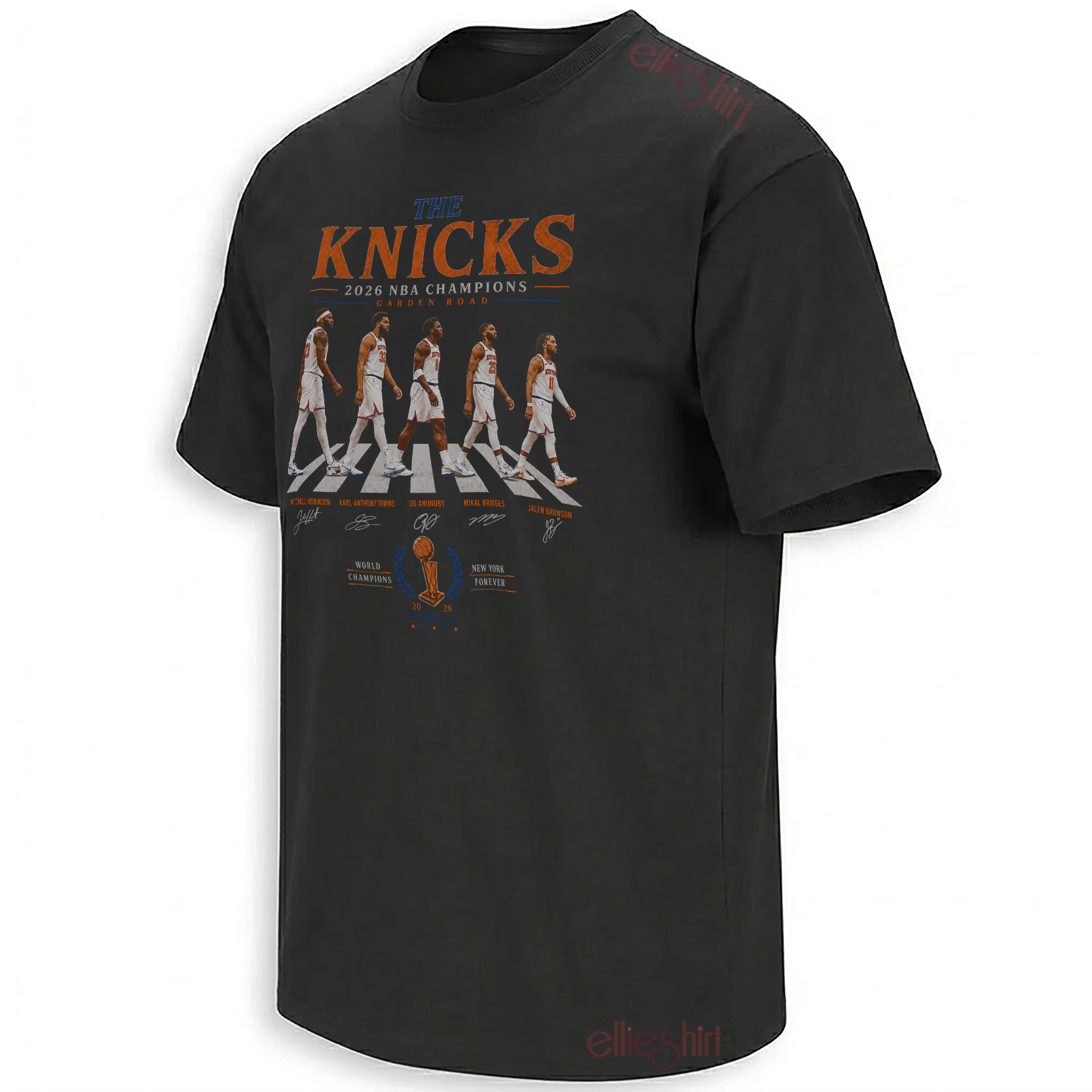
The Knicks’ championship image is not only Brunson holding the Finals MVP trophy. It is five players moving in the same direction.
Brunson controlled the game. Bridges supplied length and defensive pressure. Towns created size and spacing. Hart gave the lineup rebounding and motion. Anunoby defended every type of scorer and delivered the Game 4 tip-in that changed the Finals.
Together, they became the starting five that ended New York’s 53-year wait and gave Madison Square Garden a modern championship identity.
The walking composition makes the title feel earned step by step—five players carrying the weight of New York until the road finally ended at the trophy.
The Starting Five Was Built From Different Histories
The captain and closer.
The perimeter defender and ironman.
The size and spacing engine.
The rebounder and connector.
The two-way stopper and Game 4 hero.
Brunson, Bridges and Hart carried a Villanova championship connection into New York. Towns arrived after nine seasons as Minnesota’s central star. Anunoby entered through a trade that changed the Knicks’ defensive ceiling.
Their paths were different enough to make the final image feel improbable. The five did not grow together from one draft class. They were assembled through conviction, risk and an unusually clear understanding of complementary roles.
The Artwork Turns the Lineup Into a Procession
Most championship graphics freeze players in celebration. Garden Road Champions shows movement.
The walking figures suggest that the title was not one event but a route—through the regular season, four playoff rounds, repeated deficits and the pressure of representing New York.
No player is isolated above the group. Brunson may be the leader, but the composition insists that the championship arrived through collective forward motion.
Every Finals Victory Required a Comeback
New York won four games in the series, and all four required the Knicks to recover from double-digit deficits.
That pattern gave the title an unusual emotional structure. The starting five repeatedly looked close to losing control before rebuilding the game possession by possession.
Game 4 provided the largest test: a 29-point deficit, the biggest comeback in Finals history, and Anunoby’s decisive tip-in after Brunson carried the scoring burden.
Brunson Supplied the Direction
Every road needs a leader capable of choosing pace. Brunson performed that function for New York.
He averaged 32.6 points in the Finals and scored a Knicks-record 45 in the closeout. His strength was not simply making shots, but understanding when the entire game required him to take control.
The lineup could walk together because Brunson gave it a destination.
Bridges and Anunoby Protected the Route
Bridges and Anunoby gave New York two long, versatile perimeter defenders capable of changing assignments without changing the entire system.
Their presence allowed Brunson to conserve energy and let the Knicks survive against different offensive styles.
Anunoby’s tip-in became the defining finish, but the defensive work before that moment made the comeback possible.
Towns Changed the Geometry
Towns forced defenses to choose between protecting the rim and following a center away from it.
His rebounding and scoring gave New York a physical dimension the earlier versions of the roster had lacked.
In the walking image, Towns’ scale is visually important. He makes the lineup look capable of carrying both perimeter skill and interior force.
Hart Connected Every Possession
Hart’s role rarely fits one clean statistic. He rebounds, advances the ball, changes pace and turns broken possessions into usable ones.
He also gives the group emotional continuity. His relationships with Brunson and Bridges connect college history to the professional title.
The road image would feel less complete without the player whose value is often defined by movement itself.
The Road Began Long Before the Finals
A move initially debated as an overpay became the foundation of a championship roster.
His arrival gave the Knicks an elite two-way wing capable of reshaping postseason matchups.
New York accepted major trade costs to increase its shooting, size and defensive versatility.
The Knicks completed another comeback, defeated San Antonio 94–90 and became champions for the first time since 1973.
The Image Also Belongs to the Parade
Once the title was won, the five-player walk acquired a second meaning. It no longer pointed only toward the trophy. It resembled the movement of champions through New York.
The players who had carried the Garden through the playoffs became the central figures of the city’s celebration.
That is why “Garden Road Champions” feels broader than a roster label. It connects Madison Square Garden, the playoff road and the public procession after the final victory.
Frequently Asked Questions
Who are the five players in Garden Road Champions?
Jalen Brunson, Mikal Bridges, Karl-Anthony Towns, Josh Hart and OG Anunoby.
Did this group form the Knicks starting lineup?
Yes. The five formed New York’s primary starting lineup during the 2026 championship run.
What was historic about the Finals?
The Knicks won the series 4–1 and came back from double-digit deficits in all four victories.
What happened in Game 4?
New York erased a 29-point deficit, with Brunson leading the rally and Anunoby delivering the game-winning tip-in.
Why are the players shown walking?
The walking arrangement symbolizes the shared journey from roster construction and Madison Square Garden pressure to the championship and parade.
How long was the Knicks championship drought?
New York had not won the NBA title since 1973, a wait of 53 years.
The Garden Road Champions piece preserves the starting five as a single moving image of New York’s completed championship journey.
Garden Road Champions Shirt features Brunson, Bridges, Towns, Hart and Anunoby as the New York Knicks starting five that completed four Finals comeback wins and ended a 53-year championship drought.