
First in My Bloodline to Read This Much Gay Fanfiction
A sentence normally reserved for education, migration or family milestones has been reassigned to late-night tabs, impossible fictional relationships and a reading history no ancestor could have predicted.
“First in my bloodline” usually introduces a serious achievement. The first person in a family to graduate from college. The first to own a home. The first to build a life in a new country. Internet fandom kept the ceremonial structure and replaced the achievement with an enormous personal archive of gay fanfiction.
That reversal is why the sentence has moved so easily across Instagram, X and Threads in summer 2026. It sounds dignified, generational and historically significant—until the final two words reveal a private reading habit that previously lived inside browser tabs and fandom usernames.
The joke does not apologize for that habit. It promotes it into a family milestone. Somewhere in the imagined ancestral line, centuries of survival have culminated in one descendant reading 180,000 words about two fictional men who exchanged six lines of dialogue in the original story.
The meme turns a private fandom habit into the improbable achievement toward which the entire family tree was apparently working.
How Ancestral Pride Became a Fandom Template
The internet frequently repurposes motivational language by preserving its emotional scale and replacing its subject. “My ancestors’ wildest dreams” can describe genuine progress, but it can also caption a small luxury, a niche hobby or an absurd modern convenience.
“First in my bloodline” follows the same method. The phrase carries the weight of family history. Pairing it with fanfiction creates comedy through disproportion: the language is monumental, while the activity appears intimate, digital and culturally specific.
Yet the joke contains a real generational distinction. Previous readers did not have searchable archives, instant global fandoms or millions of transformative stories accessible from a phone. The claim is funny partly because it may be literally true.
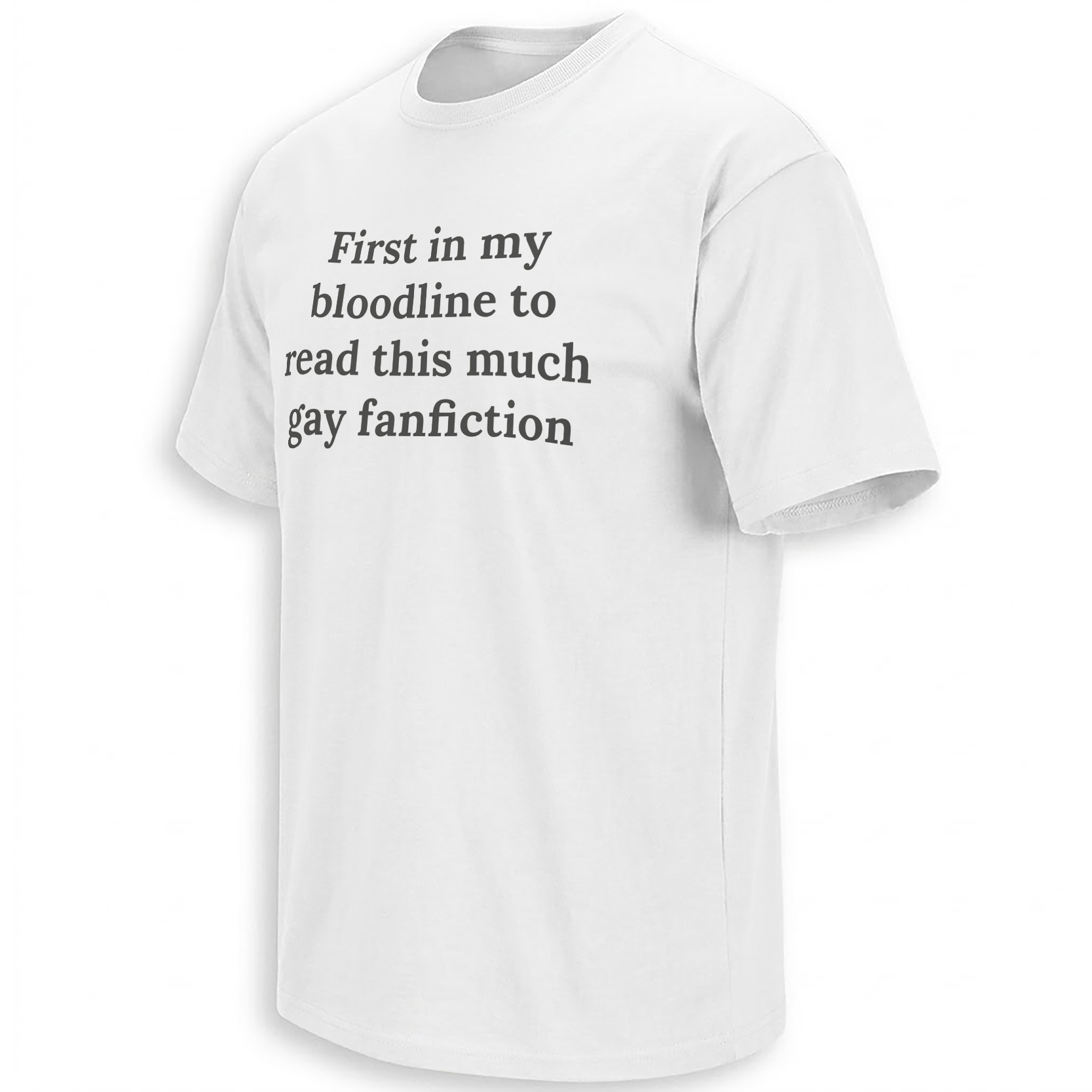
Why the Design Looks Like a Serious Book Cover
The graphic uses no character art, rainbow symbol, fandom logo or visual punchline. Its restraint forces the viewer to read the full sentence before understanding what kind of confession has been made.
The black serif type resembles traditional publishing, academic text and literary merchandise. That seriousness is essential. A louder meme font would announce the joke too early; the editorial typography allows the absurdity to arrive gradually.
The white field adds the feeling of a printed page. The design therefore looks like an object made by someone who insists their reading habit belongs inside literature, even when the source material began with an unresolved glance between two characters.
Minimal typography gives a highly specific internet confession the dignity of a generational proclamation. The visual joke is the distance between formal presentation and chaotic reading history.
Fanfiction Turned Reading Into Participation
Traditional reading usually ends at the final page. Fanfiction begins from the belief that a story can remain open: relationships can be reinterpreted, minor characters can become central and worlds can continue beyond their official endings.
Queer fanfiction has played a particularly important role in that process. When mainstream stories offered limited LGBTQ representation, fans built alternative romantic and emotional possibilities themselves. Some works provide playful wish fulfillment; others explore identity, trauma and intimacy at novel length.
The bloodline meme carries this history lightly. It does not present a lecture about transformative work. It simply recognizes the scale of participation through one reader’s enormous, slightly alarming consumption.
The Humor Comes From Being Specific but Anonymous
The sentence does not reveal which fandom, pairing or archive produced the achievement. That omission makes it widely reusable. A reader can connect it to anime, fantasy novels, television dramas, sports RPF, video games or a franchise whose creators never intended the relationship fans eventually centered.
At the same time, the wording is intimate enough to feel like a confession. “This much” implies a quantity too large to state directly. The reader knows the number would create follow-up questions and wisely leaves it undefined.
This balance lets the phrase work as both identity signal and private joke. People inside fanfiction culture understand the tabs, tags, bookmarks and late-night reading immediately. Outsiders understand enough to recognize that a substantial amount of literature has been consumed.
From Secret Tab to Public Reader Identity
Older internet culture often treated fanfiction as something to hide behind usernames. Contemporary fandom increasingly turns reading habits into public identity through memes, recommendation videos, archive statistics and clothing.
The change does not eliminate embarrassment; it makes embarrassment communal. The joke says the reader knows how excessive the habit sounds and has decided that self-awareness is more entertaining than secrecy.
With no confirmed dedicated fanfiction collection, the piece belongs inside EllieShirt’s newest cultural graphics archive, where niche internet language is recorded while the joke is still moving across social feeds.
Frequently Asked Questions
What does “First in my bloodline to read this much gay fanfiction” mean?
It humorously presents a large queer-fanfiction reading history as a groundbreaking achievement within the reader’s family lineage.
Why does the meme use the phrase “first in my bloodline”?
The phrase normally introduces a serious generational milestone, so applying it to fanfiction creates comedy through exaggerated historical importance.
Why is gay fanfiction important in fandom culture?
It has allowed readers and writers to explore queer relationships, identity and emotional possibilities that were often absent or underdeveloped in mainstream source material.
Why does the design use plain serif text?
The literary typography gives the internet confession a formal, bookish appearance and allows the punchline to emerge only after the full sentence is read.
Is the phrase connected to one specific fandom?
No. Its lack of character names or franchise references allows readers from many different fandoms and pairings to recognize themselves in it.
The First in My Bloodline graphic presents a highly online reading habit with the dignity of a literary family motto.
First in My Bloodline Gay Fanfiction Shirt turns queer fandom reading into a mock ancestral milestone through restrained literary typography and self-aware internet humor.