
Why a Lasagna-Serving Cartoon Cat Is Carrying the Internet’s Darkest Non Sequitur
“Epstein didn’t kill himself” became larger than a single theory when users began inserting it into unrelated conversations. Pairing the phrase with a cheerful orange cat turns institutional distrust into deliberate tonal whiplash.
The phrase “Epstein didn’t kill himself” has survived because it rarely waits for an appropriate context. It interrupts interviews, captions, signs and jokes that appear to be discussing something else entirely.
That interruption became the meme’s defining structure. The sentence arrives where it should not, forcing a dark unresolved public controversy into an ordinary or cheerful frame.
A lasagna-serving orange cartoon cat is therefore not a random addition. He is the perfect delivery mechanism: nostalgic, harmless, immediately recognizable and completely mismatched with the political suspicion printed beside him.
“Epstein didn’t kill himself” is a conspiracy-era slogan, not an established factual conclusion. The New York City medical examiner ruled Jeffrey Epstein’s death a suicide, and later federal reviews retained that conclusion while documenting serious failures in prison supervision.
The meme does not become powerful by resolving the case. It becomes powerful by refusing to let the case leave the room.
How the Phrase Became an Internet Interruption
Jeffrey Epstein died in federal custody in August 2019 while awaiting trial on sex-trafficking charges. The official suicide ruling was immediately surrounded by public suspicion because of surveillance failures, guard misconduct and Epstein’s connections to wealthy and politically influential people.
The internet converted that suspicion into a portable sentence. Rather than limiting discussion to legal reporting, users began placing the phrase at the end of unrelated posts and interviews.
That behavior changed its cultural function. The sentence was no longer used only as a direct claim about the manner of death. It became shorthand for distrust of official narratives, elite protection and institutions believed to be withholding information.
Its persistence also means it crosses ideological boundaries. Different communities use it to target different political figures, media organizations and agencies. The object of suspicion changes; the interruption remains.
Why the Phrase Returned to Anti-Trump Discourse
The Epstein records debate remained politically active as the federal government released millions of pages and continued facing questions about redactions, omitted names, victim protection and the pace of disclosure.
Donald Trump’s administration became part of that argument because it publicly claimed a commitment to transparency while critics continued questioning how the records were reviewed and released.
An anti-Trump reading of the meme does not require the artwork to accuse Trump of causing Epstein’s death. The design instead channels frustration toward political power, secrecy and the perception that public accountability remains incomplete.
This distinction matters. The slogan is a cultural object built around suspicion. It should not be rewritten as a verified allegation against a particular person.
The Cartoon Cat Makes the Message More Confrontational
A plain political slogan announces itself before anyone reads it. Dark colors, severe type and protest imagery prepare the viewer for conflict.
The Epstein Didn’t Kill Himself Shirt does the opposite. Its orange character, steaming tray and rounded retro lettering suggest harmless comic nostalgia.
Only after that friendly first impression does the sentence register. The graphic moves from cartoon recognition to political unease in a single glance.
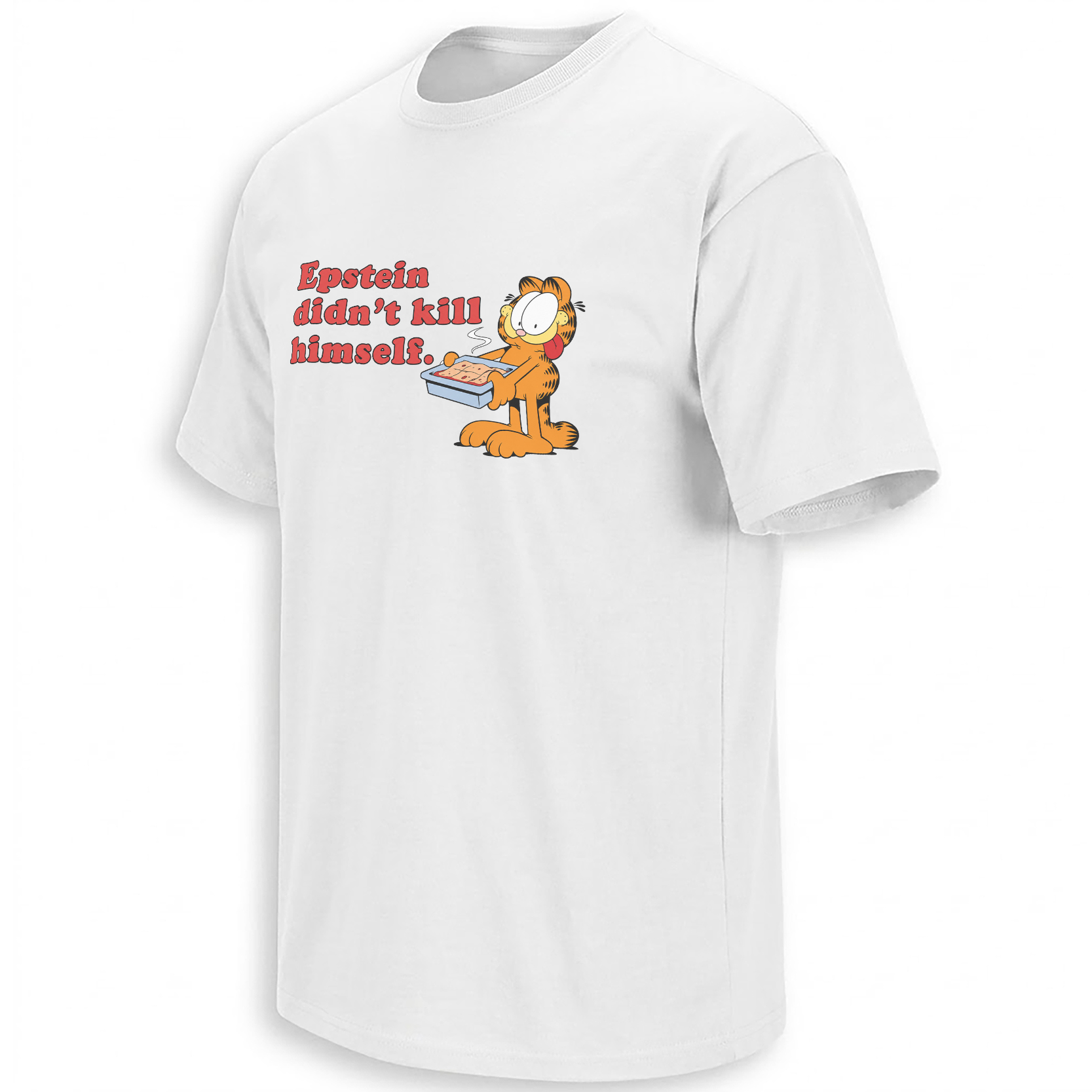
Three Layers Make the Joke Work
The orange cat, wide eyes and lasagna reference recall a familiar world of harmless newspaper-comic humor.
The text introduces death, institutional failure and unresolved suspicion without changing the cheerful illustration.
The cat has no logical connection to Epstein, which reproduces the original meme tradition of inserting the phrase where it does not belong.
Why the Lasagna Matters
The food tray ensures that the character is not simply an anonymous orange cat. Lasagna is the recognition trigger.
That trigger allows the design to communicate nostalgia without printing another name or logo. The viewer understands the reference through orange stripes, facial expression and the steaming rectangular meal.
The blue tray also creates visual balance. Red text occupies the left side while the orange-and-blue character occupies the right, allowing both halves to remain legible without a background scene.
The design therefore works like a compressed two-panel comic. The sentence establishes dread. The character appears to serve dinner as though nothing unusual has happened.
White, Sport Grey or Sand Changes the Tone
The cleanest and most direct presentation, with maximum contrast between the bright cartoon palette and the red sentence.
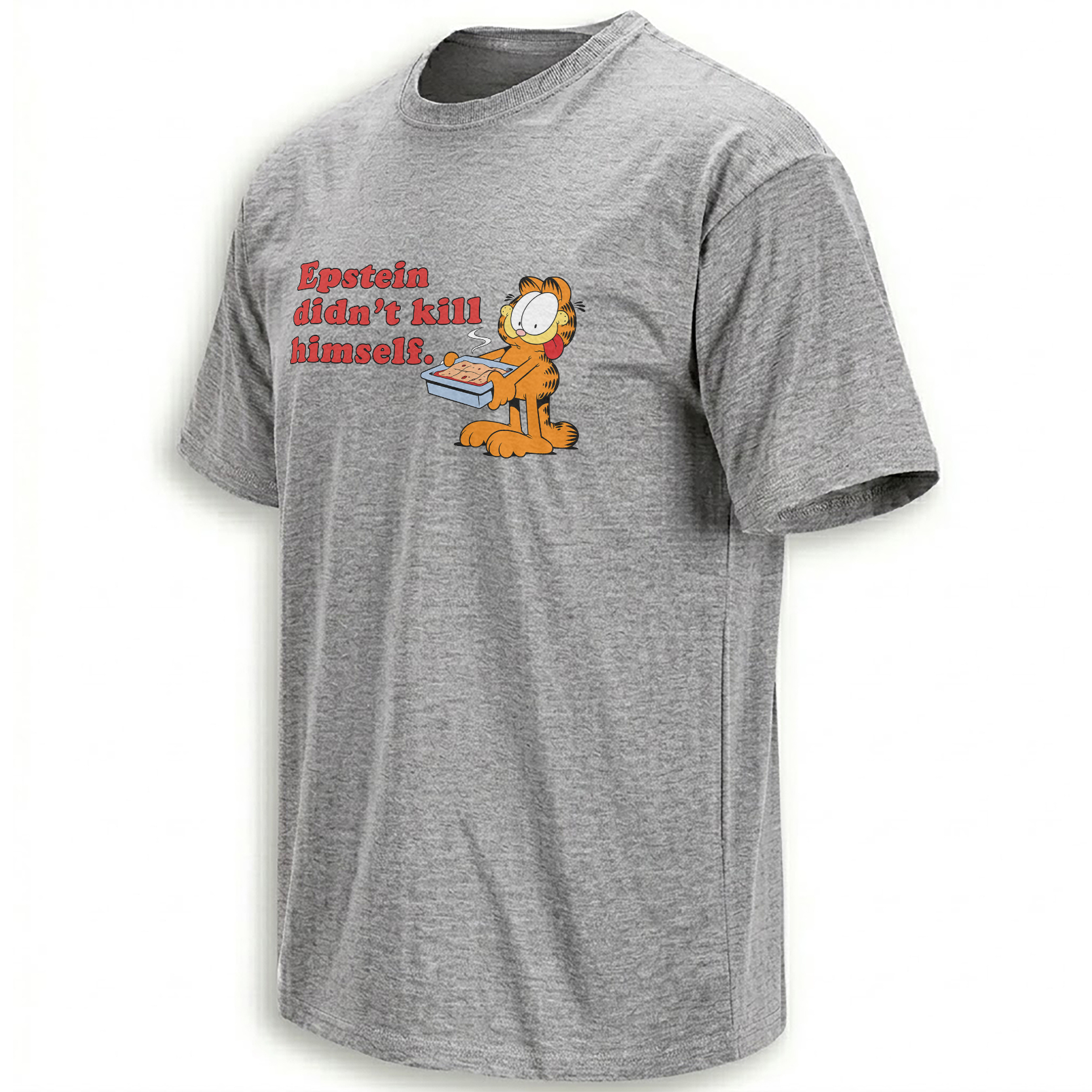
A casual internet-meme treatment that feels closer to a spontaneous statement shirt than a polished protest graphic.
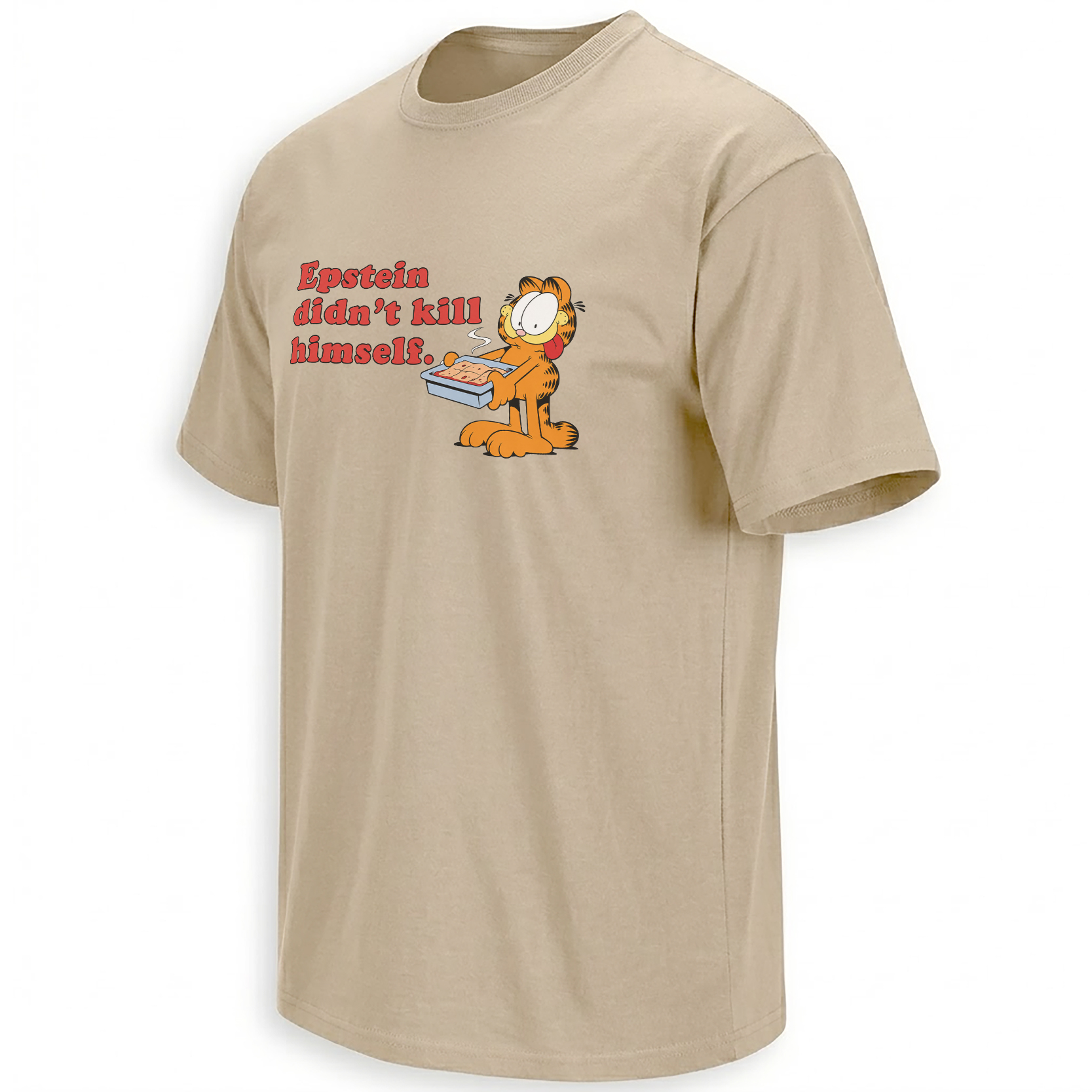
The warmest version, giving the artwork the faded personality of an old comic souvenir carrying an unexpectedly current political message.
The Meme Reflects a Real Crisis of Trust
The slogan persists partly because documented institutional failures created space for suspicion. Guards failed to complete required checks, records were falsified and prison procedures broke down around one of the most scrutinized detainees in the country.
Those facts do not prove homicide. They explain why the official conclusion struggled to close the public conversation.
The meme compresses that gap into five words. It replaces detailed reporting with a blunt declaration, which makes it powerful as a cultural signal but unreliable as a substitute for evidence.
The cartoon pairing adds another critique: public discussion of grave institutional questions now travels through jokes, nostalgia and absurd images because those formats often move faster than formal explanations.
Political Apparel as a Public Context Test
Wearing the phrase forces the surrounding audience to decide how it should be read. Is it a literal conspiracy claim, an anti-Trump protest, a criticism of government secrecy, a reference to prison failure or simply an old internet interruption?
The design refuses to settle that question for everyone. Its cartoon form makes the statement less visually aggressive while preserving the bluntness of the text.
The dedicated Jeffrey Epstein collection provides the closest topic archive for related political and disclosure-era designs. The Newest collection places the piece alongside other current slogans moving from online discourse into physical graphics.
Frequently Asked Questions
Is “Epstein didn’t kill himself” a proven fact?
No. It is a conspiracy-era slogan. The official medical finding and subsequent federal reviews concluded that Jeffrey Epstein died by suicide.
Why did the phrase become a meme?
Users began inserting it into unrelated interviews, posts and jokes as a shorthand for suspicion toward official narratives and powerful institutions.
Why is an orange cartoon cat included?
The cheerful lasagna-serving character creates a deliberate contrast with the dark political sentence and reproduces the meme’s tradition of appearing in unexpected contexts.
Does the shirt accuse Donald Trump of killing Epstein?
No. The design does not identify a killer. Its anti-Trump relevance comes from criticism of political transparency and the handling of Epstein-related records.
Why are there white, sport-grey and sand versions?
White creates maximum clarity, sport grey gives the graphic a casual meme-shirt tone and sand adds a warmer vintage-comic appearance.
The Epstein Didn’t Kill Himself design preserves the meme as deliberate visual whiplash: comic nostalgia serving lasagna beside a statement that continues to represent political distrust and demands for institutional transparency.
Epstein Didn’t Kill Himself Shirt pairs the conspiracy-era political slogan with a cheerful orange cartoon cat serving lasagna, creating a nostalgic anti-Trump meme about secrecy, institutional distrust and unresolved public suspicion.