Detroit Lions Touchdown Workout: Push-Ups, Sit-Ups & Jahmyr Gibbs
The Lions beat Tampa Bay 31–21, but their fourth-quarter touchdown celebrations told a second story. Jahmyr Gibbs scored twice, and Detroit’s offense treated the end zone like an improvised gym.
The first workout started after a touchdown. The second made it look like a routine. On November 22, 2026, Jahmyr Gibbs and the Detroit Lions turned two fourth-quarter scores against the Tampa Bay Buccaneers into a running joke about exercise, first dropping for push-ups and later performing sit-ups in the end zone.
Detroit had arrived at Ford Field carrying a five-game winning streak and substantial pressure in the NFC North. A 31–21 victory over Tampa Bay extended that streak to six and improved the Lions to 8–2. Yet the team found time to create a visual subplot that had very little to do with the score: the end zone had become a gym floor.
The celebration was especially memorable because it required participation. Players were no longer just pointing toward the crowd or performing an individual dance. They were getting down on the turf together, turning a scoring play into a coordinated physical routine.
That combination of football and humor now sits naturally inside the Detroit Lions visual archive, where player-specific graphics and team slogans capture the moments that fans continue to discuss beyond the game itself.
How Jahmyr Gibbs Turned the Fourth Quarter Into a Workout
Detroit’s offense had already produced touchdown passes from Jared Goff to Amon-Ra St. Brown and Jameson Williams. But Tampa Bay was still within striking distance when the final period began.
Gibbs gave the Lions separation with a two-yard rushing touchdown. After reaching the end zone, he was joined by teammates for a group push-up celebration, with Amon-Ra St. Brown among those taking part. The performance was playful but coordinated enough to look like an actual team exercise.
Later in the quarter, Gibbs scored again on a four-yard run. The Lions followed it with another workout-themed celebration, this time performing sit-ups. Instead of repeating the same gesture, the offense had developed a second exercise for the next scoring opportunity.
The distinction matters: the viral footage was not one continuous workout after a single touchdown. It represented two celebrations after two different Gibbs scores. The Detroit News documented both movements, while the Lions’ official game recap confirmed the 31–21 result and Gibbs’ two rushing touchdowns.
Detroit did not just score twice in the fourth quarter. It created two separate workout routines for the same end zone.
The Real End-Zone Workout, Captured on Camera
The photograph of Lions players doing synchronized push-ups is a striking piece of football imagery. Honolulu blue helmets are lowered toward the turf while teammates align their bodies in a row. The pose resembles a coordinated training session more than a conventional touchdown celebration.

Television footage made the physical comedy more apparent. FOX’s coverage showed the Lions performing their exercises in the end zone, with the joke becoming easy to recognize even for viewers who had not followed the earlier scoring drives.
From Push-Ups to Sit-Ups: A Celebration With a Second Act
In many NFL celebrations, the routine is designed around a single instantly recognizable pose. Detroit’s exercise theme worked differently. It created a flexible idea that players could repeat without performing exactly the same movement every time.
Push-ups and sit-ups are familiar exercises. No explanation is required to recognize what players are mimicking. That accessibility makes the joke effective across football audiences, turning the scoring play into a visual moment that requires very little context.
The second routine also changed how the first was remembered. Once the offense performed sit-ups after another touchdown, the push-ups no longer looked like an isolated gag. Together, they suggested a deliberate theme: score a touchdown, then complete another round of the end-zone workout.
Four Graphic Interpretations of Detroit’s End Zone Fitness Club
The four designs inspired by the Lions’ celebrations take different visual approaches to the same story. Two emphasize the physical actions and workout imagery. Two turn the sequence into short, rhythmic slogans that capture the team’s habit of finding something new to do after scoring.
The real celebration consisted of push-ups and sit-ups. The barbell graphic is a stylized extension of the gym theme, not documentation of players lifting actual weights during the touchdown celebration.
 01 / Workout Scene
A direct visual interpretation of Detroit’s sit-up celebration. The design connects the scoring play with the movement that followed, making the exercise itself the central piece of the artwork.
View the sit-up graphic →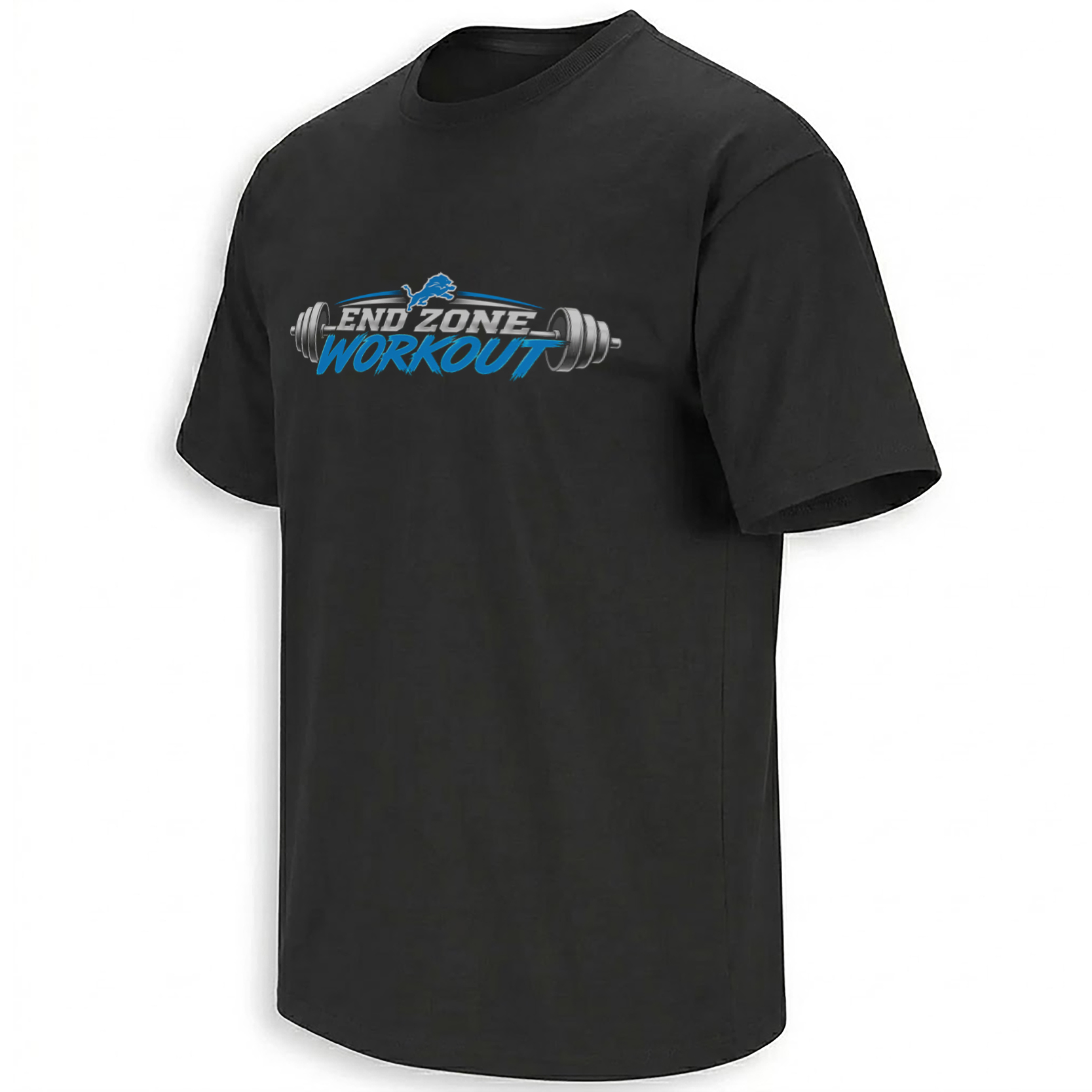 02 / Gym Metaphor
The barbell becomes a visual shorthand for the improvised gym atmosphere. Unlike the literal push-up and sit-up imagery, this version expands the joke into a broader football-fitness concept.
Explore the gym-themed design →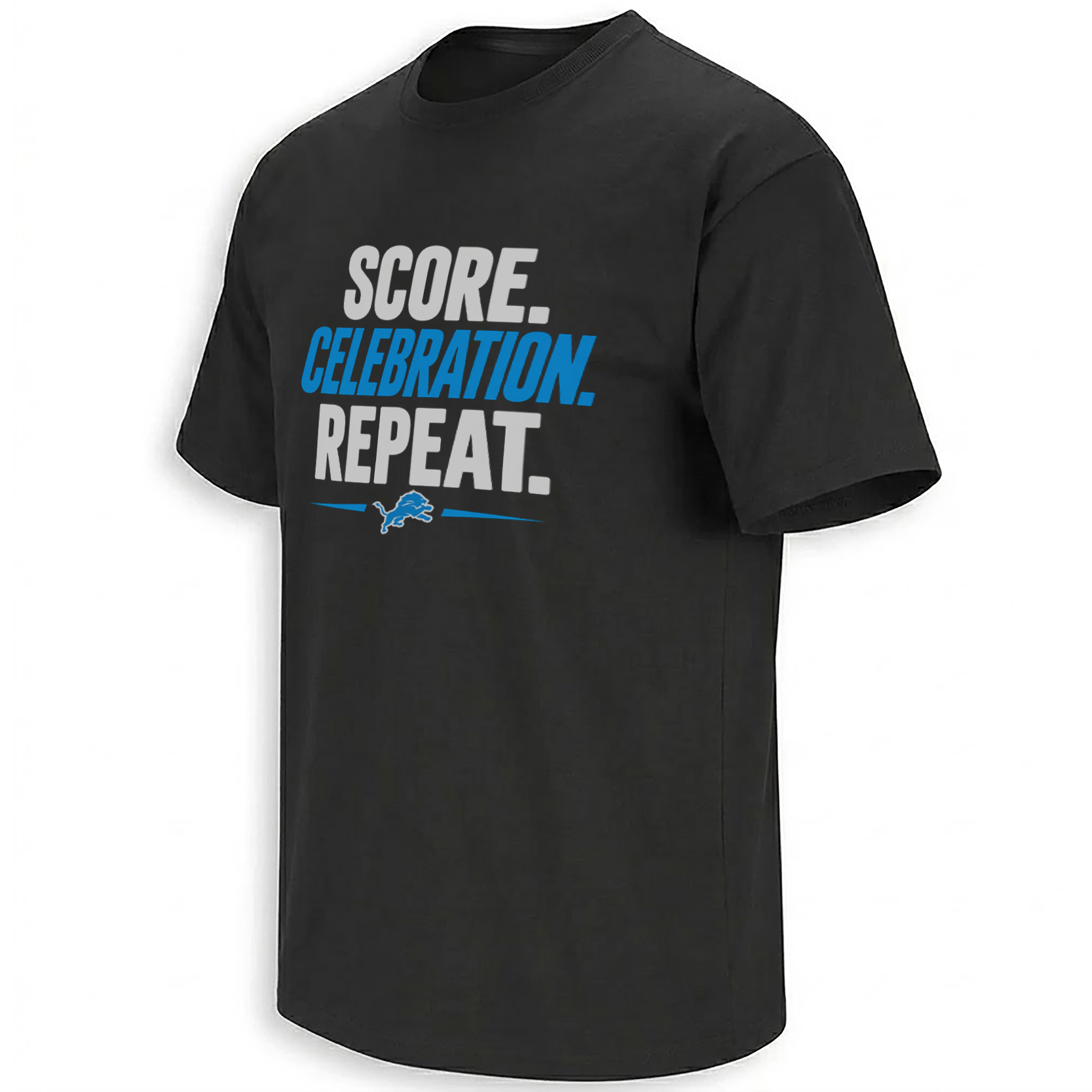 03 / The Slogan
A typography-focused treatment that reduces the action to a three-part rhythm. The message works because Detroit’s scoring success and celebration creativity were closely linked during the game.
View the typography piece →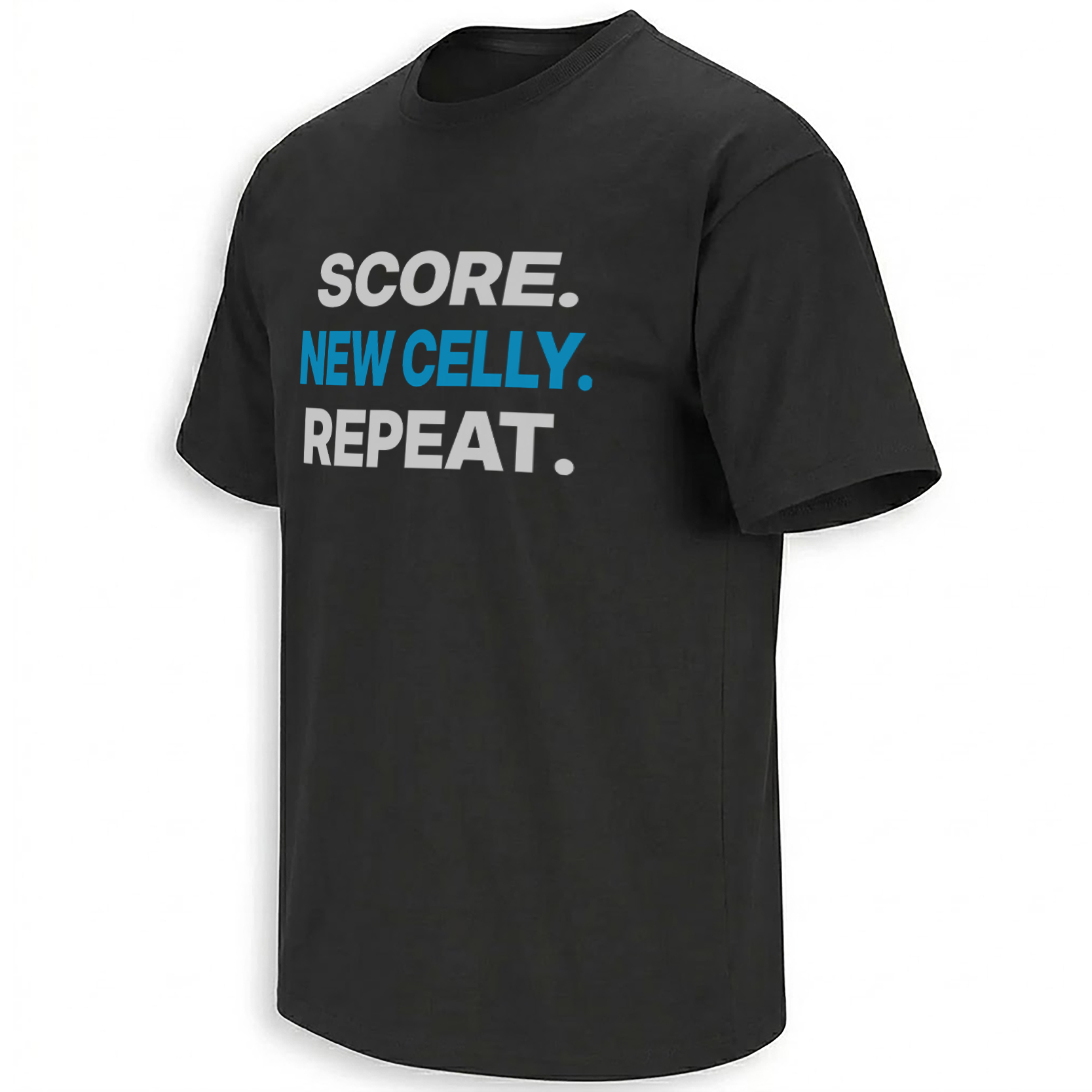 04 / The Running Joke
This slogan emphasizes the creative cycle rather than one exercise. Every touchdown becomes another opportunity for the Lions to introduce a fresh celebration, making surprise part of the team’s personality.
Explore the slogan graphic →Why Detroit’s Touchdown Celebrations Have Become Their Own Story
The workout routine arrived just one week after Detroit performed an unusual crawling formation during its November 15 game against New England in Munich. That earlier celebration also generated discussion online, illustrating how quickly the Lions’ post-touchdown choreography had become a recurring conversation.
Amon-Ra St. Brown later explained that the Munich routine was inspired by footage of an NFL Europe celebration shown during a team meeting. He described how the players decided to perform their own version after scoring. The account, reported by Heavy Sports, provides useful context: these celebrations are often deliberate collaborations, not purely spontaneous reactions.
The Detroit offense combines significant star power with a willingness to be playful. Gibbs supplies explosive runs. St. Brown and Williams bring different personalities to the receiving group. Jared Goff organizes the offense, while the players create their own language around the results.
A celebration gives that language a visible form. Unlike a statistical milestone, it can be shared as a short clip, a still photograph or a graphic without needing a full explanation of the drive that preceded it.
The Bigger Context: Winning, Injury Concerns and Celebration Culture
Detroit’s enjoyment of touchdown choreography also existed alongside a more serious conversation. In Munich on November 15, star defensive end Aidan Hutchinson suffered a season-ending ACL injury while celebrating a sack. The incident renewed debate around the risks players take after successful plays.
The following week, Jameson Williams performed a front flip while crossing the goal line on a 57-yard touchdown reception against Tampa Bay. The landing alarmed some viewers, particularly given Hutchinson’s injury. The workout routines following Gibbs’ scores offered a very different visual, although the team did not publicly describe them as a direct safety response.
These contrasts help explain why Detroit’s celebrations have become such a prominent part of its 2026 season. Fans are enjoying the creativity while also paying closer attention to how their favorite players celebrate. The conversation is not simply about whether a touchdown looks entertaining. It is about expression, teamwork and how those moments unfold in a physically demanding sport.
Why These Graphics Work as Football Memory
Sports graphics can preserve a game through its score, a player portrait or a famous phrase. Detroit’s workout celebrations offer another possibility: preserve the behavior that made an ordinary scoring sequence unexpectedly memorable.
The Score Drop Repeat design records an actual exercise-inspired pose. End Zone Workout extends the same theme through a barbell metaphor. Score Celebration Repeat turns the team’s behavior into an easy-to-recognize pattern, while Score New Celly Repeat emphasizes the novelty of each new routine.
Each graphic therefore reflects a different part of the relationship between football and online culture. The strongest interpretations retain the moment’s essential elements — Detroit, a touchdown and the surprising workout routine — without confusing illustration with documentary fact.
For fans browsing Jahmyr Gibbs designs or the wider NFL collection, these pieces form a compact record of a single afternoon when Detroit’s offensive production and collective humor came together.
Frequently Asked Questions
What was the Detroit Lions workout touchdown celebration?
It was a series of exercise-inspired celebrations following Jahmyr Gibbs’ two rushing touchdowns against the Tampa Bay Buccaneers on November 22, 2026. Detroit players first performed push-ups and later sit-ups.
Did Jahmyr Gibbs and the Lions do push-ups or sit-ups?
Both. Players celebrated Gibbs’ first fourth-quarter touchdown with push-ups and followed his second touchdown with a sit-up routine.
When did the Lions’ end-zone workout happen?
The workout celebrations happened on November 22, 2026, during Detroit’s Week 11 home game against Tampa Bay at Ford Field.
Did the Detroit Lions beat the Buccaneers?
Yes. Detroit won 31–21, improving to 8–2 and extending its winning streak to six games.
How many touchdowns did Jahmyr Gibbs score against Tampa Bay?
Gibbs scored two rushing touchdowns in the fourth quarter, from two yards and four yards.
Did Detroit players lift a real barbell in the end zone?
No. The documented celebrations involved push-ups and sit-ups. The barbell graphic is an artistic interpretation of the workout theme.
Why does Score New Celly Repeat fit the Lions’ 2026 season?
Detroit’s players have performed several distinctive touchdown celebrations, including the Munich crawling formation and the two workout routines against Tampa Bay. The slogan references that recurring creativity.
Two touchdowns, two workouts and another victory in the Lions’ winning streak. The Score Drop Repeat artwork and three related interpretations capture the most playful part of Detroit’s Week 11 win. The wider Detroit Lions collection follows the team’s other defining moments and graphic traditions.
Detroit Lions running back Jahmyr Gibbs inspired two workout-themed celebrations in a 31–21 victory over Tampa Bay on November 22, 2026. Explore how the push-up and sit-up routines became four football graphics: Score Drop Repeat, End Zone Workout, Score Celebration Repeat and Score New Celly Repeat.