The End Zone Edition
Bucky Irving & Vita Vea’s Belly Celly: The Buccaneers’ Viral TD Celebration
Tampa Bay lost the game in Detroit. Somehow, a running back and a 347-pound defensive tackle turned their touchdown celebration into a piece of internet art — complete with a museum-worthy photograph and one unforgettable drum solo.
Detroit was winning the football game. Bucky Irving and Vita Vea were about to win the internet. In the third quarter of the Tampa Bay Buccaneers’ November 22, 2026 matchup with the Lions at Ford Field, Irving powered into the end zone from one yard out, cutting Detroit’s lead to 17–14. What followed had almost nothing to do with the score.
Vita Vea, Tampa Bay’s massive nose tackle, had joined the offense as an extra blocker. After Irving scored, Vea lifted his jersey, exposing his stomach. Irving stepped forward and struck it three times like a drum. For a few seconds, the NFL had apparently become a percussion performance.
The Buccaneers eventually lost 31–21, falling to 3–7, but the clip and photographs traveled far beyond the game’s outcome. The team’s official account jokingly declared the image worthy of the Louvre, while fans gave the bizarre celebration a perfectly efficient name: the Belly Celly. News coverage, NFL video clips and football communities quickly picked up the joke.
The moment joins the growing visual archive of Tampa Bay Buccaneers culture, where memorable players and unexpected on-field moments become part of the language fans share long after the final whistle.
The Touchdown Was Football. The Celebration Was Something Else.
Tampa Bay’s third-quarter touchdown came at the end of a 12-play, 70-yard drive. The Buccaneers brought in a jumbo formation, placing Vea on offense as an eligible fullback. His blocking helped create space for Irving, who crossed the goal line to make it a three-point game with 2:28 left in the quarter.
According to the Buccaneers’ official game report, Irving finished with 100 yards from scrimmage and extended his streak of games with a rushing touchdown to four. His productive afternoon gave Tampa Bay reason to believe a comeback was still possible.
But the play’s lasting visual came after the scoring signal. Vea pulled up his jersey while Irving enthusiastically drummed on his stomach. The enormous contrast between the players, their shared commitment to the joke and the sudden shift from serious football to physical comedy made the scene unusually memorable.
Some celebrations make the highlight reel. This one somehow became a museum exhibit, a percussion solo and an internet punchline at the same time.
The Real Photograph Behind the Belly Celly
The viral image matters because it captures something a box score cannot. Irving and Vea are not simply standing together after a touchdown. The photograph preserves the actual visual joke: Vea displaying his stomach and Irving appearing to play it like an oversized drum.
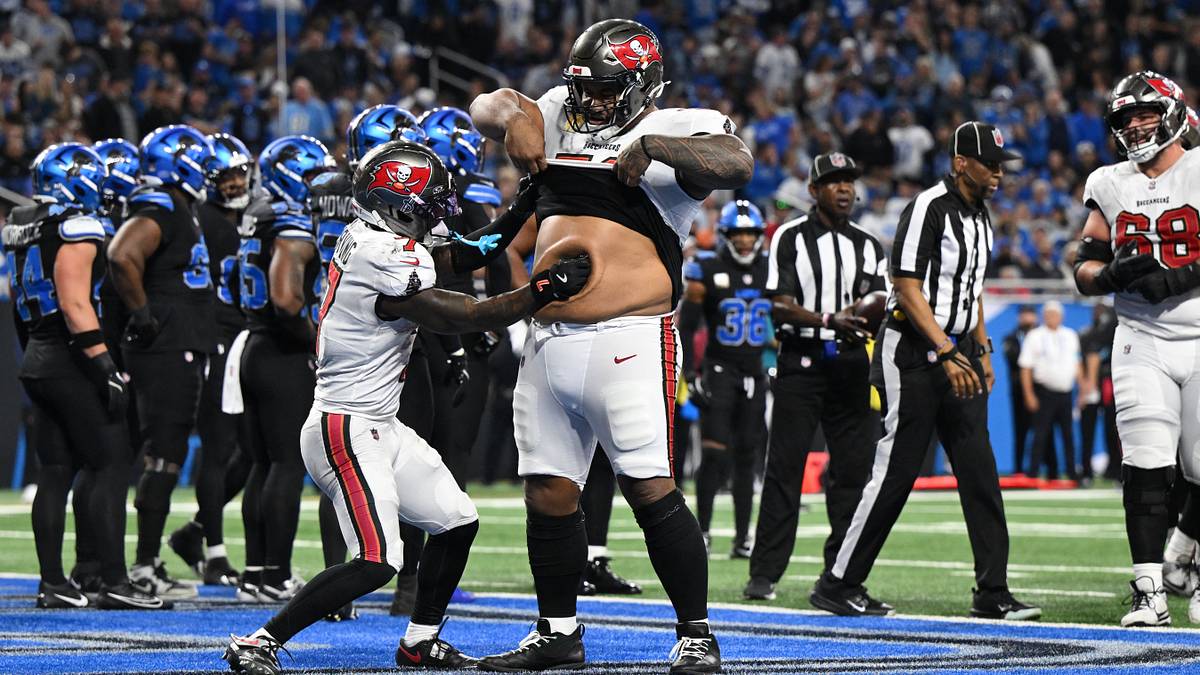
The photograph’s appeal is unusually direct. A compact running back reaches toward the exposed stomach of a much larger teammate. White Buccaneers uniforms and pewter helmets make the scene immediately identifiable, while the absurd action supplies its own explanation.
There is no need to invent a punchline. The players created the composition themselves.
Three Beats That Became a Meme
Three taps were enough to give the moment a rhythm that viewers could imagine hearing even without the broadcast audio. That musical quality helped the celebration translate into captions, jokes, comic-book sound effects and short-form video reactions.
The NFL shared the clip through its official social account, and Tampa Bay’s own account leaned into the absurdity with footage of the celebration. The performance was funny because it was both unexpected and perfectly suited to the two participants.
Why the Buccaneers Wanted It Hung in the Louvre
The reaction became even funnier when the Buccaneers published photographs of the celebration with the caption “HANG IT IN THE LOUVRE.” The reference to the famous Paris art museum turned a strange football photograph into a mock masterpiece.
The joke was not that Irving and Vea had created conventional beauty. It was the contrast between an absurd sports image and the language of fine art. Fans quickly extended that idea, inviting further comparisons with paintings, museum displays and historic portraits.
The art comparison traveled beyond the team’s account. Sports culture page ArtButMakeItSports drew a parallel between the scene and a seventeenth-century painting attributed to Simon de Vos, while football journalists and fans repeatedly described the celebration photo as something deserving a frame.
This is why the Louvre version of the design makes sense. It takes the actual language of the team post and gives that joke a physical visual form.
Five Ways One NFL Moment Became Graphic Culture
A touchdown celebration can be remembered through a replay, a photograph, a familiar phrase or a new illustration. Each preserves a slightly different aspect of the moment. The five Belly Celly graphics interpret the same event through sports lettering, classical art parody, comic-book storytelling, minimalist silhouettes and cartoon exaggeration.
These are not five different celebrations. They are five different visual readings of the same interaction between Irving and Vea at Ford Field.
 01 / The Original
Bold athletic lettering and the Buccaneers’ pirate-flag identity frame the players’ actual interaction. This graphic keeps the visual language close to a traditional football highlight poster, allowing the strange celebration itself to provide the humor.
View the original graphic →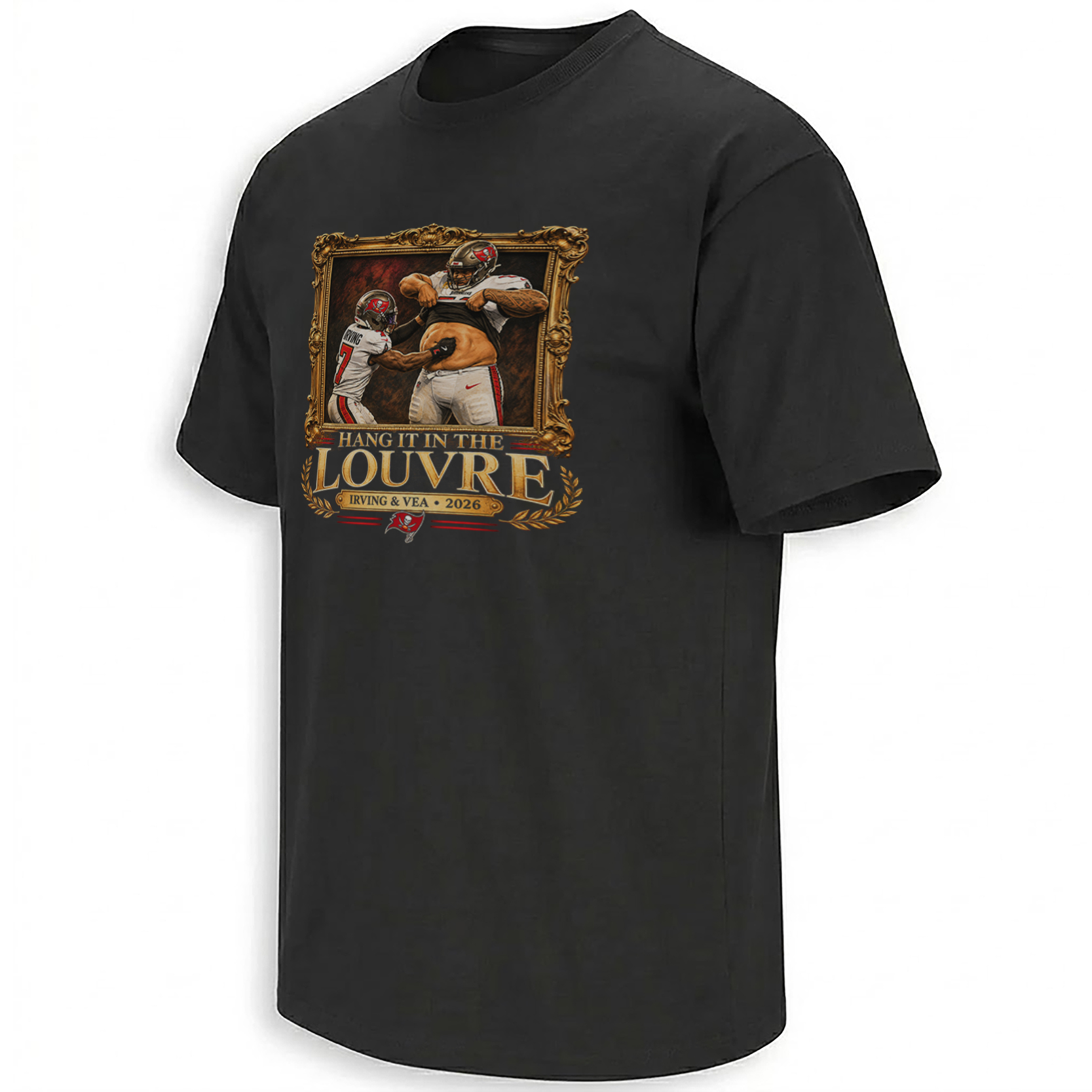 02 / The Museum
The Buccaneers’ real social-media caption becomes a museum parody. An ornate golden frame, antique-style treatment and Irving & Vea 2026 plaque turn a ridiculous end-zone photograph into a mock historic painting.
Explore the framed artwork → 03 / The Comic
Three explosive words turn the belly slaps into a printed soundtrack. Comic-book action lines and red motion effects transform the physical joke into a sequence that readers can almost hear.
See the comic interpretation →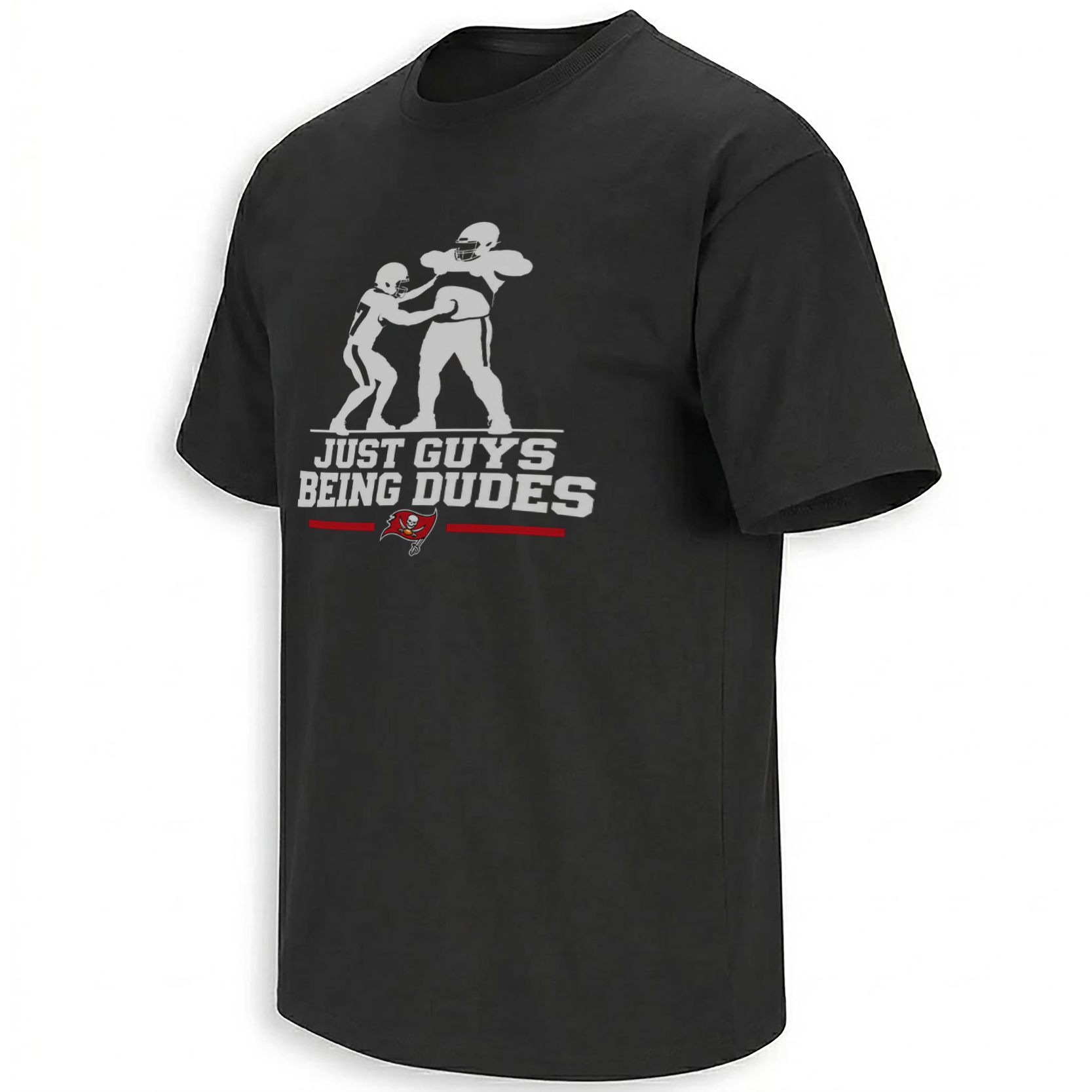 04 / The Silhouette
A white silhouette and familiar internet phrase reduce the moment to its essential shapes. Without faces or elaborate effects, the figures’ body language becomes the joke. The quieter graphic leaves more room for the viewer’s memory of the clip.
View the silhouette artwork → 05 / The Cartoon
This interpretation shifts the spotlight toward Vita Vea. The exaggerated belly, striking hand and playful athletic lettering give the defensive tackle’s contribution its own cartoon identity. The running back scores; the big man becomes the drum.
Explore the cartoon piece →The Internet Had Its Own Commentary
The celebration spread because it offered something rare: a football moment whose comedy needed almost no background knowledge. Even viewers unfamiliar with Tampa Bay’s roster could understand the contrast between the two players and the absurd rhythm of the performance.
On Reddit’s r/nfl, slow-motion footage inspired jokes about the sound of Vea’s stomach, the players’ friendship and the sheer physical strength required to make the celebration work. Other commenters connected the scene to Thanksgiving humor or described it as one of the strangest and most enjoyable celebrations of the season.
The comments helped demonstrate why the moment connected across fan bases. There was no complicated rivalry to decode, no controversial officiating decision at the center of the clip and no need to choose a side. The scene was simply funny.
Tampa Bay’s loss still mattered in the season standings. Yet the Belly Celly belonged to another type of football memory: one that survives because the players showed personality in a sport usually measured through statistics, pressure and results.
Why Vita Vea Was the Perfect Partner
The celebration would have been difficult to imagine without Vea. At 347 pounds, the Buccaneers nose tackle is known for the power he brings to the defensive line. In this particular sequence, he had temporarily crossed into an offensive role to help Irving reach the end zone.
That detail gives the joke an extra layer. Vea did not simply appear for a random celebration. He had been directly involved in the scoring play, making his participation part of the touchdown’s story. His willingness to lift his jersey and become the center of the gag made the moment both a football highlight and a display of teammate chemistry.
Irving’s role was just as important. The running back went from a difficult goal-line finish to an exaggerated series of drum beats in seconds, creating a visual contrast between the intensity of the play and the ridiculousness of the celebration.
Both athletes now have an additional place in Tampa Bay’s cultural vocabulary. Fans looking through Bucky Irving graphics or Vita Vea designs can see how individual player identities connect with broader moments that take on a life of their own.
When a Losing Game Produces a Lasting Football Image
The NFL has a long history of touchdown celebrations that become part of the league’s public memory. Some are attached to iconic victories or postseason achievements. Others survive because they express personality more effectively than a conventional highlight.
The Belly Celly belongs to that second category. Detroit won the contest, and the Lions’ fourth-quarter scoring ultimately decided the result. But the image of Irving playing Vea’s stomach like a drum became a separate story, one that fans could replay, share and reinterpret without changing the facts of the game.
The broader NFL collection reflects the same relationship between football and visual culture. Team identity, unforgettable plays, unusual celebrations and recurring fan jokes all produce graphics that act as markers of specific moments.
What makes this collection distinctive is the separation between the historical event and its different visual afterlives. The original photograph documents the celebration. The Louvre parody exaggerates its cultural status. The comic, silhouette and cartoon interpretations preserve different parts of the same joke without pretending they represent different plays.
Frequently Asked Questions
What is the Bucky Irving and Vita Vea Belly Celly?
Belly Celly is the nickname for a Tampa Bay Buccaneers touchdown celebration in which running back Bucky Irving struck defensive tackle Vita Vea’s exposed stomach three times like a drum.
When did the Buccaneers Belly Celly happen?
The celebration occurred on November 22, 2026, during the third quarter of Tampa Bay’s Week 11 game against the Detroit Lions at Ford Field.
Why was Vita Vea on offense during the touchdown?
Tampa Bay used Vea as an eligible fullback in a jumbo goal-line formation. His blocking helped Bucky Irving score on a one-yard touchdown run.
Did the Buccaneers beat the Lions after the Belly Celly?
No. Irving’s touchdown reduced Detroit’s lead to 17–14, but the Lions went on to defeat Tampa Bay 31–21.
Why did the Buccaneers say Hang It in the Louvre?
Tampa Bay’s official social account jokingly suggested that the unusual celebration photograph belonged in the famous Paris art museum, turning the moment into a fine-art parody.
What does Boom Boom Boom mean in the Belly Celly artwork?
The phrase translates Irving’s three belly slaps into comic-book sound effects, emphasizing the musical rhythm and physical comedy of the celebration.
Why did the Belly Celly spread on social media?
The unusual interaction between Irving and Vea, the three rhythmic slaps and the Buccaneers’ museum joke made the moment easy to recognize, replay and reinterpret online.
The football game ended in Detroit. The joke kept traveling. From the original Belly Celly artwork to the Louvre-inspired portrait, each interpretation preserves a different part of the play that made Bucky Irving and Vita Vea unexpected stars of NFL internet culture. The wider Buccaneers archive places the celebration alongside other memorable Tampa Bay football moments.
Bucky Irving and Vita Vea’s Belly Celly became a viral NFL moment after Tampa Bay’s November 22, 2026 touchdown against Detroit. Explore the original belly-drumming celebration, the Buccaneers’ Hang It in the Louvre post and five graphic interpretations ranging from comic-book sound effects to minimalist silhouettes.