
Colt Emerson’s Walk-Off Bubble Gum Bath Marked Seattle’s Youth Movement
The Mariners nearly surrendered a six-run lead, but their 20-year-old rookie delivered the final swing—and disappeared beneath one of baseball’s sweetest postgame celebrations.
For seven innings, Seattle’s game against Minnesota appeared calm enough to become an uncomplicated win. George Kirby controlled the Twins, the Mariners built a 6–0 advantage, and T-Mobile Park settled into the comfortable rhythm of a game moving toward its expected ending.
Then the final two innings changed everything. Minnesota scored twice in the eighth, added four more in the ninth and erased the entire lead. A game that had once felt settled arrived at the bottom of the ninth tied 6–6, with Seattle suddenly facing the possibility of turning a dominant evening into one of its most frustrating losses of the season.
Colt Emerson changed the final image. With the winning run in position, the 20-year-old rookie drove a 105-mph single into play and delivered the first walk-off hit of his Major League career. Within seconds, the tension disappeared beneath teammates, flying gum and the kind of celebration baseball reserves for endings that nearly escaped.
Seattle lost the comfortable version of the game, then watched one of its youngest players rescue the ending.
The Walk-Off Meant More Because the Game Nearly Collapsed
Not all walk-offs carry the same emotional shape. Some conclude close games that have remained tense from the first inning. Others complete dramatic comebacks. Emerson’s hit belonged to a stranger category: the rescue of a game Seattle had already appeared to win.
That distinction explains the intensity of the celebration. When a six-run lead disappears late, frustration begins before the final out. Fans mentally replay bullpen decisions, missed opportunities and every moment when the game could have been finished more cleanly.
Emerson’s single interrupted that process. The hit did not erase the bullpen collapse, but it prevented the collapse from becoming the final story. Instead of leaving the stadium discussing a surrendered lead, Seattle fans left with the image of a rookie mobbed near the infield.
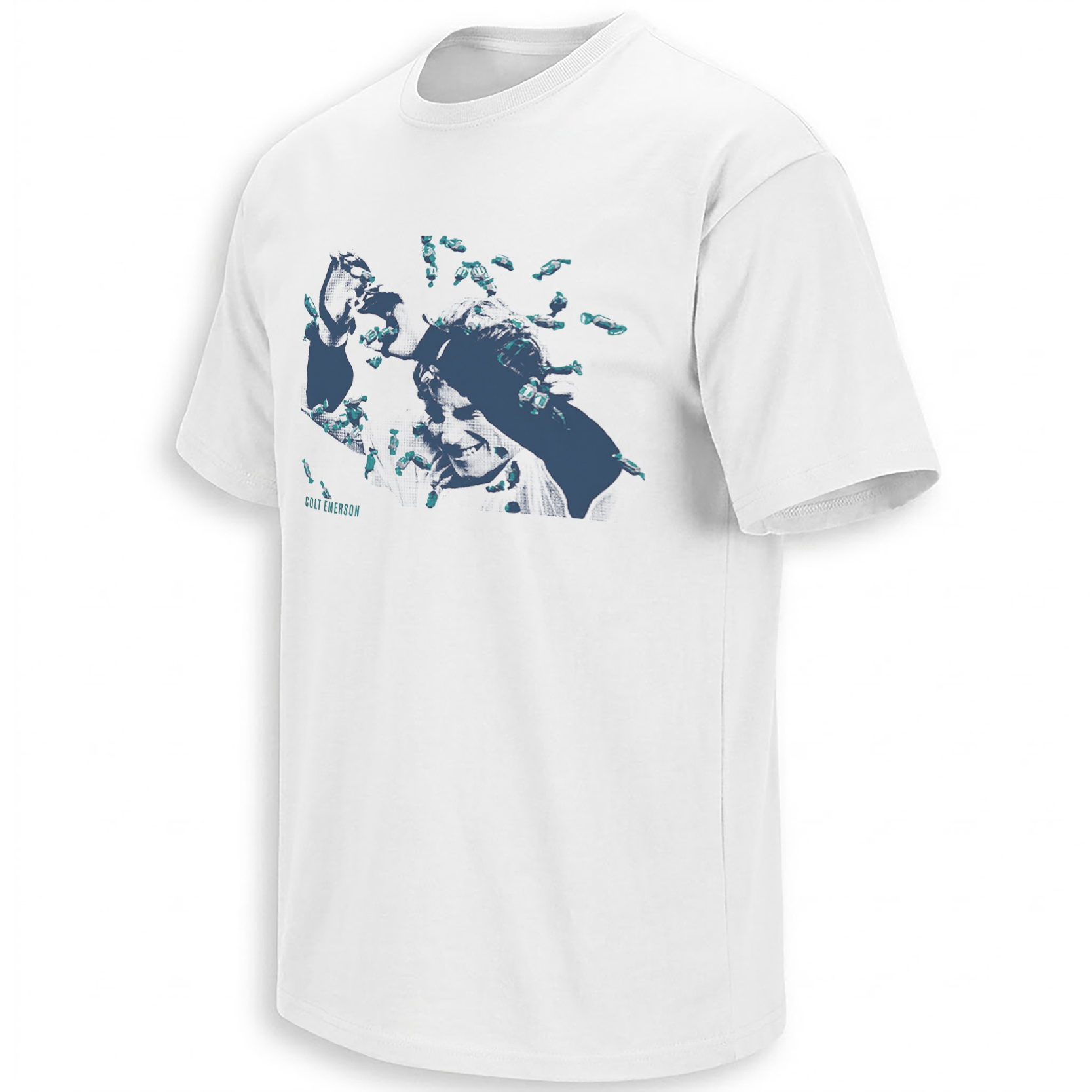
Why Bubble Gum Belongs to Baseball Celebration Culture
Baseball celebrations have always transformed ordinary dugout objects into props. Water coolers become postgame showers. Sunflower seeds become confetti. Towels, helmets and cups enter the frame because the celebration happens before anyone has time to organize it.
Bubble gum adds a distinctly baseball-specific form of chaos. Gum already belongs to the visual vocabulary of the sport: players chew it during long innings, blow bubbles between pitches and keep buckets of it inside the dugout. When teammates throw pieces during a walk-off celebration, an everyday habit becomes pink confetti.
The contrast is part of the appeal. Emerson’s winning hit carried real competitive pressure, but the celebration looked playful and almost juvenile. That combination fit a rookie whose arrival has been framed around maturity and long-term importance, yet who is still young enough for his first Major League walk-off to feel like a discovery.
Mariners navy and teal establish the team frame, while bright pink gum creates the visual surprise. The scattered pieces introduce movement across the composition, making the artwork feel like the exact second after teammates reached Emerson.
Colt Emerson Had Already Been Asked to Grow Up Quickly
Seattle promoted Emerson in May, making him one of the youngest players in the Major Leagues. His call-up came with unusually clear organizational confidence. Before his debut, the Mariners had signed him to an eight-year extension, signaling that they viewed him as a central figure in the club’s future rather than a temporary injury replacement.
That belief did not make the transition easy. Emerson experienced the uneven stretches common to young hitters adjusting to Major League velocity, sequencing and daily scrutiny. By the end of July, his recent offensive results had become part of the conversation around Seattle’s lineup.
The walk-off therefore arrived at a useful moment. One swing cannot solve every developmental challenge, but it can change the emotional temperature surrounding a young player. It gives teammates evidence of composure, gives fans a permanent highlight and gives the player a memory of succeeding when the entire game has narrowed to one at-bat.
Seattle’s Young Core Finished the Game Together
Emerson’s hit did not stand alone. Cole Young produced four hits earlier in the game, creating another strong night for a Mariners roster increasingly shaped by young position players. The combination made the victory feel like a preview of the club Seattle has been trying to build.
Prospect-driven teams are often discussed through future language. Analysts describe what a lineup could become in two seasons, where each player may eventually defend and which young hitter has the highest ceiling. Walk-off moments accelerate that timeline emotionally.
On this night, Young helped construct the lead and Emerson restored it at the end. The future was not waiting in Tacoma or appearing only on prospect lists. It was responsible for a Major League win in Seattle.
Why the Celebration Became the Better Artifact
A design could have isolated Emerson’s swing, the ball leaving the bat or the runner crossing home. The bubble-gum image preserves something broader: the instant when an individual hit became a team memory.
Walk-offs are valuable because they eliminate the distance between performance and celebration. There is no defensive inning to complete and no additional opportunity for the opponent. The game ends, teammates begin running, and the player responsible is absorbed into the group.
The graphic keeps Emerson visible inside that chaos. His identity remains central, but the gum and surrounding movement explain what the hit meant. This was not simply another single added to a rookie stat line. It was the final action in a 7–6 game that had changed emotional direction several times.
A New Entry in Seattle’s Baseball Memory
The Walk-Off Bubble Gum Bath design acts as a timestamp of Emerson’s first Major League walk-off and the night Seattle’s young core prevented a late collapse from becoming a loss.
Inside the Seattle Mariners collection, it joins graphics built around clubhouse celebrations, home-run rituals, rising players and the emotional unpredictability of Mariners baseball. The broader MLB collection connects the moment to the walk-offs, rookie breakthroughs and dugout traditions that define a full baseball season.
Frequently Asked Questions
What happened during Colt Emerson’s walk-off game?
Seattle built a 6–0 lead, Minnesota tied the game with six runs across the eighth and ninth innings, and Emerson delivered the winning single in the bottom of the ninth.
Was it Colt Emerson’s first MLB walk-off?
Yes. The 7–6 victory gave Emerson the first walk-off hit of his Major League career.
Why is bubble gum featured in the design?
Emerson’s teammates celebrated by surrounding him with flying gum, turning a familiar dugout object into colorful postgame confetti.
How old was Emerson during the 2026 season?
Emerson was 20 years old, making him one of the youngest active players in Major League Baseball.
Why did the walk-off matter to Seattle’s youth movement?
Cole Young produced four hits and Emerson delivered the winner, allowing two members of Seattle’s emerging core to shape the same victory.
The Walk-Off Bubble Gum Bath piece preserves Emerson’s first career game-winner through the joyful chaos that followed, while the Seattle Mariners archive follows the rookies, rituals and late-inning moments shaping the club’s next chapter.
Walk-Off Bubble Gum Bath Shirt captures Colt Emerson’s first MLB walk-off through Mariners teal, flying pink gum and the chaotic team celebration following Seattle’s 7–6 win over Minnesota.