Cheryl Reeve’s “Trans Kids Belong” Shirt Turned the Sideline Into a Public Statement
During a Fever-Lynx game already surrounded by competing rallies and national attention, Minnesota coach Cheryl Reeve used a light-blue shirt, a few direct words and a conversation at midcourt to express a different vision of belonging in sports.
Before the opening possession in Minneapolis on August 2, the most important exchange of the afternoon may have happened at center court. Cheryl Reeve and Sophie Cunningham spoke briefly before the Minnesota Lynx faced the Indiana Fever, two figures positioned on opposite sides of a debate that had followed Indiana across several cities.
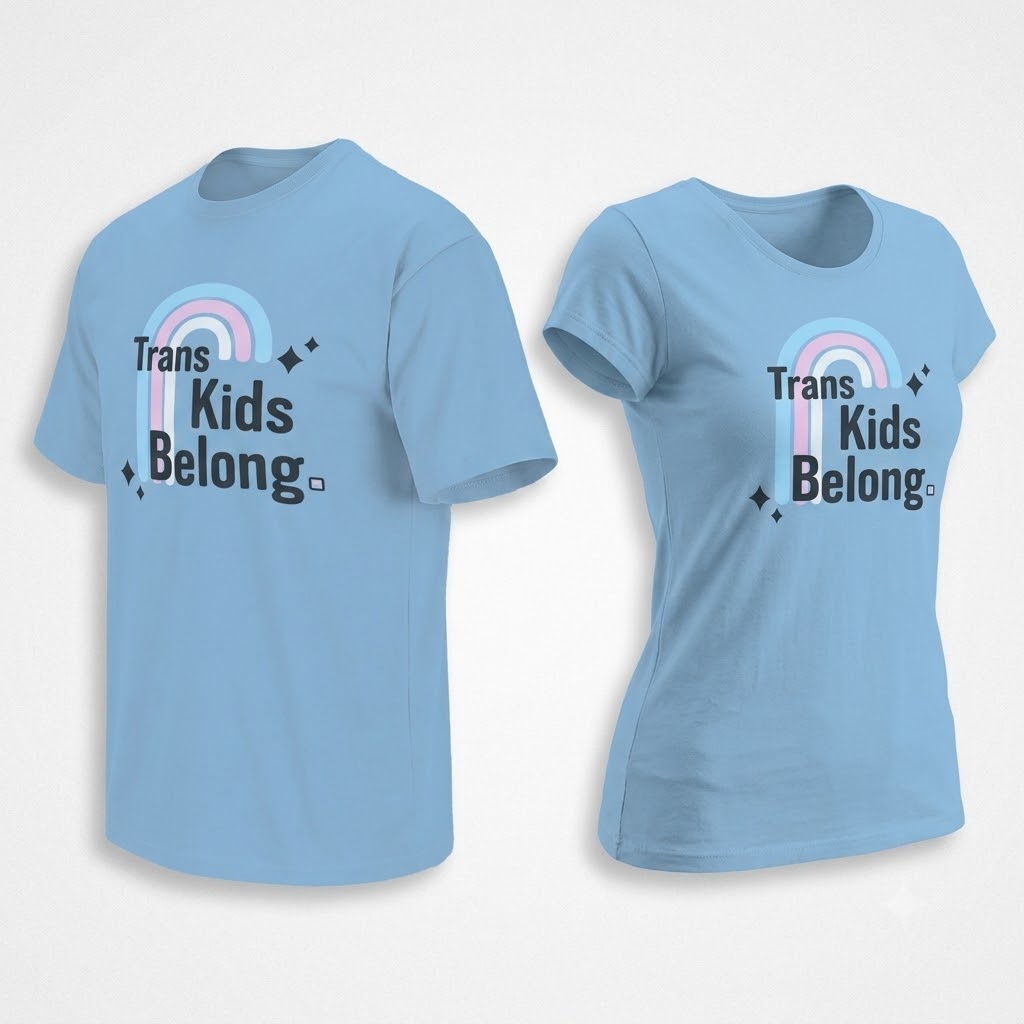
Reeve did not reveal the private details of the conversation. What she chose to make public was visible beneath her jacket: a light-blue shirt carrying the words “Trans Kids Belong.” The message was repeated in the stands, where spectators wore versions reading “Trans Kids Belong in Sports.”
The shirt did not interrupt the game. It existed inside the normal language of coaching—timeouts, substitutions, defensive instructions and sideline movement. That placement gave the message its cultural force. Advocacy was not presented as an external event. It was positioned directly within the arena and the basketball community.
The power of the phrase came from its refusal to treat belonging as an abstract policy question. It reduced the argument to the emotional reality of children seeking a place in community and sport.
A Game Surrounded by Two Different Visions of Women’s Sports
Outside Target Center, supporters of Cunningham carried messages thanking her for defending female athletic categories. Opposing demonstrators called for protection and inclusion of transgender people. Inside, Cunningham was booed when she touched the ball, while Reeve’s clothing communicated its own response without requiring a press-conference backdrop.
The disagreement was sharp, but the pregame conversation between the player and coach complicated the assumption that public opposition must eliminate personal dialogue. Reeve later emphasized education and respectful conversation, suggesting that disagreement could be confronted directly rather than reduced entirely to online slogans.
Minnesota won the basketball game 108–100, yet the cultural image that traveled beyond the box score was the combination of Reeve’s shirt, the messages in the crowd and the unusual visibility of a debate that had attached itself to the Fever schedule.

Why Cheryl Reeve’s Message Carried Particular Weight
Reeve is not a distant commentator entering the league for one news cycle. She is one of the WNBA’s most established coaches and a central figure in Minnesota basketball culture. When someone with that institutional standing uses the sideline to communicate support for transgender youth, the message becomes part of the league’s internal conversation.
Her position also fits the longer history of the WNBA as a league where players, coaches and fans have spoken openly about identity, civil rights and LGBTQ inclusion. For many members of that community, support for transgender people is not a newly imported slogan. It is connected to a broader belief that women’s basketball should remain a place where marginalized people can be visible.
The message appeared on the coach and in the crowd, embedding advocacy inside the normal visual rhythm of a WNBA game.
Competing demonstrations showed that the same sport had become a meeting point for two fundamentally different interpretations of fairness.
How “Trans Kids Belong” Works as Visual Language
The phrase is deliberately plain. It does not require the viewer to understand eligibility rules, hormone policies or legal arguments. Its focus is not the professional athlete but the child, and its central verb is not compete, win or qualify. It is belong.
That word changes the emotional frame. Belonging can describe participation in a team, acceptance within a school, safety in a community or the basic experience of not being treated as a public threat. Supporters understand the message as an affirmation of dignity rather than a complete technical policy for every athletic level.
The pastel palette reinforces that reading. Light blue, pink and soft white are widely associated with transgender pride imagery, while the handwritten lettering avoids the aggressive authority of a campaign poster. The effect is closer to a community-made sign: direct, human and intentionally accessible.
Soft color, imperfect lettering and a concise message make the artwork feel personal rather than institutional. The graphic communicates care first, allowing the political context to emerge through the viewer’s knowledge of the Fever-Lynx moment.
One Conversation Did Not Resolve the Larger Conflict
Reeve and Cunningham speaking before the game did not erase their differences. It did, however, create a rare image of direct conversation inside a controversy mostly shaped by rallies, headlines and social-media reaction.
Supporters of Cunningham continue to argue that female competition requires sex-based boundaries. Supporters of Reeve’s message emphasize that transgender youth face hostility and should not be discussed as dangers to teammates or locker rooms. Those positions involve different definitions of protection, and neither side considers the stakes symbolic.
The wider Minnesota Lynx collection records the team and personalities surrounding the moment, while the WNBA collection places it inside a league where culture and basketball regularly overlap. The LGBT Pride collection provides the broader visual context for messages centered on identity, dignity and community.
Frequently Asked Questions
When did Cheryl Reeve wear the “Trans Kids Belong” shirt?
She wore it while coaching the Minnesota Lynx against the Indiana Fever at Target Center on August 2, 2026.
Why was the shirt connected to Sophie Cunningham?
It appeared amid rallies and public reaction to Cunningham’s support for excluding transgender athletes from girls’ and women’s sports.
Did Cheryl Reeve and Sophie Cunningham speak before the game?
Yes. They held a conversation at midcourt, although Reeve did not publicly disclose the complete details of what was said.
What does “Trans Kids Belong” mean in this context?
Supporters use the phrase to affirm that transgender children deserve dignity, community and access to supportive environments, including sports.
The Trans Kids Belong design preserves Cheryl Reeve’s visible sideline response, while the Minnesota Lynx, WNBA and LGBT Pride collections document the broader communities connected to it.
Trans Kids Belong Shirt captures Cheryl Reeve’s visible message during the 2026 Fever-Lynx controversy through pastel pride colors, handwritten typography and a direct statement about dignity and belonging.