
Ceddanne Rafaela’s Power Swing Is Becoming the New Shape of Boston’s No. 3
A first All-Star selection, elite center-field instincts and a swing now producing decisive moments have changed how Boston sees Ceddanne Rafaela. The No. 3 jersey no longer represents potential alone; it represents a player increasingly controlling games from both sides of the ball.
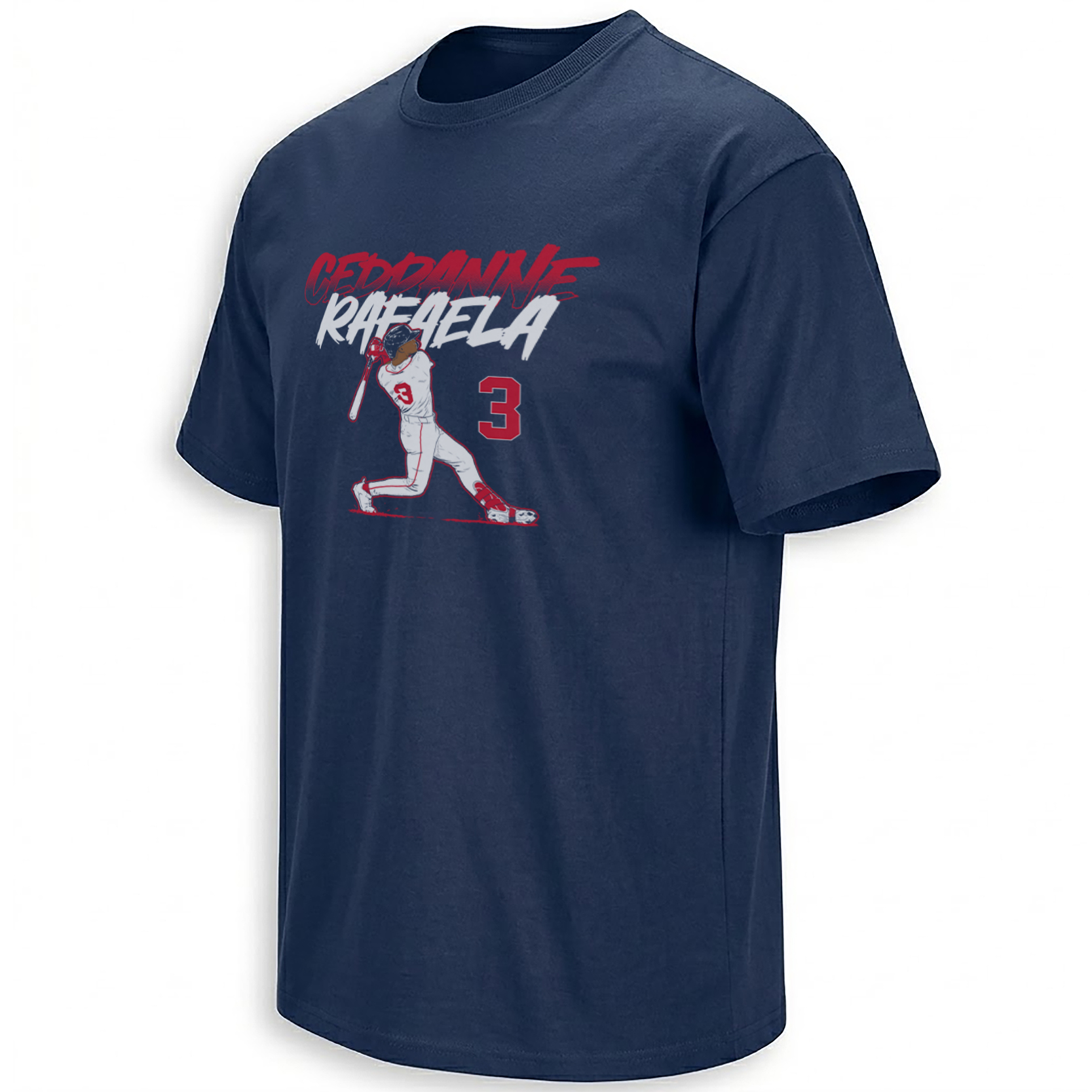
The swing looked compact until the ball left the bat. Then it became unmistakable: hips cleared, arms extended and a small frame generated the kind of violent acceleration that makes a stadium react before the camera has fully tracked the flight.
That image has followed Ceddanne Rafaela through Boston’s 2026 season. For years, the easiest way to explain his value was through defense. He could erase a gap, climb a wall, change direction in center field and turn a likely extra-base hit into a moment that spread across highlight accounts. This year, the conversation has widened. The glove remains part of the story, but the bat is no longer waiting outside it.
Rafaela’s first career All-Star selection in July confirmed the larger shift. He had moved from the bottom of Boston’s order into a more meaningful offensive role while maintaining the availability and defensive range that made him indispensable. The selection did not arrive as a reward for one viral play. It reflected the accumulation of at-bats, adjustments and two-way impact.
Rafaela’s appeal is no longer built around what he might become. It is built around how quickly one swing or one route in center field can change the shape of a game.
From Defensive Highlight to Complete-Player Conversation
Rafaela’s defensive reputation was established early because his best catches are immediately legible. Fans do not need an advanced metric to understand a center fielder covering impossible ground. The camera shows open grass, then suddenly shows Rafaela arriving inside it.
Offensive growth is subtler. It appears in which pitches a hitter refuses, how frequently he reaches two strikes without surrendering the at-bat and whether the swing remains under control when the moment grows louder. Boston’s 2026 version of Rafaela has shown more of that discipline without losing the physical aggression that gives his swing its visual force.
The result is a player whose highlights now arrive in pairs. A running catch can preserve a lead. A fast, high-finish swing can create one. That balance is why the No. 3 graphic feels current rather than predictive: it records the season when the offensive and defensive versions of Rafaela began to occupy the same frame.
The Swing That Turned Into an Internet Image
Baseball’s social-media vocabulary is built around short transformations. A pitch is delivered, a hitter commits, and within seconds the same motion exists as a replay, a slow-motion clip, a screenshot and a fan reaction. Rafaela’s big swing at Dodger Stadium fit that sequence perfectly because the visual told the story without explanation.
The embed matters because the motion is the subject. A static description can explain Rafaela’s bat speed, but the original post lets the reader see the compact load and immediate extension that inspired the graphic. It also preserves the way modern fans encountered the moment: not only through a broadcast, but through a clip circulating while the game was still emotionally active.
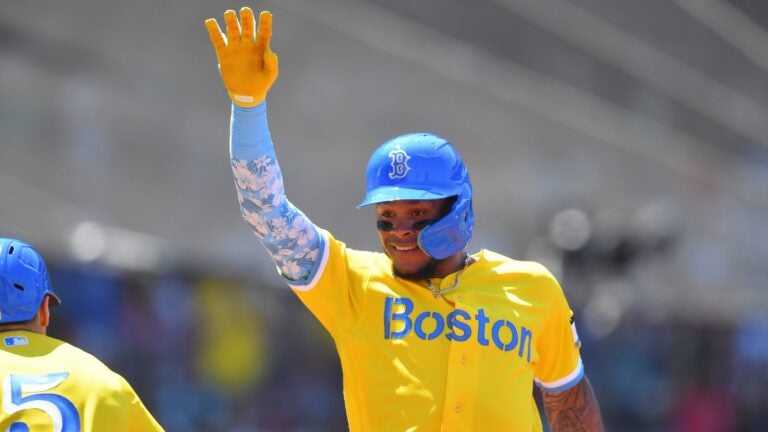
A Source Image Beyond the Product Graphic
Why the Artwork Reads Like a Boston Baseball Poster
The design does not attempt to document every part of Rafaela’s game. It chooses the swing because the swing now carries more narrative tension. Boston fans already understand the glove. The newer emotional development is seeing the same player produce decisive offensive images.
The pose creates a diagonal line through the composition, allowing the bat, shoulders and No. 3 to guide the eye. That movement gives the artwork the energy of a photographed follow-through rather than a posed player portrait. The layout also echoes older baseball program covers, where one exaggerated athletic action could stand in for an entire season.
The power-swing silhouette works because it connects three versions of Rafaela at once: the athlete with extraordinary body control, the emerging run producer and the young Boston player whose number is becoming recognizable without requiring a full nameplate.
No. 3 as a Running Boston Archive
Baseball numbers gain meaning through repetition. They appear in batting stances, defensive replays, lineup graphics and photographs taken after the game. Over time, the number becomes a shortcut to the player’s movement.
That is happening with Rafaela’s No. 3. The wider Boston Red Sox collection records those changing visual associations, from clubhouse language to individual player moments. The broader MLB collection places the design within the larger way baseball culture converts swings, catches, celebrations and meme phrases into wearable memory.
Frequently Asked Questions
Why did Ceddanne Rafaela’s 2026 season attract wider attention?
His established elite defense was joined by stronger offensive production, improved plate decisions and his first career MLB All-Star selection.
Why is the power swing central to this design?
The swing represents the newer part of Rafaela’s public identity: a player once discussed primarily for defense now creating decisive offensive highlights.
What does the No. 3 represent in the artwork?
It functions as a visual identifier connecting Rafaela’s Boston uniform, his growing role and the highlights that defined his 2026 rise.
Why are social-media clips important to modern baseball culture?
They allow individual swings and defensive plays to circulate immediately, turning brief game actions into shared fan images and recurring conversation.
The Ceddanne Rafaela Power Swing design preserves the offensive image changing the conversation, while the wider Boston Red Sox visual archive follows the plays and personalities shaping the season.
Ceddanne Rafaela Shirt captures Boston’s No. 3 at full extension during the 2026 season that brought his first All-Star selection and expanded his identity from elite center fielder to complete two-way threat.